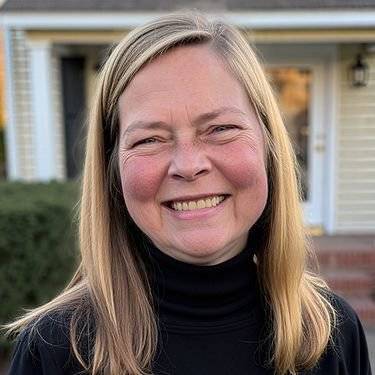
Rice_Karin.jpg
Karin Connelly Rice

Stories by: Karin Connelly Rice

Karin Connelly Rice enjoys telling people's stories, whether it's a promising startup or a life's passion. Over the past 20 years she has reported on the local business community for publications such as Inside Business and Cleveland Magazine. She was editor of the Rocky River/Lakewood edition of In the Neighborhood and was a reporter and photographer for the Amherst News-Times. At Fresh Water she enjoys telling the stories of Clevelanders who are shaping and embracing the business and research climate in Cleveland.
Some saucy brew - and pizza - coming to Hingetown
Presentation to highlight unique history behind Lee-Harvard neighborhood
As Cleveland’s eastern suburbs were just beginning to establish themselves in the 1920s, Cleveland’s Lee-Harvard neighborhood, bordering Shaker Heights, Warrensville Heights and Maple Heights on the the city’s south east side, was thriving in its own right.
 
The Lee-Harvard neighborhood, once known as Miles Heights Village and the Lee-Seville neighborhoods, was historically an integrated community of notable firsts. Ohio’s first African-American mayor, Arthur Johnston was elected in 1929 when the neighborhood was mostly white. His house on East 147th Street still stands today.
 
The neighborhood established many of the first citizen's councils and neighborhood associations in the region and had an interracial police force.
 
On Thursday, October 6, the Cleveland Restoration Society (CRS), along with Cleveland Ward 1 councilman Terrell Pruitt, the Harvard Community Services Center and CSU’s Maxine Levin Goodman College of Urban Affairs, will present “Cleveland’s Suburb in the City: The Development and Growth of Lee-Harvard.”
 
The free discussion will be led by Todd Michney, assistant professor at the University of Toledo and author of Changing Neighborhoods: Black Upward Mobility in Cleveland, 1900-1980.
 
“We at CRS have been so impressed with the neighborhoods of Ward 1, Lee-Harvard and Lee-Seville,” says Michael Fleenor, CRS director of preservation services, "because they reflect our recent history – Cleveland’s last expansion, progress in Civil Rights, and the growth of neighborhood associations and community development corporations in the late 20th Century."

Click here for photos and to continue reading about the fascinating history of this stalwart Cleveland neighborthood.


New business set to bloom in Ohio City
Community-minded Artful lands in Coventry neighborhood
Edwins campus completes second phase
When De’Anthony Harris was released from Grafton Correctional Institution last October, he had a new outlook on his future. And, thanks to Brandon Chrostowski, owner of EDWINS Leadership and Restaurant  Institute on Shaker Square, Harris also has a second chance at a successful life.

During his eight years in prison Harris, now 27, did everything he could to improve his odds in the outside world. “The best thing that happened to me is I didn’t have kids when I went in,” he says. “The only responsibility was myself. I was blessed that I did the right thing.”
 
Harris enrolled in Chrostowski’s culinary training class at Grafton. He also earned his temporary commercial driver's license (CDL) for truck driving, a certification in pet grooming and any took just about any other workforce training program the prison offered.

Continue reading.
Bridging the racial divide through art
New bike lanes add to Lakewood's cyclist-friendly goal
In its quest to have bicycles be a primary form of transportation in the city, Lakewood recently added two new dedicated bike lanes along the entire stretch of Madison Avenue. The addition is part of the city’s Bicycle Master Plan, adopted in 2012 as a way to encourage cycling.

“We want to establish cycling as a main means of transportation in Lakewood,” says Bryce Sylvester, the city’s senior city planner. “The goal is to be recognized as one of the most bicycle friendly cities in the country.”
 
City officials began implementing the plan back in 2012 with shared bike-vehicle lanes, known as “sharrows,” on Detroit Avenue and dedicated bike lanes on Franklin Boulevard.  The lanes are clearly marked as sharrows or dedicated lanes.
 
In addition to the traditional bike lane markings, the new lanes on Madison implement two new bicycle infrastructure signs. The lanes will have “door zone” patterns – small diagonal lines – to mark areas where people in parked cars may be opening their doors into the lane. The idea is to reduce the number of run-ins cyclists have with abruptly opening car doors.
 
Dotted markings through intersections along the route will reinforce the fact that bicyclists have priority over turning vehicles or vehicles entering the roadway – alerting traffic, both bike and vehicles, of potential conflict areas.
 
“Our hope is to make it a safer ride down Madison Avenue,” says Sylvester.
 
The city also has installed more than 100 bike racks in front of businesses since 2012, with the aim of installing 20 racks per year.
 
Sylvester says the Bicycle Master Plan and its execution are in response to the residents’ demands. “The people have built an environment of cyclists here,” he says. “People use their bikes to get around. We’re taking a proactive approach of active living in Lakewood. We feel infrastructures like this allow out residents to be active.”
 
Lakewood has been awarded a bronze award for its efforts by the League of American Bicyclists
 
"We're doing okay," says Sylvester of the plan’s progress.