
AsiaTown/St. Clair Superior

Speaking last week at the annual meeting of the Northeast Ohio Areawide Coordinating Agency (NOACA), the regional transportation planning agency for Northeast Ohio, Executive Director Grace Gallucci promised a more strategic distribution of money for projects and greater emphasis on multi-modal transportation options.
"We want more choices; that's what freedom -- being an American -- is about," she said. "NOACA is not trying to vilify the automobile; we're trying to attract the best and the brightest. Bicycling is increasingly popular, and more communities are integrating bike plans. Americans are driving less for the first time in a generation, and that trend is clearly led by the Millenial generation."
NOACA also has launched a far-reaching plan to assemble information on the condition of every highway, road and street in five counties, and use this information to make objective decisions about transportation spending. "Making decisions in an objective, data-driven way is more important now than ever. If there ever was a time to make decisions make economic sense, the time is now."
Gallucci touted NOACA's new Regional Bicycle Transportation Plan, a $15 million investment in the City of Cleveland's W. 73rd Street Extension Project and the Clifton Boulevard streetscape project among NOACA's recent, big ticket investments.
Peter Rogoff, Federal Transit Administrator, gave the keynote address. He argued that transit-oriented development projects can spark urban revitalization if done right, citing Cleveland's bus-rapid transit along the Euclid Corridor as one example of success.
Cleveland is a "national model for doing" with the Euclid Corridor project, Rogoff stated, because the project cost a lot less than light rail but resulted in big ridership gains and major economic development along the corridor. Other cities are studying how Cleveland did it and replicating our success, he added.
Source: Grace Gallucci, Peter Rogoff
Writer: Lee Chilcote
"We want more choices; that's what freedom -- being an American -- is about," she said. "NOACA is not trying to vilify the automobile; we're trying to attract the best and the brightest. Bicycling is increasingly popular, and more communities are integrating bike plans. Americans are driving less for the first time in a generation, and that trend is clearly led by the Millenial generation."
NOACA also has launched a far-reaching plan to assemble information on the condition of every highway, road and street in five counties, and use this information to make objective decisions about transportation spending. "Making decisions in an objective, data-driven way is more important now than ever. If there ever was a time to make decisions make economic sense, the time is now."
Gallucci touted NOACA's new Regional Bicycle Transportation Plan, a $15 million investment in the City of Cleveland's W. 73rd Street Extension Project and the Clifton Boulevard streetscape project among NOACA's recent, big ticket investments.
Peter Rogoff, Federal Transit Administrator, gave the keynote address. He argued that transit-oriented development projects can spark urban revitalization if done right, citing Cleveland's bus-rapid transit along the Euclid Corridor as one example of success.
Cleveland is a "national model for doing" with the Euclid Corridor project, Rogoff stated, because the project cost a lot less than light rail but resulted in big ridership gains and major economic development along the corridor. Other cities are studying how Cleveland did it and replicating our success, he added.
Source: Grace Gallucci, Peter Rogoff
Writer: Lee Chilcote

"Failure" is a tough word, particularly for entrepreneurial types throwing so much of their lives into a venture that might go belly up within a few months. However, Paul McAvinchey, creator of TechPint, believes valuable lessons can be learned from disappointment.
Such is the theme of this fall's TechPint conference, a casual gathering for entrepreneurs and investors in Internet technology. Coordinator McAvinchey expects more than 250 of the region's most innovative tech pacesetters to attend the quarterly-held event taking place tonight (September 26) at Sterle’s Slovenian Country House. Speakers John Gadd of Hotcards.com, Kendall Wouters of Reach Ventures and Phil Brennan of Echogen Power Systems will touch on how businesses can bounce back from seemingly crushing setbacks.
"It's a fact that you must fail many times before you see success," says McAvinchey, who moved to Cleveland from County Tipperary, Ireland, in April 2012 to lead product innovation for MedCity Media. "If you're failing, that means you're trying. That's a good thing."
Even stories of tremendous achievement, like the billion-dollar acquisition of Instagram, began on a rocky road of risk and false starts, McAvinchey points out.
"Failure will work for you if you learn from it," he says.
The informal get-together is designed to connect the region's tech thinkers over a couple pints of beers, says McAvinchey. TechPint's moniker this month is "Techtoberfest," in appreciation of this suds-filled season of the year.
Autumn also is a time for scary stories, and attendees will hear a few frightening business-related tales at TechPint. "It's important to celebrate failure," McAvinchey says. "This is a way to bring positive attention to it."
SOURCE: Paul McAvinchey
WRITER: Douglas J. Guth
Such is the theme of this fall's TechPint conference, a casual gathering for entrepreneurs and investors in Internet technology. Coordinator McAvinchey expects more than 250 of the region's most innovative tech pacesetters to attend the quarterly-held event taking place tonight (September 26) at Sterle’s Slovenian Country House. Speakers John Gadd of Hotcards.com, Kendall Wouters of Reach Ventures and Phil Brennan of Echogen Power Systems will touch on how businesses can bounce back from seemingly crushing setbacks.
"It's a fact that you must fail many times before you see success," says McAvinchey, who moved to Cleveland from County Tipperary, Ireland, in April 2012 to lead product innovation for MedCity Media. "If you're failing, that means you're trying. That's a good thing."
Even stories of tremendous achievement, like the billion-dollar acquisition of Instagram, began on a rocky road of risk and false starts, McAvinchey points out.
"Failure will work for you if you learn from it," he says.
The informal get-together is designed to connect the region's tech thinkers over a couple pints of beers, says McAvinchey. TechPint's moniker this month is "Techtoberfest," in appreciation of this suds-filled season of the year.
Autumn also is a time for scary stories, and attendees will hear a few frightening business-related tales at TechPint. "It's important to celebrate failure," McAvinchey says. "This is a way to bring positive attention to it."
SOURCE: Paul McAvinchey
WRITER: Douglas J. Guth

The large number of open jobs in the startup community indicates these companies are doing well and growing. But working for a young startup has unique challenges. Recruiters and employers discuss some of the critical qualities required for those looking for a good fit with a startup.
men's journal drops into cleveland for a visit
In a Men's Journal travel feature titled "Visiting Cleveland, on Purpose," writer Robert Reid manages to enjoy himself during an action-packed visit to town -- and also manages to trot out a few hackneyed affronts as well.
"Spread out on the south shore of Lake Erie, 'The Forest City' -- called the 'mistake by the lake' by the sort of people who talk like that -- is a pleasant surprise for visitors who actually make the trip," Reid writes. "Just the names of the neighborhoods, including Slavic Village, Little Italy, and Asiatown, are a tribute to the city’s melting-pot roots, which manifest in great fusion cuisine."
In the piece, Reid mentions Happy Dog, Beachland Ballroom, the Orchestra, Big Fun, MOCA, Melt and others.
Read the rest of the (back-handed) compliment here.
"Spread out on the south shore of Lake Erie, 'The Forest City' -- called the 'mistake by the lake' by the sort of people who talk like that -- is a pleasant surprise for visitors who actually make the trip," Reid writes. "Just the names of the neighborhoods, including Slavic Village, Little Italy, and Asiatown, are a tribute to the city’s melting-pot roots, which manifest in great fusion cuisine."
In the piece, Reid mentions Happy Dog, Beachland Ballroom, the Orchestra, Big Fun, MOCA, Melt and others.
Read the rest of the (back-handed) compliment here.
ny times gives ink to new rust belt mag 'belt'
In a New York Times Arts Beat post titled “New Magazine Celebrates ‘Rust Belt Chic,’ With a Wink,” writer Jennifer Schuessler details her conversation with Belt magazine editor Anne Trubek about a new publication dedicated to fostering a new journalistic beat in Cleveland.
"The decaying cities of the post-industrial Midwest can sometimes seem like a museum of things America used to make: cars, refrigerators, steel, televisions. But if a start-up in Cleveland gets its way, the region may help rebuild the market for another endangered product -- long-form magazine journalism," Schuessler writes.
The magazine offers up a collection of essays and reporting that seeks to explore the regional identity that is known as the Rust Belt.
“I cringe at words like ‘authentic,’” Trubek says in the article. “But the rust belt aesthetic isn’t about the ephemeral global economy, it’s about boots on the ground and things hidden in grandma’s attic. We want to explore that.”
Check out the full interview here.
"The decaying cities of the post-industrial Midwest can sometimes seem like a museum of things America used to make: cars, refrigerators, steel, televisions. But if a start-up in Cleveland gets its way, the region may help rebuild the market for another endangered product -- long-form magazine journalism," Schuessler writes.
The magazine offers up a collection of essays and reporting that seeks to explore the regional identity that is known as the Rust Belt.
“I cringe at words like ‘authentic,’” Trubek says in the article. “But the rust belt aesthetic isn’t about the ephemeral global economy, it’s about boots on the ground and things hidden in grandma’s attic. We want to explore that.”
Check out the full interview here.

Cleveland, like most American cities, has had its challenges regarding segregation. But emerging patterns of desegregation can significantly advance our city's position as a center of innovation. This represents a key opportunity to reconstitute a new American neighborhood model by harnessing the potential of diversification.

Kelli Hanley Potts has lived in Denver and Albuquerque, where she got involved in the slow food movement, replaced her front lawn with a vegetable garden, and worked for some of those cities' top chefs. When she got the urge to move back home to Cleveland, she knew she wanted to do something food-related.
That's when she stumbled upon a business idea. Despite the rise of the local food movement, most people had no idea how to cook kale, make jam or preserve food. She asked 18 female friends if they knew how to make a pie from scratch, and only two said yes.
Additionally, many people in the local farming movement have trouble explaining and marketing their products to customers, who are largely unfamiliar with them, she explains.
There are no cooking schools in Cleveland that did what she wanted to do -- connect people back to the land and back to their grandmothers' kitchens by teaching them the age-old skills of home economics -- so she decided to create one.
"I didn't want to watch a chef in front of me and drink wine," says Hanley Potts. "I wanted to learn something. I wanted to reconnect people to the lineage of the table, help them build their own table culture."
She recently launched the Agrarian Collective, an earth-to-table lifestyle school. Her mobile cooking school is offering classes this fall that cover topics like roasting your own coffee, fermented and cultured foods, and discovering local apples, among others. She'll be teaching students how to make the perfect pesto at this weekend's Cleveland Flea.
She was aided by a $5,000 low-interest loan from Bad Girl Ventures, which enabled her to purchase supplies and begin reaching out to chefs and farmers as partners.
"This is like home ec, but not quite as official and nerdy," she says. "It's about reconnecting people. All these things we once learned and were taught, they're missing. We're teaching people the 'how' of home."
Source: Kelli Hanley Potts
Writer: Lee Chilcote
That's when she stumbled upon a business idea. Despite the rise of the local food movement, most people had no idea how to cook kale, make jam or preserve food. She asked 18 female friends if they knew how to make a pie from scratch, and only two said yes.
Additionally, many people in the local farming movement have trouble explaining and marketing their products to customers, who are largely unfamiliar with them, she explains.
There are no cooking schools in Cleveland that did what she wanted to do -- connect people back to the land and back to their grandmothers' kitchens by teaching them the age-old skills of home economics -- so she decided to create one.
"I didn't want to watch a chef in front of me and drink wine," says Hanley Potts. "I wanted to learn something. I wanted to reconnect people to the lineage of the table, help them build their own table culture."
She recently launched the Agrarian Collective, an earth-to-table lifestyle school. Her mobile cooking school is offering classes this fall that cover topics like roasting your own coffee, fermented and cultured foods, and discovering local apples, among others. She'll be teaching students how to make the perfect pesto at this weekend's Cleveland Flea.
She was aided by a $5,000 low-interest loan from Bad Girl Ventures, which enabled her to purchase supplies and begin reaching out to chefs and farmers as partners.
"This is like home ec, but not quite as official and nerdy," she says. "It's about reconnecting people. All these things we once learned and were taught, they're missing. We're teaching people the 'how' of home."
Source: Kelli Hanley Potts
Writer: Lee Chilcote

Are you sustainable, Cleveland? That's the question environmentally conscious city officials are asking heading into the fifth annual Sustainable Cleveland 2019 Summit. The initiative to build "a green city on a blue lake" is at the halfway mark, and Cleveland's new chief of sustainability believes Northeast Ohio is meeting the metrics set out a half decade ago.
travel writer swoons over cleveland visit
In a Huffington Post travel feature titled "The American Grandeur of Cleveland," contributor Sally Fay was so smitten by our city that she writes, "There are many reasons to visit Cleveland, enough to swing the vote right into moving there!"
She writes that "Cleveland has a character that appreciates its past while embracing the renewal of the future. In 2013, the city has a different kind of American grandeur than it did in its industrial heyday of the early 20th century, but rather than get stuck in the past and not learn the lessons from it, Cleveland has aged well into a modern, global and down-to-earth city."
Stops on her exhaustive visit through town included Lake View Cemetery, Cleveland Cultural Gardens, Cleveland Art Museum, Severance Hall, Museum of Contemporary Art, Cleveland Institute of Music, Rock and Roll Hall of Fame, PlayhouseSquare, West Side Market and many other stops.
She closes out the piece with this resounding endorsement:
"If you are looking for opportunities, reasonably priced real estate, cultural diversity, high culture, top medicine, professional sports and mid-western charm, pack your bags and discover the American grandeur and quality of life of Cleveland has going for it!"
Read the rest right here.
She writes that "Cleveland has a character that appreciates its past while embracing the renewal of the future. In 2013, the city has a different kind of American grandeur than it did in its industrial heyday of the early 20th century, but rather than get stuck in the past and not learn the lessons from it, Cleveland has aged well into a modern, global and down-to-earth city."
Stops on her exhaustive visit through town included Lake View Cemetery, Cleveland Cultural Gardens, Cleveland Art Museum, Severance Hall, Museum of Contemporary Art, Cleveland Institute of Music, Rock and Roll Hall of Fame, PlayhouseSquare, West Side Market and many other stops.
She closes out the piece with this resounding endorsement:
"If you are looking for opportunities, reasonably priced real estate, cultural diversity, high culture, top medicine, professional sports and mid-western charm, pack your bags and discover the American grandeur and quality of life of Cleveland has going for it!"
Read the rest right here.

The founder of the successful Cleveland Flea will soon move her growing business, The Indie Foundry, into a historic mansion on St. Clair Avenue. The location will function as a co-working and classroom space aimed at helping small creative businesses to grow and flourish. It joins a growing list of new startups on that street.
"This is the business development side of a business incubator, a place where you meet other creatives," says Stephanie Sheldon. "You’re making things in the kitchen, crafting things or making stuff in the woodshop -- but when it’s time to work on your business, where do you do that? 'Hey, have you found great insurance agent? Who do you use for bookkeeping? How do you deal with a growing company?' These are the kinds of questions that the Indie Foundry is dedicated to."
The stone mansion, located behind the Slovenian National Home, is a bit of a "time capsule" that has beautiful hardwood floors, natural woodwork and two ballrooms.
Sheldon says the Indie Foundry will offer desk space and wi-fi for freelancers and creative entrepreneurs as well as classes, workshops and a slew of pop-up events.
Examples include a lecture series from Bad Girl Ventures and workshops hosted by Soulcraft, the Cleveland Culinary Launch and Kitchen, and Craft Connection.
Sheldon will also work closely with the Slovenian National Home to help improve their operations over the next year, including making the home's courtyard a signature outdoor space for events, pop-up dinners and other activities.
Source: Stephanie Sheldon
Writer: Lee Chilcote
"This is the business development side of a business incubator, a place where you meet other creatives," says Stephanie Sheldon. "You’re making things in the kitchen, crafting things or making stuff in the woodshop -- but when it’s time to work on your business, where do you do that? 'Hey, have you found great insurance agent? Who do you use for bookkeeping? How do you deal with a growing company?' These are the kinds of questions that the Indie Foundry is dedicated to."
The stone mansion, located behind the Slovenian National Home, is a bit of a "time capsule" that has beautiful hardwood floors, natural woodwork and two ballrooms.
Sheldon says the Indie Foundry will offer desk space and wi-fi for freelancers and creative entrepreneurs as well as classes, workshops and a slew of pop-up events.
Examples include a lecture series from Bad Girl Ventures and workshops hosted by Soulcraft, the Cleveland Culinary Launch and Kitchen, and Craft Connection.
Sheldon will also work closely with the Slovenian National Home to help improve their operations over the next year, including making the home's courtyard a signature outdoor space for events, pop-up dinners and other activities.
Source: Stephanie Sheldon
Writer: Lee Chilcote

Next week, Lutheran Metropolitan Ministry (LMM) celebrates the grand opening of its new headquarters in a former textile manufacturing shop at E. 45th Street and Superior Avenue. The redeveloped office not only makes LMM more efficient, sustainable and accessible, it also contains a 2,400-square-foot central kitchen and 6,000-square-foot metal shop that allows the group to advance its social enterprise branch.
Michael Sering, Vice President at LMM, says that the organization is able to churn out hundreds of bike racks a year using the new metal shop. Recently, LMM inked a contract with the Cleveland Clinic to build and install an additional 136 racks. LMM employs individuals from 2100 Lakeside, a men's shelter, to make the racks.
The new, spacious central kitchen will allow LMM to continue its work to employ individuals reentering society after time in prison. LMM already prepares about 1,500 meals per day for area homeless shelters and other social service facilities.
LMM is preparing to break ground on a new community garden adjacent to 2100 Lakeside. Sering hopes to build a custom fence for the garden in the metal shop.
LMM's new administrative headquarters are named after Richard Sering, Michael Sering's father and LMM's former director. Richard Sering died of cancer 10 years ago.
Source: Michael Sering
Writer: Lee Chilcote
Michael Sering, Vice President at LMM, says that the organization is able to churn out hundreds of bike racks a year using the new metal shop. Recently, LMM inked a contract with the Cleveland Clinic to build and install an additional 136 racks. LMM employs individuals from 2100 Lakeside, a men's shelter, to make the racks.
The new, spacious central kitchen will allow LMM to continue its work to employ individuals reentering society after time in prison. LMM already prepares about 1,500 meals per day for area homeless shelters and other social service facilities.
LMM is preparing to break ground on a new community garden adjacent to 2100 Lakeside. Sering hopes to build a custom fence for the garden in the metal shop.
LMM's new administrative headquarters are named after Richard Sering, Michael Sering's father and LMM's former director. Richard Sering died of cancer 10 years ago.
Source: Michael Sering
Writer: Lee Chilcote


There are now dozens of high-performing charter and public schools in the City of Cleveland. Yet a culture of school choice still is not the norm in many Cleveland neighborhoods, and as many as 60 percent of city families have not yet chosen a school to attend.
With the deadline looming on August 19th, those families that do not proactively choose a school will be enrolled in their neighborhood school, which may or may not be the best option depending on how the school is ranked on State of Ohio report cards.
Perhaps most startling is the fact that many high-performing schools in the city have empty seats waiting to be filled even as kids are enrolled in failing schools.
That's why the Transformation Alliance has launched an unprecedented campaign to "promote one common goal of driving enrollment to high-performing schools," says Megan O'Bryan, a nonprofit veteran who is its new Executive Director.
"The ultimate goal of the Transformation Alliance is to ensure that every child in Cleveland attends an excellent school and every neighborhood has a portfolio of high-quality school choices," says O'Bryan. "Our goal is to fill empty seats in the high-performing schools, and over time, drive demand to these good choices. In the marketplace, that demand will then naturally drive out low-performers."
Parents can learn more about school ratings at the Right School Right Now site. The group has completed three different mailers to 25,000 households promoting school choice options. Fliers have been passed out through local community groups. Families can also call 211 to learn more about school ratings.
"The goal is to get parents to look at the info and say, 'My child's school is in Academic Watch, but two miles away there's a school rated Excellent. Why?'"
Although the Transformation Alliance and this campaign are so new that they do not yet have formal goals, O'Bryan says the aim is a "cultural shift" that will take time. "I took this job because it’s an opportunity to create that cultural shift. It's very important for every single resident and the region that this shift occurs. It's a matter of equality and social justice. It's about economic success for our region."
Source: Megan O'Bryan
Writer: Lee Chilcote
With the deadline looming on August 19th, those families that do not proactively choose a school will be enrolled in their neighborhood school, which may or may not be the best option depending on how the school is ranked on State of Ohio report cards.
Perhaps most startling is the fact that many high-performing schools in the city have empty seats waiting to be filled even as kids are enrolled in failing schools.
That's why the Transformation Alliance has launched an unprecedented campaign to "promote one common goal of driving enrollment to high-performing schools," says Megan O'Bryan, a nonprofit veteran who is its new Executive Director.
"The ultimate goal of the Transformation Alliance is to ensure that every child in Cleveland attends an excellent school and every neighborhood has a portfolio of high-quality school choices," says O'Bryan. "Our goal is to fill empty seats in the high-performing schools, and over time, drive demand to these good choices. In the marketplace, that demand will then naturally drive out low-performers."
Parents can learn more about school ratings at the Right School Right Now site. The group has completed three different mailers to 25,000 households promoting school choice options. Fliers have been passed out through local community groups. Families can also call 211 to learn more about school ratings.
"The goal is to get parents to look at the info and say, 'My child's school is in Academic Watch, but two miles away there's a school rated Excellent. Why?'"
Although the Transformation Alliance and this campaign are so new that they do not yet have formal goals, O'Bryan says the aim is a "cultural shift" that will take time. "I took this job because it’s an opportunity to create that cultural shift. It's very important for every single resident and the region that this shift occurs. It's a matter of equality and social justice. It's about economic success for our region."
Source: Megan O'Bryan
Writer: Lee Chilcote

Recent grants awarded to the Collinwood and St. Clair Superior neighborhoods are allowing them to proceed with arts- and culture-based projects each hopes will revitalize their communities and boost their economies. The efforts are part of a larger national movement known as creative placemaking.

Welcome to Cleveland, an artists' visitation weekend hosted by Northeast Shores CDC and the Community Partnership for Arts and Culture, drew about a dozen artists to Cleveland, many of whom have signed leases and are expected to move here.
"The weekend exceeded our expectations by far," says Brian Friedman, Executive Director of Northeast Shores. "We didn't know they'd be so ready to go."
The artists were impressed not only by Cleveland's affordability but also by the accessibility of the rich arts scene here, Friedman says. "For them it was really the connectedness -- there's a much stronger ability for artists to network and connect here than in many of the communities where they're from."
The artists came from Brooklyn, Boston and Atlanta, among other locations. They were responsible for getting to Cleveland, but the nonprofit partners put them up in a hotel and covered most of their costs once they got here. The group spent the weekend on a whirlwind tour of North Collinwood, Slavic Village, St. Clair Superior, Ohio City, Tremont and Detroit Shoreway. Activities included a visit to the Cleveland Museum of Art and brunch at the Beachland Ballroom.
Northeast Shores and CPAC marketed to 12,000 artists nationally for the Artist-in-Residence program. Friedman says that since launching the effort a few years ago, he's seen 83 artists move to Cleveland, open a business, or do a project here.
Some of the artists who responded to the visitation weekend weren't sure if it was real. "They weren't sure if we would try to sell them a timeshare," says Friedman. "We told them, 'Really, just come. We want you to come be creative in Cleveland.'"
Once the artists move here, the nonprofit partners will help connect them to arts organizations and community efforts in their new neighborhoods. "We'll make sure that they get connected to the fabric of what's going on," says Friedman. "We anticipate that's the beginning of developing deeper roots in Cleveland."
Source: Brian Friedman
Writer: Lee Chilcote
"The weekend exceeded our expectations by far," says Brian Friedman, Executive Director of Northeast Shores. "We didn't know they'd be so ready to go."
The artists were impressed not only by Cleveland's affordability but also by the accessibility of the rich arts scene here, Friedman says. "For them it was really the connectedness -- there's a much stronger ability for artists to network and connect here than in many of the communities where they're from."
The artists came from Brooklyn, Boston and Atlanta, among other locations. They were responsible for getting to Cleveland, but the nonprofit partners put them up in a hotel and covered most of their costs once they got here. The group spent the weekend on a whirlwind tour of North Collinwood, Slavic Village, St. Clair Superior, Ohio City, Tremont and Detroit Shoreway. Activities included a visit to the Cleveland Museum of Art and brunch at the Beachland Ballroom.
Northeast Shores and CPAC marketed to 12,000 artists nationally for the Artist-in-Residence program. Friedman says that since launching the effort a few years ago, he's seen 83 artists move to Cleveland, open a business, or do a project here.
Some of the artists who responded to the visitation weekend weren't sure if it was real. "They weren't sure if we would try to sell them a timeshare," says Friedman. "We told them, 'Really, just come. We want you to come be creative in Cleveland.'"
Once the artists move here, the nonprofit partners will help connect them to arts organizations and community efforts in their new neighborhoods. "We'll make sure that they get connected to the fabric of what's going on," says Friedman. "We anticipate that's the beginning of developing deeper roots in Cleveland."
Source: Brian Friedman
Writer: Lee Chilcote

From Gordon Square to North Collinwood, a definite shift is occurring among young homebuyers, who increasingly are choosing to raise families in the city. Thanks to phenomenal amenities and a growing roster of good schools, Cleveland is becoming downright kid-friendly!
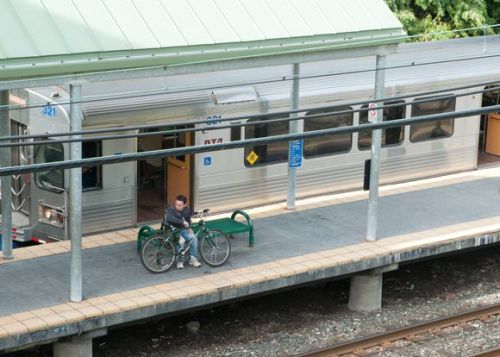
City of Cleveland officials and non-profit leaders are taking notice of how an improved cycling infrastructure can reshape the future of our city for the better. How the city proceeds with a handful or projects could make or break our momentum.

The Northeast Ohio Sustainable Communities Consortium (NEOSCC) has mapped out what our region's future looks like if we stay on the same, urban-sprawl-lovin' course. Spoiler alert: It ain't good.
The group's "Business as Usual" scenario attempts to answer the question, "What will happen over the next 27 years if Northeast Ohio just keeps doing what it has been doing?" using sophisticated mapping.
NEOSCC's predictions include 2.4 percent growth in population and 6.2 percent growth in employment across 12 counties. Yet given our current land use patterns, about 92,500 acres will be used for new development and 77,100 acres will be abandoned.
That means Northeast Ohio is "on pace to abandon 10.5 percent of its housing units by 2040" or "18 units abandoned per day," according to the NEOSCC.
Although NEOSCC will not reveal its recommendations at this point, staff will present four scenarios to the public at open houses in the coming weeks.
These scenarios include "business as usual" (sprawl with limited growth), "doing things differently" (more sustainable development with limited growth), "grow the same" (sprawl with growth at a higher level than is occurring now) and "grow differently" (more sustainable development with greater growth).
After receiving input from residents, NEOSCC will recommend a scenario to the four metropolitan planning organizations that help divvy up transportation dollars for the region and create long-term land use plans. Jeff Anderle of NEOSCC says that the group must create a "shared vision" to be successful with its efforts.
"We're not a governing organization; we don't have implementation power," he says. "It's been tricky, but we've gotten great participation from elected officials throughout the region. There's a lot of 'Let's see how and where this comes out.'"
To participate in the process, Northeast Ohio residents can attend one of the upcoming open houses or check out the Imagine My NEO tool on the website.
Source: Jeff Anderle
Writer: Lee Chilcote
The group's "Business as Usual" scenario attempts to answer the question, "What will happen over the next 27 years if Northeast Ohio just keeps doing what it has been doing?" using sophisticated mapping.
NEOSCC's predictions include 2.4 percent growth in population and 6.2 percent growth in employment across 12 counties. Yet given our current land use patterns, about 92,500 acres will be used for new development and 77,100 acres will be abandoned.
That means Northeast Ohio is "on pace to abandon 10.5 percent of its housing units by 2040" or "18 units abandoned per day," according to the NEOSCC.
Although NEOSCC will not reveal its recommendations at this point, staff will present four scenarios to the public at open houses in the coming weeks.
These scenarios include "business as usual" (sprawl with limited growth), "doing things differently" (more sustainable development with limited growth), "grow the same" (sprawl with growth at a higher level than is occurring now) and "grow differently" (more sustainable development with greater growth).
After receiving input from residents, NEOSCC will recommend a scenario to the four metropolitan planning organizations that help divvy up transportation dollars for the region and create long-term land use plans. Jeff Anderle of NEOSCC says that the group must create a "shared vision" to be successful with its efforts.
"We're not a governing organization; we don't have implementation power," he says. "It's been tricky, but we've gotten great participation from elected officials throughout the region. There's a lot of 'Let's see how and where this comes out.'"
To participate in the process, Northeast Ohio residents can attend one of the upcoming open houses or check out the Imagine My NEO tool on the website.
Source: Jeff Anderle
Writer: Lee Chilcote

Three prominent community development groups in Cleveland have merged, and staffers say the resulting alliance will help strengthen community revitalization efforts across the city, foster more unified advocacy, and allow for greater efficiency in citywide efforts.
Neighborhood Progress Inc. (NPI), a community development intermediary that provides grants and technical assistance to community development corporations (CDCs), has merged with Cleveland Neighborhood Development Coalition (CNDC) and LiveCleveland. CNDC is a trade association of CDCs; LiveCleveland helps to market city neighborhoods.
That might sound like a mouthful of acronyms to the average city resident, but Joel Ratner, President of NPI, says the collaboration really is about improving Cleveland's neighborhoods.
"We'll have a greater ability to coordinate the marketing of neighborhoods along with advocacy, capacity building and all the other things we've traditionally done," he says. "This is really about uniting the strands of community development across the city in a way that's integrated and strategic rather than separate."
For example, says Ratner, CDCs will be able to have a stronger voice in education reform and other efforts that affect the entire city, residents will see an increased marketing presence, and CDC employees will benefit from shared services like healthcare. It adds up to more effective efforts to improve all of Cleveland.
"Our mission is to foster communities of choice and opportunity throughout Cleveland," says Ratner, who acknowledges that NPI will still only have resources to provide core operating support to a subset of city neighborhoods. "There are lots of ways we can play a role in lifting up all CDCs and neighborhoods."
CNDC Director Colleen Gilson says that while the merger idea was far from popular among CDCs at first -- they feared losing their independence -- individual leaders saw the value in fostering a citywide community development network that provides more effective services to all neighborhoods, not just a select few.
The merger will be publicly rolled out in September, with NPI moving into its new offices in the Saint Luke's project at Shaker Boulevard and E. 116th by January.
Source: Joel Ratner
Writer: Lee Chilcote
Neighborhood Progress Inc. (NPI), a community development intermediary that provides grants and technical assistance to community development corporations (CDCs), has merged with Cleveland Neighborhood Development Coalition (CNDC) and LiveCleveland. CNDC is a trade association of CDCs; LiveCleveland helps to market city neighborhoods.
That might sound like a mouthful of acronyms to the average city resident, but Joel Ratner, President of NPI, says the collaboration really is about improving Cleveland's neighborhoods.
"We'll have a greater ability to coordinate the marketing of neighborhoods along with advocacy, capacity building and all the other things we've traditionally done," he says. "This is really about uniting the strands of community development across the city in a way that's integrated and strategic rather than separate."
For example, says Ratner, CDCs will be able to have a stronger voice in education reform and other efforts that affect the entire city, residents will see an increased marketing presence, and CDC employees will benefit from shared services like healthcare. It adds up to more effective efforts to improve all of Cleveland.
"Our mission is to foster communities of choice and opportunity throughout Cleveland," says Ratner, who acknowledges that NPI will still only have resources to provide core operating support to a subset of city neighborhoods. "There are lots of ways we can play a role in lifting up all CDCs and neighborhoods."
CNDC Director Colleen Gilson says that while the merger idea was far from popular among CDCs at first -- they feared losing their independence -- individual leaders saw the value in fostering a citywide community development network that provides more effective services to all neighborhoods, not just a select few.
The merger will be publicly rolled out in September, with NPI moving into its new offices in the Saint Luke's project at Shaker Boulevard and E. 116th by January.
Source: Joel Ratner
Writer: Lee Chilcote

Stormwater run-off can overflow sewers, flood homes, erode roads and streambanks, and pollute our beloved waterways. Northeast Ohio Regional Sewer District is seeking to address these issues with a stormwater management program. Kyle Dreyfuss-Wells, manager of watershed programs for NEORSD, explains what the venture means for the average resident.