
University Circle


Inmates from the Lorain Correctional Institution and CWRU students come together in a course aimed at tackling racism, oppression and the implication of mass incarceration.

Everyday items like head phones, ear buds, even loud music through speakers can damage our hearing. Hair cells and hair bundles in the inner ear receive audio information and transmit it to the brain. When those hair bundles are damaged, hearing loss can occur.
“The hair cells are used to convert sounds to electrical impulses that go the brain,” explains Brian McDermott, associate professor of otolaryngology-head and neck surgery at CWRU School of Medicine. “When sound comes into the ear, the hair bundles, or stereocilia, move back and forth. Loud noises can kill the bundle.”
But now researchers at Case the have discovered that the movement of protein within hair cells of the inner ear shows signs of a repair and renewal mechanism. That recognition means that researchers may be able to find a way to reduce or repair hearing loss, says McDermott. “We hope it gives insight into the important hair cell.”
McDermott and his team are using zebrafish – a transparent fish found in India's Ganges River – to study and better understand the workings of the human ear. “We use zebrafish in our research to study ears because the fish are optically clear,” explains McDermott. “Their hair cells are similar to human hair cells.”
McDermott learned a lot about the human ear from studying the fish. “For a number of years people thought that the hair bundle was a static structure and really didn’t change much over time,” he says. “We showed the hair bundle proteins actually move quite fast. We were shocked. We were surprised to see that movement.””
The discovery gave the researchers hope that there may be a way to cure hearing loss. “The reason that movement is important is it implies that there is a renewal process going on,” says McDermott. “Proteins are exchanging, which might be a repair process.”
The next step is to determine how the hair bundle may repair itself with the protein movement. McDermott and his team will continue to study the process fully in the transparent zebrafish ear. “There are no drugs right now that actually cure hearing loss,” says McDermott. “It’s very much a possibility that when we understand the process, that movement may heal hearing loss.”
The research was published in the Nov. 17 edition of Cell Reports.
“The hair cells are used to convert sounds to electrical impulses that go the brain,” explains Brian McDermott, associate professor of otolaryngology-head and neck surgery at CWRU School of Medicine. “When sound comes into the ear, the hair bundles, or stereocilia, move back and forth. Loud noises can kill the bundle.”
But now researchers at Case the have discovered that the movement of protein within hair cells of the inner ear shows signs of a repair and renewal mechanism. That recognition means that researchers may be able to find a way to reduce or repair hearing loss, says McDermott. “We hope it gives insight into the important hair cell.”
McDermott and his team are using zebrafish – a transparent fish found in India's Ganges River – to study and better understand the workings of the human ear. “We use zebrafish in our research to study ears because the fish are optically clear,” explains McDermott. “Their hair cells are similar to human hair cells.”
McDermott learned a lot about the human ear from studying the fish. “For a number of years people thought that the hair bundle was a static structure and really didn’t change much over time,” he says. “We showed the hair bundle proteins actually move quite fast. We were shocked. We were surprised to see that movement.””
The discovery gave the researchers hope that there may be a way to cure hearing loss. “The reason that movement is important is it implies that there is a renewal process going on,” says McDermott. “Proteins are exchanging, which might be a repair process.”
The next step is to determine how the hair bundle may repair itself with the protein movement. McDermott and his team will continue to study the process fully in the transparent zebrafish ear. “There are no drugs right now that actually cure hearing loss,” says McDermott. “It’s very much a possibility that when we understand the process, that movement may heal hearing loss.”
The research was published in the Nov. 17 edition of Cell Reports.

Bike Cleveland has teamed up with the Cuyahoga County Department of Sustainability to secure 250 bikes for a bike sharing program in time for the Republican National Convention next July. The move is part of a larger countywide initiative.
"Over five years we need 700 bikes in 70 stations," explains Mike Foley, executive director of Cuyahoga County's Department of Sustainability.
In order to get started on that tall order, last month the team identified CycleHop-SoBi as the preferred vendor for the new bike share system. Negotiations are ongoing, although Northeast Ohio Areawide Coordinating Agency (NOACA) awarded the county $357,000 in federal funding to bring the plan to fruition. With 20 percent in matching funds, the group has $446,000 available to purchase the bikes.
"The federal government requires us to own these things at least for their usable life," explains Foley, "which is deemed five years." The program in its entirety will cost more, he adds, and will depend on a private-public partnership that relies on business and other private sponsors adopting stations and systems. Downtown will be the initial focus area for the first wave of bike stations.
The CycleHop-SoBi brand is a collaboration of two entities.
"CycleHop operates the system,"explains Foley. "SoBi manufactures the bikes," which he describes as sturdy and equipped with GPS systems. "Heaven forbid a bike is stolen or not returned," he says, "they'll be able to find it. It also helps figure out routes. They call it a smart bike. We were impressed with technology."
The bikes can also be locked anywhere.
"You don't have to go to a SoBi bike station," says Foley. "You can lock it up at regular bike stop and go get your coffee."
The versatility doesn't stop there. Although still tentative, Foley sees the program having flexible membership options, with yearly, monthly and weekly fee structures available, as well as an hourly rental system for one-time users.
As the program expands to reach that 700 number, Foley sees it reaching across the county.
"There are suburban communities that I know are interested in this. Cleveland Heights is chomping at the bit to be part of it," he says, adding that Lakewood has also expressed interest.
"We want this to be larger than just the city of Cleveland."
"Over five years we need 700 bikes in 70 stations," explains Mike Foley, executive director of Cuyahoga County's Department of Sustainability.
In order to get started on that tall order, last month the team identified CycleHop-SoBi as the preferred vendor for the new bike share system. Negotiations are ongoing, although Northeast Ohio Areawide Coordinating Agency (NOACA) awarded the county $357,000 in federal funding to bring the plan to fruition. With 20 percent in matching funds, the group has $446,000 available to purchase the bikes.
"The federal government requires us to own these things at least for their usable life," explains Foley, "which is deemed five years." The program in its entirety will cost more, he adds, and will depend on a private-public partnership that relies on business and other private sponsors adopting stations and systems. Downtown will be the initial focus area for the first wave of bike stations.
The CycleHop-SoBi brand is a collaboration of two entities.
"CycleHop operates the system,"explains Foley. "SoBi manufactures the bikes," which he describes as sturdy and equipped with GPS systems. "Heaven forbid a bike is stolen or not returned," he says, "they'll be able to find it. It also helps figure out routes. They call it a smart bike. We were impressed with technology."
The bikes can also be locked anywhere.
"You don't have to go to a SoBi bike station," says Foley. "You can lock it up at regular bike stop and go get your coffee."
The versatility doesn't stop there. Although still tentative, Foley sees the program having flexible membership options, with yearly, monthly and weekly fee structures available, as well as an hourly rental system for one-time users.
As the program expands to reach that 700 number, Foley sees it reaching across the county.
"There are suburban communities that I know are interested in this. Cleveland Heights is chomping at the bit to be part of it," he says, adding that Lakewood has also expressed interest.
"We want this to be larger than just the city of Cleveland."


MOCA, Cleveland's Museum of Contemporary Art, continually stretches art far beyond the canvas, but the internationally revered icon started out as a tiny bastion of counterculture during the tumultuous 60s.

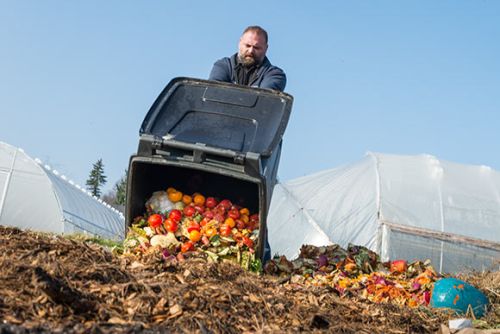
The concept of saving compostable food from landfills, and instead putting it to good use, is a notion that is starting to catch on in Northeast Ohio.

As a biomedical engineering graduate student at CWRU, Punkaj Ahuja was working in 2010 on applications for a core sensor his team was developing.
Then the idea for a rapid blood test using the same technology came to him. By October 2014, he had formed Apollo Medical Devices – a company that is developing a low-cost, accurate and rapid blood analysis system.The company has offices at BioEnterprise.
“Our device uses rapid blood testing technology with a single drop of blood in just five minutes,” explains Apollo CEO Patrick Leimkuehler. “It delivers when time matters most – in the ER, the ICU and the OR.”
The Apollo system uses a single drop of blood to get basic metabolic panel, or CHEM-7, results in minutes. The test measures various basic levels like glucose, sodium, creatinine and potassium to diagnose illness and determine treatments. Other tests require a blood draw and take up to two hours for results.
“I was working on another project using the same sensor technology and a group of us were in a room brainstorming,” recalls Ahuja. "We were discussing what else we can do with this sensor technology – with its low cost and rapid results.”
After talking to a physician, Ahuja was convinced they had to develop their product. “That’s what pushed us toward the test itself,” he says. “Once it was ingrained in our minds, a lot of work and a bunch of labs tests began to get this into the real world.”
While the Apollo device is still in the development stage, Ahuja and Leimkuehler plan to have the product to market by 2017. Apollo plans to market the device primarily to hospitals’ emergency departments, intensive care units and operating rooms. Once launched, Leimkuehler says Apollo plans to expand and target primary care doctors and the home health care markets.
Last summer, Apollo Medical Devices won the $20,000 grand prize in JumpStart’s Startup Scaleup NEO Up-and-Comers Pitch Competition. The company has also received funding from the Northeast Ohio Innovation Fund, CWRU’s Case-Coulter Translational Research Partnership and Ohio’s Third Frontier Technology Validation and Start-up Fund.
Then the idea for a rapid blood test using the same technology came to him. By October 2014, he had formed Apollo Medical Devices – a company that is developing a low-cost, accurate and rapid blood analysis system.The company has offices at BioEnterprise.
“Our device uses rapid blood testing technology with a single drop of blood in just five minutes,” explains Apollo CEO Patrick Leimkuehler. “It delivers when time matters most – in the ER, the ICU and the OR.”
The Apollo system uses a single drop of blood to get basic metabolic panel, or CHEM-7, results in minutes. The test measures various basic levels like glucose, sodium, creatinine and potassium to diagnose illness and determine treatments. Other tests require a blood draw and take up to two hours for results.
“I was working on another project using the same sensor technology and a group of us were in a room brainstorming,” recalls Ahuja. "We were discussing what else we can do with this sensor technology – with its low cost and rapid results.”
After talking to a physician, Ahuja was convinced they had to develop their product. “That’s what pushed us toward the test itself,” he says. “Once it was ingrained in our minds, a lot of work and a bunch of labs tests began to get this into the real world.”
While the Apollo device is still in the development stage, Ahuja and Leimkuehler plan to have the product to market by 2017. Apollo plans to market the device primarily to hospitals’ emergency departments, intensive care units and operating rooms. Once launched, Leimkuehler says Apollo plans to expand and target primary care doctors and the home health care markets.
Last summer, Apollo Medical Devices won the $20,000 grand prize in JumpStart’s Startup Scaleup NEO Up-and-Comers Pitch Competition. The company has also received funding from the Northeast Ohio Innovation Fund, CWRU’s Case-Coulter Translational Research Partnership and Ohio’s Third Frontier Technology Validation and Start-up Fund.


Matthew Jackson traveled to Cleveland from the UK this past summer to get an idea of US cities' economic redevelopment efforts. He shares his impressions and compares Cleveland to the UK.


Doctors, researchers, pharmaceutical companies and the public will gather to discuss major issues around disorders of the brain and nervous system at Cleveland Clinic Innovations' Medical Innovation Summit October 25th-28th.

The Cuyahoga River's watershed extends south to Stark County. While the infamous fire of 1969 has faded, the river is still troubled, but efforts both natural and beautiful are underway to turn the tide.

While Cleveland's urban core is seeing an increase in educated young professionals, neighborhoods are also diversifying and families are moving to the suburbs.

This weekend, explore IngenuityFest, check out Walk All Over Waterloo, get cultured at International Cleveland Community Day at CMA, view short films at Ohio City Film Festival and more.

For 14 years Christie Murdoch has called Tremont home to her eclectic boutique Banyan Tree – selling unique clothing, jewelry, accessories and gifts to loyal customers. Last October, The Banyan Box became one of the first tenants of Small Box Cleveland – a market of shops in renovated shipping containers.
Now, Murdoch is moving east and about to open her third Banyan Tree store at 11440 Uptown Alley in University Circle’s Uptown. “I feel like it’s a fresh and new area that people are just hearing about, just learning about,” says Murdoch of the location. “There’s a mixture of people coming here, and it’s different than Tremont.”
Murdoch wasn’t actively looking for a third location, but Uptown felt right. “I looked at spaces over the years, but it wasn’t right,” she says. “Then this came along and we were open to it. It turned out really nice. It has the same feel as Tremont, but more modern.”
The Tremont Banyan Tree has a solid East Side customer base, Murdoch says, but having an east side location will add to it. “Our east side customers are very loyal, but I think they’d come here more. And we love that we’re staying in the City of Cleveland.”
The Uptown store will carry similar items as the Tremont location, but Murdoch will adapt as needed. “In the beginning we will have very similar things,” she says. “Then, when we figure out who our client base is, we will bring in more items. We want to get to know our clients first, get feedback, then go from there.” The store will also showcase work from local artists and designers.
Murdoch grew up in retail – her mother owned a seasonal store – but didn’t initially intend to go into retail herself until she came across an empty storefront in 2001. “I had graduated from college and was looking for a job when I saw this space in Tremont,” she recalls. “And I decided I could do it.”
Fourteen years later, the Banyan Tree is one of Cleveland’s prized stores for shoppers looking for something a little different.
The Uptown location opens Thursday, October 8 with an opening night party at 6p.m with food, drinks and shopping exclusives. Regular store hours are Monday through Wednesday from 11am to 7pm, Thursday through Sunday from 11am to 9pm and Sunday 11am to 4pm.
Now, Murdoch is moving east and about to open her third Banyan Tree store at 11440 Uptown Alley in University Circle’s Uptown. “I feel like it’s a fresh and new area that people are just hearing about, just learning about,” says Murdoch of the location. “There’s a mixture of people coming here, and it’s different than Tremont.”
Murdoch wasn’t actively looking for a third location, but Uptown felt right. “I looked at spaces over the years, but it wasn’t right,” she says. “Then this came along and we were open to it. It turned out really nice. It has the same feel as Tremont, but more modern.”
The Tremont Banyan Tree has a solid East Side customer base, Murdoch says, but having an east side location will add to it. “Our east side customers are very loyal, but I think they’d come here more. And we love that we’re staying in the City of Cleveland.”
The Uptown store will carry similar items as the Tremont location, but Murdoch will adapt as needed. “In the beginning we will have very similar things,” she says. “Then, when we figure out who our client base is, we will bring in more items. We want to get to know our clients first, get feedback, then go from there.” The store will also showcase work from local artists and designers.
Murdoch grew up in retail – her mother owned a seasonal store – but didn’t initially intend to go into retail herself until she came across an empty storefront in 2001. “I had graduated from college and was looking for a job when I saw this space in Tremont,” she recalls. “And I decided I could do it.”
Fourteen years later, the Banyan Tree is one of Cleveland’s prized stores for shoppers looking for something a little different.
The Uptown location opens Thursday, October 8 with an opening night party at 6p.m with food, drinks and shopping exclusives. Regular store hours are Monday through Wednesday from 11am to 7pm, Thursday through Sunday from 11am to 9pm and Sunday 11am to 4pm.