A different perspective: ‘Improper Frames’ looks beyond Cleveland’s property data
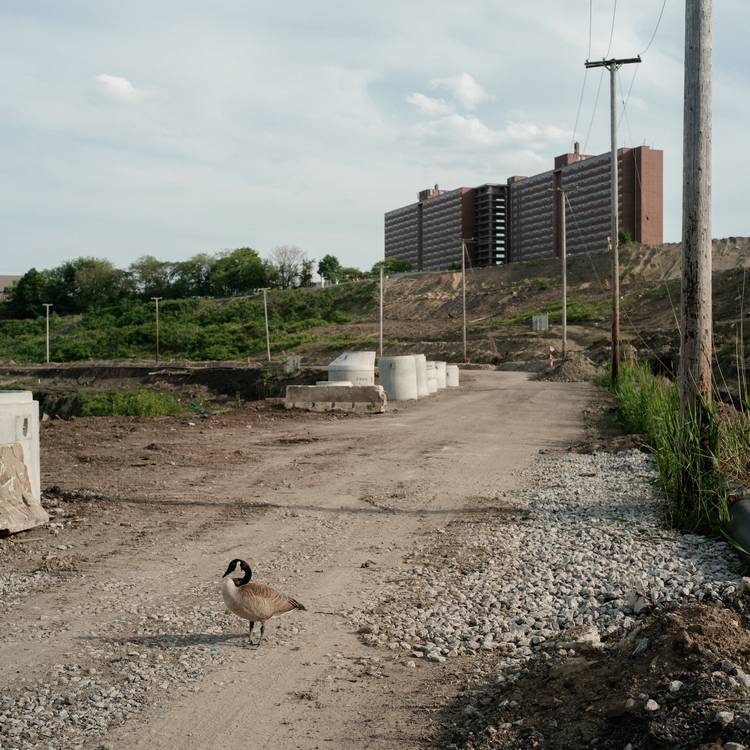
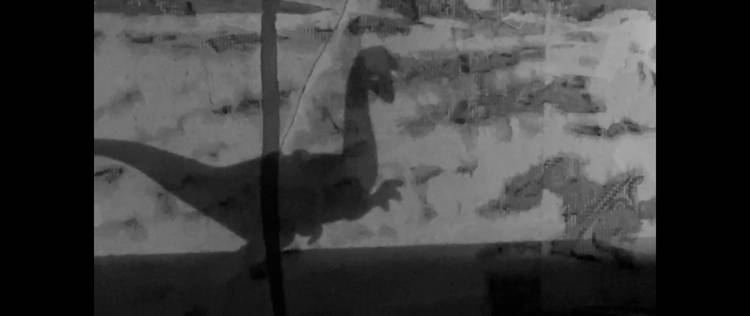
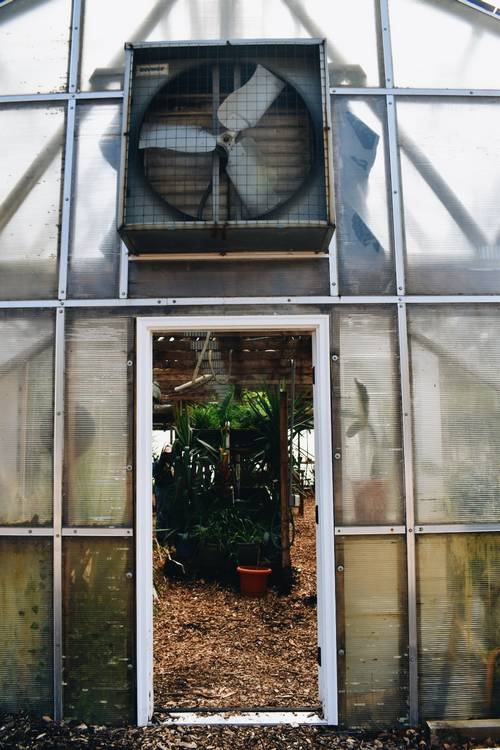 Breathe of the Green HouseIn 2022 and 2023, teams of surveyors walked every street in Cleveland—more than 1,400 miles over six months—photographing and cataloging approximately 162,000 property parcels and buildings across the city.
Partnering with Western Reserve Land Conservancy, the surveyors were armed with tablets and survey applications to document conditions and create a complete property inventory to identify code problems and areas for potential rehabilitation funding.
For architect and educator Theodossis Issaias, however, the massive undertaking raises a fundamental question: What happens when a city reduces itself to data points?
Issaias attempts to answer this question as curator of "Improper Frames," on view through May 10 at the Cleveland Museum of Art's Transformer Station center for the visual and performing arts in Ohio City’s Hingetown neighborhood.
“Property inventories do more than document space,” he says. “They translate lived environments into parcels, conditions, and use codes that can be compared, ranked, and acted upon.”
In addition to his work on “Improper Frames,” Issaias is curator of the Carnegie Museum of Art Heinz Architectural Center and special faculty at Carnegie Mellon University School of Architecture in Pittsburgh. His research focuses on architecture at the intersection of human rights, conflict and the provision of shelter.
Presented in partnership with Cleveland Print Room, “Improper Frames” brings together six artists who offer a counter-narrative to the city's official inventory.
Photographers Amber N. Ford, Jon Gott, Michael Indriolo, Da’Shaunae Marisa, Vivica Satterwhite, and Alejandro Vergara reveal in their works what escapes administrative description: The memories embedded in vacant lots, the rivers that flow without regard for property lines, and the shadows of joy that linger in spaces marked for demolition.
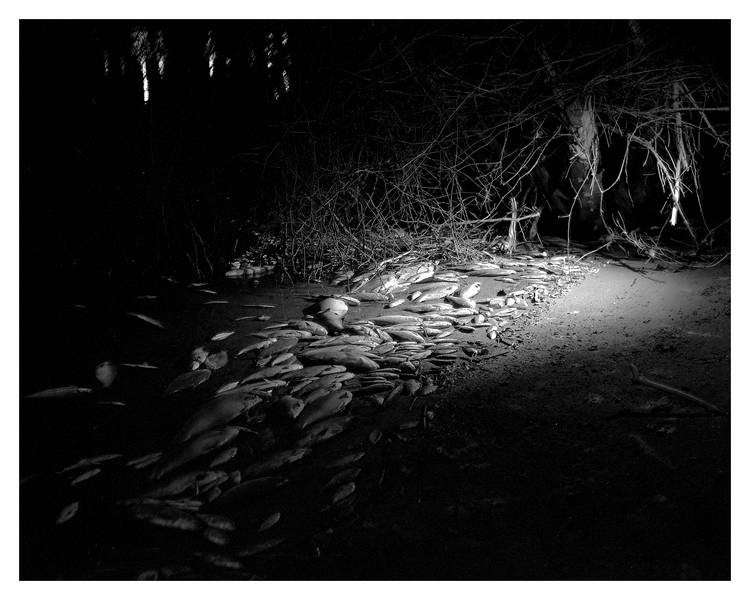 Untitled 21Beyond the frame
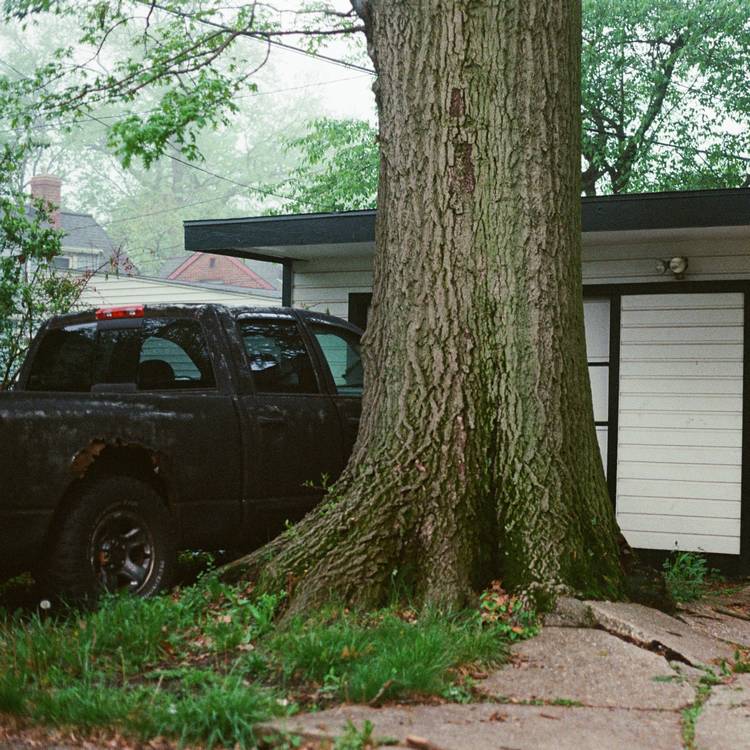
The city's property inventory used photography as verification—visual evidence to support numeric assessments and spatial metrics. Cleveland Print Room director Kerry Davis notes that these images reveal as much about the process of documentation as the properties themselves.
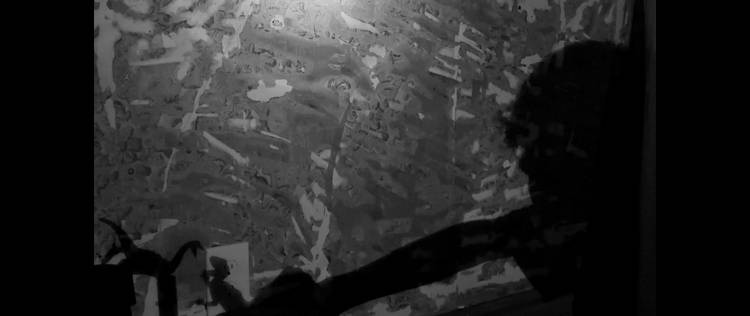
"Surveyors' shadows slip into frame. Windows glare white. Focus drifts. Fingers obscure lenses," Davis observed. "They are not evidence of conditions so much as evidence of the conditions under which evidence is produced."
This recognition sparked the Cleveland Print Room's response. The organization, which provides affordable access to darkroom facilities and supports local photographers, saw an opportunity to complicate the official narrative.
“When the city of Cleveland, working with several nonprofit partners, launched this comprehensive property inventory,” Issaias recalls, “we began asking what it might mean for Cleveland Print Room to take on a parallel role: not simply documenting the city, but asking questions about the very process of documenting it.”
The resulting exhibition emerged from an open call to artists and months of collaborative workshops, walks through the city, and gatherings that brought artists together to think about what Issaias calls "a type of a counter inventory, an inventory that is actually about the people and the city and less about the econometric [decisions] than development decisions that cities using those data."
Six perspectives, one city
The six photographers share a common thread, says Issaias. “The participating artists share a deep understanding of Cleveland and a profound emotional and embodied investment in the city and the ways it functions.”
For instance, Marisa's project exemplifies this intimate approach, using her experiences growing up in Cleveland and tracing them across generations.
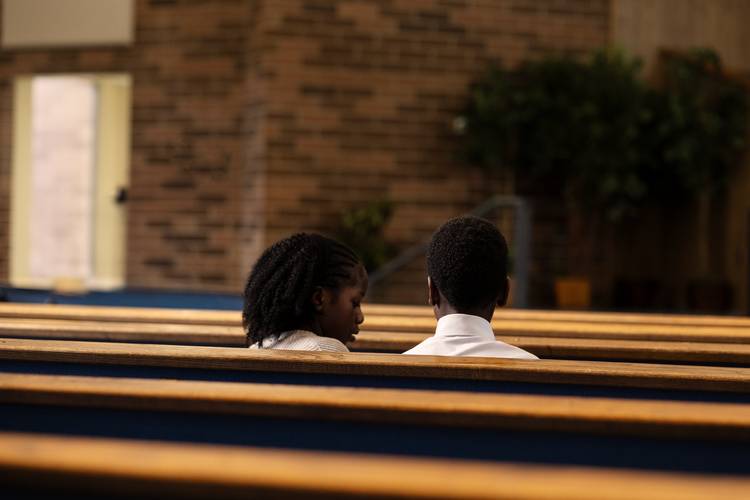
“Da’Shaunae Marisa has created an extraordinary project that traces the story of Black life and Black joy in Cleveland, while also confronting the ways demolition, redevelopment, and displacement have attempted to erase those conditions of life from the city.”
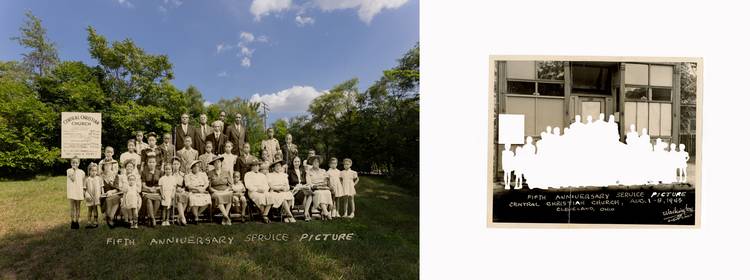
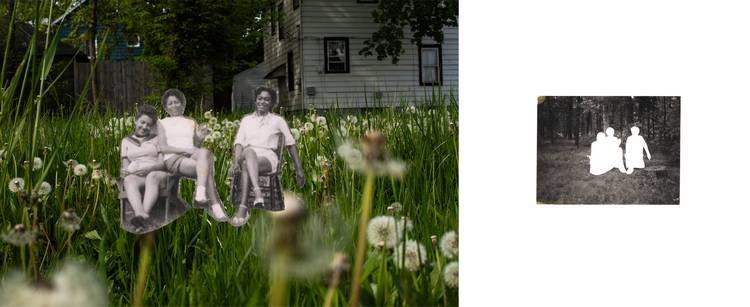
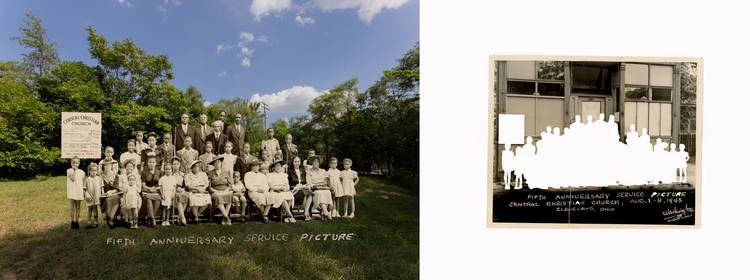 Central ChurchMarisa finds vernacular photographs—historical images of cosmetology schools, churches, parties, and living rooms—then visits the sites where they were taken, now often vacant lots. She superimposes the figures from those archival photos onto the empty land.
“The work reminds us that this land is not vacant,” observes Issaias. “It carries memories—traces, even apparitions—of the people and communities who once lived there.”
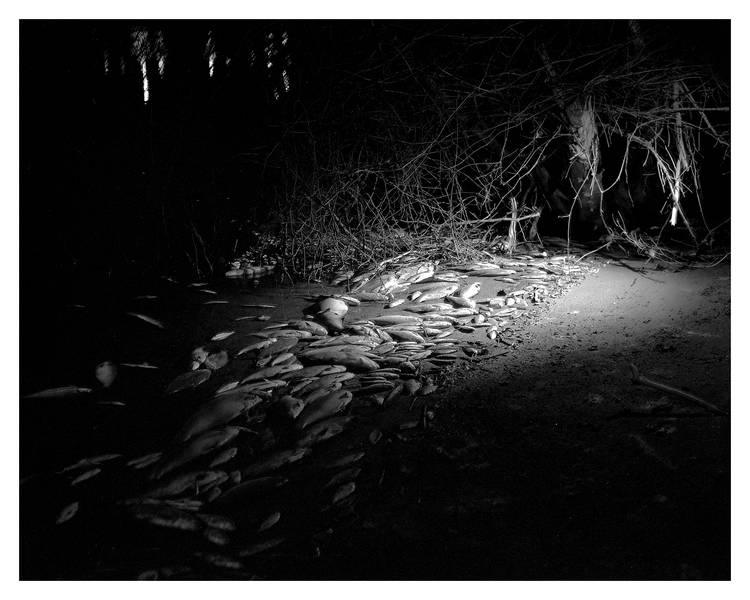
Michael Indriolo takes a different approach, focusing on the Cuyahoga River—an element entirely absent from property inventories because, as Issaias notes, "it's not property—so what do you inventory?”
Indriolo, a photojournalist who grew up in Cleveland, weaves personal memories of playing along the river as a child with broader environmental histories, including the famous fires that helped spark national environmental regulations.
“The river cannot be captured through a property inventory,” he explains. “It does not belong to a parcel, and it cannot be easily categorized or measured through the administrative logic of property.”
Limits of objectivity
At the heart of "Improper Frames" lies a challenge to the supposed objectivity of administrative documentation. The official property inventory presents itself as factual, but Issaias argues it reveals more about the process of evidence-gathering than the city itself.
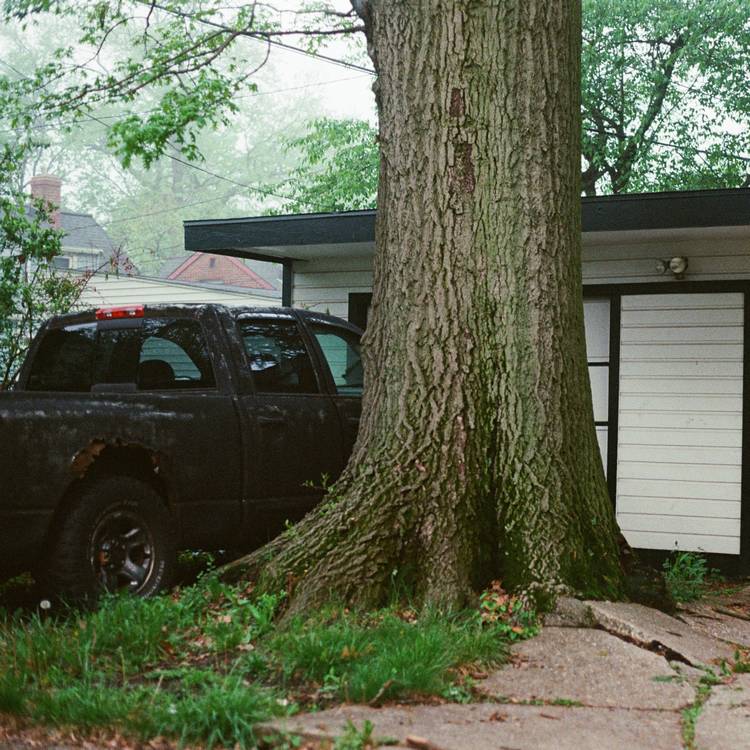 Dyptich“In many of the survey photographs you can see the shadow of the surveyor—sometimes a finger slips into the lens; sometimes weather conditions blur the image,” Issaias explains. “These traces reveal the human and environmental circumstances of data collection. Yet the entire apparatus is presented as objective.”
He says the inventory extends beyond photography to the broader question of how cities understand themselves.
“In many ways, the property inventory reinforces the structures that already exist in the city,” Issaias says. “What about the river? What about the forms of life that do not conform to the human-made divisions imposed on urban space?”
A platform for co-creation
As an architect who also works in the museum field, “I approached the exhibition as a platform for co-creation,” says Issaias. “Rather than arriving with predetermined answers, I began with questions about the process of property inventories, how they render cities legible, and what the implications of that legibility might be.”
The collaborative process included reading sessions, city walks, and a gathering at Oasis, a community urban farm, where participants had conversations with urban farmers about vacant property and more equitable approaches to land use. "The project was enriched by all those conversations," Issaias reflected.
This open-ended approach reflects the exhibition's broader goals. Rather than providing definitive answers, "Improper Frames" is meant to spark conversation and encourage visitors to "think differently about the immediacy of their environment," says Issaias.
 Brown FamilyBeyond documentation
What Issaias and Davis deem "improper frames” are not necessarily errors, but rather are openings—ways of accounting for a city that cannot be fully contained by the documents that seek to define it.
The works reveal the inadequacy of administrative tools to capture urban life in its full complexity.
By exposing the subjectivity behind supposedly objective documentation, Issaias argues the exhibition opens space for more inclusive ways of understanding—and planning—cities.
"Improper Frames" continues at the Transformer Station, 1460 W. 29th Street in Hingetown, through Sunday, May 10. The free exhibit is open Thursdays, Saturdays, and Sundays from 12 p.m. to 6 p.m., and Fridays from 12 p.m. to 8 p.m.