Accelerating ideas: Duo to pitch ‘Concrete Quilt’ to combat HIV crisis through public art
.jpg)
<
On Thursday, Feb. 26, the Cleveland Leadership Center will host its 12th Accelerate pitch competition. With 35 presenters pitching 26 unique and innovative ideas, the FreshWater Cleveland staff decided to talk to just a few select entrepreneurs about their visions to make Cleveland a better place to live, work, play, and visit in hopes of winning funding and making invaluable connections to bring their ideas to life. Today, we talk to Erin Benay and Ken Schneck about their concept for an AIDS awareness public art installment at Edgewater Park, “The Concrete Quilt.”
Two friends are bringing together art history expertise and LGBTQ advocacy to address a growing public health crisis through a public art project called "Cleveland's Concrete Quilt"— a public memorial and awareness project that commemorates people lost to HIV/AIDS while sharing current information about prevention and testing.
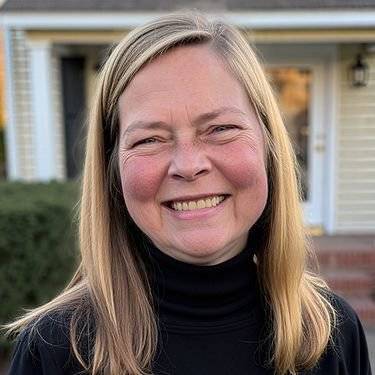
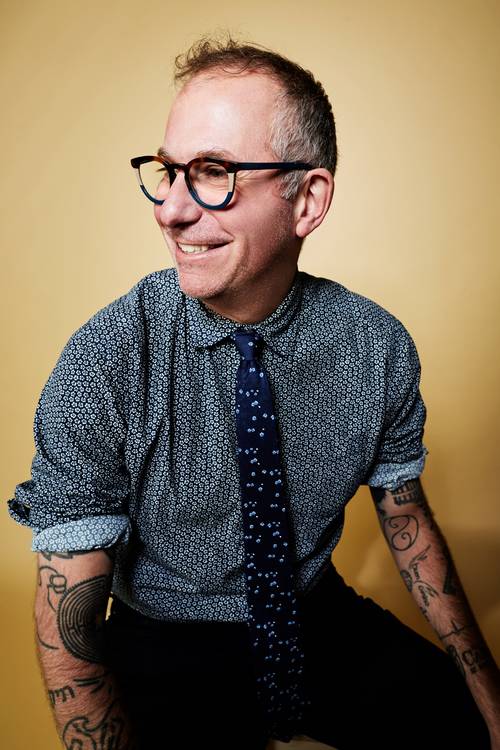
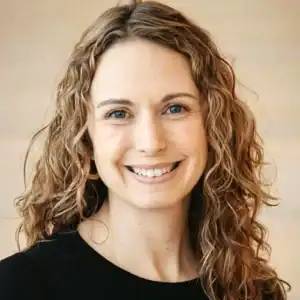
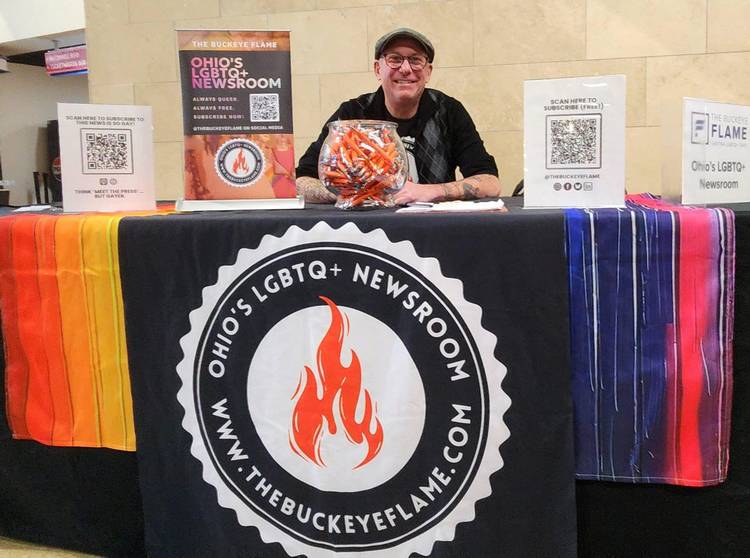
 Ken SchneckJournalist Ken Schneck, who is editor of The Buckeye Flame and has covered Cleveland's civic initiatives for years, and Erin Benay, an art history professor at Case Western Reserve University (CWRU), developed a proposal that combines AIDS awareness with community-driven public art—addressing what Benay and Schneck describe as an urgent and growing problem in Cleveland.
Modeled after the NAMES Project AIDS Memorial Quilt, their project invites community members to paint 3’ x 6’ panels in memory of loved ones. They will pitch their project at the Cleveland Leadership Center's Accelerate: Citizens Make Change competition on Thursday, Feb. 26 at Huntington Convention Center.
"Cleveland has been cited as one of those nexus places of needing more attention to reduce the rates of HIV," Schneck explains. "It's also one of the reasons that the local chapter of ACT UP [AIDS Coalition to Unleash Power] has had to reconvene here in Cleveland after being dormant for 20 years."
Up to 80 “quilt” panels will be installed together in an underpass near Edgewater Park, creating a large-scale, accessible outdoor art installation. Additionally, Benay and Schneck say they will have interpretive panels at the site that will offer information about HIV testing and PrEP (Pre-Exposure Prophylaxis).
The pair say the project will include a limited-edition screenprint designed by Zygote Press, with on-site printing opportunities and distribution through public libraries. The initiative concludes with a free, downloadable guide to support replication of the project in other communities.
 Erin BenayScaling up
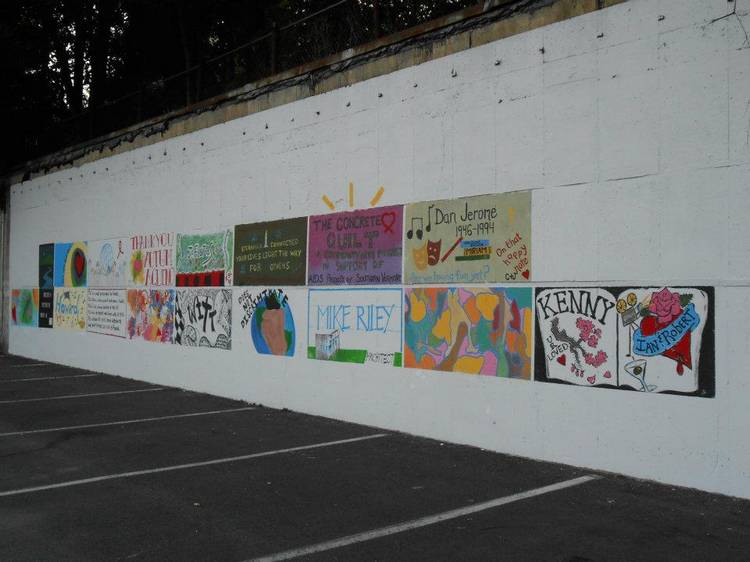
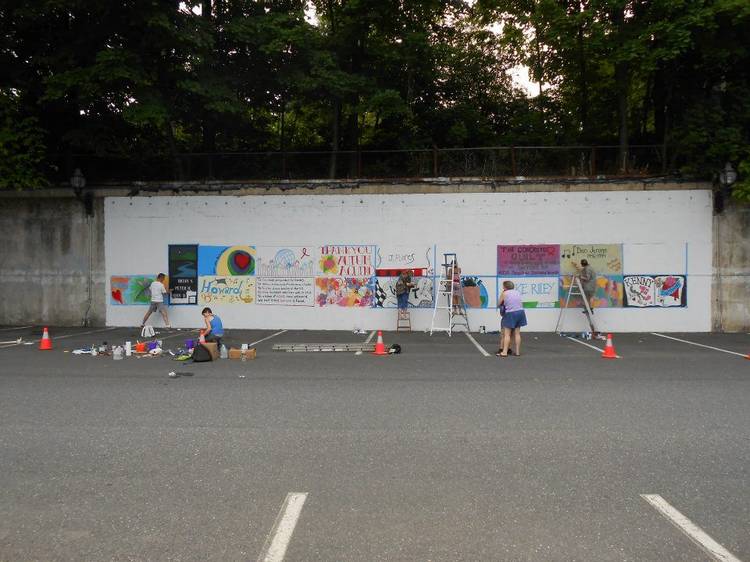
Schneck says this Concrete Quilt project is similar to a project he worked on in Brattleboro, Vermont, when more than 20 community artists painted a Concrete Quilt for 25th anniversary of AIDS Memorial Quilt.
He says the Cleveland version will scale up the concept and serve a much larger urban LGBTQ community in Northeast Ohio.
"When I did this in Vermont, it literally was just putting up a Facebook post and saying, ‘we're taking over this wall in this parking lot to paint these panels of the quilt’—there wasn't a lot of intentionality behind it," he recalls. "One of the many great things that Erin brings to this is much more intentionality about how you approach public art."
Schneck says the Edgewater Park tunnel was chosen for its historical significance to the city's LGBTQ community.
"The earliest documented Prides, with the first couple in 1973... were in Edgewater Park,” he says. “Edgewater Park, in particular, has this really close tie to the LGBTQ community."
Benay brings an art historical perspective that emphasizes the power of participatory public art over passive monuments.
"I think that a lot of studies have shown that blasting people with educational facts isn't always particularly effective,” she argues. “The same thing is true of public art: If you just decorate public spaces with pretty things, people don't really feel all that invested in them."
Taking an historical stand
The Concrete Quilt project holds some urgency, Benay and Schneck say, an urgency that stems from multiple converging factors. They say research shows millennials are the least knowledgeable generation about HIV and AIDS, while healthcare providers often lack fluency in current prevention practices like PrEP.
"Pre exposure prophylaxis, if taken regularly, eliminates HIV [and its transmission] with over a 99% certainty,” Schneck explains. “But that also presupposes that [people’s] healthcare providers know about PrEP, which we've learned that not all of them do."
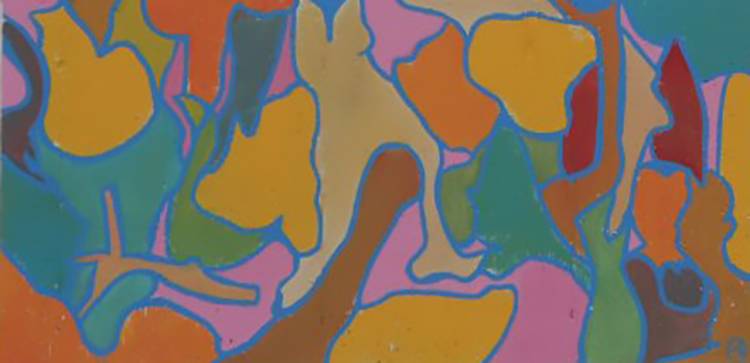
 One of the quilt panels on the first Concrete Quilt in Vermont, commemorating the 25th anniversary of the AIDS Quilt.Additionally, Schneck says the timing for this project is particularly critical, given recent moves to remove LGBTQ public art around the country.
“[In August], the Rainbow crosswalk outside the Pulse Memorial in Orlando was removed,” he cites as an example. “Florida is... pretty dead set on removing rainbow related art."
Benay compares the Concrete Quilt project to broader historical patterns of public art and social movements.
"The creation of public art and monuments is really essential to how people create and memorialize history and moments in that history,” she says. “Public monuments and public art can be used to foster social change, but they can also be used to silence and erase people and their experiences."
While the Edgewater Concrete Quilt format would follow the dimensions of the National Memorial Names Project quilt, it would differ in that it would allow for the creation of panels that community members can paint collaboratively.
The 2026 project would also incorporate modern elements like QR codes, downloadable PDFs, and a limited edition poster series to extend its reach beyond the physical installation.
Benay adds that Cleveland's history with community-driven public art provides a strong foundation for their project.
"In 1973, the National Endowment for the Arts gave the City of Cleveland a big grant for a project called City Canvases to put up murals throughout the city that would help to like rejuvenate neighborhoods, build community and enfranchisement among under-resourced communities," she explains.
The movement continues
Benay and Schneck say their project has potential champions, including former Ward 15 Cleveland City Council member Matt Zone, whose personal connection to the AIDS crisis has made him a longtime supporter of such initiatives.
.jpg) More than 20 community artists in Vermont painted a 'Concrete Quilt' to commemorate the 25th anniversary of The Names Project - AIDS Memorial Quilt."His brother died due to complications relating to AIDS, and so he's been a champion,” Schneck says. “We've actually been batting this idea around since Matt has been in office.”
More than 20 community artists in Vermont painted a 'Concrete Quilt' to commemorate the 25th anniversary of The Names Project - AIDS Memorial Quilt."His brother died due to complications relating to AIDS, and so he's been a champion,” Schneck says. “We've actually been batting this idea around since Matt has been in office.”
Ironically, Schneck’s original Vermont installation faces erasure. "Brattleboro, Vermont has removed that mural,” Schneck says. “If it hasn't been painted over already, it's about to be painted over. It's just amazing how, even this thing that we created to be a remembrance, has been eliminated."
Benay says their current project represents a continuum of art-based HIV/AIDS advocacy dating back to the 1980s.
"HIV and AIDS advocacy has always, since the 1980s, been connected with public art efforts,” she says. “Advocacy has always been, historically, since this public health crisis began, connected with the power of art to affect social change."
The collaborators say they see their project as both timely intervention and historical preservation, creating space for community engagement while educating a generation that may know little about ongoing HIV/AIDS realities.
As they prepare for the Accelerate pitch competition, they're hoping to demonstrate that public art can serve as both memorial and call to action in addressing persistent public health challenges.
Tickets are on sale now for Accelerate 2026 on Thursday, Feb. 26 from 4 p.m. to 8:30 p.m. at Huntington Convention Center.