Ancient fires: African pyre discovery adds another chapter to CMNH’s research legacy


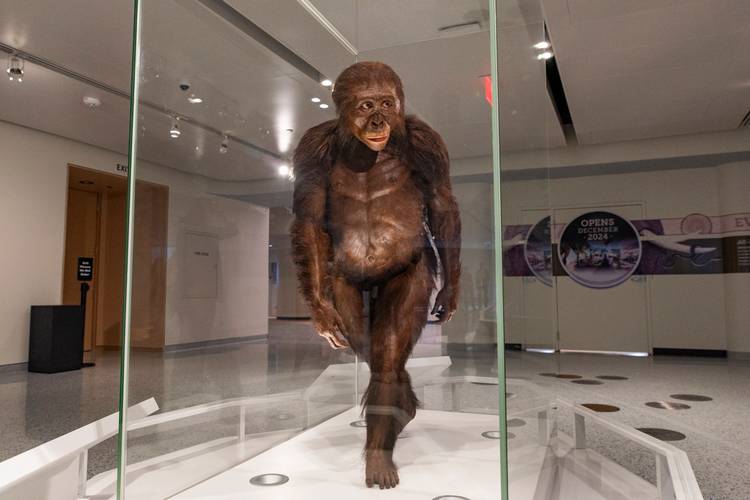
The Cleveland Museum of Natural History (CMNH) has been educating residents about human evolution for more than a century. Almost everyone who has been to the museum knows Cleveland’s favorite Australopithecus afarensis, Lucy, discovered more than 50 years ago and a permanent CMNH resident.
CMNH remains a cornerstone for new research that further illuminates humanity’s long, arduous and fascinating inception—most recently with studies that illuminate ancient cremation rituals.
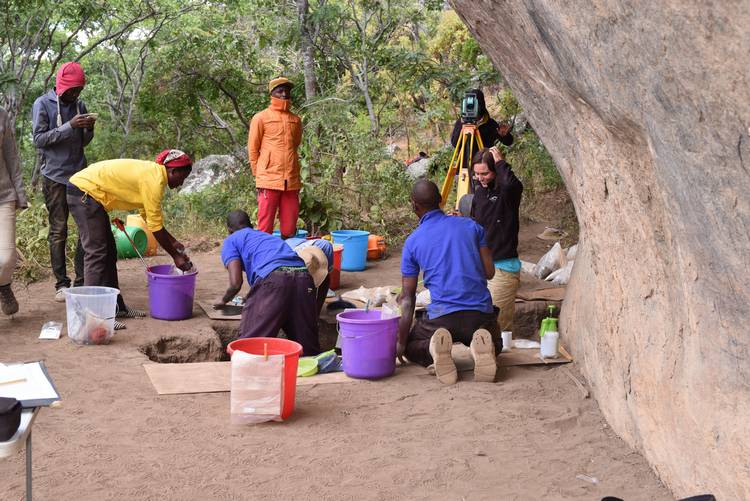
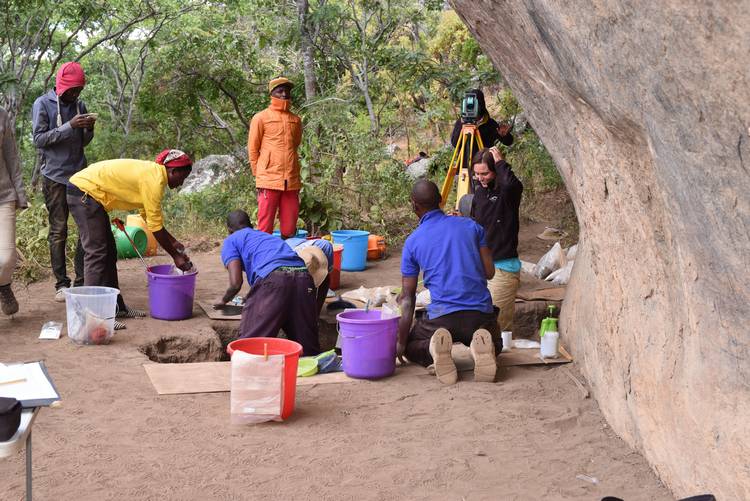 The excavation site in the Mount Hora region.Bioarchaeologist and CMNH curator of human evolution Elizabeth “Ebeth” Sawchuk recently co-led a study that details the earliest evidence of cremation in Africa. According to a research study co-authored by Sawchuk in the journal Science Advances, hunter-gatherers cremated a small woman in an open pyre—providing a frozen-in-time look into how ancient people honored their dead.
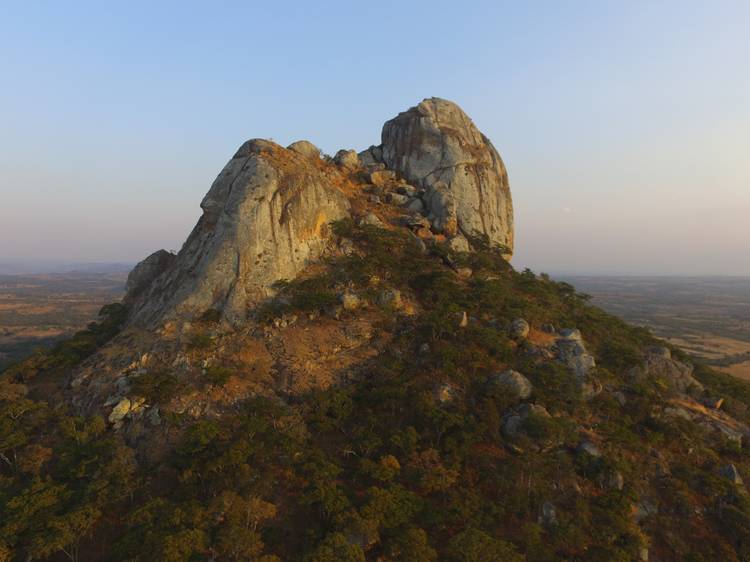
The cremation site is at the base of Mount Hora, a prominent natural outcropping in northern Malawi—think Pride Rock from “The Lion King” movie. Dating back 9,500 years, the site represents the world's oldest undisturbed pyre built for an adult.
Sawchuk partnered with a group of international scholars on the discovery, performing analysis of human remains from photos. Analysis of 170 bone fragments excavated from the site revealed the remains of an adult woman who was under five feet tall and between 18 and 60 years old. Particular thermal patterns on the bones confirmed that the body was likely cremated prior to decomposition.
The pyre, approximately the size of a queen bed, exhibited no evidence of anyone else being cremated before or after the woman. Building the fire required gathering piles of grass and deadwood for a blaze that likely reached a temperature of over 900 degrees Fahrenheit.
A gruesome discovery, yet a remarkable one, due to the effort and innovation involved, notes Sawchuk.
“It’s like something from a ‘Vikings’ show,” observes Sawchuk. “It’s hard to burn a body, and you need a lot of fuel to burn a body to ash. You also have to concentrate the heat of the fire.”
More than meets the eye
The African find joins the discovery of an 11,500-year-old pyre in Alaska, erected for a three-year-old child. Burned human remains entered the scene 40,000 years ago in Australia as well, but it took additional millennia for purposefully built structures to appear, says Sawchuk.
 CMNH associate curator of human evolution Dr. Elizabeth “Ebeth” SawchukThe Malawi pyre site, known as Hora 1, was used as an all-encompassing hunter-gatherer burial ground. On-site research from project lead Jessica Thompson, an assistant professor of anthropology at Yale University, showed that people first inhabited the site about 21,000 years ago.
Further study of fully complete skeletons revealed the grounds’ role as a makeshift cemetery as far back as 16,000 years ago, according to Jessica Cerezo-Román, the report’s lead author and associate professor of anthropology at University of Oklahoma.
Following excavations at Hora 1, Thompson sent the pyre remains and associated samples to
the U.S. for study, assuring researchers that they would eventually be returned to Malawi.
Meticulous archaeological, forensic, and bioarchaeological methods—including microscopic examination of burned bone and pyre sediments—proved that the social behaviors of African foragers were more complex than previously thought.
“It takes labor to do this, and people didn’t think this was in the repertoire of ancient hunter-gatherers, so that’s a big finding,” Sawchuk argues. “It breaks down stereotypes of these people being simple and just fighting for their lives.”
The cremation study comes at an exciting time for CMNH, recently named among the top five museums in the country in a USA TODAY reader poll.
“Earning a top five national ranking is an extraordinary honor for the museum,” said CMNH president and CEO Sonia Winner in a press release. “Our transformation was guided by a commitment to science, sustainability, and community impact, and we’re proud to see that reflected on a national stage.”
The pyre discovery is the latest milestone for a global leader in decoding the human experience, says Sawchuk.
“We get to sit in our offices and think about these big scientific questions,” she says. “The study shows the space and support we have from the museum, and the legacy of research here.”