Art meets AI: Cleveland Museum of Art reimagines ArtLens experience in third iteration
Since its 1916 opening, the Cleveland Museum of Art (CMA) has upheld its founding motto, “for the benefit of all the people forever.” The words are based on philanthropist Jeptha Wade II’s 1892 declaration when he gifted the deed for the Wade Park land where the museum was built.
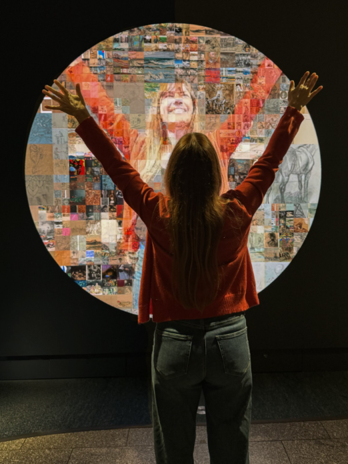
 The Art Mirror is a fan favorite at 'ArtLens Reimagined.'More than a century later, the museum continues to make its collection accessible to the public. This time it is using technology to encourage visitors to look at art in new ways with its third version of the free ArtLens app.
On Tuesday, July 28, CMA opened “ArtLens Reimagined: The Intersection of Art, Technology, and Innovation,” transforming 10,000 square feet of gallery space into 21 interactive experiences that combine the museum’s collection with technology, artificial intelligence, movement, sound and hands-on exploration.
The latest and most ambitious iteration of ArtLens builds on more than a decade of visitor research and feedback. The original ArtLens gallery, known as Gallery One, opened in 2012, followed by the ArtLens app in 2013 and its iPhone release in January 2014.
The newest ArtLens gallery is designed to make art more approachable while giving visitors new tools to investigate, create and connect with the collection, says Jane Alexander, CMA chief digital innovation and information technology officer.
“What makes this iteration different is that we have over a decade of evaluations, analytics, and visitor feedback,” she says. “Technology is not the destination—it is the bridge that helps people engage more deeply with the collection.”
Accessibility and inclusive design also played a central role in developing ArtLens Reimagined. CMA worked with Design I/O and Prime Access Consulting (PAC) to create experiences that incorporate visual, auditory, tactile, and movement-based interactions.
The museum also rebuilt its ArtLens mobile app, which works on both iOS and Android devices. Features include accessible wayfinding, screen-reader support, voice and text search, audio experiences, and customizable tours.
Alexander says it is one of the first art museums in the world to create visual descriptions for every primary image in its permanent collection. Those descriptions are incorporated into ArtLens Reimagined and the new mobile app, expanding access for visitors who are blind or have low vision.
Technology meets the classics
The ArtLens Reimagined gallery is divided into five areas—Relate, Investigate, Create, Explore, and Infinite Landscape + You on View.
Each experience begins with a work of art from the museum’s collection, with the featured artwork changing regularly so frequent visitors can encounter something new.
 Interactive artistry at the Cleveland Museum of Art's ArtLens Crash Party.Relate
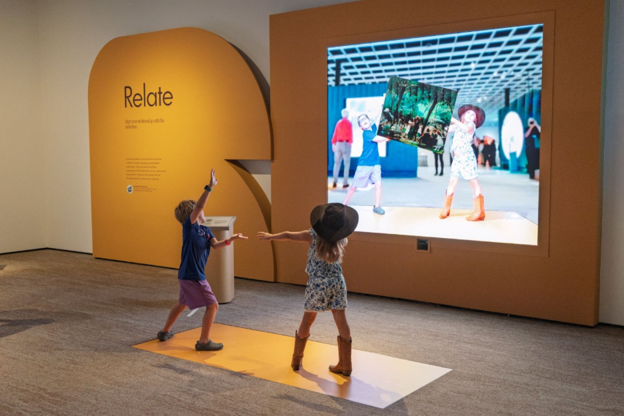
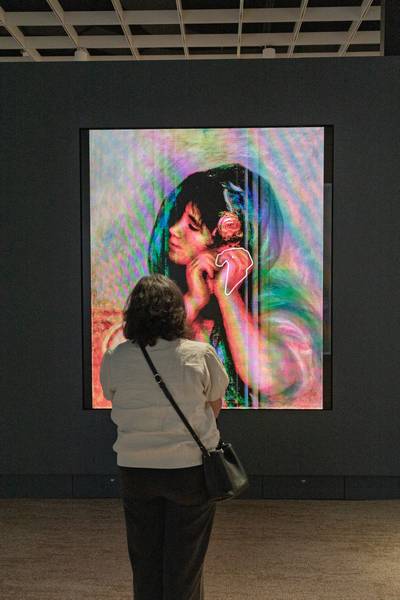
“The Relate section is where you start your relationship with the collection,” says Alexander, adding that one of the first experiences visitors encounter is Art Mirror, a large digital mirror that uses artworks from the CMA collection to create a constantly changing portrait around the visitor’s reflection.
Other experiences use movement to make connections between visitors and artwork.
For instance, in “Art in Arm’s Reach,” visitors move their hands closer together or farther apart to discover art that fits within the space between them, offering a fun way to see the scale of works in the collection.
“Hand Model” uses depth cameras and motion tracking to match visitors’ hand gestures with similar positions depicted in artworks.
“Strike a Pose” works in a similar way, using visitors’ movements and poses to find corresponding figures in works from the collection.
Alexander says she has been especially interested in watching visitors discover these experiences and then seek out the actual works of art elsewhere in the museum.
Investigate
The Investigate section takes a deeper look at the stories behind the museum’s collection.
“That’s where we want you to really understand these life stories of our collection,” says Alexander.
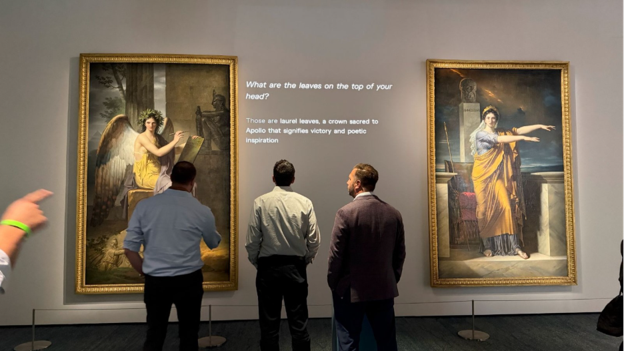
At “Talk to the Art,” visitors can ask questions about selected artworks and receive voice and text responses based on research approved by CMA curators.
Alexander says the experience has already become one of her favorites to watch visitors use—adding that guests have enjoyed trying to stump the artworks with increasingly complex questions. Even with 15 years of tenure at CMA, Alexander says the experience has helped her learn more about some of the museum’s paintings.
“What Does Art Sound Like?” takes a different approach. Visitors can touch 3D reproductions connected to a Civil War scene and a historic Cleveland landmark while listening to visual descriptions and atmospheric audio.
At “Look Closer,” visitors use an interactive lens to examine three-dimensional models of artwork from different angles and uncover information about how objects were created, authenticated or restored.
“Paint the Past” uses motion tracking to allow visitors to reveal the pigments that once covered an ancient Assyrian relief dating from 883 to 859 BC.
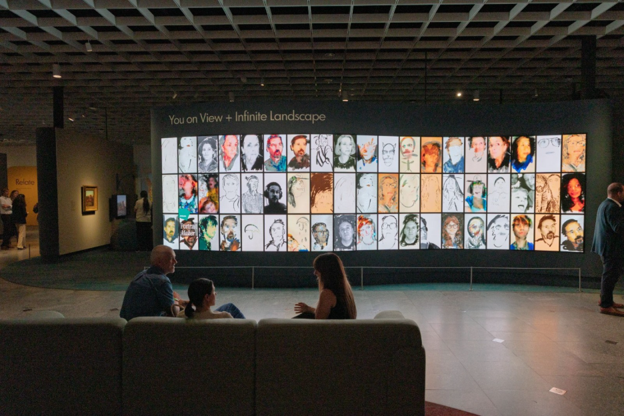
 'You on View' shows the self-portraits other visitors have created at 'Portrait Maker..'Create
The Create section builds on the museum’s earlier Studio Play gallery, taking the idea of learning by making in a new direction.
“We’ve taken it to another level,” Alexander says.
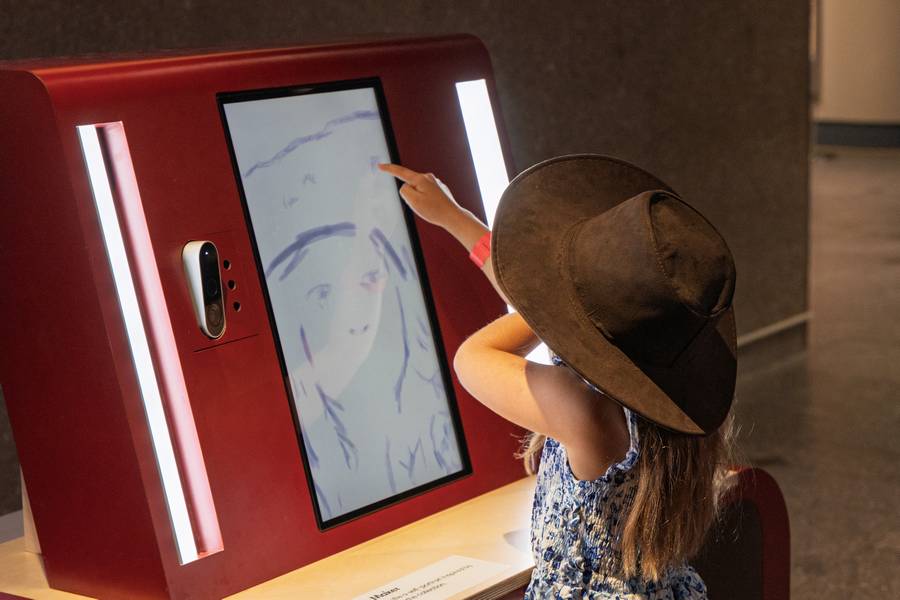
Visitors can create customized textile designs with Endless Threads, make pottery with Pottery Explorer, and turn selfies into portraits inspired by works in the CMA collection with Portrait Maker.
Art Morph incorporates generative AI, allowing visitors to transform tactile materials into original artwork inspired by pieces in the museum’s Open Access collection.
The experiences emphasize that creating art can take many forms and illustrate that visitors don’t have to be artists to participate.
Explore
Explore focuses on collaboration and the idea of the museum as a shared experience.
ArtLens Puzzles offers three interactive challenges based on the collection, with new editions introduced weekly.
Visitors also can contribute to a Community Mural by creating, arranging and remixing artwork from the collection in response to changing prompts.
The ArtLens Wall, a 40-foot interactive display that has been part of previous ArtLens iterations, also returns. Visitors can browse works currently on view throughout the museum, along with selected works that are off view. Alexander says a new and more accessible version of the wall is planned for 2027.
‘Infinite Landscape + You on View’
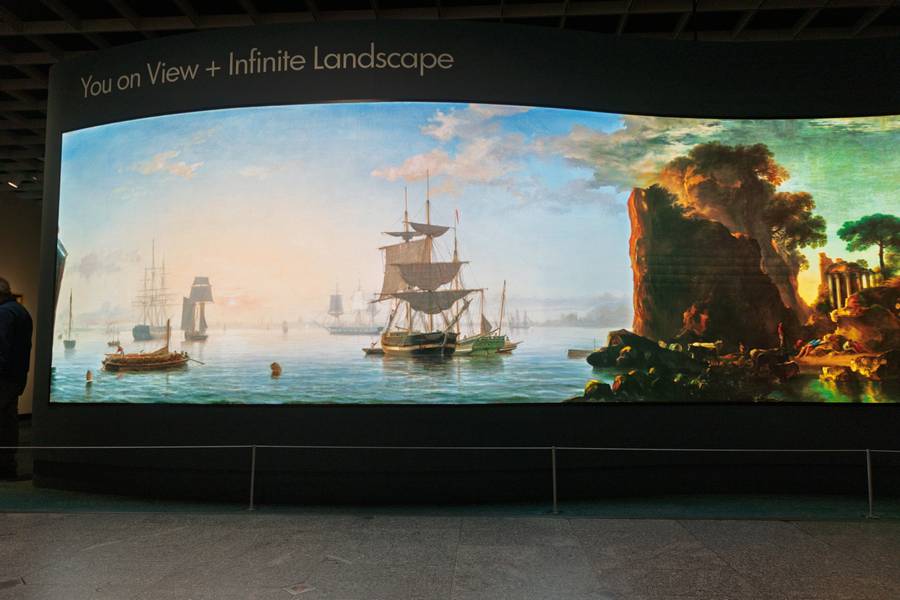
For a more immersive experience, Infinite Landscape uses artificial intelligence to connect a seemingly endless stream of landscape artworks.
Displayed on a 24-foot curved wall, the experience generates transitions between the landscapes in real time. Every few minutes, it alternates with You on View, which highlights creations made by visitors throughout the gallery.
The result is an ever-changing panorama that gives visitors a chance to slow down and simply take in the artwork.
Responsible AI
Artificial intelligence is woven throughout ArtLens Reimagined, but Alexander says the technology is being used with specific limitations.
 Interactive artistry at the Cleveland Museum of Art's ArtLens Crash Party.All of the AI models used in ArtLens Reimagined operate locally within the museum. “Talk to the Art” and “What Does Art Sound Like?” use finite libraries of material approved by the CMA curators, while “Art Morph” and Community Mural reference works from the museum’s Open Access collection.
The AI is specifically trained on the CMA’s collection, and Alexander says ArtLens Reimagined does not access art or training material that may not have been ethically sourced.
“In ArtLens Reimagined, we're leveraging the advancement of AI technology to make it more meaningful and impactful,” she says. “Now that AI has more capability, we really have used it in so many different ways.”
However, she points out that the technology is secondary to the art.
“The Cleveland Museum of Art has one of the top collections in the world,” says Alexander. “We’re very proud of it. No matter what technology we use, it can only be used to enhance the experience and not to distract from the art.”
That balance is at the heart of ArtLens Reimagined: Using increasingly sophisticated technology—not to replace the CMA experience, but to encourage visitors to spend more time looking, asking questions, making connections, and, perhaps, discovering something new in a collection that has been free and open to the public for generations.
ArtLens Reimagined: The Intersection of Art, Technology, and Innovation will be on exhibit through Sept. 1, 2031 in the Maltz Family Foundation ArtLens Gallery. Admission is free.
CMA’s collection includes more than 68,000 artworks spanning 6,000 years of artistic achievement. The museum is free to all and is located in University Circle.