Feathers, fashion, and function: CMNH exhibit explores nature’s elegant, complex design

.jpg)
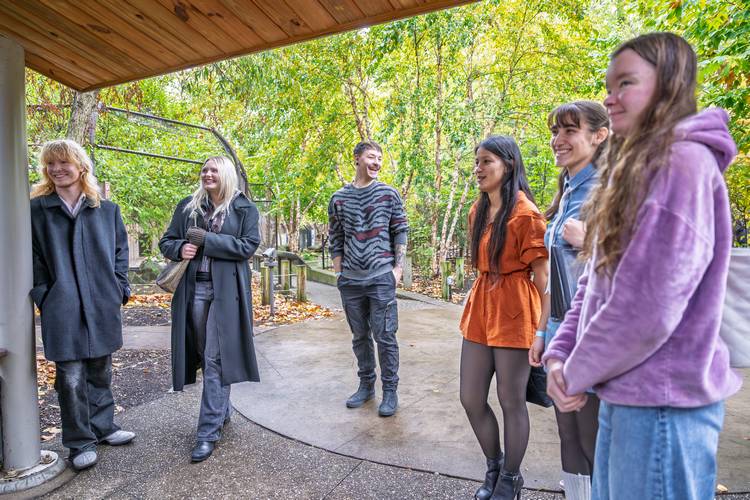
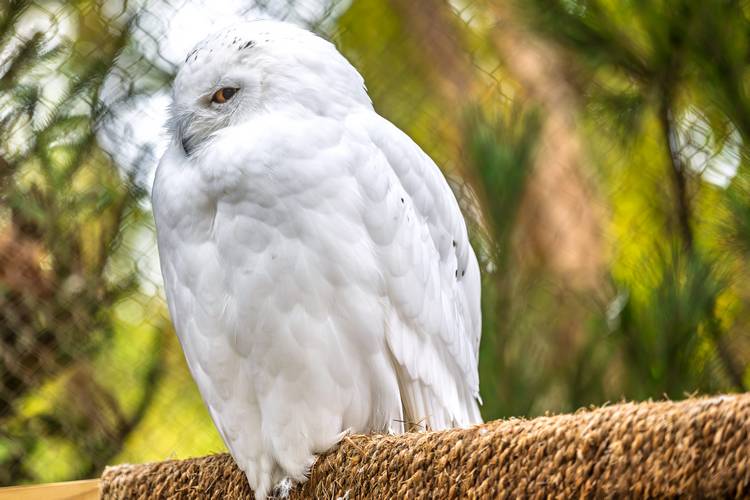
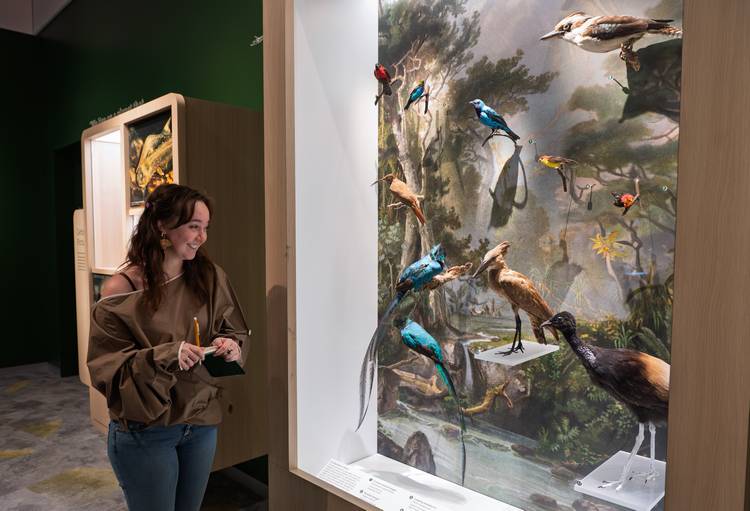
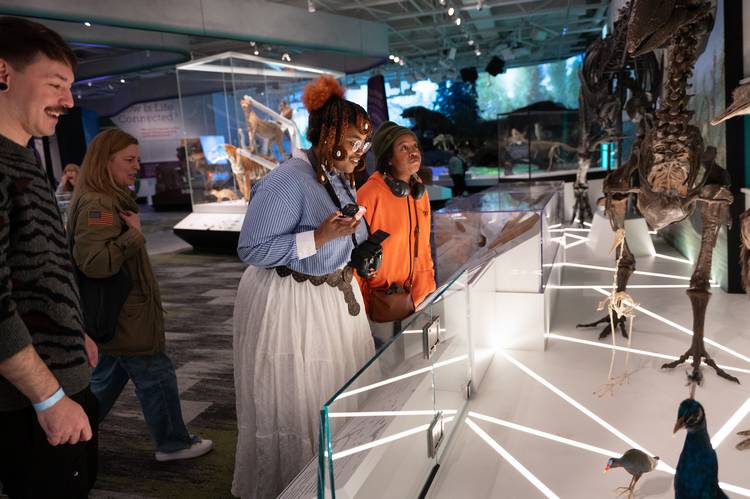
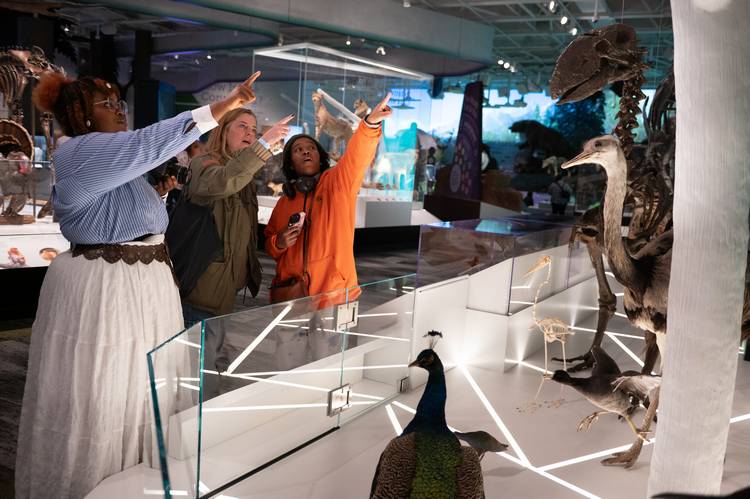
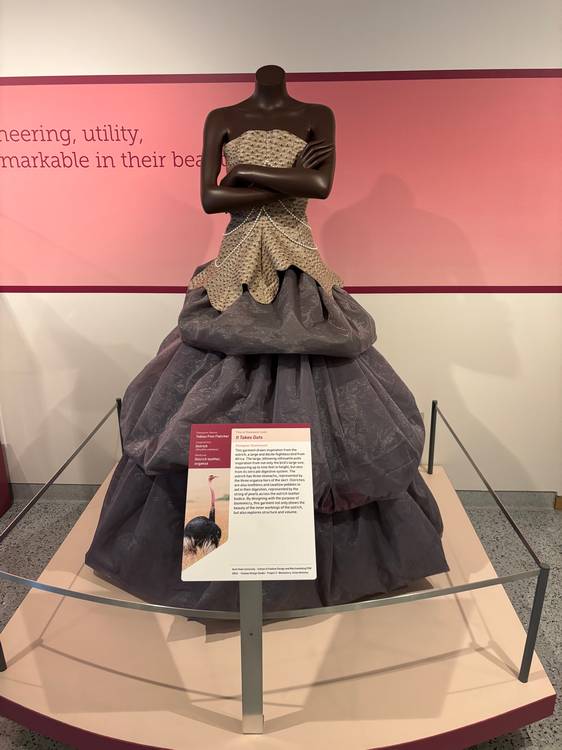
On a recent spring day at the Cleveland Museum of Natural History (CMNH), Tobias Finn Fletcher, a junior studying fashion design at Kent State University’s School of Fashion, proudly preened as he stood before “It Takes Guts,” a dress he created that took inspiration from the ostrich.
Fletcher is one of the students who created work for CMNH’s new “Fashion & Feather” exhibition at the natural history museum, which opened this week on Earth Day, Wednesday, April 22.
 KSU School of Fashion junior Tobias Finn Fletcher's dress, 'It Takes Guts.' His design was inspired by the ostrich“It was incredible,” Fletcher says of the design and museum exhibition experience. “It’s honestly one of the biggest things to ever happen to me.”
Only 10 students out of the 104 KSU juniors who applied were chosen to have their work featured in “Fashion & Feather,” which is a “collaboration between CMNH, Kent State University Museum, and the KSU School of Fashion.”
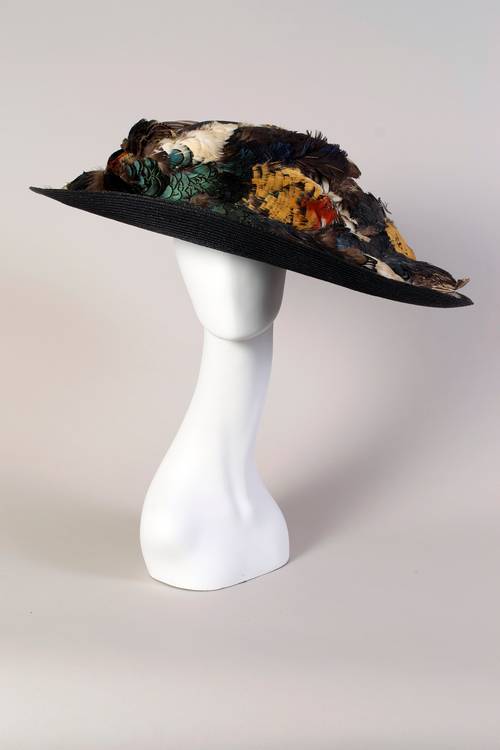
Fletcher’s winning design is displayed in the museum’s new Visitor Hall—a free community gathering space in the museum’s lobby—along with taxidermy mounts of birds and historic fashion items from the KSU Museum collection.
Historical view
“Fashion & Feather” is a “cross-disciplinary exhibition exploring the beauty, complexity, and cultural significance of feathers,” according to a museum news release.
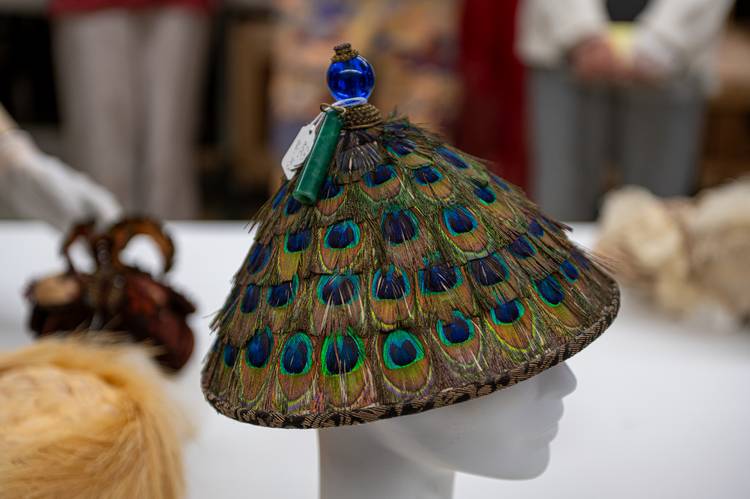
Combining historic fashion, ornithological specimens, cultural objects, and the students’ modern-day designs, the exhibit examines the relationship between people and nature.
The works compare how feathers are used in the natural world with how humans have used feathers in fashion throughout history for ornamentation and design.
“I think the most important part is to showcase the history of how fashion and art are inspired by nature,” says CMNH president and CEO Sonia Winner, “how we’ve used animals in fashion, and how we can do it more sustainably.”
Winner points to the fact that feathers used in fashion in the late 19th and early 20th centuries nearly led to the extinction of some bird species. Bird advocates organized, and the Migratory Bird Treaty Act of 1918 prevented the further plundering of feathers for ornamental design.
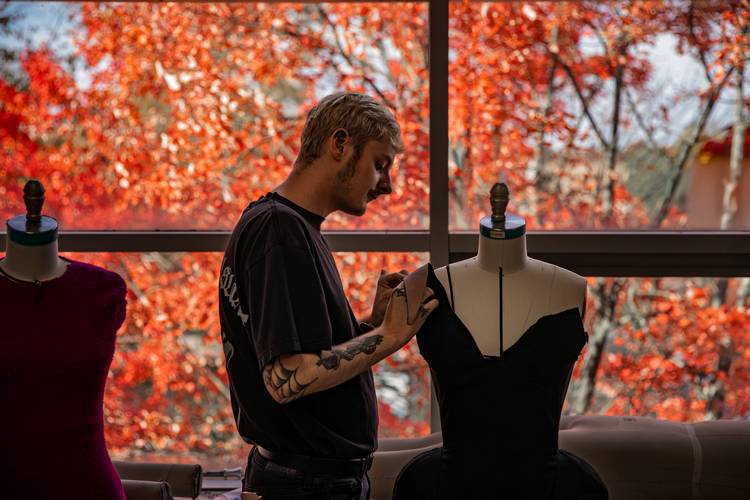
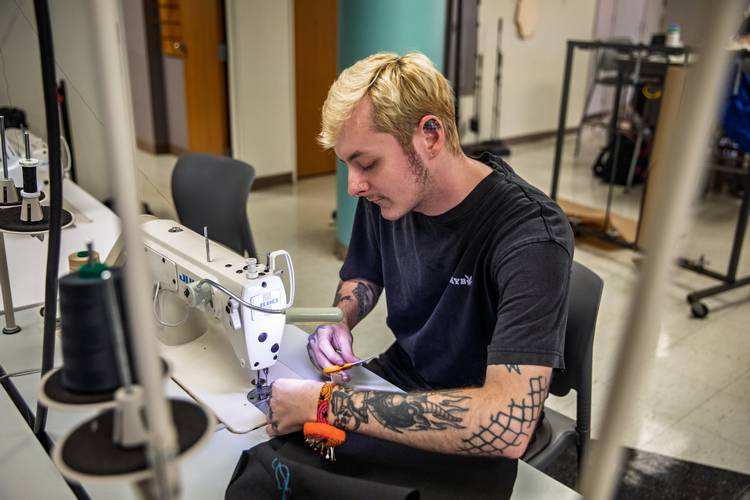
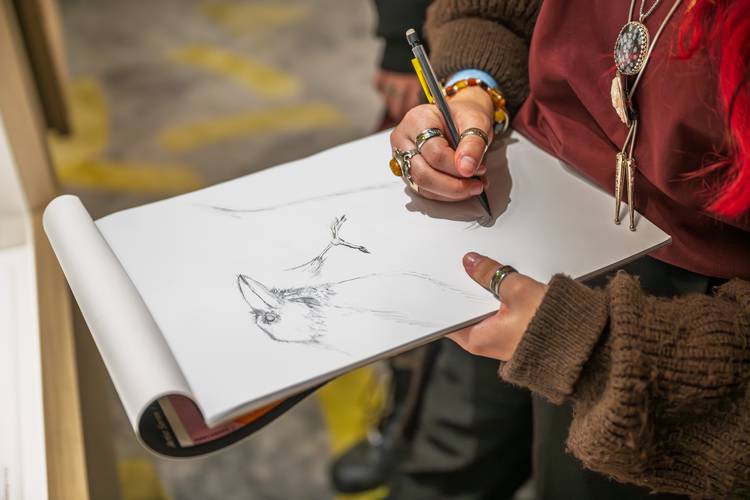
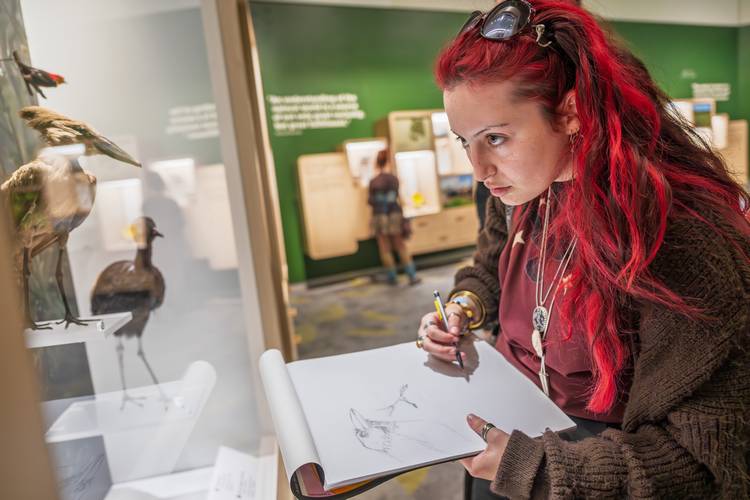
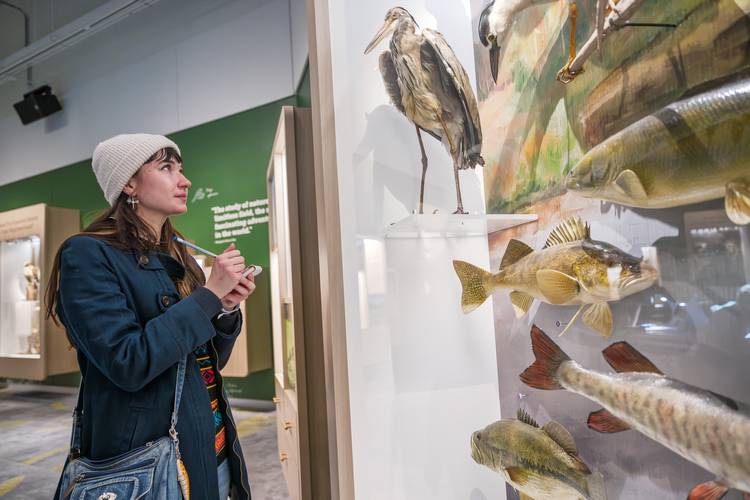
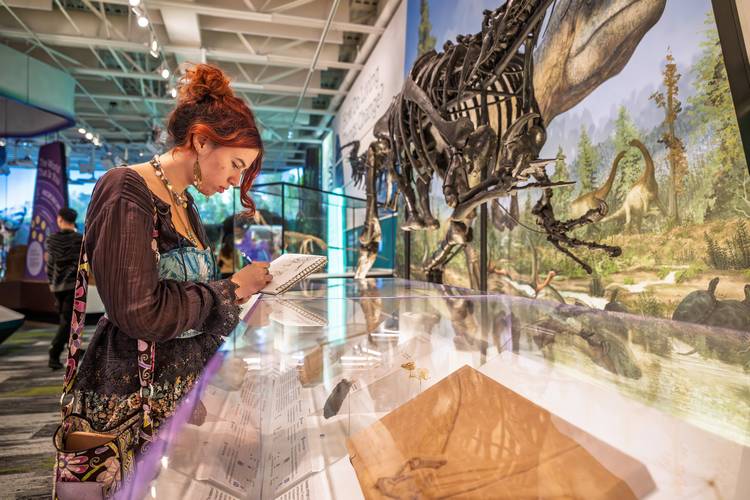
 A student hard at work on an avian biomimicry fashion project.Winner says the partnership between the two institutions came together easily and naturally. “We wanted to showcase our historic collection of birds, but also our partnerships in the region,” she explains. “We’re lucky to have Kent State University nearby, and they have a remarkable museum. We wanted to partner one world-class institution with another.”
KSU’s School of Fashion is considered one of the top programs in the country. “Any ways we can involve students, it extends everything that’s core to our mission,” Winner continues.
The museum exhibition was curated by Sara Hume, curator and professor at the KSU Museum, in partnership with the CMNH’s exhibition team. “We have one of the best collections in the world, and we wanted to do something to showcase it,” says KSU Museum director Sara Spinner.
Design inspired by nature
The exhibition in CMNH’s Visitor Hall is free. Upstairs, in the Corning Gallery, additional works by KSU students use biomimicry—the art of finding practical solutions to design challenges by mimicking nature’s own solutions.
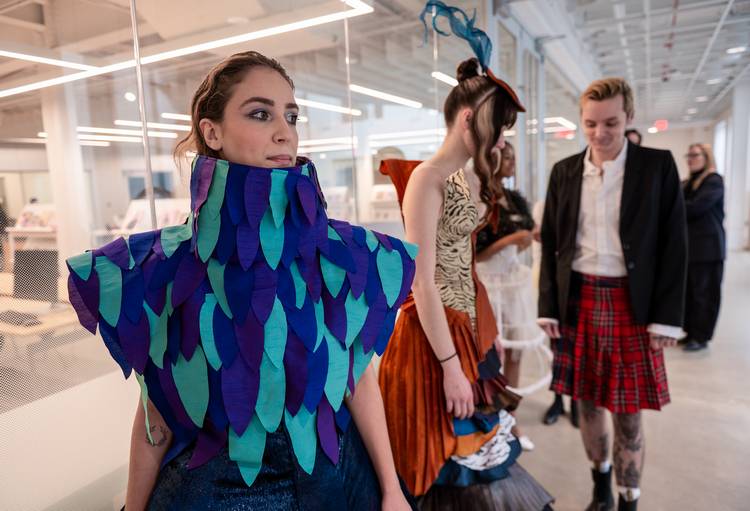
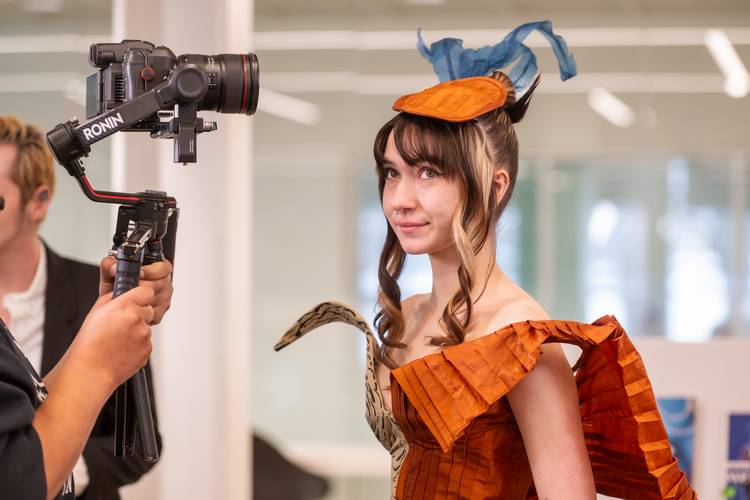
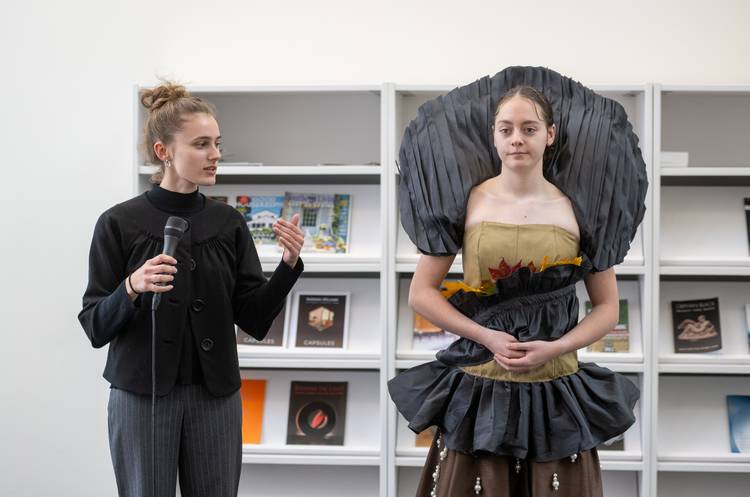
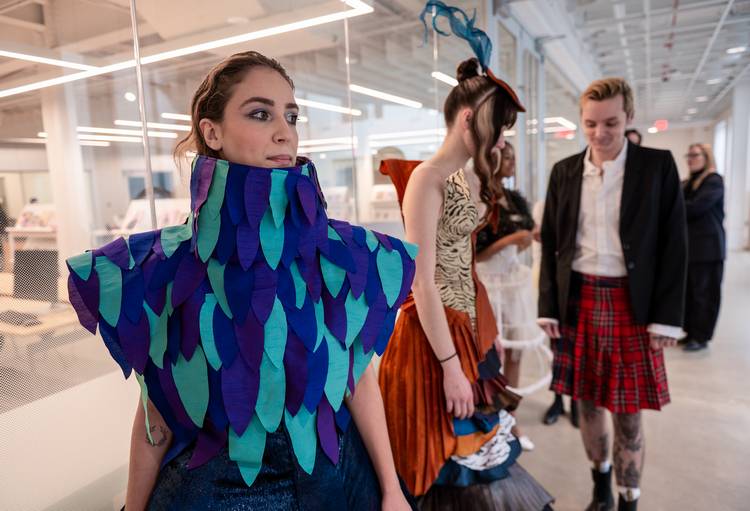 Students model the designs during the KSU School of Fashion biomimicry project.The students were challenged to evoke the wild beauty of birds without using real feathers—engaging the viewer with questions of sustainability and real-world impact.
The Corning Gallery exhibits require general admission ticketed access, which costs between $25 and $28 for adults. KSU students receive $5 general admission during the exhibit through Oct. 11. Tickets must be purchased in-person at the museum Welcome Desk with an active student ID.
The exhibit invites guests to wonder at the beauty of birds and their feathers, while reflecting on the delicate balance between cultural fascination and conservation. “Fashion & Feather” runs through Friday, Oct. 16.