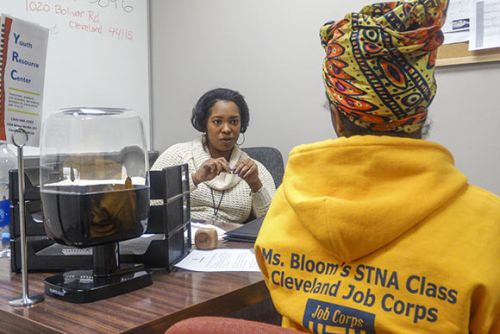
Well-educated millennials are living in Cleveland, but the city must adapt to their needs if we want them to stay.


The technology and software business startup accelerator Flashstarts will now offer a way for companies in the formulation phase a way to speed up the process.
Starting today, the organization will begin taking applications for Flashstarts Labs – a way for startups to prepare for the accelerator program.
“It’s a formalization of something we’ve been doing for the last couple of years, where we can work with teams before they are accepted in to the accelerator,” explains Flashstarts co-founder and CEO Charles Stack. “A lot of teams are missing something – skill sets, market validation, strategy, a co-founder – this will help them get into the accelerator program.”
The idea behind the Labs is to offer the fastest path between business concept and startup formation. Companies accepted into the three-month program will receive access to more than 40 mentors, consulting, business tools and office space in StartMart, Flashstarts’ 35,000-square-foot entrepreneurial co-working space in the Terminal Tower.
Stack explains that in Flashstarts’ three-year history, he has found that a lot of startups need help getting things organized. “We learned that a lot of people and ideas need a high-speed on-ramp,” he says. “Now we have StartMart, so we have a lot of space to bring in Labs. When a good idea bubbles up from the goo, we grab it and put it in the accelerator.”
There's room for 50 people in the Labs, and accelerator companies will be chosen from the Labs teams. "I don't know how many we'll pick for the accelerator, but we will pick from these teams,” Stack says. “We will spend a lot of time working with these teams.”
Applications will be accepted on an ongoing basis. Selection criteria will include uniqueness, market opportunity, team background, and likelihood of success.
Starting today, the organization will begin taking applications for Flashstarts Labs – a way for startups to prepare for the accelerator program.
“It’s a formalization of something we’ve been doing for the last couple of years, where we can work with teams before they are accepted in to the accelerator,” explains Flashstarts co-founder and CEO Charles Stack. “A lot of teams are missing something – skill sets, market validation, strategy, a co-founder – this will help them get into the accelerator program.”
The idea behind the Labs is to offer the fastest path between business concept and startup formation. Companies accepted into the three-month program will receive access to more than 40 mentors, consulting, business tools and office space in StartMart, Flashstarts’ 35,000-square-foot entrepreneurial co-working space in the Terminal Tower.
Stack explains that in Flashstarts’ three-year history, he has found that a lot of startups need help getting things organized. “We learned that a lot of people and ideas need a high-speed on-ramp,” he says. “Now we have StartMart, so we have a lot of space to bring in Labs. When a good idea bubbles up from the goo, we grab it and put it in the accelerator.”
There's room for 50 people in the Labs, and accelerator companies will be chosen from the Labs teams. "I don't know how many we'll pick for the accelerator, but we will pick from these teams,” Stack says. “We will spend a lot of time working with these teams.”
Applications will be accepted on an ongoing basis. Selection criteria will include uniqueness, market opportunity, team background, and likelihood of success.

Just in time for Australia Day today, Tuesday, Jan. 26, Cleveland Coffee Company yesterday introduced a new coffee blend in honor of Australian native and Cavs point guard Matthew “Delly” Dellavedova, called G’Day Mate.
Created by Delly himself, the blend is of Sumatra and Peruvian coffees – Sumatra, which borders Australia, and Peruvian, which is known for its velvety texture, create a rich aroma and bold flavor.
After going through the chain of command, Cleveland Coffee owner Brendan Walton first invited Delly to come to his roaster back in December, after taking note of the basketball player’s love for coffee during the NBA Playoffs.
“It seemed to be his beverage of preference before, and sometimes during, the game,” says Walton. “So I invited him to our warehouse to do coffee roasting 101, which was cool because he’d never seen it done before. He was very interested and asked a lot of questions, so we had him do one of the roasts.”
Walton says Delly, who drinks his coffee black, prefers a dark roast with bold flavor. So after tasting a few blends, Walton and Delly developed a suitable flavor profile in G’Day Mate.
Walton delivered the new blend to 40 area retailers yesterday. The G’Day Mate blend will be available through the end of June in stores, online and at Walton’s cafe in A.J. Rocco’s, 816 Huron Road.
Furthermore, Walton announced that Cleveland Coffee Company will donate 10 percent of the proceeds from G'Day Mate sales to All Faiths Pantry, a non-profit organization in Old Brooklyn that works with the Cleveland Food Bank to deliver groceries to seniors and other people with limited mobility.
“I think it will go over well, and Delly was very receptive to that,” says Walton. “[Executive director] John [Visnauskas], he’s a good soul working to help people out. I’m sure it will sell.”
The Cavs played their first "Australia Day" game last night against the Minnesota Timberwolves and wore their gold uniforms to honor Australia’s colors, gold and green. The Cavs won, 114-107.
Created by Delly himself, the blend is of Sumatra and Peruvian coffees – Sumatra, which borders Australia, and Peruvian, which is known for its velvety texture, create a rich aroma and bold flavor.
After going through the chain of command, Cleveland Coffee owner Brendan Walton first invited Delly to come to his roaster back in December, after taking note of the basketball player’s love for coffee during the NBA Playoffs.
“It seemed to be his beverage of preference before, and sometimes during, the game,” says Walton. “So I invited him to our warehouse to do coffee roasting 101, which was cool because he’d never seen it done before. He was very interested and asked a lot of questions, so we had him do one of the roasts.”
Walton says Delly, who drinks his coffee black, prefers a dark roast with bold flavor. So after tasting a few blends, Walton and Delly developed a suitable flavor profile in G’Day Mate.
Walton delivered the new blend to 40 area retailers yesterday. The G’Day Mate blend will be available through the end of June in stores, online and at Walton’s cafe in A.J. Rocco’s, 816 Huron Road.
Furthermore, Walton announced that Cleveland Coffee Company will donate 10 percent of the proceeds from G'Day Mate sales to All Faiths Pantry, a non-profit organization in Old Brooklyn that works with the Cleveland Food Bank to deliver groceries to seniors and other people with limited mobility.
“I think it will go over well, and Delly was very receptive to that,” says Walton. “[Executive director] John [Visnauskas], he’s a good soul working to help people out. I’m sure it will sell.”
The Cavs played their first "Australia Day" game last night against the Minnesota Timberwolves and wore their gold uniforms to honor Australia’s colors, gold and green. The Cavs won, 114-107.

Team Promotions in Beachwood has been helping businesses promote their names and ideas for 28 years.
“I would consider ourselves to be a dimensional advertising agency,” says company owner and president Hank Frisch. “We’re helping people promote their companies through products.”
From coffee mugs to adult coloring books, Team Promotions has thousands of products to promote a company or event. “We’ve sold steaks and delivered them to people’s addresses,” says Frisch of one of the more outrageous promotions he has done. Other times, Frisch has shaped T-shirts into the shape of a realistic replica his client is promoting.
“There are just a million different things – crazy, crazy things – you can do. It’s a matter of creativity.”
With the Republican National Convention coming to town in July, Frisch has already gotten inquiries from convention officials. “We’ve done some business as it relates to the Republican National Convention,” he says. “[They’re] interested in the variety of things, some tech products.”
As the convention nears, Frisch says he is prepared for the increased business. “We hope to do more,” he says. “We’ve shown our ideas to them and we hope as things get closer we’ll be able to do more for them.”
Frisch expects the pace to be hectic, but he’s ready. “There’s a lot going on and it’s interesting to wrap your arms around who’s doing what,” he says. “There’s a lot of opportunity for local businesses. It’s a fast-paced business. We just have to be prepared. We’re ready to be there when they need us.”
“I would consider ourselves to be a dimensional advertising agency,” says company owner and president Hank Frisch. “We’re helping people promote their companies through products.”
From coffee mugs to adult coloring books, Team Promotions has thousands of products to promote a company or event. “We’ve sold steaks and delivered them to people’s addresses,” says Frisch of one of the more outrageous promotions he has done. Other times, Frisch has shaped T-shirts into the shape of a realistic replica his client is promoting.
“There are just a million different things – crazy, crazy things – you can do. It’s a matter of creativity.”
With the Republican National Convention coming to town in July, Frisch has already gotten inquiries from convention officials. “We’ve done some business as it relates to the Republican National Convention,” he says. “[They’re] interested in the variety of things, some tech products.”
As the convention nears, Frisch says he is prepared for the increased business. “We hope to do more,” he says. “We’ve shown our ideas to them and we hope as things get closer we’ll be able to do more for them.”
Frisch expects the pace to be hectic, but he’s ready. “There’s a lot going on and it’s interesting to wrap your arms around who’s doing what,” he says. “There’s a lot of opportunity for local businesses. It’s a fast-paced business. We just have to be prepared. We’re ready to be there when they need us.”

Beginning next Wednesday, Jan. 27th, Gordon Square’s Capitol Theatre will launch its monthly Happy Hour cocktail party – a classic film paired with cocktails and appetizers from local restaurants.
"An evening at our Happy Hour Film Series is a great way to warm up the winter with a drink as you mix and mingle with friends both old and new," says David Huffman, director of marketing for Cleveland Cinemas.
The idea came about last fall when theater officials realized they were not using the full potential of the theater’s liquor license. “We were serving beer and wine, but no mixed drinks until last September,” explains Huffman. They tried out the concept with a showing of “Some Like it Hot” last summer during the brunch series. “When we were doing Sunday mornings, a lot of films wouldn’t work with brunch,” Huffman explains
So officials then decided to run a recurring cocktail hour series, showing a few contemporary classics. The Happy Hour Kicks off on Wednesday with “Fargo” – a nod, in part, to the Coen Brothers’ upcoming release of “Hail, Caesar!”
Future showings include “The Sting” in February and “Network” in March.
The $10 admission ($8 if you buy in advance) includes one cocktail and complimentary appetizers, catered by local restaurants. Capitol Theatre’s current cocktail selections include a Moscow mule, whiskey sour, pomegranate gimlet, and a chipotle bloody mary, as well as beer and wine.
Cha Spirits and Pizza Kitchen will cater Wednesday’s showing. Toast, which catered the trial run in September, will be at the February event and Luxe will cater the March film.
Drinks and appetizers are from 6 p.m. to 7 p.m. Patrons are welcome to refill their beverages before the showings.
The Happy Hour series is in addition to the Capitol’s regular Wednesday happy hours, which offers a $1 discount on drinks from 4 p.m. to 8 p.m.
"An evening at our Happy Hour Film Series is a great way to warm up the winter with a drink as you mix and mingle with friends both old and new," says David Huffman, director of marketing for Cleveland Cinemas.
The idea came about last fall when theater officials realized they were not using the full potential of the theater’s liquor license. “We were serving beer and wine, but no mixed drinks until last September,” explains Huffman. They tried out the concept with a showing of “Some Like it Hot” last summer during the brunch series. “When we were doing Sunday mornings, a lot of films wouldn’t work with brunch,” Huffman explains
So officials then decided to run a recurring cocktail hour series, showing a few contemporary classics. The Happy Hour Kicks off on Wednesday with “Fargo” – a nod, in part, to the Coen Brothers’ upcoming release of “Hail, Caesar!”
Future showings include “The Sting” in February and “Network” in March.
The $10 admission ($8 if you buy in advance) includes one cocktail and complimentary appetizers, catered by local restaurants. Capitol Theatre’s current cocktail selections include a Moscow mule, whiskey sour, pomegranate gimlet, and a chipotle bloody mary, as well as beer and wine.
Cha Spirits and Pizza Kitchen will cater Wednesday’s showing. Toast, which catered the trial run in September, will be at the February event and Luxe will cater the March film.
Drinks and appetizers are from 6 p.m. to 7 p.m. Patrons are welcome to refill their beverages before the showings.
The Happy Hour series is in addition to the Capitol’s regular Wednesday happy hours, which offers a $1 discount on drinks from 4 p.m. to 8 p.m.

The Tavern Company owner Chris Armington and his fellow business owners along Lee Road in Cleveland Heights were tired of hearing their customers complain about how difficult it is to find parking on the weekends.
So they got together to solve the problem and, hopefully, increase their business traffic.
Most of the restauranteurs, bar owners and the Cedar Lee Theatre got together and hired VIP Valet to park customers’ car on Fridays and Saturdays. “It’s a convenience for customers,” says Armington. “Everyone’s biggest complaint is parking, walking, getting tickets.”
For $5, patrons can park at any of the four valet stations located in the business district along Lee Road – from Taste and Brennan’s Colony to Parnell’s Pub. When they are done eating, drinking and catching a movie, they can pick their cars up at any station – regardless of where they dropped it off. Even establishments like Lopez, which has its own lot and valet, are participating.
Customers do not have to specify where they are heading to use the service. “They won’t turn anyone away,” says Armington. “The business owners are paying for it [the up-front costs] so people can have fun all evening at the restaurants and bars.”
Of course, the convenience also means better traffic for the business owners. “It’s a win-win for everyone,” Armington says, adding that the LED “valet” sign cones VIP uses make the valet stations easily identifiable, “inviting and safe.”
The service, which began on Friday, Dec. 18, is slowly catching on, according to Armington, with more people using the service as word spreads. “Every weekend is a little better and better,” he says. “Ideally, we want to make Lee Road a destination where people can go, park and then go anywhere.”
So they got together to solve the problem and, hopefully, increase their business traffic.
Most of the restauranteurs, bar owners and the Cedar Lee Theatre got together and hired VIP Valet to park customers’ car on Fridays and Saturdays. “It’s a convenience for customers,” says Armington. “Everyone’s biggest complaint is parking, walking, getting tickets.”
For $5, patrons can park at any of the four valet stations located in the business district along Lee Road – from Taste and Brennan’s Colony to Parnell’s Pub. When they are done eating, drinking and catching a movie, they can pick their cars up at any station – regardless of where they dropped it off. Even establishments like Lopez, which has its own lot and valet, are participating.
Customers do not have to specify where they are heading to use the service. “They won’t turn anyone away,” says Armington. “The business owners are paying for it [the up-front costs] so people can have fun all evening at the restaurants and bars.”
Of course, the convenience also means better traffic for the business owners. “It’s a win-win for everyone,” Armington says, adding that the LED “valet” sign cones VIP uses make the valet stations easily identifiable, “inviting and safe.”
The service, which began on Friday, Dec. 18, is slowly catching on, according to Armington, with more people using the service as word spreads. “Every weekend is a little better and better,” he says. “Ideally, we want to make Lee Road a destination where people can go, park and then go anywhere.”