
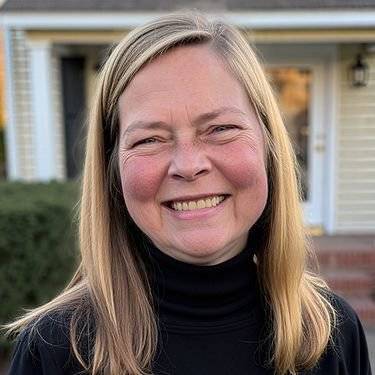
Karin Connelly Rice
Stories by: Karin Connelly Rice
Karin Connelly Rice enjoys telling people's stories, whether it's a promising startup or a life's passion. Over the past 30 years she has reported on local community members and businesses for publications such as Inside Business, Cleveland Magazine, the Rocky River/Lakewood edition of In the Neighborhood, and the Amherst News-Times. At Fresh Water Rice focuses on Clevelanders who are shaping and embracing Cleveland—especially those making positive changes in the city's underserved neighborhoods.
The New Ventures Healthcare Challenge once again will kick off the Cleveland Clinic’s 2014 Medical Innovation Summit, introducing the world to healthcare information technology companies with new and creative concepts.
"We’re looking for anything creative, innovative or inspiring," says Gary Fingerhut, executive director of Cleveland Clinic Innovations (CCI). “We want anything that’s going to revolutionize the health of our patients.”
While the summit does not start until October 27, the deadline for the first round of the challenge -- a video submission -- is Friday, May 30. “This year is a much more structured approach, with three rounds,” says Fingerhut. “There is the new video round, which explains what’s unique, why the idea is a game changer and how big an impact it will have." The second round is a web conference presentation. A select group of candidates will then be asked to present at the summit to a panel of experts and venture capitalists."
The winning company will work with CCI and its advisory board on commercialization strategies. The team will also demonstrate its product to a select group of Cleveland Clinic caregivers.
“Last year, the competition added a lot of energy because we had these really bright entrepreneurs from 40 states and 20 countries,” says Fingerhut. “It’s an exciting way to kick things off.” Eleven teams ultimately presented their concepts to the board.
Last year’s winner presented a thermometer that connects to the cloud for predictive analysis of the flu across the country. CCI currently is assisting the team with commercialization end of the product.
Applicants must submit a You Tube link to MIS2014@ccf.org by May 30 to be considered for the video round.
"We’re looking for anything creative, innovative or inspiring," says Gary Fingerhut, executive director of Cleveland Clinic Innovations (CCI). “We want anything that’s going to revolutionize the health of our patients.”
While the summit does not start until October 27, the deadline for the first round of the challenge -- a video submission -- is Friday, May 30. “This year is a much more structured approach, with three rounds,” says Fingerhut. “There is the new video round, which explains what’s unique, why the idea is a game changer and how big an impact it will have." The second round is a web conference presentation. A select group of candidates will then be asked to present at the summit to a panel of experts and venture capitalists."
The winning company will work with CCI and its advisory board on commercialization strategies. The team will also demonstrate its product to a select group of Cleveland Clinic caregivers.
“Last year, the competition added a lot of energy because we had these really bright entrepreneurs from 40 states and 20 countries,” says Fingerhut. “It’s an exciting way to kick things off.” Eleven teams ultimately presented their concepts to the board.
Last year’s winner presented a thermometer that connects to the cloud for predictive analysis of the flu across the country. CCI currently is assisting the team with commercialization end of the product.
Applicants must submit a You Tube link to MIS2014@ccf.org by May 30 to be considered for the video round.

Finding the perfect apartment to rent can be a pain in the neck. Factor in the desired amenities, attractions and location, and the search becomes even more difficult. Amit Patel thought of all that when designing Quo, a rental tool that matches users with apartments that suit their lifestyles.
“The idea around Quo is how we can change the way people search for residential rentals,” explains Patel. “There are hundreds of places on sites like Craigslist, all with the same feel and all through the same basic search engine. We wanted to understand what people are looking for, what their lifestyle is.”
Scheduled to launch later this month, Quo targets college students and young professionals who are looking for specific features in their neighborhoods. “Now you can put in preferences like, I want to live near a Starbucks, or near nightlife or places to eat,” explains Patel. “Or, choose areas that are walkable, bikeable or driveable.”
The site also will have a renter’s toolkit, where users can pay rent, split the rent between roommates and purchase renters insurance. A referral program offers incentives for renters who introduce friends to Quo. If a referral rents an apartment through the site, the referring user gets a cash incentive.
Even though Quo hasn’t yet officially launched, excitement already is building through word of mouth. The company already has more than 2,100 likes on its Facebook page.
“The idea around Quo is how we can change the way people search for residential rentals,” explains Patel. “There are hundreds of places on sites like Craigslist, all with the same feel and all through the same basic search engine. We wanted to understand what people are looking for, what their lifestyle is.”
Scheduled to launch later this month, Quo targets college students and young professionals who are looking for specific features in their neighborhoods. “Now you can put in preferences like, I want to live near a Starbucks, or near nightlife or places to eat,” explains Patel. “Or, choose areas that are walkable, bikeable or driveable.”
The site also will have a renter’s toolkit, where users can pay rent, split the rent between roommates and purchase renters insurance. A referral program offers incentives for renters who introduce friends to Quo. If a referral rents an apartment through the site, the referring user gets a cash incentive.
Even though Quo hasn’t yet officially launched, excitement already is building through word of mouth. The company already has more than 2,100 likes on its Facebook page.
flashstarts launches only software mentorship program of its kind
Flashstarts, which recently won an award for best small company internship at the annual Expys, is launching a new mentorship program for aspiring software developers. The interns will be a part of a Flashstarts 12-week accelerator program – assisting the startup companies with their software needs while receiving advice and coaching from mentors who are senior software developers.
“Our mentors serve different roles, depending on their areas of expertise,” explains Flashstarts CEO and founder Charles Stack. “A lot of software developer interns haven’t had experience working in groups. We thought we’d expand that experience.”
Flashstarts hired 20 interns from multiple disciplines for the summer of 2013. The interns worked for 10 startup teams that participated in Flashstarts’ first accelerator class and provided each team with software development, marketing, graphic design and business management services.
The organization is one of only a few startup accelerators in the country to hire interns as support staff for their startups. There are still two software developer internships open for this summer’s group of startups.
Additionally, Flashstarts raised its follow-on funding from $1.25 million last year to $2.5 million this year. “This will give us much more follow-on funding,” explains Stack. “Teams can get up to a half-million in funding upon graduation.”
The accelerator teams trade eight percent equity for a $25,000 investment, office space and access to coaching and services. The summer 2014 program begins May 27.
“Our mentors serve different roles, depending on their areas of expertise,” explains Flashstarts CEO and founder Charles Stack. “A lot of software developer interns haven’t had experience working in groups. We thought we’d expand that experience.”
Flashstarts hired 20 interns from multiple disciplines for the summer of 2013. The interns worked for 10 startup teams that participated in Flashstarts’ first accelerator class and provided each team with software development, marketing, graphic design and business management services.
The organization is one of only a few startup accelerators in the country to hire interns as support staff for their startups. There are still two software developer internships open for this summer’s group of startups.
Additionally, Flashstarts raised its follow-on funding from $1.25 million last year to $2.5 million this year. “This will give us much more follow-on funding,” explains Stack. “Teams can get up to a half-million in funding upon graduation.”
The accelerator teams trade eight percent equity for a $25,000 investment, office space and access to coaching and services. The summer 2014 program begins May 27.
jointly issued report shows positive economic growth for region
A report issued jointly by 10 different economic development organizations shows positive economic growth for Northeast Ohio as a region. The Northeast Ohio 2013 Regional Economic Development Report shows business investment projects created or retained 26,092 jobs, $1.2 billion in payroll and $2 billion in capital investment last year.
The report, which was produced by Team NEO, was initiated by 10 regional groups, each with its own economic development concentration: BioEnterprise, Greater Akron Chamber, Greater Cleveland Partnership, JumpStart, MAGNET, NorTech, Stark Development Board, Team Lorain County, Team NEO and the Youngstown/Warren Regional Chamber.
“This certainly means there are signs of economic vitality, and it shows a whole lot of good things going on,” says Team NEO CEO Tom Waltermire. “There are a lot of positive things happening, a lot of businesses growing and adding employment.”
This is the second year the group has compiled the report. “We thought it would be interesting to look at the impact that all of these businesses together have in Northeast Ohio,” says Waltermire of the regional report, as opposed to just a Cleveland-focused report. “When we act as a region and collaborate, it makes us much stronger and more competitive.”
The individual cities in the region only benefit from collaboration. “The competition is mainly outside the region,” explains Waltermire. “It would not even make sense for our metropolitan areas to compete.”
Rebecca Bagley, president and CEO of NorTech, stresses the importance of each of the 10 specialized organizations working together. “Through each organization we fill a specialized role, but working in concert leads to a healthy, thriving economy,” she says.
The report also highlights success stories related to business attraction; business growth and development; entrepreneurship; and technology, innovation and commercialization.
The report, which was produced by Team NEO, was initiated by 10 regional groups, each with its own economic development concentration: BioEnterprise, Greater Akron Chamber, Greater Cleveland Partnership, JumpStart, MAGNET, NorTech, Stark Development Board, Team Lorain County, Team NEO and the Youngstown/Warren Regional Chamber.
“This certainly means there are signs of economic vitality, and it shows a whole lot of good things going on,” says Team NEO CEO Tom Waltermire. “There are a lot of positive things happening, a lot of businesses growing and adding employment.”
This is the second year the group has compiled the report. “We thought it would be interesting to look at the impact that all of these businesses together have in Northeast Ohio,” says Waltermire of the regional report, as opposed to just a Cleveland-focused report. “When we act as a region and collaborate, it makes us much stronger and more competitive.”
The individual cities in the region only benefit from collaboration. “The competition is mainly outside the region,” explains Waltermire. “It would not even make sense for our metropolitan areas to compete.”
Rebecca Bagley, president and CEO of NorTech, stresses the importance of each of the 10 specialized organizations working together. “Through each organization we fill a specialized role, but working in concert leads to a healthy, thriving economy,” she says.
The report also highlights success stories related to business attraction; business growth and development; entrepreneurship; and technology, innovation and commercialization.


Disease Diagnostics Group, a startup company out of CWRU, won the top $1,500 prize in the Charter One Foundation Student Business Idea Competition. Three winners were announced at the Northeast Ohio Entrepreneur Expo on April 7.
Disease Diagnostics has developed a hand-held device for early detection of malaria. The company was founded by CEO John Lewandowski, who earned his undergraduate degree in mechanical engineering and his masters in engineering management from CWRU, and Chief Scientific Officer (CSO) Brian Grimberg, assistant professor of international health at Case School of Medicine’s Center for Global Health and Disease.
“It was Dr. Grimberg’s technology,” explains Lewandowski. “This device is reusable, portable, inexpensive and fast. One billion tests are needed. Five hundred million to 700 million cases are documented and people don’t even know they have it.”
Disease Diagnostics’ Rapid Assessment of Malaria (RAM) device can help people get treatment early. The test costs only about 25 cents to run, takes about a minute for results and has 94 percent accuracy. “Malaria is completely curable disease,” says Lewandowski. “With early detection, you won’t die from it and you won’t spread it. Being able to detect it in someone who doesn’t have symptoms yet would be monumental.”
The company is in the final stages of testing its device and collecting field data, in part thanks to funding from the Case-Coulter Translational Partnership. Lewandowski foresees the RAM device to be on the market soon for national and international government programs.
Lewandowski says they will use the $1,500 for final prototyping and lab tests.
Other recipients of Charter One Foundation funds were Sprav Water, a company out of Case that is developing a shower head that monitors water consumption, and Holmes Mouthwatering Applesauce, an applesauce manufacturer out of Hiram College. Sprav received $400 and Holmes received $600.
The three winners were selected by a panel of judges and by popular vote.
Disease Diagnostics has developed a hand-held device for early detection of malaria. The company was founded by CEO John Lewandowski, who earned his undergraduate degree in mechanical engineering and his masters in engineering management from CWRU, and Chief Scientific Officer (CSO) Brian Grimberg, assistant professor of international health at Case School of Medicine’s Center for Global Health and Disease.
“It was Dr. Grimberg’s technology,” explains Lewandowski. “This device is reusable, portable, inexpensive and fast. One billion tests are needed. Five hundred million to 700 million cases are documented and people don’t even know they have it.”
Disease Diagnostics’ Rapid Assessment of Malaria (RAM) device can help people get treatment early. The test costs only about 25 cents to run, takes about a minute for results and has 94 percent accuracy. “Malaria is completely curable disease,” says Lewandowski. “With early detection, you won’t die from it and you won’t spread it. Being able to detect it in someone who doesn’t have symptoms yet would be monumental.”
The company is in the final stages of testing its device and collecting field data, in part thanks to funding from the Case-Coulter Translational Partnership. Lewandowski foresees the RAM device to be on the market soon for national and international government programs.
Lewandowski says they will use the $1,500 for final prototyping and lab tests.
Other recipients of Charter One Foundation funds were Sprav Water, a company out of Case that is developing a shower head that monitors water consumption, and Holmes Mouthwatering Applesauce, an applesauce manufacturer out of Hiram College. Sprav received $400 and Holmes received $600.
The three winners were selected by a panel of judges and by popular vote.

Welcome to the latest edition of Who’s Hiring in Cleveland?
There are plenty of good jobs to be found here in Cleveland. This is the latest installment in a regular series of posts in which we feature companies that are hiring, what those employers are looking for, and how to apply.
Here’s the latest Cleveland hiring news:
MidTown Cleveland, Inc. is looking for a director of the Cleveland Health-Tech Corridor. This newly created position will be responsible for the development, coordination and implementation of the business and marketing strategy of the Cleveland Health-Tech Corridor. For a complete description, click here. Interested applicants should email their resumes and cover letters to Jim Haviland, MidTown Cleveland executive director.
BlueBridge Networks, the region's leading total technology solutions provider, is looking to hire a systems engineer to ensure the stability, integrity and efficient operation of the in-house information systems that support core organizational functions as well as any external customers. The company also is looking for a network engineer. Apply here.
InStore Finance, a seller-finance company that is taking off, has a number of open positions, including a merchant optimization manager. This position drives incremental consumer contracts through the merchant by creating training materials, facilitating webinar training classes, motivating merchant employees, creating awareness and establishing accountability. Most important, the person in this position will increase the number of new consumer contracts per merchant location. Email resumes here.
Have hiring news that you’d like to share? Email Karin at Fresh Water Cleveland and send us this information or career links!
There are plenty of good jobs to be found here in Cleveland. This is the latest installment in a regular series of posts in which we feature companies that are hiring, what those employers are looking for, and how to apply.
Here’s the latest Cleveland hiring news:
MidTown Cleveland, Inc. is looking for a director of the Cleveland Health-Tech Corridor. This newly created position will be responsible for the development, coordination and implementation of the business and marketing strategy of the Cleveland Health-Tech Corridor. For a complete description, click here. Interested applicants should email their resumes and cover letters to Jim Haviland, MidTown Cleveland executive director.
BlueBridge Networks, the region's leading total technology solutions provider, is looking to hire a systems engineer to ensure the stability, integrity and efficient operation of the in-house information systems that support core organizational functions as well as any external customers. The company also is looking for a network engineer. Apply here.
InStore Finance, a seller-finance company that is taking off, has a number of open positions, including a merchant optimization manager. This position drives incremental consumer contracts through the merchant by creating training materials, facilitating webinar training classes, motivating merchant employees, creating awareness and establishing accountability. Most important, the person in this position will increase the number of new consumer contracts per merchant location. Email resumes here.
Have hiring news that you’d like to share? Email Karin at Fresh Water Cleveland and send us this information or career links!

On Thursday, May 1, Global Cleveland will officially launch its talent attraction campaign at a major event at the Cleveland Convention Center. The event -- like the organization hosting it -- is focused on increasing the population while strengthening the local economy.

Melissa Khoury loves pork so much that she's earned the title “Queen of Pork.” Growing up watching local butchers cut her steaks, then gaining even more exposure to butcheries while living in Atlanta, Khoury discovered her passion early on.
When Khoury moved back to Cleveland in 2009, she worked as a chef in a number of well known restaurants with no intention of staying in town. But then, everything began falling into place and Saucisson was born in 2013.
Saucisson sells hand-cured meats and specialty sausages, all sourced from local farmers and butchers. Currently, Khoury works out of the Cleveland Culinary Launch and sells her products at local farmers markets and the Cleveland Flea.
From chorizo to smoked Tasso ham, Khoury has found her calling. “I love everything about it,” she says. “It’s like my Zen. It’s me and my animal and it’s relaxing to me.”
Khoury’s love of pork was no secret to area chefs, but she was less known to retail consumers. “When I started the company, chefs in the city knew who I was and knew about my pork obsession, but the general consumer didn’t know unless they were patrons of one of the restaurants I worked at,” she says.
Khoury is a big supporter of other local businesses like Fresh Fork Market, Thirsty Dog Brewing Company and New Creations Farm in Geauga County. They often work together to share their creations. For example, Khoury buys her meat from New Creations, sells her sausage through Fresh Fork and uses Thirsty Dog lager in some of her sausages.
Now that customers have had a chance to get to know Khoury and the products she sells through Saucisson, her next goal is to open a female-owned butcher shop. In doing so, she wants not only to sell her products, but also inform the general public about fresh and cured meats and sustainable butchery.
"I educate the general consumer, whether it’s a sausage sandwich or spaghetti sauce,” she explains. “It’s cool to see people get adventurous with my products. But I don’t want to make anything that will scare anyone away. I’m making sausage approachable.”
To help achieve those goals, Khoury recently brought on Penny Barend as a business partner.
Source: Melissa Khoury
Writer: Karin Connelly
When Khoury moved back to Cleveland in 2009, she worked as a chef in a number of well known restaurants with no intention of staying in town. But then, everything began falling into place and Saucisson was born in 2013.
Saucisson sells hand-cured meats and specialty sausages, all sourced from local farmers and butchers. Currently, Khoury works out of the Cleveland Culinary Launch and sells her products at local farmers markets and the Cleveland Flea.
From chorizo to smoked Tasso ham, Khoury has found her calling. “I love everything about it,” she says. “It’s like my Zen. It’s me and my animal and it’s relaxing to me.”
Khoury’s love of pork was no secret to area chefs, but she was less known to retail consumers. “When I started the company, chefs in the city knew who I was and knew about my pork obsession, but the general consumer didn’t know unless they were patrons of one of the restaurants I worked at,” she says.
Khoury is a big supporter of other local businesses like Fresh Fork Market, Thirsty Dog Brewing Company and New Creations Farm in Geauga County. They often work together to share their creations. For example, Khoury buys her meat from New Creations, sells her sausage through Fresh Fork and uses Thirsty Dog lager in some of her sausages.
Now that customers have had a chance to get to know Khoury and the products she sells through Saucisson, her next goal is to open a female-owned butcher shop. In doing so, she wants not only to sell her products, but also inform the general public about fresh and cured meats and sustainable butchery.
"I educate the general consumer, whether it’s a sausage sandwich or spaghetti sauce,” she explains. “It’s cool to see people get adventurous with my products. But I don’t want to make anything that will scare anyone away. I’m making sausage approachable.”
To help achieve those goals, Khoury recently brought on Penny Barend as a business partner.
Source: Melissa Khoury
Writer: Karin Connelly

Several Cleveland area companies have some new faces on their staffs. Here’s a rundown of who is in new positions.
Bryan Stubbs is the Cleveland Water Alliance’s new executive director. The Cleveland Water Alliance is a collaborative group of companies, academic institutions and public agencies working to create a thriving economy around the global needs of water quality and access. Stubbs’ background is in sustainability and non-profit management, most recently as a consultant with The Oberlin Project.
“The Cleveland Water Alliance is about elevating the conversation of water in a way that encompasses the opportunity that our water asset affords both our community and our economy,” explains Stubbs. "It’s about our future as the Water Belt.”
Stubbs plans to bring his successes with the Oberlin Project to the Cleveland Water Alliance. "At the Oberlin Project I was tasked with implementing a plan to radically lower greenhouse gas emissions while growing the local economy and jobs, the parts of which are not mutually exclusive,” he says. “I plan on bringing that core concept to the Alliance by working collaboratively with our leading corporations, academic institutions and public agencies.
Project and Construction Services (PCS) named Kevin Lawlor president of the employee-owned professional construction services and general contracting company. Lawlor succeeds 13-year PCS president Robert S. Strickland, who recently retired. Lawlor has more than 38 years of design and construction phase experience and has been with PCS for 22 years, the last 11 years as executive vice president.
Cleveland Neighborhood Progress Inc., a private nonprofit community development funding intermediary focused on investing in the revitalization of city neighborhoods, is growing. The organization has added four key staff members since January. Alesha Washington joined CNP as senior director of advocacy, policy and research, and Mordecai Cargill was hired as manager of fund development in January. In mid-march Zoë Taft Mueller joined CNP as placemaking fellow and Daniel Brown was hired as economic opportunity fellow. Later this month, Donald A. Pattison will come to CNP as community lending specialist, Village Capital Corporation.
Have a new hire you'd like to share? Email Karin with the details and we’ll help spread the good news!
Bryan Stubbs is the Cleveland Water Alliance’s new executive director. The Cleveland Water Alliance is a collaborative group of companies, academic institutions and public agencies working to create a thriving economy around the global needs of water quality and access. Stubbs’ background is in sustainability and non-profit management, most recently as a consultant with The Oberlin Project.
“The Cleveland Water Alliance is about elevating the conversation of water in a way that encompasses the opportunity that our water asset affords both our community and our economy,” explains Stubbs. "It’s about our future as the Water Belt.”
Stubbs plans to bring his successes with the Oberlin Project to the Cleveland Water Alliance. "At the Oberlin Project I was tasked with implementing a plan to radically lower greenhouse gas emissions while growing the local economy and jobs, the parts of which are not mutually exclusive,” he says. “I plan on bringing that core concept to the Alliance by working collaboratively with our leading corporations, academic institutions and public agencies.
Project and Construction Services (PCS) named Kevin Lawlor president of the employee-owned professional construction services and general contracting company. Lawlor succeeds 13-year PCS president Robert S. Strickland, who recently retired. Lawlor has more than 38 years of design and construction phase experience and has been with PCS for 22 years, the last 11 years as executive vice president.
Cleveland Neighborhood Progress Inc., a private nonprofit community development funding intermediary focused on investing in the revitalization of city neighborhoods, is growing. The organization has added four key staff members since January. Alesha Washington joined CNP as senior director of advocacy, policy and research, and Mordecai Cargill was hired as manager of fund development in January. In mid-march Zoë Taft Mueller joined CNP as placemaking fellow and Daniel Brown was hired as economic opportunity fellow. Later this month, Donald A. Pattison will come to CNP as community lending specialist, Village Capital Corporation.
Have a new hire you'd like to share? Email Karin with the details and we’ll help spread the good news!

Back by popular demand, the second annual Entrovation will be held on Friday, May 2, at the Beachwood Community Center. The event is an opportunity for entrepreneurs and businesses of all sizes to showcase their companies and learn from each other. Organized by Beachwood High School marketing teacher and Junior Achievement advisor Greg Perry, the event is touted as the largest Northeast Ohio business fair that connects businesses and entrepreneurs.
“We will have everything from salsa to solar panels,” says Perry. The event is the culmination of a year-long Beachwood Junior Achievement Company Program taken by 24 students from Beachwood, Mayfield and Brush high schools.
The students work on Entrovation all year, planning every detail and learning about entrepreneurship. “The class operates like a company,” explains Perry. “My students' company is an entrepreneurial event planning company.”
More than 170 businesses, from small startups to large local players like CWRU, Parker Hannifin and Sherwin Williams, will exhibit. “These companies encourage their employees to think like entrepreneurs, even though they work for very big companies and universities,” says Perry. “And it’s a really great way for young entrepreneurs to establish local contacts.”
The Burton D. Morgan Foundation will sponsor the Innovative Entrepreneur of the Year Awards in which five companies will be chosen by attendees at Entrovation. The top five entrepreneurs will be invited to pitch their companies on May 28 for a chance to win $3,000, $1,500 and $500 prizes.
Entrepreneurial companies will have their goods for sale, Collection Auto Group will have cars on display and six food trucks will be on hand. Perry is expecting about 5,000 people to attend this year’s event, which is free and runs from noon to 6 p.m.
Source: Greg Perry
Writer: Karin Connelly
“We will have everything from salsa to solar panels,” says Perry. The event is the culmination of a year-long Beachwood Junior Achievement Company Program taken by 24 students from Beachwood, Mayfield and Brush high schools.
The students work on Entrovation all year, planning every detail and learning about entrepreneurship. “The class operates like a company,” explains Perry. “My students' company is an entrepreneurial event planning company.”
More than 170 businesses, from small startups to large local players like CWRU, Parker Hannifin and Sherwin Williams, will exhibit. “These companies encourage their employees to think like entrepreneurs, even though they work for very big companies and universities,” says Perry. “And it’s a really great way for young entrepreneurs to establish local contacts.”
The Burton D. Morgan Foundation will sponsor the Innovative Entrepreneur of the Year Awards in which five companies will be chosen by attendees at Entrovation. The top five entrepreneurs will be invited to pitch their companies on May 28 for a chance to win $3,000, $1,500 and $500 prizes.
Entrepreneurial companies will have their goods for sale, Collection Auto Group will have cars on display and six food trucks will be on hand. Perry is expecting about 5,000 people to attend this year’s event, which is free and runs from noon to 6 p.m.
Source: Greg Perry
Writer: Karin Connelly

As a small business owner, Carl Baldesare knows the headaches associated with growing a company. With a background as a small business advisor and, more recently, owner of Specialty Renovations construction company, Baldesare grew frustrated with the expense and limited resources available in growing his small company.
Then about nine months ago, Baldesare had an idea for growing all the small businesses in Cleveland: Keep it Local Cleveland Project. “I just started wondering, why don’t people help these small businesses out,” he recalls. “I realized number one is they didn’t know the business existed, or they were afraid to try it.”
The Keep it Local Cleveland Project is a membership based group dedicated to promoting and growing small businesses of all kinds in Cleveland. Businesses can run promotions and specials through the website. “I created an all-encompassing Cleveland chamber,” Baldesare boasts. “We connect local people to local businesses. We do this by telling you where to find them, and give you a little incentive to find them.”
Member businesses get access to monthly networking events, a mention on social media and radio, and promotion on Keep it Local’s website marketplace. “It’s a pretty slick setup,” says Baldesare. Consumers can access deals and promotions, or simply research local businesses. “When you buy from independent local businesses, more of your money goes to other independent local businesses.”
The project already has generated a loyal following, with more than 3,000 followers on Facebook. The organization now has five employees.
Keep it Local Cleveland officially kicks off on Sunday with a free concert at the Beachland Ballroom featuring local bands, of course. A ticket is required to get into the concert.
Source: Carl Baldesare
Writer: Karin Connelly
Then about nine months ago, Baldesare had an idea for growing all the small businesses in Cleveland: Keep it Local Cleveland Project. “I just started wondering, why don’t people help these small businesses out,” he recalls. “I realized number one is they didn’t know the business existed, or they were afraid to try it.”
The Keep it Local Cleveland Project is a membership based group dedicated to promoting and growing small businesses of all kinds in Cleveland. Businesses can run promotions and specials through the website. “I created an all-encompassing Cleveland chamber,” Baldesare boasts. “We connect local people to local businesses. We do this by telling you where to find them, and give you a little incentive to find them.”
Member businesses get access to monthly networking events, a mention on social media and radio, and promotion on Keep it Local’s website marketplace. “It’s a pretty slick setup,” says Baldesare. Consumers can access deals and promotions, or simply research local businesses. “When you buy from independent local businesses, more of your money goes to other independent local businesses.”
The project already has generated a loyal following, with more than 3,000 followers on Facebook. The organization now has five employees.
Keep it Local Cleveland officially kicks off on Sunday with a free concert at the Beachland Ballroom featuring local bands, of course. A ticket is required to get into the concert.
Source: Carl Baldesare
Writer: Karin Connelly

As the processing of shale oil increases, oil refineries are looking for an ecologically effective way to dispose of catalyst. Three local companies -- Metaloy, Redimet and Evergreen Environmental -- have teamed up to create METPro Recovery, working with Skye Metal in Marietta.
“It’s a joint venture relationship to deal with the increased amount of catalyst coming from oil refineries and shale oil mining,” explains Claude Kennard, Metaloy president. “Four refineries in Ohio will be processing these new crudes.”
METPro Recovery identifies companies producing catalysts containing heavy metals such as molybdenum, nickel, iron, titanium and cobalt. METPro then delivers these catalysts to Skye Metal’s Marietta facility to produce super alloys and usable raw materials.
METPro is able to accept hazardous and non-hazardous “K Waste” materials through a variance granted by the state. The company’s process focuses on sustainability and being environmentally safe. “It goes from the refinery to METPro and the customer without creating additional waste,” explains Kennard. “The gasses that come off in the process go through a scrubber. There’s nothing bad coming out of our plants.”
The added benefit to METPro’s process is that there is demand for a product. “The sweet spot of our application is the steel mills will always need the materials we have,” says Kennard. In fact, the recycled materials are cheaper than sourcing naturally occurring materials. The company is reaching out to all of the major industry players.
Kennard says the partnership will create jobs within all four of the partnering companies. Metaloy will hire three to five people in the next year, while Redimet plans to hire two people and Evergreen plans to hire four.
METPro plans to start with processing 500 tons of catalyst a month and eventually ramp up to its 4,000-ton capacity, with a potential to generate $10 million in sales.
Source: Claude Kennard
Writer: Karin Connelly
“It’s a joint venture relationship to deal with the increased amount of catalyst coming from oil refineries and shale oil mining,” explains Claude Kennard, Metaloy president. “Four refineries in Ohio will be processing these new crudes.”
METPro Recovery identifies companies producing catalysts containing heavy metals such as molybdenum, nickel, iron, titanium and cobalt. METPro then delivers these catalysts to Skye Metal’s Marietta facility to produce super alloys and usable raw materials.
METPro is able to accept hazardous and non-hazardous “K Waste” materials through a variance granted by the state. The company’s process focuses on sustainability and being environmentally safe. “It goes from the refinery to METPro and the customer without creating additional waste,” explains Kennard. “The gasses that come off in the process go through a scrubber. There’s nothing bad coming out of our plants.”
The added benefit to METPro’s process is that there is demand for a product. “The sweet spot of our application is the steel mills will always need the materials we have,” says Kennard. In fact, the recycled materials are cheaper than sourcing naturally occurring materials. The company is reaching out to all of the major industry players.
Kennard says the partnership will create jobs within all four of the partnering companies. Metaloy will hire three to five people in the next year, while Redimet plans to hire two people and Evergreen plans to hire four.
METPro plans to start with processing 500 tons of catalyst a month and eventually ramp up to its 4,000-ton capacity, with a potential to generate $10 million in sales.
Source: Claude Kennard
Writer: Karin Connelly

More than 100 business-minded entrepreneurs are expected to attend this weekend’s Cleveland Startup Weekend in Tyler Village (3615 Superior Ave.) to present their business ideas, mingle and team up to create business plans.
Startup Weekend, an international event, returned to Cleveland last year for the first time in five years to a warm reception. So organizers Ryan Marimon and Bryan Adams decided to do it again this year.
The weekend, which runs from Friday night, April 11, through Sunday, April 13, is about education, mentoring and hands-on skill development. “Startup Weekends are all about learning by doing, whether you’re learning a new skill or a new way of thinking,” says Marimon. “Don’t just listen to theory; build your own strategy and test it as you go.”
Participants will gather on Friday to pitch their ideas. Teams are then formed around the best ideas, via vote, and the teams spend the rest of the weekend working on a business model. The weekend culminates with pitch sessions and a winner is selected by a panel of judges.
Last year, eight teams pitched on Sunday night. Marimon says he expects as many as 16 teams to pitch at the end of the weekend this year.
Marimon says there’s nothing to lose in exploring ideas. “The risk of failure for the weekend is really low, so there is no reason not to get out and try things,” he says. “At the end of the day, we are all about fostering lasting relationships and fostering a community of doers right here in Cleveland.”
Registration for the event is $99 and is open up until the weekend’s start. As a special for Fresh Water readers, use the code FRESH to register for only $59.
Source: Ryan Marimon
Writer: Karin Connelly
Startup Weekend, an international event, returned to Cleveland last year for the first time in five years to a warm reception. So organizers Ryan Marimon and Bryan Adams decided to do it again this year.
The weekend, which runs from Friday night, April 11, through Sunday, April 13, is about education, mentoring and hands-on skill development. “Startup Weekends are all about learning by doing, whether you’re learning a new skill or a new way of thinking,” says Marimon. “Don’t just listen to theory; build your own strategy and test it as you go.”
Participants will gather on Friday to pitch their ideas. Teams are then formed around the best ideas, via vote, and the teams spend the rest of the weekend working on a business model. The weekend culminates with pitch sessions and a winner is selected by a panel of judges.
Last year, eight teams pitched on Sunday night. Marimon says he expects as many as 16 teams to pitch at the end of the weekend this year.
Marimon says there’s nothing to lose in exploring ideas. “The risk of failure for the weekend is really low, so there is no reason not to get out and try things,” he says. “At the end of the day, we are all about fostering lasting relationships and fostering a community of doers right here in Cleveland.”
Registration for the event is $99 and is open up until the weekend’s start. As a special for Fresh Water readers, use the code FRESH to register for only $59.
Source: Ryan Marimon
Writer: Karin Connelly


Deacon Burns, front man for the alternative punk-hop group Kounterclockwise, is the star of a new sci-fi animated movie, “Kounterclockwise in Forever-Land.” Burns, who attended Cleveland Heights High School, worked with Los Angeles-based animator Jim Lujan for more than a year to create the film, which takes place in Cleveland.
The movie chronicles the adventures of Burns and bandmate Kaya Rogue through the streets of Cleveland in search of a magical glove that was stolen from the Rock Hall. The project has been a lifelong dream for Burns. “It was just incredible,” he says. “I always wanted to do an animated show and it was a blast. I loved every minute of it.”
Burns and Lujas have never met; Lujas actually hasn’t even been to Cleveland. But the two put the film together long-distance. “It just goes to show how far technology has come that we can do this,” says Burns.
Forever-Land features scenes from the Lake Erie shore, Coventry and Stevenson’s Bar and Grille in Euclid (renamed the Wandering Eye in the movie). Burns, who was left paralyzed after an accident in 2007, describes the movie as positive, inspirational and for all ages. “Kounterclockwise in Forever-Land is the first-ever disabled hip-hop inter-galactic animated hero that saves the day in a wheelchair,” boasts Burns.
The Greater Cleveland Urban Film Festival will sponsor the movie’s big screen premier on April 24 at the Atlas Theater in Euclid.
Sources: Deacon Burns, Jim Lujan
Writer: Karin Connelly
The movie chronicles the adventures of Burns and bandmate Kaya Rogue through the streets of Cleveland in search of a magical glove that was stolen from the Rock Hall. The project has been a lifelong dream for Burns. “It was just incredible,” he says. “I always wanted to do an animated show and it was a blast. I loved every minute of it.”
Burns and Lujas have never met; Lujas actually hasn’t even been to Cleveland. But the two put the film together long-distance. “It just goes to show how far technology has come that we can do this,” says Burns.
Forever-Land features scenes from the Lake Erie shore, Coventry and Stevenson’s Bar and Grille in Euclid (renamed the Wandering Eye in the movie). Burns, who was left paralyzed after an accident in 2007, describes the movie as positive, inspirational and for all ages. “Kounterclockwise in Forever-Land is the first-ever disabled hip-hop inter-galactic animated hero that saves the day in a wheelchair,” boasts Burns.
The Greater Cleveland Urban Film Festival will sponsor the movie’s big screen premier on April 24 at the Atlas Theater in Euclid.
Sources: Deacon Burns, Jim Lujan
Writer: Karin Connelly

The students in the Math Corps at CSU program are not just there to sharpen their math skills. For the third summer, a group of middle school and high school students will come to the CSU campus from Cleveland schools for a four-week program that not only teaches math through mentoring, but also provides a nurturing, supportive environment.
The Math Corps at CSU is a spinoff of a program at Wayne State University in Detroit, which has since 1990 offered a combined academic enrichment and mentoring program to Detroit Public Schools students. Since 1995, more than 95 percent of Detroit’s Math Corps students have graduated from high school and 80 percent have gone on to college.
Organizers in Cleveland looked to Detroit when launching a similar program here. Beyond strong mathematical foundations, the Math Corps provides a safe, caring environment in which children are able to recognize and nurture excellence.
“It’s really about a way of seeing kids and a way of seeing math,” explains Dionissi Aliprantis, associate director of the Math Corps. “It’s about helping kids realize their greatness. All kids have greatness in them. We use math as a way to bring it out of them.”
The seventh and eighth graders learn from high school teaching assistants (TAs), who have been through the program. There also are six college instructors. The participants are divided into teams of 10 middle school students at the same grade level, one college student who serves as team leader, and five TAs. Students emerge loving math, loving themselves and knowing how to respect others.
“There’s a lot you can learn from math: hard work, the courage to fail and it’s kind of fun,” says Aliprantis. “We do all that in the context of a caring community. We have high expectations and we tell them we actually care about each other and take care of each other.”
While the program is open to all Cleveland area middle and high school students, organizers see the Math Corps as a way to support struggling Cleveland public schools. “It’s about creating this community,” says Math Corps co-founder and instructor Francisca Richter. “You have to have commitment, a sense of responsibility and the drive to want to learn. We hope to reach out to more children.”
This year the Math Corps will accept 40 incoming seventh graders to attend the camp from July 14 to Aug. 7, as well as 20 eighth graders and 30 high school teaching assistants. Applications are due by Friday, April 11.
Sources: Dionissi Aliprantis and Francisca Richter
Writer: Karin Connelly
The Math Corps at CSU is a spinoff of a program at Wayne State University in Detroit, which has since 1990 offered a combined academic enrichment and mentoring program to Detroit Public Schools students. Since 1995, more than 95 percent of Detroit’s Math Corps students have graduated from high school and 80 percent have gone on to college.
Organizers in Cleveland looked to Detroit when launching a similar program here. Beyond strong mathematical foundations, the Math Corps provides a safe, caring environment in which children are able to recognize and nurture excellence.
“It’s really about a way of seeing kids and a way of seeing math,” explains Dionissi Aliprantis, associate director of the Math Corps. “It’s about helping kids realize their greatness. All kids have greatness in them. We use math as a way to bring it out of them.”
The seventh and eighth graders learn from high school teaching assistants (TAs), who have been through the program. There also are six college instructors. The participants are divided into teams of 10 middle school students at the same grade level, one college student who serves as team leader, and five TAs. Students emerge loving math, loving themselves and knowing how to respect others.
“There’s a lot you can learn from math: hard work, the courage to fail and it’s kind of fun,” says Aliprantis. “We do all that in the context of a caring community. We have high expectations and we tell them we actually care about each other and take care of each other.”
While the program is open to all Cleveland area middle and high school students, organizers see the Math Corps as a way to support struggling Cleveland public schools. “It’s about creating this community,” says Math Corps co-founder and instructor Francisca Richter. “You have to have commitment, a sense of responsibility and the drive to want to learn. We hope to reach out to more children.”
This year the Math Corps will accept 40 incoming seventh graders to attend the camp from July 14 to Aug. 7, as well as 20 eighth graders and 30 high school teaching assistants. Applications are due by Friday, April 11.
Sources: Dionissi Aliprantis and Francisca Richter
Writer: Karin Connelly

Meet Michael Croley, Jeff Draeger, Dave Lucas and Matthew Stipe, founders of Brews + Prose at Market Garden Brewery, a monthly literary series featuring readings by established and emerging authors in one of Cleveland’s most popular places to eat and drink.
