Slow the roll: Lake-Clifton Connector trades speed for safety, walkability
The Lake Road-Clifton Boulevard corridor has a “highway feel,” many say, with a heavily-trafficked four lanes funneling motorists across the Lakewood-Rocky River border.
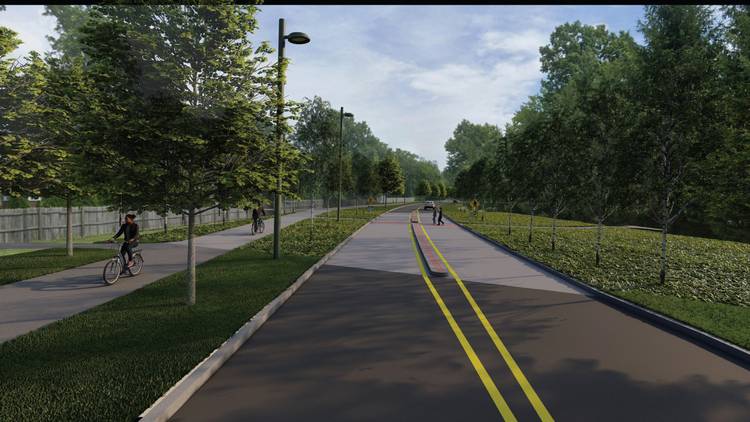
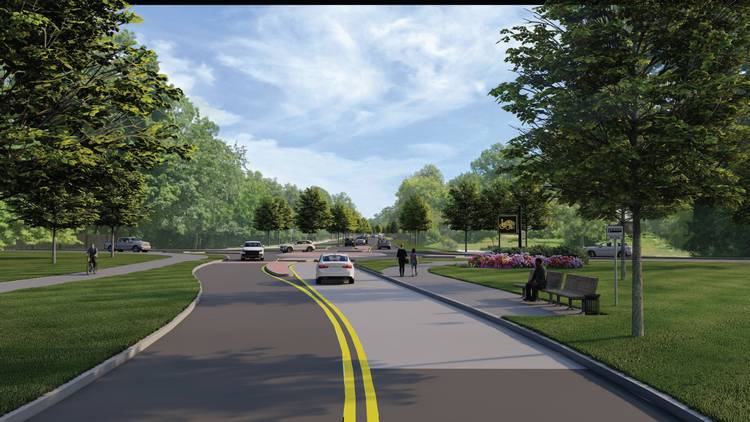
Through a joint effort among Cuyahoga County, Lakewood, and Rocky River, the Lake-Clifton Connector Project will shed two travel lanes in the corridor and make room for a more pedestrian-friendly experience.
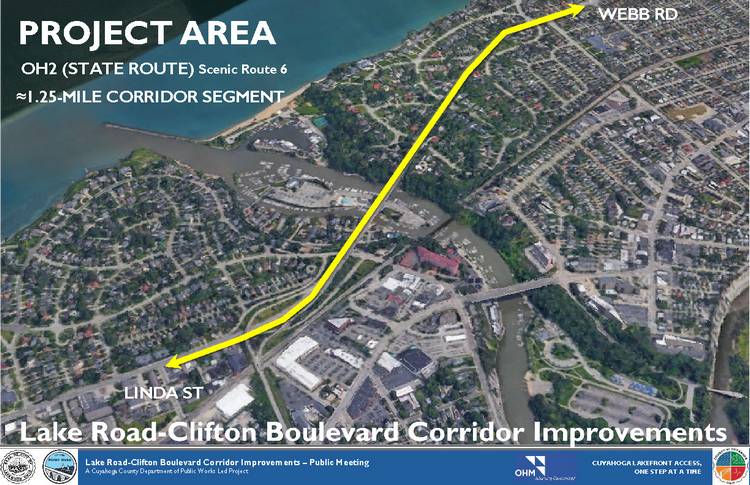
 The Lake-Clifton Connector project mapCity leaders say the $11 million Connector, which broke ground March 31, will transform a 1.2-mile stretch between Lakewood and Rocky River. Narrowing the corridor is only one aspect of the plan.
The venture will also provide a multi-use path for cyclists and walkers, install new lighting and marked crosswalks, and create green infrastructure elements along the corridor.
Increased safety and accessibility acted as dual inspirations for the project, says Lakewood public works director Chris Gordon.
“Reducing from four to two lanes will give [the corridor] more of a neighborhood feel and get pedestrians off the road,” he predicts. “We want people to enjoy multiple ways of transportation—whether they’re walking or biking.”
Construction began on Monday, April 20 with a targeted completion of September 2027. The off-road path will run along the north side of the roadway, offering views of Lake Erie while creating an easier commute for bike riders, Gordon says.
Along with shrinking the corridor, the initiative will add Lakewood’s first roundabout, located at Lakewood Road and Clifton Boulevard. Gordon says the traffic circle will replace lights at the intersection, enhancing safety and connectivity across the Rocky River.
“The roundabout is traffic-calming infrastructure, so when you’re coming over the Clifton Boulevard Bridge from Rocky River, there’s an opportunity to calm traffic and not have a highway feel,” he explains.
For now, vehicles will be temporarily diverted to the north side of the road, then shift to a permanent two-lane set-up with one lane in each direction.
Initial work will close the intersection for at least 90 days, also overlapping with the Ohio Department of Transportation’s reconstruction of Interstate 90 from the West Side suburbs to Rocky River.
Gordon says the project is a temporary inconvenience that officials believe will pay off in the long run.
“We know how intrusive this can be,” he says, “but in the end, we think the majority of residents will be satisfied with the final project.”
A safe and reliable ride
Jacob VanSickle, executive director of cycling advocacy group Bike Cleveland, says he views the addition of a dedicated multi-use path as a win for two-wheeled commuters. The new trail will bring a significant upgrade to a road currently offering only a buffered bike lane.
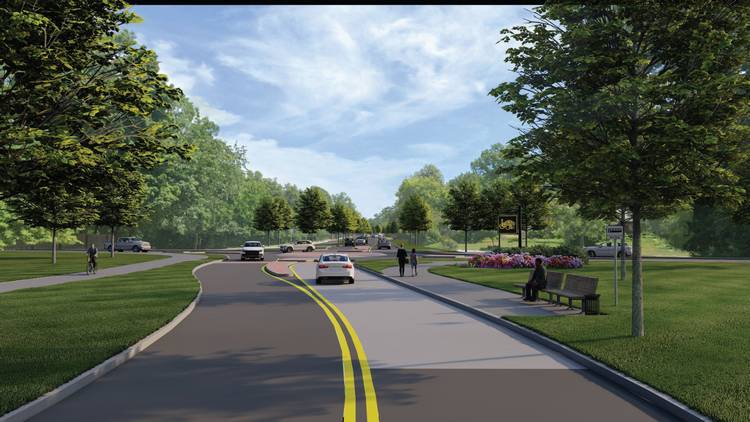 A roundabout is a key feature of fhe Lake-Clifton Connector project.“So often, communities create these plans and they sit on the shelf,” says VanSickle. “But Lakewood [and its partners] are taking these plans and putting them into action. With these upgrades, the key benefit is creating a safe place to bike for people of all ages and abilities.”
Based on traffic safety data, the roundabout is an improvement over the current intersection, adds VanSickle.
“With the path coming in south of the roundabout, that will give motorists good sight lines for pedestrians and cyclists,” he says.
The Lake Road-Clifton Boulevard path adds another key piece of cycling infrastructure in Lakewood, complementing the shared-use trail planned as part of the forthcoming Bunts Road renovation. While the Bunts Road overhaul has sparked debate over a potential influx of new riders, the neighboring Lake-Clifton Connector project has moved forward with little friction.
VanSickle says he sees both initiatives as part of a larger biking ecosystem, which includes Cleveland Mayor Justin Bibb’s call to build 50 miles of protected bike lanes over the next three years.
“People are looking to get to their destination—whether [it is] at the Cleveland border, or into Lakewood and Rocky River,” says VanSickle. “Everyone should be able to do that—whether they’re walking, riding a bike, or taking the bus.
He adds that there is plenty of proof that it’s possible. “Cities across the world have shown that if you build safe [biking infrastructure] and get people where they need to go, they will choose to ride a bike for other trips, he explains. “Trips they may not have done in the past.”