

The Rockefeller Building: The rise, fall, and uncertain future of an architectural gem
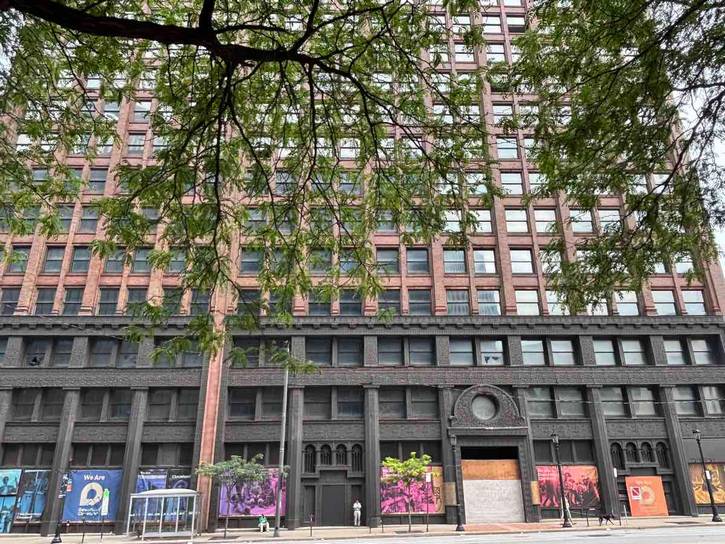

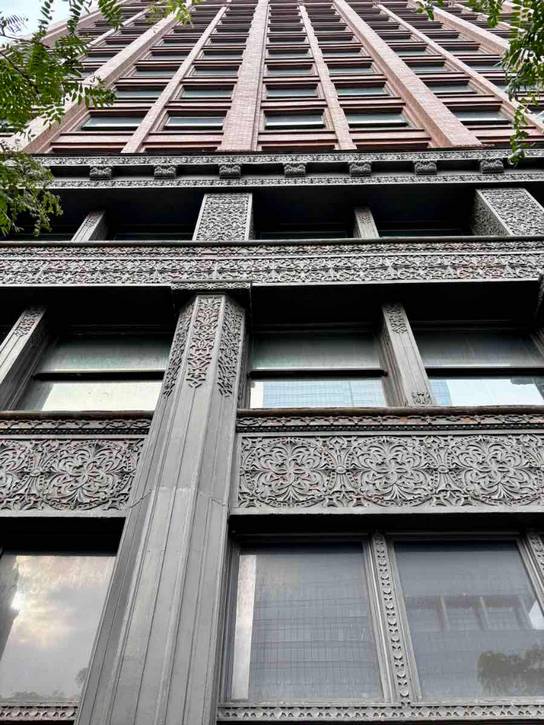
With its future under threat, it feels like a good time to review the story of one of Cleveland’s most remarkable structures. Occupying a notable location, the intersection of W. 6th and Superior, the 1905 Rockefeller Building stands on a storied piece of Cleveland real estate.
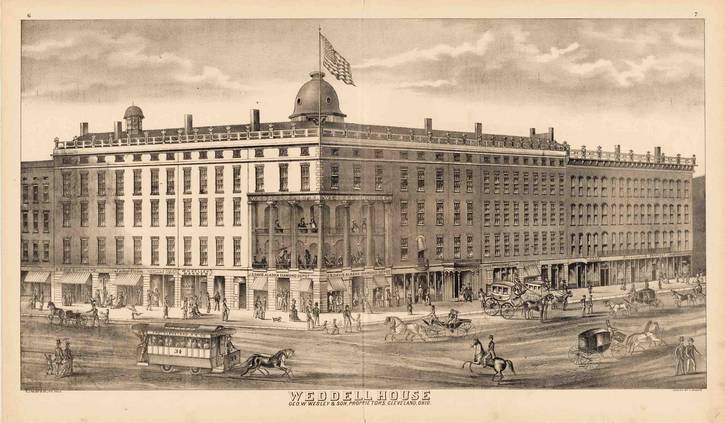
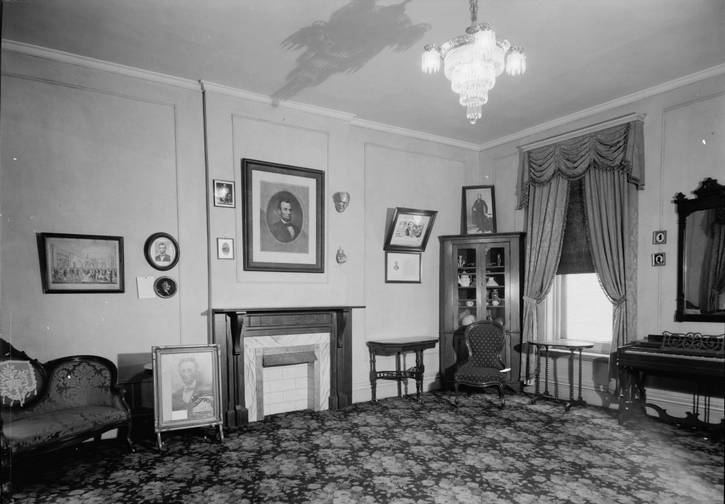
It was preceded by the Weddell House, one of the city’s best known 19th century hotels. When President-elect Abraham Lincoln stopped in Cleveland during his 1861 inaugural trip, he stayed there in February and spoke to a crowd from a balcony on the building’s southeast corner.
By the early 20th century Weddell House was obsolete.
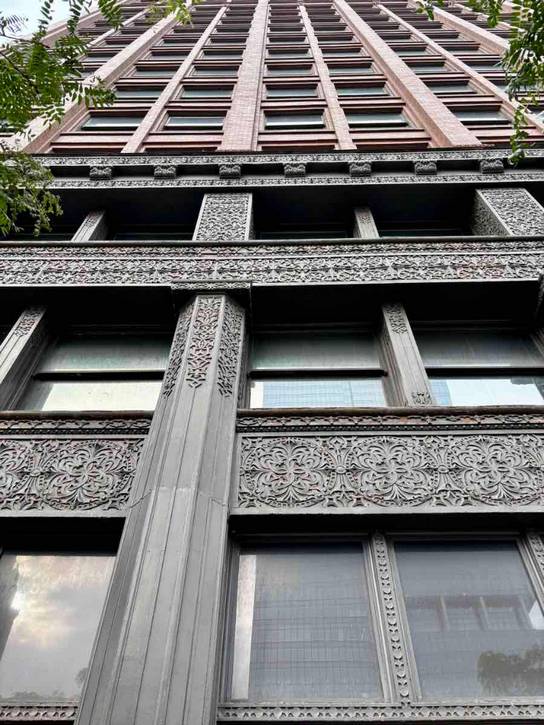 The ironwork detail on the Rockefeller Building.The hotel was demolished and John D. Rockefeller bought the site. He hired Cleveland architectural firm Knox & Elliot to design a modern office building to replace the aging hotel.
William Knox and John Elliott met as young men in the Chicago offices of Burnham & Root in the early 1890s when the firm was one of the preeminent architectural firms in the United States.
Their design of the Rockefeller Building was influenced by Louis Sullivan, widely remembered as the architect who launched the career of Frank Lloyd Wright, and perhaps the only contemporary the famously egotistical Wright regarded as a peer.
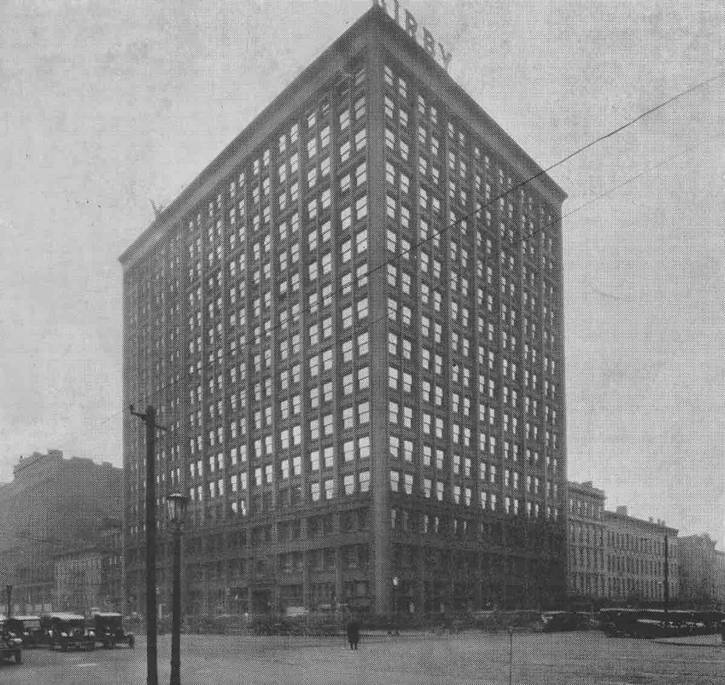
Knox & Elliott designed a building in the Weddell House’s place that stood 212 feet tall. At 17 stories, it was a giant in its day.
Its first floor included a dramatic banking floor. More than two stories high, this space vanished in a renovation done in the 1950s. The building’s interior was embellished with large quantities of marble decoration. The upper floors quickly became home for a number of businesses.
The building’s initial life as the Rockefeller Building was short lived. In 1920 it was purchased by a local character named Josiah Kirby, whose first act was to change the name to the Kirby Building, to John D. Rockefeller’s great annoyance.
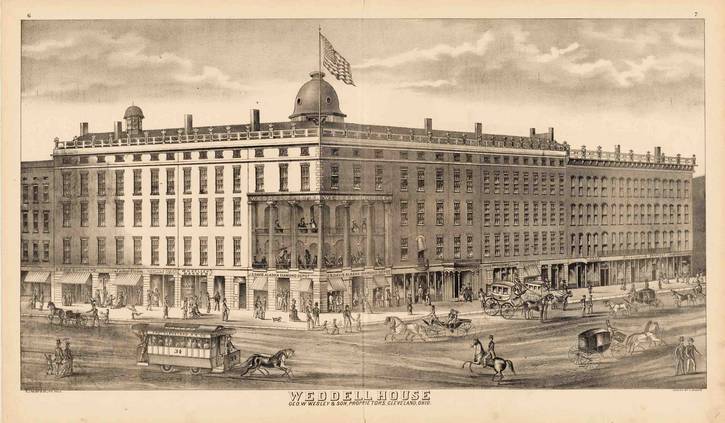 1874 Lithograph of the Weddell House, the predecessor to the Rockefeller Building.Kirby was a young man with a questionable reputation. He fronted a very successful mortgage company for a time but saw his fortune collapse by 1923. Accused of mail fraud and improper dealings in securities he was compelled to put the Kirby Building up for sale.
It was immediately repurchased by Rockefeller who, probably with some glee, restored its original name.
The Rockefeller Building’s subsequent history was uneventful for decades. It has seen more controversy in the past several years than it has since the days of Josiah Kirby.
Developers bought the building in 2021 with great intentions. Their plans foundered, tenants moved out, and the building entered a period of total neglect, vandalism, and thievery.
Now another group of developers has a plan. Time will tell if theirs is workable.
In the meantime the ghosts of John D. Rockefeller and Josiah Kirby are probably watching closely.
About the Author: Tom Matowitz
Recently retired after a 37-year career teaching public speaking, Tom Matowitz has had a lifelong interest in local and regional history. Working as a freelance author for the past 20 years he has written a number of books and articles about Cleveland’s past. He has a particular interest in the area’s rich architectural history.