
Central/Kinsman

Events are being canceled or rescheduled left and right. Offices are closing, and people are working from home and sheltering in place. We caught up with five Cleveland organizations to see how the coronavirus crisis is affecting their efforts to serve the public.

Two technology-driven projects that were pitched last year at the Cleveland Leadership Center’s Accelerate: Citizens Make Change civic pitch competition are well on their way to fruition.

The tree canopy is declining in Cuyahoga County at an alarming rate, experts say. They offer suggestions on how we can reverse the trend.

Doctors from St. Vincent Charity Medical Center explore issues involving trust and trauma with Central residents during a reverse ride-along hosted by the Cleveland Central Promise Neighborhood.

City of Cleveland officials make their case for building a new police headquarters in the Kinsman neighborhood next to the Opportunity Corridor.

Cleveland's role in the civil rights movement is often overlooked. The Cleveland Restoration Society hopes to remedy that with a civil rights trail consisting of 10 Ohio Historical Markers.

PRE4CLE is all about preparing preschoolers for kindergarten, which studies show pays dividends down the road. As the organization reaches the five-year mark, it has much to celebrate but also decisions to make about where to go next.

Opportunity zones supposedly were intended to be good for investors and poor neighborhoods alike. Two years after their creation, the benefits for all city residents are still in dispute.

Money and time are running out to renovate or demolish blighted homes in Cleveland and its inner suburbs, but thousands remain.
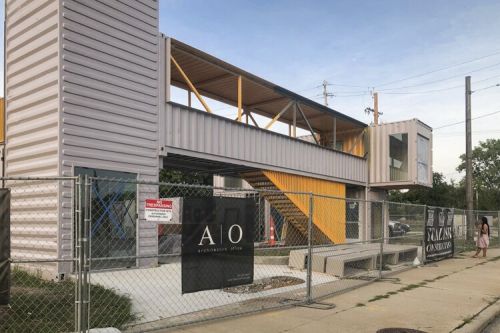
When a lack of affordable retail space was preventing small businesses and startups from getting off the ground in Cleveland's Kinsman neighborhood, Burten, Bell, Carr decided to think out of the box.
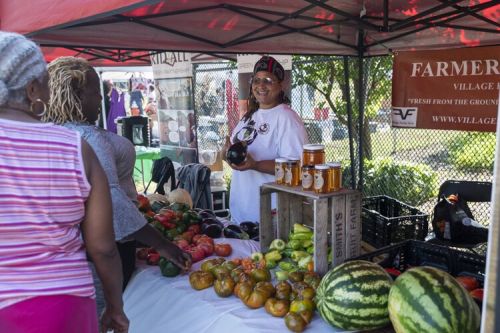
Urban farming is enjoying a revival worth celebrating, and they did just that at Fresh Fest at Otter Park in Cleveland's Kinsman neighborhood on Sept. 7.

From a dynamic duo bringing back Glenville to a Sudanese designer working on a welcome center for Irishtown Bend, these artists are changing the city's creative landscape.

Replacing urban vacant lots with green spaces provides countless benefits for local neighborhoods, but one of the most rewarding parts of the city's gardening program is seeing beginning gardeners transform into leaders.

In Cuyahoga County, the infant mortality rate for African-American babies is 15.1 per every 1,000 live births, compared to 3.8 for white babies. In other words, Cleveland's black babies are approximately four times more likely to die before their first birthday than white babies.

Right next to the newly christened Euclid Beach Pier, more than 550 community leaders gathered lakeside for the fifth annual Vibrant City Awards—presented by Cleveland Neighborhood Progress (CNP) and Delta Dental and highlighting the best in local urban revitalization efforts.

Local artists and nonprofits are teaming up to create change through Cuyahoga Arts and Culture's Learning Lab.

Not surprisingly, Cleveland’s geological landscape 200 years ago was quite different than today’s modern, industrialized city. In 1820, spring-fed streams ran freely throughout the region, running through neighborhoods like Cleveland Heights, Kinsman, Scranton Flats, and Ohio City. Last Saturday, April 6, these now-hidden waterways took the spotlight during a sold-out tour: Exploring Cleveland's Hidden Waterways.
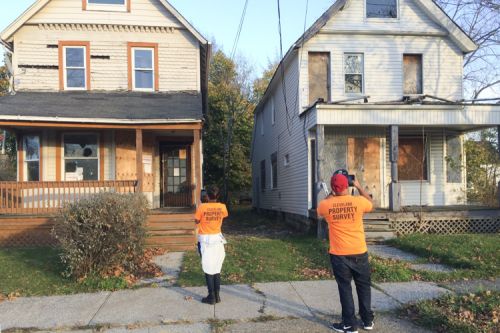
Cleveland's east side is steadily emerging from the 2010 housing crisis—with the number of vacant and distressed structures decreasing significantly while home prices are on the rise.
So go the findings of a 2018 report by the Western Reserve Land Conservancy that examined 13 Cleveland neighborhoods (including Fairfax, Slavic Village, and Shaker Square).
So go the findings of a 2018 report by the Western Reserve Land Conservancy that examined 13 Cleveland neighborhoods (including Fairfax, Slavic Village, and Shaker Square).

Anyone who set foot in the Beachland Ballroom last Saturday might have thought the rumors of print media's demise have been greatly exaggerated. At the sold-out Concert for Truth, more than 450 people gathered to show their support for local journalism and those who bring us the news every day. The event featured 11 local musicians who volunteered their time and talents to raise about $5,000 for the 24 Plain Dealer employees who are being laid off after March.
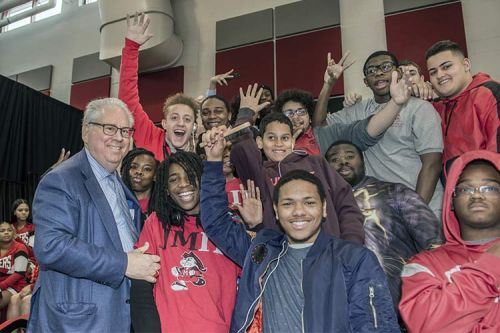
With 20 cities in the running, Cleveland’s chances of becoming the next Say Yes to Education chapter—and only the fourth in the country to receive the distinction—were just a paltry five percent. Yet according to Say Yes founder George Weiss, it was no contest.