
Emerging Neighborhoods

What has been a lifelong love of comics and video games for Tamar Medina has turned into an interesting business. Medina and his co-founders developed J-Lynn Entertainment in 2011, which makes video game comics -- interactive comics where the reader controls the outcome of the comic or an entire series of comics.
In July, Medina began test marketing the video game comics at conventions. “The feedback we got at the comic conventions was great,” says Medina.
But at the conventions Medina also got an unexpected reaction. Parents and teachers approached him to say his video game comics would be a helpful tool for children with autism. After some research into autism, Medina and his team discovered their games were perfect for cognitive training, collecting performance data, and research in autism spectrum disorders.
“Kids with autism have trouble reading and comprehending certain words,” Medina explains. “But reading a comic and seeing what’s going on with pictures, the kids really adhere to technology.” Because the comics are interactive, they also help autistic children develop their social and decision-making skills.
Medina went to top experts for help in developing a line of games specific to kids with autism. “At the end of the game, we put statistics on the social choices they made,” says Medina of one feature he’s incorporated. “We wanted to have it be fun and be interactive.”
J-Lynn Entertainment is still developing its regular line of video game comics and is talking to investors. The company has five employees. Medina says they are hoping to bring on a full-time programmer, and envisions J-Lynn will employ 25 to 50 people within the next five years.
“The passion is awesome and we think our product will be great, not only in improving the autism condition, but also identifying it,” says Medina. “I believe we have the ability and skills for growth. J-Lynn is currently polishing its prototype and hopes to release it this fall for android.
Source: Tamar Medina
Writer: Karin Connelly
In July, Medina began test marketing the video game comics at conventions. “The feedback we got at the comic conventions was great,” says Medina.
But at the conventions Medina also got an unexpected reaction. Parents and teachers approached him to say his video game comics would be a helpful tool for children with autism. After some research into autism, Medina and his team discovered their games were perfect for cognitive training, collecting performance data, and research in autism spectrum disorders.
“Kids with autism have trouble reading and comprehending certain words,” Medina explains. “But reading a comic and seeing what’s going on with pictures, the kids really adhere to technology.” Because the comics are interactive, they also help autistic children develop their social and decision-making skills.
Medina went to top experts for help in developing a line of games specific to kids with autism. “At the end of the game, we put statistics on the social choices they made,” says Medina of one feature he’s incorporated. “We wanted to have it be fun and be interactive.”
J-Lynn Entertainment is still developing its regular line of video game comics and is talking to investors. The company has five employees. Medina says they are hoping to bring on a full-time programmer, and envisions J-Lynn will employ 25 to 50 people within the next five years.
“The passion is awesome and we think our product will be great, not only in improving the autism condition, but also identifying it,” says Medina. “I believe we have the ability and skills for growth. J-Lynn is currently polishing its prototype and hopes to release it this fall for android.
Source: Tamar Medina
Writer: Karin Connelly

There are now dozens of high-performing charter and public schools in the City of Cleveland. Yet a culture of school choice still is not the norm in many Cleveland neighborhoods, and as many as 60 percent of city families have not yet chosen a school to attend.
With the deadline looming on August 19th, those families that do not proactively choose a school will be enrolled in their neighborhood school, which may or may not be the best option depending on how the school is ranked on State of Ohio report cards.
Perhaps most startling is the fact that many high-performing schools in the city have empty seats waiting to be filled even as kids are enrolled in failing schools.
That's why the Transformation Alliance has launched an unprecedented campaign to "promote one common goal of driving enrollment to high-performing schools," says Megan O'Bryan, a nonprofit veteran who is its new Executive Director.
"The ultimate goal of the Transformation Alliance is to ensure that every child in Cleveland attends an excellent school and every neighborhood has a portfolio of high-quality school choices," says O'Bryan. "Our goal is to fill empty seats in the high-performing schools, and over time, drive demand to these good choices. In the marketplace, that demand will then naturally drive out low-performers."
Parents can learn more about school ratings at the Right School Right Now site. The group has completed three different mailers to 25,000 households promoting school choice options. Fliers have been passed out through local community groups. Families can also call 211 to learn more about school ratings.
"The goal is to get parents to look at the info and say, 'My child's school is in Academic Watch, but two miles away there's a school rated Excellent. Why?'"
Although the Transformation Alliance and this campaign are so new that they do not yet have formal goals, O'Bryan says the aim is a "cultural shift" that will take time. "I took this job because it’s an opportunity to create that cultural shift. It's very important for every single resident and the region that this shift occurs. It's a matter of equality and social justice. It's about economic success for our region."
Source: Megan O'Bryan
Writer: Lee Chilcote
With the deadline looming on August 19th, those families that do not proactively choose a school will be enrolled in their neighborhood school, which may or may not be the best option depending on how the school is ranked on State of Ohio report cards.
Perhaps most startling is the fact that many high-performing schools in the city have empty seats waiting to be filled even as kids are enrolled in failing schools.
That's why the Transformation Alliance has launched an unprecedented campaign to "promote one common goal of driving enrollment to high-performing schools," says Megan O'Bryan, a nonprofit veteran who is its new Executive Director.
"The ultimate goal of the Transformation Alliance is to ensure that every child in Cleveland attends an excellent school and every neighborhood has a portfolio of high-quality school choices," says O'Bryan. "Our goal is to fill empty seats in the high-performing schools, and over time, drive demand to these good choices. In the marketplace, that demand will then naturally drive out low-performers."
Parents can learn more about school ratings at the Right School Right Now site. The group has completed three different mailers to 25,000 households promoting school choice options. Fliers have been passed out through local community groups. Families can also call 211 to learn more about school ratings.
"The goal is to get parents to look at the info and say, 'My child's school is in Academic Watch, but two miles away there's a school rated Excellent. Why?'"
Although the Transformation Alliance and this campaign are so new that they do not yet have formal goals, O'Bryan says the aim is a "cultural shift" that will take time. "I took this job because it’s an opportunity to create that cultural shift. It's very important for every single resident and the region that this shift occurs. It's a matter of equality and social justice. It's about economic success for our region."
Source: Megan O'Bryan
Writer: Lee Chilcote

Welcome to Cleveland, an artists' visitation weekend hosted by Northeast Shores CDC and the Community Partnership for Arts and Culture, drew about a dozen artists to Cleveland, many of whom have signed leases and are expected to move here.
"The weekend exceeded our expectations by far," says Brian Friedman, Executive Director of Northeast Shores. "We didn't know they'd be so ready to go."
The artists were impressed not only by Cleveland's affordability but also by the accessibility of the rich arts scene here, Friedman says. "For them it was really the connectedness -- there's a much stronger ability for artists to network and connect here than in many of the communities where they're from."
The artists came from Brooklyn, Boston and Atlanta, among other locations. They were responsible for getting to Cleveland, but the nonprofit partners put them up in a hotel and covered most of their costs once they got here. The group spent the weekend on a whirlwind tour of North Collinwood, Slavic Village, St. Clair Superior, Ohio City, Tremont and Detroit Shoreway. Activities included a visit to the Cleveland Museum of Art and brunch at the Beachland Ballroom.
Northeast Shores and CPAC marketed to 12,000 artists nationally for the Artist-in-Residence program. Friedman says that since launching the effort a few years ago, he's seen 83 artists move to Cleveland, open a business, or do a project here.
Some of the artists who responded to the visitation weekend weren't sure if it was real. "They weren't sure if we would try to sell them a timeshare," says Friedman. "We told them, 'Really, just come. We want you to come be creative in Cleveland.'"
Once the artists move here, the nonprofit partners will help connect them to arts organizations and community efforts in their new neighborhoods. "We'll make sure that they get connected to the fabric of what's going on," says Friedman. "We anticipate that's the beginning of developing deeper roots in Cleveland."
Source: Brian Friedman
Writer: Lee Chilcote
"The weekend exceeded our expectations by far," says Brian Friedman, Executive Director of Northeast Shores. "We didn't know they'd be so ready to go."
The artists were impressed not only by Cleveland's affordability but also by the accessibility of the rich arts scene here, Friedman says. "For them it was really the connectedness -- there's a much stronger ability for artists to network and connect here than in many of the communities where they're from."
The artists came from Brooklyn, Boston and Atlanta, among other locations. They were responsible for getting to Cleveland, but the nonprofit partners put them up in a hotel and covered most of their costs once they got here. The group spent the weekend on a whirlwind tour of North Collinwood, Slavic Village, St. Clair Superior, Ohio City, Tremont and Detroit Shoreway. Activities included a visit to the Cleveland Museum of Art and brunch at the Beachland Ballroom.
Northeast Shores and CPAC marketed to 12,000 artists nationally for the Artist-in-Residence program. Friedman says that since launching the effort a few years ago, he's seen 83 artists move to Cleveland, open a business, or do a project here.
Some of the artists who responded to the visitation weekend weren't sure if it was real. "They weren't sure if we would try to sell them a timeshare," says Friedman. "We told them, 'Really, just come. We want you to come be creative in Cleveland.'"
Once the artists move here, the nonprofit partners will help connect them to arts organizations and community efforts in their new neighborhoods. "We'll make sure that they get connected to the fabric of what's going on," says Friedman. "We anticipate that's the beginning of developing deeper roots in Cleveland."
Source: Brian Friedman
Writer: Lee Chilcote

From Gordon Square to North Collinwood, a definite shift is occurring among young homebuyers, who increasingly are choosing to raise families in the city. Thanks to phenomenal amenities and a growing roster of good schools, Cleveland is becoming downright kid-friendly!
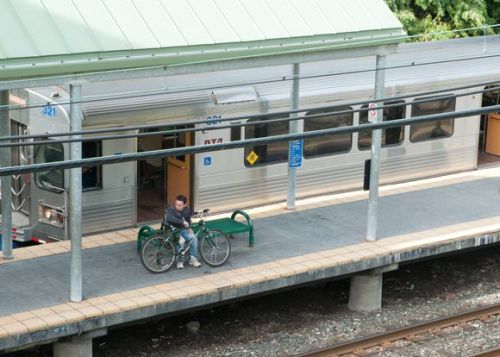
City of Cleveland officials and non-profit leaders are taking notice of how an improved cycling infrastructure can reshape the future of our city for the better. How the city proceeds with a handful or projects could make or break our momentum.

For 10 years, my husband and I have called Ohio City home, where we are now raising our three young children. This summer, Team Taseff created a “Cleveland Summer Bucket List,” which includes 10 places and activities to explore in Cleveland that are free, fun and close to home.

Palo Alto-based Technology Crossover Ventures (TCV) recently invested $66 million in Beachwood-based TOA Technologies, the largest ever venture-backed investment in an Ohio software company and the fourth largest of its kind in the nation last year.
TOA, which provides on-demand mobile workforce management solutions, began looking for investors about a year ago as part of its long-term growth plan. “We were looking at our ability to meet the opportunity ahead of us,” explains John Opdycke, vice president of worldwide marketing for TOA. “More and more companies are looking to manage their mobile employees, and more and more companies are depending on mobile employees to be the face of the company. Now we’re better prepared for rapid growth.”
In January TOA executives began talking to several investment firms. TOA had TCV on their short list, and TCV was looking for investment opportunities in the mobile workforce management industry. Founded in 2003, TOA has steadily grown. Prior to TCV’s investment, TOA announced its cumulative annual contract value had increased 444 percent from 2008 to 2012 and doubled its customers from 2011 to 2012. Additionally, the company developed strategic partnerships and successfully launched a new product, ETAdirect Professional.
The investment will go toward all aspects of the business, Opdycke says, including R&D, marketing and hiring. “Department heads are already talking about their hiring plans,” he says. TOA has 56 employees in Cleveland and expects to expand to 80 by the end of the year. Globally, TOA expects to increase employees from 450 to 600. “We’ll have an immediate uptick in the next six months and that will probably continue into 2013.”
Additionally, Opdycke sees the investment as good for Northeast Ohio. “It’s great to see a big VC looking outside Silicon Valley for investments,” he says. “We are more than happy to carry the light for other companies to look for investments outside the region. Such an infusion of cash in Northeast Ohio shows these things can happen in our part of the country.”
Source: John Opdycke
Writer: Karin Connelly
TOA, which provides on-demand mobile workforce management solutions, began looking for investors about a year ago as part of its long-term growth plan. “We were looking at our ability to meet the opportunity ahead of us,” explains John Opdycke, vice president of worldwide marketing for TOA. “More and more companies are looking to manage their mobile employees, and more and more companies are depending on mobile employees to be the face of the company. Now we’re better prepared for rapid growth.”
In January TOA executives began talking to several investment firms. TOA had TCV on their short list, and TCV was looking for investment opportunities in the mobile workforce management industry. Founded in 2003, TOA has steadily grown. Prior to TCV’s investment, TOA announced its cumulative annual contract value had increased 444 percent from 2008 to 2012 and doubled its customers from 2011 to 2012. Additionally, the company developed strategic partnerships and successfully launched a new product, ETAdirect Professional.
The investment will go toward all aspects of the business, Opdycke says, including R&D, marketing and hiring. “Department heads are already talking about their hiring plans,” he says. TOA has 56 employees in Cleveland and expects to expand to 80 by the end of the year. Globally, TOA expects to increase employees from 450 to 600. “We’ll have an immediate uptick in the next six months and that will probably continue into 2013.”
Additionally, Opdycke sees the investment as good for Northeast Ohio. “It’s great to see a big VC looking outside Silicon Valley for investments,” he says. “We are more than happy to carry the light for other companies to look for investments outside the region. Such an infusion of cash in Northeast Ohio shows these things can happen in our part of the country.”
Source: John Opdycke
Writer: Karin Connelly

The Northeast Ohio Sustainable Communities Consortium (NEOSCC) has mapped out what our region's future looks like if we stay on the same, urban-sprawl-lovin' course. Spoiler alert: It ain't good.
The group's "Business as Usual" scenario attempts to answer the question, "What will happen over the next 27 years if Northeast Ohio just keeps doing what it has been doing?" using sophisticated mapping.
NEOSCC's predictions include 2.4 percent growth in population and 6.2 percent growth in employment across 12 counties. Yet given our current land use patterns, about 92,500 acres will be used for new development and 77,100 acres will be abandoned.
That means Northeast Ohio is "on pace to abandon 10.5 percent of its housing units by 2040" or "18 units abandoned per day," according to the NEOSCC.
Although NEOSCC will not reveal its recommendations at this point, staff will present four scenarios to the public at open houses in the coming weeks.
These scenarios include "business as usual" (sprawl with limited growth), "doing things differently" (more sustainable development with limited growth), "grow the same" (sprawl with growth at a higher level than is occurring now) and "grow differently" (more sustainable development with greater growth).
After receiving input from residents, NEOSCC will recommend a scenario to the four metropolitan planning organizations that help divvy up transportation dollars for the region and create long-term land use plans. Jeff Anderle of NEOSCC says that the group must create a "shared vision" to be successful with its efforts.
"We're not a governing organization; we don't have implementation power," he says. "It's been tricky, but we've gotten great participation from elected officials throughout the region. There's a lot of 'Let's see how and where this comes out.'"
To participate in the process, Northeast Ohio residents can attend one of the upcoming open houses or check out the Imagine My NEO tool on the website.
Source: Jeff Anderle
Writer: Lee Chilcote
The group's "Business as Usual" scenario attempts to answer the question, "What will happen over the next 27 years if Northeast Ohio just keeps doing what it has been doing?" using sophisticated mapping.
NEOSCC's predictions include 2.4 percent growth in population and 6.2 percent growth in employment across 12 counties. Yet given our current land use patterns, about 92,500 acres will be used for new development and 77,100 acres will be abandoned.
That means Northeast Ohio is "on pace to abandon 10.5 percent of its housing units by 2040" or "18 units abandoned per day," according to the NEOSCC.
Although NEOSCC will not reveal its recommendations at this point, staff will present four scenarios to the public at open houses in the coming weeks.
These scenarios include "business as usual" (sprawl with limited growth), "doing things differently" (more sustainable development with limited growth), "grow the same" (sprawl with growth at a higher level than is occurring now) and "grow differently" (more sustainable development with greater growth).
After receiving input from residents, NEOSCC will recommend a scenario to the four metropolitan planning organizations that help divvy up transportation dollars for the region and create long-term land use plans. Jeff Anderle of NEOSCC says that the group must create a "shared vision" to be successful with its efforts.
"We're not a governing organization; we don't have implementation power," he says. "It's been tricky, but we've gotten great participation from elected officials throughout the region. There's a lot of 'Let's see how and where this comes out.'"
To participate in the process, Northeast Ohio residents can attend one of the upcoming open houses or check out the Imagine My NEO tool on the website.
Source: Jeff Anderle
Writer: Lee Chilcote

Slavic Village Recovery, an ambitious effort to provide an extreme neighborhood makeover to a 530-acre chunk of the east side, has begun the process of purchasing 40 homes that will be rehabbed.
Two of these properties already have been put on the market with new mechanicals and other finishes for a mere $60,000, says Marie Kittredge, Executive Director of Slavic Village Development, a partner in the project along with Forest City Enterprises and Safeguard Properties.
"The model is: If my kids are 20-somethings buying their first house, what would that first house look like and what would be attractive to them?" explains Kittredge. "We have to build demand by telling the story. We believe our demographic is people who are already familiar with the neighborhood and ready to buy."
Slavic Village Recovery's innovative model focuses on renovating a majority of the vacant homes on a multi-block area around Mound Avenue and E. 54th Street, where 20- to 30-percent vacancy rates prevail. The homes are acquired from lenders and rehabbed using a model that includes all major items but does not include reconfiguring floor plans, adding bedrooms or other expensive options.
Kittredge says that the rehab costs will likely range from $40,000 to $50,000, allowing the partners to earn a small profit they can reinvest in the initiative.
"The key innovation is that there's no public subsidy," she says. "It's not possible to get the subsidy you'd need for a 25 to 50 home model. If you did just one [house], people would say that's scary. If you say, 'Hey, we're doing 20 to 25 and we have Forest City involved and major grants from Wells Fargo,' then that's different."
Kittredge expects additional homes to hit the market this fall. Last week, a group of volunteers from Forest City cleaned up 60 properties in the area. Some homes are being secured using SecureView, a new product that looks like glass but is far more durable, allowing houses to be secured without using ugly plywood boards.
Source: Marie Kittredge
Writer: Lee Chilcote
Two of these properties already have been put on the market with new mechanicals and other finishes for a mere $60,000, says Marie Kittredge, Executive Director of Slavic Village Development, a partner in the project along with Forest City Enterprises and Safeguard Properties.
"The model is: If my kids are 20-somethings buying their first house, what would that first house look like and what would be attractive to them?" explains Kittredge. "We have to build demand by telling the story. We believe our demographic is people who are already familiar with the neighborhood and ready to buy."
Slavic Village Recovery's innovative model focuses on renovating a majority of the vacant homes on a multi-block area around Mound Avenue and E. 54th Street, where 20- to 30-percent vacancy rates prevail. The homes are acquired from lenders and rehabbed using a model that includes all major items but does not include reconfiguring floor plans, adding bedrooms or other expensive options.
Kittredge says that the rehab costs will likely range from $40,000 to $50,000, allowing the partners to earn a small profit they can reinvest in the initiative.
"The key innovation is that there's no public subsidy," she says. "It's not possible to get the subsidy you'd need for a 25 to 50 home model. If you did just one [house], people would say that's scary. If you say, 'Hey, we're doing 20 to 25 and we have Forest City involved and major grants from Wells Fargo,' then that's different."
Kittredge expects additional homes to hit the market this fall. Last week, a group of volunteers from Forest City cleaned up 60 properties in the area. Some homes are being secured using SecureView, a new product that looks like glass but is far more durable, allowing houses to be secured without using ugly plywood boards.
Source: Marie Kittredge
Writer: Lee Chilcote

Three prominent community development groups in Cleveland have merged, and staffers say the resulting alliance will help strengthen community revitalization efforts across the city, foster more unified advocacy, and allow for greater efficiency in citywide efforts.
Neighborhood Progress Inc. (NPI), a community development intermediary that provides grants and technical assistance to community development corporations (CDCs), has merged with Cleveland Neighborhood Development Coalition (CNDC) and LiveCleveland. CNDC is a trade association of CDCs; LiveCleveland helps to market city neighborhoods.
That might sound like a mouthful of acronyms to the average city resident, but Joel Ratner, President of NPI, says the collaboration really is about improving Cleveland's neighborhoods.
"We'll have a greater ability to coordinate the marketing of neighborhoods along with advocacy, capacity building and all the other things we've traditionally done," he says. "This is really about uniting the strands of community development across the city in a way that's integrated and strategic rather than separate."
For example, says Ratner, CDCs will be able to have a stronger voice in education reform and other efforts that affect the entire city, residents will see an increased marketing presence, and CDC employees will benefit from shared services like healthcare. It adds up to more effective efforts to improve all of Cleveland.
"Our mission is to foster communities of choice and opportunity throughout Cleveland," says Ratner, who acknowledges that NPI will still only have resources to provide core operating support to a subset of city neighborhoods. "There are lots of ways we can play a role in lifting up all CDCs and neighborhoods."
CNDC Director Colleen Gilson says that while the merger idea was far from popular among CDCs at first -- they feared losing their independence -- individual leaders saw the value in fostering a citywide community development network that provides more effective services to all neighborhoods, not just a select few.
The merger will be publicly rolled out in September, with NPI moving into its new offices in the Saint Luke's project at Shaker Boulevard and E. 116th by January.
Source: Joel Ratner
Writer: Lee Chilcote
Neighborhood Progress Inc. (NPI), a community development intermediary that provides grants and technical assistance to community development corporations (CDCs), has merged with Cleveland Neighborhood Development Coalition (CNDC) and LiveCleveland. CNDC is a trade association of CDCs; LiveCleveland helps to market city neighborhoods.
That might sound like a mouthful of acronyms to the average city resident, but Joel Ratner, President of NPI, says the collaboration really is about improving Cleveland's neighborhoods.
"We'll have a greater ability to coordinate the marketing of neighborhoods along with advocacy, capacity building and all the other things we've traditionally done," he says. "This is really about uniting the strands of community development across the city in a way that's integrated and strategic rather than separate."
For example, says Ratner, CDCs will be able to have a stronger voice in education reform and other efforts that affect the entire city, residents will see an increased marketing presence, and CDC employees will benefit from shared services like healthcare. It adds up to more effective efforts to improve all of Cleveland.
"Our mission is to foster communities of choice and opportunity throughout Cleveland," says Ratner, who acknowledges that NPI will still only have resources to provide core operating support to a subset of city neighborhoods. "There are lots of ways we can play a role in lifting up all CDCs and neighborhoods."
CNDC Director Colleen Gilson says that while the merger idea was far from popular among CDCs at first -- they feared losing their independence -- individual leaders saw the value in fostering a citywide community development network that provides more effective services to all neighborhoods, not just a select few.
The merger will be publicly rolled out in September, with NPI moving into its new offices in the Saint Luke's project at Shaker Boulevard and E. 116th by January.
Source: Joel Ratner
Writer: Lee Chilcote

A trio of local creatives, whose work in the arts ranges from entrepreneurship to philanthropy, have been acknowledged for the impact they make on the community.
Young Audiences of Northeast Ohio, a nonprofit that promotes creative learning through the arts for local children and teenagers, announced the winners of its 2013 Arts, Education and Entrepreneurship Awards late last week.
As part of its 60th anniversary celebration, the organization recognized those who have made a lasting contribution in the three key categories, says development director Jerry Smith.
The winners are:
* Stephanie Morrison-Hrbek, founder and director of Near West Theatre. Located in the Gordon Square Arts District, the theater was deemed by Young Audiences as a bastion for Cleveland youth struggling with their identities.
* Anna Arnold, director of the Florence O’Donnell Wasmer Gallery. An artist and educator, Arnold works with at-risk children, encouraging them to positively express their thoughts and values through art.
* Jeff Lachina, CEO of Lachina. The entrepreneur's educational product company recruits from Cleveland Institute of Art and other area universities to demonstrate to students that an active career in the arts can happen locally.
The three award-winners each will have an endowment established in their names, and be recognized during Young Audience's anniversary commemoration in September.
"They all reached out into the community in a unique way, touching the lives of people for whom the arts is not always readily available," says Smith.
SOURCE: Jerry Smith, Jennifer Abelson
WRITER: Douglas J. Guth
Young Audiences of Northeast Ohio, a nonprofit that promotes creative learning through the arts for local children and teenagers, announced the winners of its 2013 Arts, Education and Entrepreneurship Awards late last week.
As part of its 60th anniversary celebration, the organization recognized those who have made a lasting contribution in the three key categories, says development director Jerry Smith.
The winners are:
* Stephanie Morrison-Hrbek, founder and director of Near West Theatre. Located in the Gordon Square Arts District, the theater was deemed by Young Audiences as a bastion for Cleveland youth struggling with their identities.
* Anna Arnold, director of the Florence O’Donnell Wasmer Gallery. An artist and educator, Arnold works with at-risk children, encouraging them to positively express their thoughts and values through art.
* Jeff Lachina, CEO of Lachina. The entrepreneur's educational product company recruits from Cleveland Institute of Art and other area universities to demonstrate to students that an active career in the arts can happen locally.
The three award-winners each will have an endowment established in their names, and be recognized during Young Audience's anniversary commemoration in September.
"They all reached out into the community in a unique way, touching the lives of people for whom the arts is not always readily available," says Smith.
SOURCE: Jerry Smith, Jennifer Abelson
WRITER: Douglas J. Guth

Stormwater run-off can overflow sewers, flood homes, erode roads and streambanks, and pollute our beloved waterways. Northeast Ohio Regional Sewer District is seeking to address these issues with a stormwater management program. Kyle Dreyfuss-Wells, manager of watershed programs for NEORSD, explains what the venture means for the average resident.

Young urbanist leaders who were in Cleveland this week for Next City's annual Vanguard conference were asked a provocative question about this city's future. With new development activity happening in neighborhoods across a city that still is devastatingly poor, how can we do a better job of ensuring that these projects will benefit our poorest residents?
"I'm a little concerned that as we build projects, we're creating a city for yuppies and a city for everyone else," commented Ari Maron of MRN Ltd. in a presentation to 40 leaders from across the U.S. and Canada engaged in fields such as urban planning, entrepreneurship and sustainability. "How many cupcake and yogurt shops can a city sustain?"
Heads nodded and attendees laughed as Maron admitted the challenge was as much to himself as others, since MRN owns three of the city's most prominent new developments, E. Fourth Street in downtown Cleveland, Uptown in University Circle and property along W. 25th in Ohio City.
Several attendees noted that they were surprised by how few of the city's larger developments have translated into prosperity for surrounding neighborhoods. Sitting in the newly-built Museum of Contemporary Art at University Circle, leaders asked how that area's success could benefit its low-income neighbors.
Maron cited the Greater University Circle Initiative and local hiring and procuring efforts by University Hospitals and others. MRN has committed to hiring local residents for its projects, and the company now employs 285 city residents.
"When people from the neighborhood work here, they take ownership of the project because it's their neighborhood," he said, citing DoubleTree Hotel as one example of a University Circle project that employees many local residents.
An attendee from Chicago noted that Cleveland appears to be behind in adding bike-friendly infrastructure. He cited the recent addition of separated bicycle lanes to Surmac Avenue in Chicago as a game-changing project for his city. "Cleveland needs to do one really good pilot project," said the attendee.
Next City is a national nonprofit media organization that organizes the Vanguard conference to highlight best urban practices and develop young urban leaders. Updates from the conference are being posted on Next City's daily blog.
Source: Next City, Ari Maron
Writer: Lee Chilcote
"I'm a little concerned that as we build projects, we're creating a city for yuppies and a city for everyone else," commented Ari Maron of MRN Ltd. in a presentation to 40 leaders from across the U.S. and Canada engaged in fields such as urban planning, entrepreneurship and sustainability. "How many cupcake and yogurt shops can a city sustain?"
Heads nodded and attendees laughed as Maron admitted the challenge was as much to himself as others, since MRN owns three of the city's most prominent new developments, E. Fourth Street in downtown Cleveland, Uptown in University Circle and property along W. 25th in Ohio City.
Several attendees noted that they were surprised by how few of the city's larger developments have translated into prosperity for surrounding neighborhoods. Sitting in the newly-built Museum of Contemporary Art at University Circle, leaders asked how that area's success could benefit its low-income neighbors.
Maron cited the Greater University Circle Initiative and local hiring and procuring efforts by University Hospitals and others. MRN has committed to hiring local residents for its projects, and the company now employs 285 city residents.
"When people from the neighborhood work here, they take ownership of the project because it's their neighborhood," he said, citing DoubleTree Hotel as one example of a University Circle project that employees many local residents.
An attendee from Chicago noted that Cleveland appears to be behind in adding bike-friendly infrastructure. He cited the recent addition of separated bicycle lanes to Surmac Avenue in Chicago as a game-changing project for his city. "Cleveland needs to do one really good pilot project," said the attendee.
Next City is a national nonprofit media organization that organizes the Vanguard conference to highlight best urban practices and develop young urban leaders. Updates from the conference are being posted on Next City's daily blog.
Source: Next City, Ari Maron
Writer: Lee Chilcote

With downtown Cleveland seeing more than $2 billion in travel-related development, we must step up and make sure visitors are provided with the best possible service. We want them to spread the word when they get home about how great Cleveland is.
That was the message from David Gilbert, CEO of Positively Cleveland, at the organization's recent annual meeting. Based on recent research, the organization has determined that the city has "a communication gap" rather than "a product gap."
"We have the product -- amenities that most cities would be jealous of," said Gilbert. "We don't have enough people experiencing it."
To close that gap, Gilbert unveiled an aggressive plan to train hospitality workers as well as locals in how to better market the city and welcome and direct visitors. Positively Cleveland will also focus on legibility and wayfinding signage, online information, streetscape improvements, visitor hospitality, altering local perceptions and better destination branding and communications.
"We've done a great job of building big buildings, but we need more than that," Gilbert said. "It's 'what was the walk like?,' not just the Rock Hall experience."
Source: David Gilbert
Writer: Lee Chilcote
That was the message from David Gilbert, CEO of Positively Cleveland, at the organization's recent annual meeting. Based on recent research, the organization has determined that the city has "a communication gap" rather than "a product gap."
"We have the product -- amenities that most cities would be jealous of," said Gilbert. "We don't have enough people experiencing it."
To close that gap, Gilbert unveiled an aggressive plan to train hospitality workers as well as locals in how to better market the city and welcome and direct visitors. Positively Cleveland will also focus on legibility and wayfinding signage, online information, streetscape improvements, visitor hospitality, altering local perceptions and better destination branding and communications.
"We've done a great job of building big buildings, but we need more than that," Gilbert said. "It's 'what was the walk like?,' not just the Rock Hall experience."
Source: David Gilbert
Writer: Lee Chilcote

Mansfield Frazier, the entrepreneurial mastermind behind the improbable Chateau Hough vineyard at E. 66th and Hough, says he will break ground on the world's first biocellar this year. He's raised more than half of the $100,000 needed to complete the experimental, innovative project.
"This is about growing crops in the wintertime," says Frazier. The biocellar, which has been described as a passive solar greenhouse, will consist of a glass structure built on top of the basement of a demolished home. "We plan to grow mushrooms because they're $12 a pound, an acre yield higher than anything else. This is about renewing neighborhoods, reusing buildings and creating wealth in the inner city."
"The biocellar is based on two concepts," Frazier explains of the glass-topped structure developed by permaculture designer Jean Loria. "One is a root cellar, which has been around thousands of years, and the other is a greenhouse. It's basically taking a greenhouse structure and putting it on top of a root cellar."
Frazier says that he hopes to break ground in July so that the biocellar will be completed by fall. The two- to three-month build-out will be handled by Don Lasker of ALL Construction, and Frazier will also employ a lot of neighborhood residents and guys from a local halfway house. The biocellar was designed by Arkinetics.
Funding sources include local councilpeople, stormwater management funding from the Northeast Ohio Regional Sewer District and a local angel investor.
"We're budgeting $100,000 for the first one, but hopefully the cost will go down once we know what we're doing," says Frazier. "We know the science is there."
Source: Mansfield Frazier
Writer: Lee Chilcote
"This is about growing crops in the wintertime," says Frazier. The biocellar, which has been described as a passive solar greenhouse, will consist of a glass structure built on top of the basement of a demolished home. "We plan to grow mushrooms because they're $12 a pound, an acre yield higher than anything else. This is about renewing neighborhoods, reusing buildings and creating wealth in the inner city."
"The biocellar is based on two concepts," Frazier explains of the glass-topped structure developed by permaculture designer Jean Loria. "One is a root cellar, which has been around thousands of years, and the other is a greenhouse. It's basically taking a greenhouse structure and putting it on top of a root cellar."
Frazier says that he hopes to break ground in July so that the biocellar will be completed by fall. The two- to three-month build-out will be handled by Don Lasker of ALL Construction, and Frazier will also employ a lot of neighborhood residents and guys from a local halfway house. The biocellar was designed by Arkinetics.
Funding sources include local councilpeople, stormwater management funding from the Northeast Ohio Regional Sewer District and a local angel investor.
"We're budgeting $100,000 for the first one, but hopefully the cost will go down once we know what we're doing," says Frazier. "We know the science is there."
Source: Mansfield Frazier
Writer: Lee Chilcote

As cities continue to become more bike-friendly, new bike-based businesses are springing up to support the movement. These bike-centric businesses are both banking on and promoting a growing interest in riding, and in the process they are boosting their cities' economies.
cleveland schools trying new educational approach
In a CBS News story titled “Public, charter schools team up in Cleveland,” Dean Reynolds writes of Cleveland’s historically poor performance in standardized testing and efforts to improve such data through specialized charter schools.
“The classrooms are quiet and small -- 15 kids or less. There's individual instruction from teachers on everything from public speaking to personal etiquette.”
While the traditional schools are struggling with behavior issues, large class sizes, and overall poor performance, Alan Roskamm, CEO of a group of charters, shares that in the right environment the children can thrive.
"Many people will say you have to fix poverty before you can fix education. We believe it is upside down. The only way to fix poverty is to provide our children with a quality education," Roskamm was quoted in the article.
Read the full story here.
“The classrooms are quiet and small -- 15 kids or less. There's individual instruction from teachers on everything from public speaking to personal etiquette.”
While the traditional schools are struggling with behavior issues, large class sizes, and overall poor performance, Alan Roskamm, CEO of a group of charters, shares that in the right environment the children can thrive.
"Many people will say you have to fix poverty before you can fix education. We believe it is upside down. The only way to fix poverty is to provide our children with a quality education," Roskamm was quoted in the article.
Read the full story here.

Elisabeth Sapell admits that she has a sweet tooth. But she also grew up in her family’s grocery store, Sapell’s Bi-Rite in Lakewood. So she paired her love for candy with her knowledge of the grocery store industry and will soon open the supermarket of candy stores, Candytropolis on Richmond Road across from Richmond Mall.
“It’s a large candy superstore,” Sapell explains. “It’s 6,000 square feet of pretty much every candy you can think of. You name it, it will be there. It’s a city with the streets lined with colorful candy fun.”
Sapell wanted to start her own business for a while before she came up with the idea for Candytropolis and joined Bad Girl Ventures' spring 2013 class. While she acknowledges the candy market is saturated, Sapell’s vision of a superstore that carries variety, specialty items and gift baskets, paired with a prominent online presence, will set her apart from the rest.
And Sapell has candy. “Candy makes everyone happy,” she gushes, pointing out that different candies conjure up nostalgic memories to any age. “It’s recession proof. Everyone wants a treat when times are tough.”
But Sapell also has a solid business plan in place. In fact, she was a finalist in the BGV business plan competition, and the experience helped solidify her vision.
“It was the opportunity to go to the classes, meet a lot of people and make connections,” she says. “And I wanted to be around like-minded people who wanted to do something on their own terms. It gets lonely when you’re trying to plan.” She also received an SBA loan after learning about the option through the BGV program.
Sapell recently hired an assistant manager and has candidates lined up for stock people, cashiers, a team leader and a social media specialist. Candytropolis is scheduled to open in September.
Source: Elisabeth Sapell
Writer: Karin Connelly
“It’s a large candy superstore,” Sapell explains. “It’s 6,000 square feet of pretty much every candy you can think of. You name it, it will be there. It’s a city with the streets lined with colorful candy fun.”
Sapell wanted to start her own business for a while before she came up with the idea for Candytropolis and joined Bad Girl Ventures' spring 2013 class. While she acknowledges the candy market is saturated, Sapell’s vision of a superstore that carries variety, specialty items and gift baskets, paired with a prominent online presence, will set her apart from the rest.
And Sapell has candy. “Candy makes everyone happy,” she gushes, pointing out that different candies conjure up nostalgic memories to any age. “It’s recession proof. Everyone wants a treat when times are tough.”
But Sapell also has a solid business plan in place. In fact, she was a finalist in the BGV business plan competition, and the experience helped solidify her vision.
“It was the opportunity to go to the classes, meet a lot of people and make connections,” she says. “And I wanted to be around like-minded people who wanted to do something on their own terms. It gets lonely when you’re trying to plan.” She also received an SBA loan after learning about the option through the BGV program.
Sapell recently hired an assistant manager and has candidates lined up for stock people, cashiers, a team leader and a social media specialist. Candytropolis is scheduled to open in September.
Source: Elisabeth Sapell
Writer: Karin Connelly

It's been four years since Cleveland began allowing residents to keep chickens and one year for Cleveland Heights. Rather than the chicken-induced apocalypse predicted by some vocal critics, neither city has experienced any significant issues. In fact, chickens are improving communities in unexpected ways.

While public officials beat the drum for more money to raze vacant homes, others are saying, "Not so fast." Creative developers have crafted a way to renovate homes for as little money as it would take to demo them. The loft-like homes offer a taste of downtown, done on a dime.