Oh, what a night: CCPL’s Memory Café brings music, connection, and prom magic to older adults
There was a lot of dancing going on one day last August at the Cuyahoga County Public Library’s South Euclid-Lyndhurst Branch.
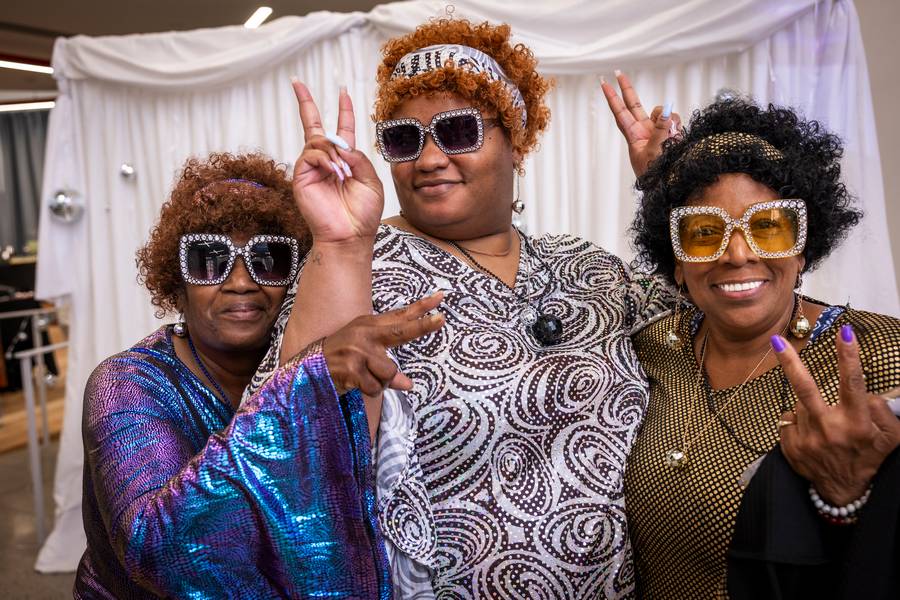
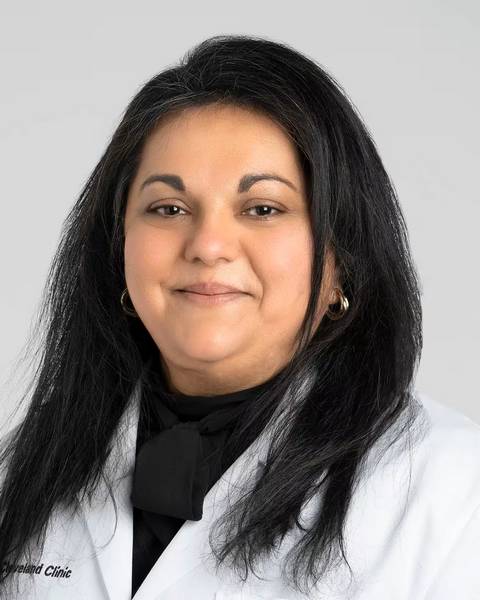
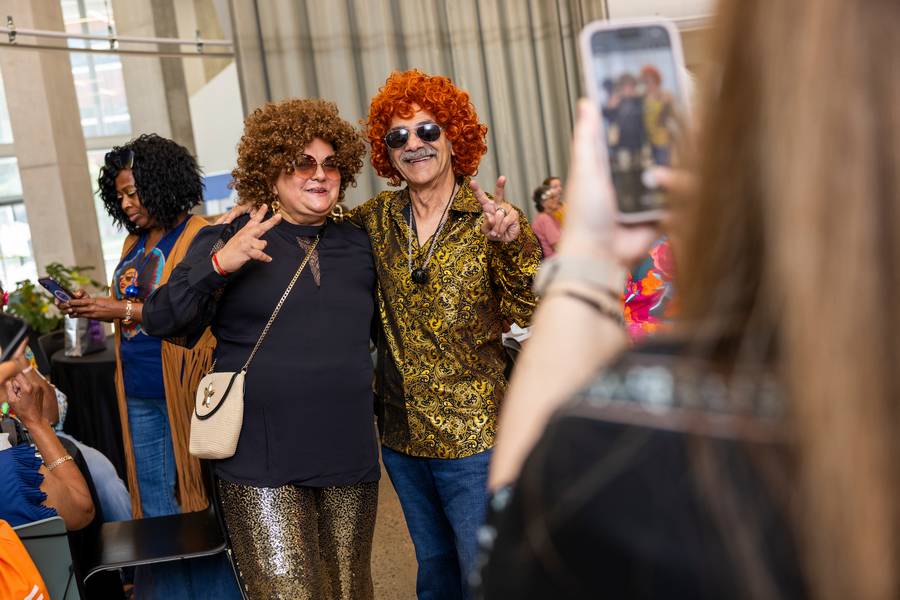
 PCI_Lucko_8981808_Patient Senior Prom at Cleveland Public Library_08-19-26The Memory Café was hosting its annual prom at the library. The theme was 1970s disco. Cleveland Clinic lead geriatrician for community programs Dr. Roopa Anmolsingh and her team got into the disco spirit—showing up in afro wigs and gold glasses.
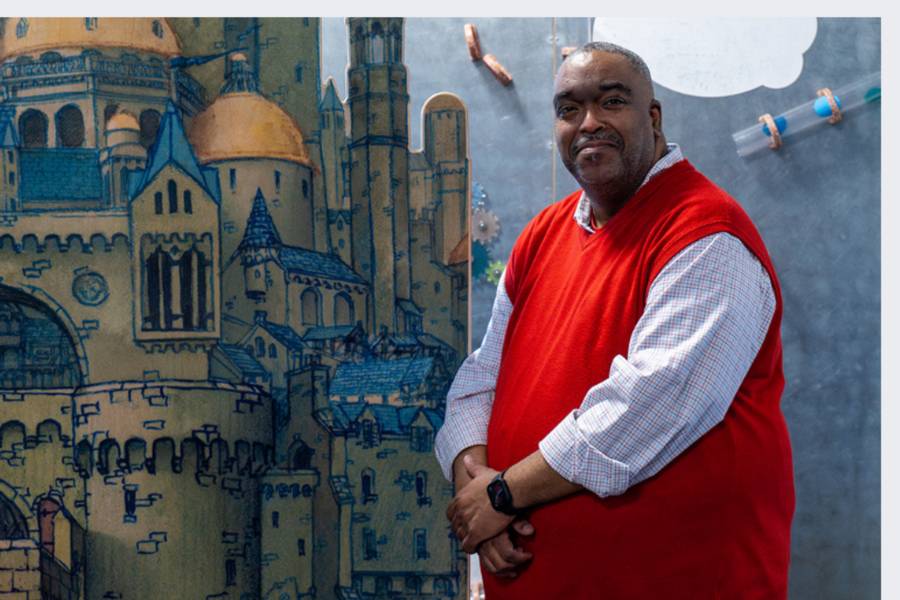
CCPL South Euclid-Lyndhurst branch manager Steven Haynie says the best part was watching people who come to the Memory Café let loose and enjoy themselves.
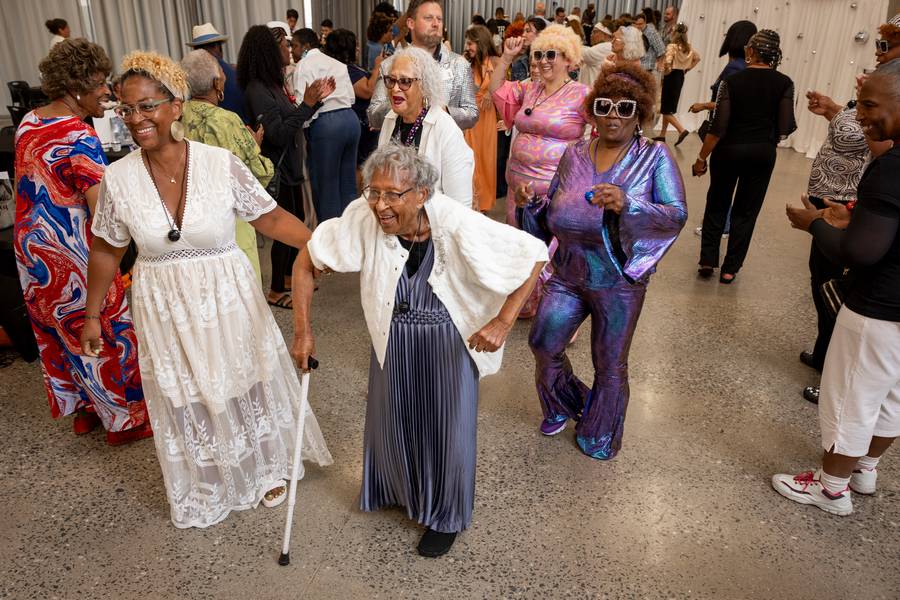
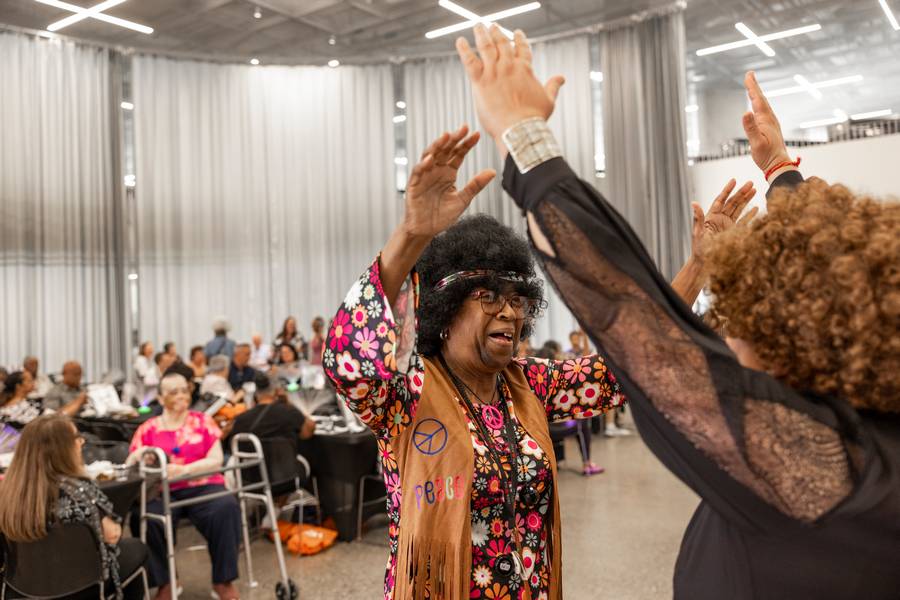
He says the most memorable part of the event happened once the music started: Participants danced, smiled, and boogied. Some people with limited mobility stood at their tables and moved to the music.
“It was amazing,” Haynie says, adding that he enjoyed seeing Anmolsingh get into the theme. “It was great.”
The prom is one of the highlights of the Memory Café, a collaboration between CCPL and the Cleveland Clinic Center for Geriatric Medicine and Care. The Memory Café meets monthly at the South Euclid-Lyndhurst Branch, offering activities designed to keep participants mentally, physically, and socially active. While people with memory loss are at the heart of the program, the Café is open to anyone who wants to participate.
A safe space
Anmolsingh, or “Dr. A,” says the idea began in 2024, after she joined the Clinic staff and learned how few Memory Cafés were available in Northeast Ohio.
“From what I was told when I got here four years ago, that there were only two Cafés in Northeast Ohio,” she recalls, adding that the majority of her patients come in because they are forgetful, have memory impairment, or dementia. She says she knew a community-based program could be valuable.
 The Memory Cafe 2026 prom theme this year had a 70s disco theme.“We'll always give advice to families, like ‘the way that you protect your brain, the way to keep the brain as healthy as possible is to stay active, mentally, physically, socially,’” she says.
A Memory Café offers a way to put that advice into practice.
Anmolsingh and her team began looking for a place to hold the program—preferably a comfortable and friendly environment. They connected with CCPL and Haynie, who offered the South Euclid-Lyndhurst Branch as a home for the Café.
“Ideally, we prefer to have the Café is in a non-medical setting,” Anmolsingh says. A hospital, even when hosting a fun event, she explains, can bring anxiety or memories for some people.
The library, on the other hand, she says provides a beautiful space and a comfortable environment.
“The icing on the cake was to have somebody like Steve,” Anmolsingh says, “he's such a caring and generous and kind person who welcomed our ideas and said, ‘hey, we have the same goal, we have the same mission.’”
Memory Café’s first year, in March 2024, was a pilot program. Initially working with CCPL, Heights Libraries, and Fox Rehabilitation Services, the team developed monthly programs, worked through the necessary agreements between the Cleveland Clinic and an outside entity, and waited to see how participants and caregivers responded.
“When we saw how successful it was the first year,” Anmolsingh recalls, “it was just an automatic response from CCPL, as well as the Clinic side, that was ‘Hey, well what are we doing next year?’”
Keeping the beat
Now entering its third year, the South Euclid-Lyndhurst Memory Café is one of three Cleveland Clinic-initiated Memory Cafés in Northeast Ohio. The other two are at Euclid General Hospital, and the Heights Library in Cleveland Heights. Anmolsingh says the hope is to continue expanding the Café locations.
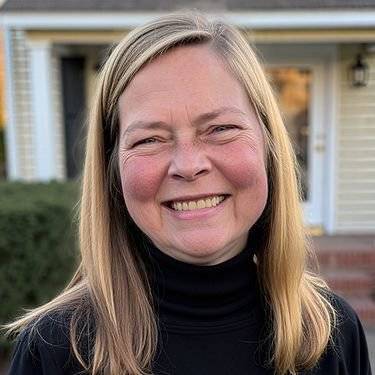
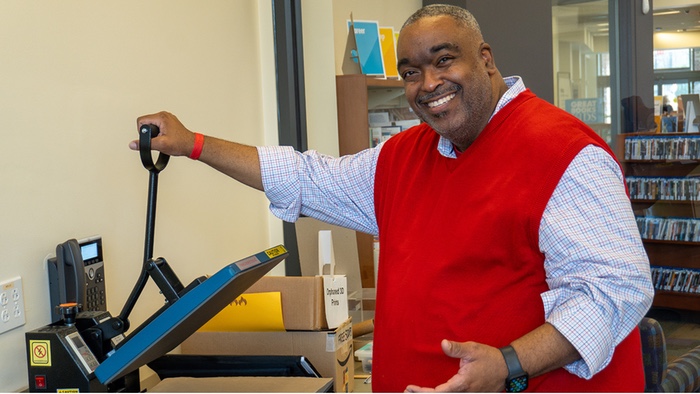
 CCPL South Euclid-Lyndhurst branch manager Steven Haynie.At South Euclid-Lyndhurst, the Café meets on the third Wednesday of every month from March through November, generally from 2 p.m. to 3:30 p.m. Volunteers arrive earlier, and participants and caregivers begin coming in around 1:30 p.m.
The program takes a break during the winter months, Haynie says, giving the team time to work with partners and facilitators to plan the next year's sessions. Much of that planning comes directly from participant and caregiver feedback.
“We sit and kind of discuss what we want the leader to look like and what those sessions are going to pertain to,” Haynie says. “And a lot of that comes from the feedback we get from Dr. A's patients and caregivers to see what they actually want to do when they come into the space. We try to meet as many needs as possible.”
That can mean music, art, physical activities, and other opportunities for participants to engage with one another. Haynie recalls a cardio drumming session in which one participant became especially stimulated.
“He was so animated,” Haynie recalls. “Not that he wasn't before, I mean, he was. But once they did this particular session, I mean, he was really into it.”
Music, in particular, can be a powerful connector for people experiencing memory loss, says Haynie.
The prom made that especially clear, as Haynie watched participants dance the Soul Train, including people with more limited mobility who stood at their tables and danced along.
“And for the ones that have maybe more limited mobility, to see them stand at their tables and dance, it's, yeah,” he says. “I'm really proud to be a part of it because I think it builds that whole social connection piece that I always talk about.”
Sparking a memory
Anmolsingh says the prom offers a glimpse into the power of familiar music and movement. She says some of the people who attend have significant dementia, yet when the music starts, they can reconnect with something that seems to exist beyond the disease.
 Cuyahoga County Public Library Memory Cafe prom attendees enjoyed a 1970a prom theme.“And you know what's heartwarming too,” she asks. “When we know the level of dementia some of these patients or people have, because they're not all patients because we've opened this up to the public.”
Anmolsingh describes one participant who does not always recognize his wife.
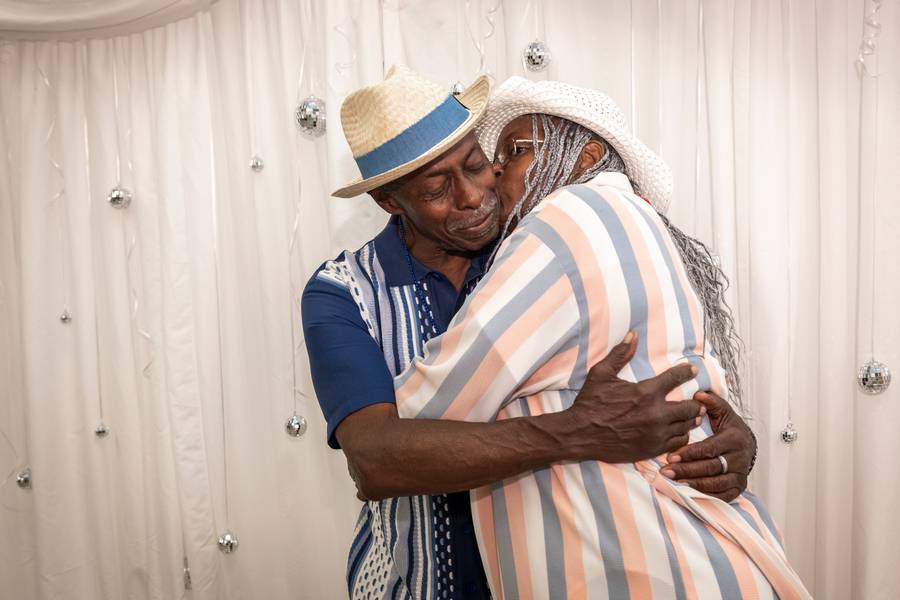
“To see them on the dance floor is unbelievable,” Anmolsingh says. “It’s just for a moment, families are like, wow, this was my husband.”
The experience can be especially meaningful for families who have watched their loved ones' abilities change.
“It's really heartwarming,” Anmolsingh says, adding that she sees conversations turn back to what happened decades ago—the routines, music, and experiences that remain familiar—even when other memories have become difficult to access.
It isn't just the dancing that makes a difference. Just talking with another person can be an opportunity for mental exercise and connection.
“It's something special to see because the more they talk, the more they use different brain functions,” Anmolsingh explains. “They're exercising their brains and they don't even realize they're doing it.”
Haynie sees the same thing.
“They're talking about totally different topics, but they're talking and they're engaged,” he observes. “And again, it's that sense of community.”
 Cleveland Clinic Geriatric Medicine doctor Roopa Anmolsingh.A place for everyone
That sense of community is one reason the Memory Café isn't restricted to people with a dementia diagnosis. Two participants, for instance, have normal memory but attend because they want activities that help keep their brains healthy.
“It’s open to anybody in the public who wants to participate in activities to keep them active mentally, physically, socially,” Anmolsingh says.
But the primary focus remains on people with memory loss—from mild cognitive impairment through different stages of dementia—but the program is not intended to exclude people who simply want to stay active and connected.
In fact, Anmolsingh says the Memory Café can be particularly useful for older adults who don't want to attend a traditional senior center because they’ve had a bad experience.
She says she encourages her patients to give the Café a chance. “It'll give you something to do once a month,” Anmolsingh says.
Participants with more advanced dementia are required to attend with a caregiver because the Memory Café does not have staff available to provide personal assistance.
Caregivers and family members
For caregivers, the program offers its own benefit: A chance to see their loved ones engaged in activities they might resist doing at home.
Anmolsingh says families who have been attending for years offer both positive and constructive feedback, helping the Memory Café team shape the program. Some caregivers have even volunteered to help at sessions.
Haynie says families tell him how much their parents enjoy the program, “because of the chance to get out and do some different things,” he says, adding that he hears those comments and expressions of gratitude when he makes reminder calls before sessions.
“It's always the same, ‘oh, my gosh. You know, dad loves this, mom loves this. Thanks for, creating this program,’” he says.
Haynie also remembers one particular gentleman who attended the Memory Café last year. Each time he arrived, he would greet Haynie at the front door with the same smile and greeting.
“I don't know if he remembered me every time,” Haynie says, “but it was always the same smile, always the same thing. You could always tell he was just glad to be there.
“And that stuff just warms my heart.”
Different perspectives, same goal
The Memory Café has become meaningful for the people who organize it, too. Anmolsingh says the partnership works because the Cleveland Clinic and CCPL bring different perspectives to the program.
“We're coming from that medical kind of mind perspective,” she says. “And then you have Steve [Haynie] and his team who like just kind of blow things out and are like…’what if we do X, Y, and Z?’
 Memory Cafe attendees at 2026 senior prom.“They have the arts, the music, ideas, that imagination,” Anmolsingh continues. “So I think that partnership is a success.”
Haynie has worked in public libraries for 24 years and says the opportunity to connect with people is one of the reasons he enjoys his work.
“Every day is a chance to connect with people I know, as well as [connect with] new people,” he says.
At the Memory Café, those connections take many forms—a conversation at a table, a drumming session, an art activity, or a dance floor filled with people moving to music they know.
And sometimes, it's a 1970s prom.
Haynie is always right in the middle of it.
Anmolsingh remembers Haynie as the lead singer for Kool & The Gang’s “Celebration.”
That sounds like a Memory Café worth remembering.
It is recommended that attendees register for events to make sure there are enough activity supplies and snacks for the programs, pre-registration is not required. All events at the three locations are free and open to the public.