One heart, forever connected: A 24-year bond forged from loss
.jpg)
.jpg)
With National Donor Day approaching this Saturday, Feb. 14, two people are reminded of how their connection began 24 years ago —with both unimaginable tragedy and an extraordinary gift of life.
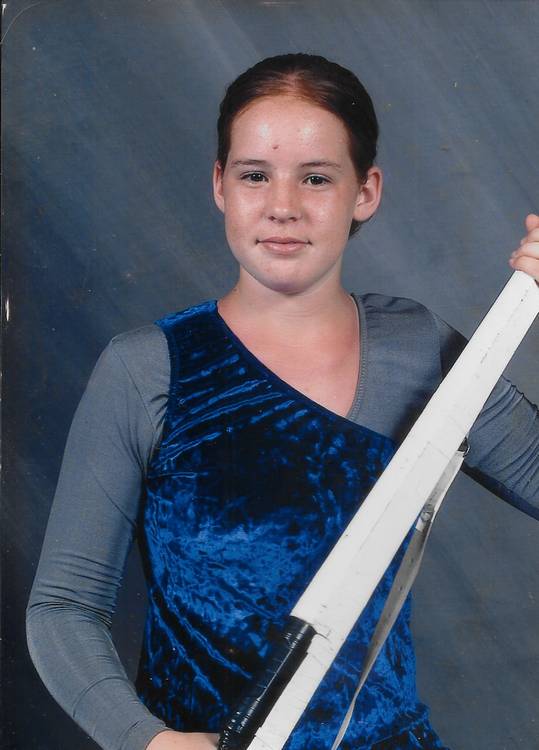
Chuck Roberts of Brooklyn, Michigan, will never forget the devastating day when his world changed forever. "24 years ago, my daughter passed away," he vividly recalls of the day in early February. “Alicia was just one month shy of her 16th birthday on March 4.” Chuck Roberts' daughter, Alicia, died 24 years ago, one month shy of her 16th birthday.
Roberts says Alicia was “going through a rough spell” and took her own life. At the hospital, he soon learned that there was no hope that she would recover.
“It was declared that there was no blood flow to her brain, so essentially she was deceased at that time,” he recalls. The doctors also told him that all of Alicia’s organs were viable for transplantation and asked Roberts if he was willing to consider donation. He sat in the hospital with his oldest daughter, Colleen, considering the request.
“Obviously, the initial thought in my brain was, ‘I'm going through all this trauma right now, and you're asking me to do this,” he says. “Selfishly, it kind of offended me. But then the chaplain and the counselors took Colleen and I aside and [said], ‘Look, you don't have to do this.’"
Roberts also considered the feelings of Alicia’s mother, who was on her way to Hawaii and unreachable. “Fortunately, Colleen told me that she, Alicia, and [their] mom had the discussion years ago about if any of them passed away, they would like to be organ donors if it was possible,” he recalls. “So that was a huge weight off my back."
Waiting on a miracle
Meanwhile, in Cleveland, 15-year-old Candice Monroe was fighting for her life. What began as flu-like symptoms during her sophomore year of high school had escalated into a life-threatening condition.
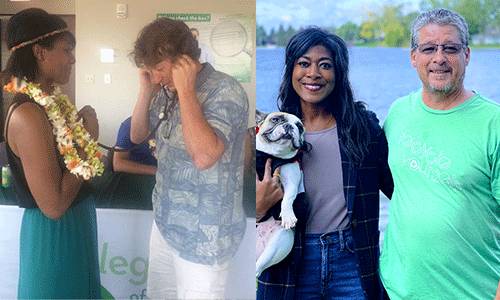
.jpg) Chuck Roberts listens to the beat of his daughter's donor heart inside Candice Monroe.“I was a sophomore in high school, doing sophomore in high school things, but couldn't really get to the bottom of why I was ill,” Monroe recalls. “I did go to several doctors, and I [would be] diagnosed with bronchitis or flu, but they couldn't really pinpoint what the real issue was.
Chuck Roberts listens to the beat of his daughter's donor heart inside Candice Monroe.“I was a sophomore in high school, doing sophomore in high school things, but couldn't really get to the bottom of why I was ill,” Monroe recalls. “I did go to several doctors, and I [would be] diagnosed with bronchitis or flu, but they couldn't really pinpoint what the real issue was.
“I just continued to get sicker and sicker, to the point where one day my mom comes home from work in early 2002 and sees that my feet are the size of mini footballs,” Monroe continues. “I was retaining a lot of water."
At the emergency room, Monroe finally received an accurate diagnosis: cardiomyopathy. "I had an enlarged heart, and they took me to the Cleveland Clinic, [where it was confirmed that] ‘yes, you have cardiomyopathy. We'll put you on some medication, see what that does.’”
Monroe went home, only to return to Cleveland Clinic two days later because her health was steadily declining. “They shared with me that I would need a heart transplant because my heart wasn't getting better,” she recalls.
Heart disease is a familiar enemy in the Monroe family. "My sister had her heart transplant in 1993 when she was 13, and my dad was diagnosed with cardiomyopathy in 1999,” recalls Monroe. “[My father] was older, so I think they thought the best mitigation plan would be medication and he wasn't listed on the transplant waiting list.
“He had a lifetime of medication to the point where he was good enough until 2018, when they said he would need a heart transplant,” she continues, “but sadly, we lost him in 2020."
Monroe's wait for a heart was brief, but terrifying.
"I waited two-and-a-half weeks—very, very quick in the transplant world,” she says of the time she waited before she got word that she was getting Alicia’s heart. “[Today], being 24 years post-transplant, I've heard stories of people waiting for years. So two-and-a-half weeks was a blessing."
Monroe was so ill after her diagnosis that she was hospitalized. "I was so sick, to the point where they were talking a left ventricular assistance device, an LVAD, because my heart just wasn't pumping blood,” she explains. “I was so very, very ill, where they couldn't send me home."
A bittersweet tale
Northeast Ohio Organ Procurement Organization (OPO) LifeBanc CEO Katie Payne has witnessed countless stories of hope emerging from tragedy.
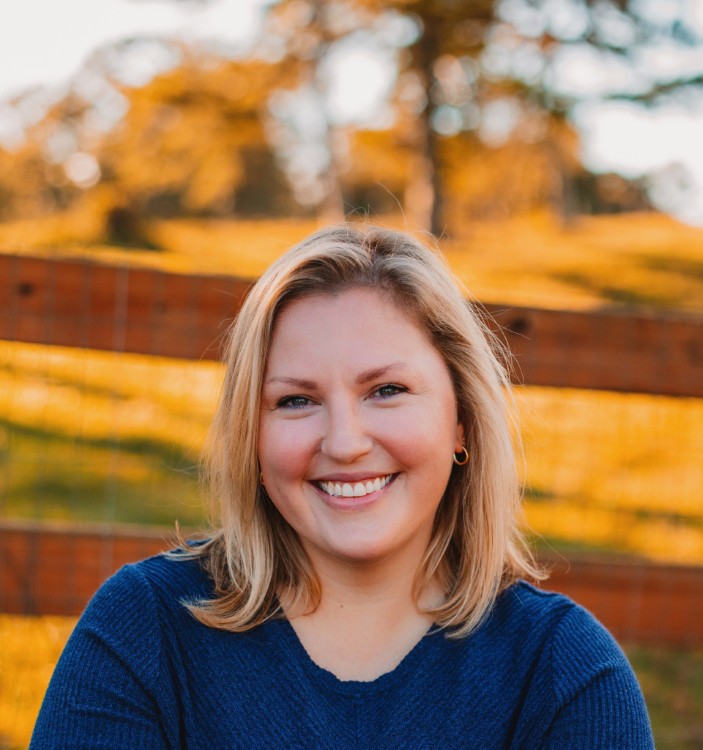
.jpg) Candice Monroe received Alicia Roberts' heart in 2002. "The thing that's really hard is, it was Chuck’s worst day, but it was Candice's best day," Payne explains, describing the complex emotions surrounding organ donation.
Candice Monroe received Alicia Roberts' heart in 2002. "The thing that's really hard is, it was Chuck’s worst day, but it was Candice's best day," Payne explains, describing the complex emotions surrounding organ donation.
The statistics tell a sobering story. "Only about 2% of people who pass away on a ventilator in a hospital are able to move forward with donation for one reason or another," Payne notes. This makes each donation incredibly precious.
Despite these challenges, LifeBanc has had remarkable success so far this year. "This year, we've had 34 donors in Northeast Ohio, and we've transplanted almost 100 organs already," she shares proudly.
Payne says LifeBanc’s mission extends far beyond the moment of donation.
"We never forget that loved one, and we support donor families for as long as they want to stay connected to us," she emphasizes. "It's important to me that people know that we take care of families after the donation, too—not just in the moment when the organs are needed."
Physical and emotional healings
When Monroe received Alicia’s heart, she began a journey of healing in 2002 that would go beyond the operating room. The Roberts and Monroe families were connected through anonymous letters for more than a decade before Candice, 39, decided to reach out directly.
"So it was the ‘what do I say’ that I really struggled with,” Monroe recalls. “I didn't want a generic letter, and I wanted to make sure the words were right, so I waited. Nine years, or no, 11, 10 years, I don't know, and decided, let me do it."
Roberts recalls his excitement over receiving Monroe’s initial letter.
“I had heard previously from one of the lung recipients, the pancreas recipient, the kidney recipient, and the eye recipient's family,” he recalls. “But in the back of my mind—it's foolish, but I always thought, the heart…well, every organ is important—I was hoping that that day would come. And when I get Candice's letter, it really lit me up.”
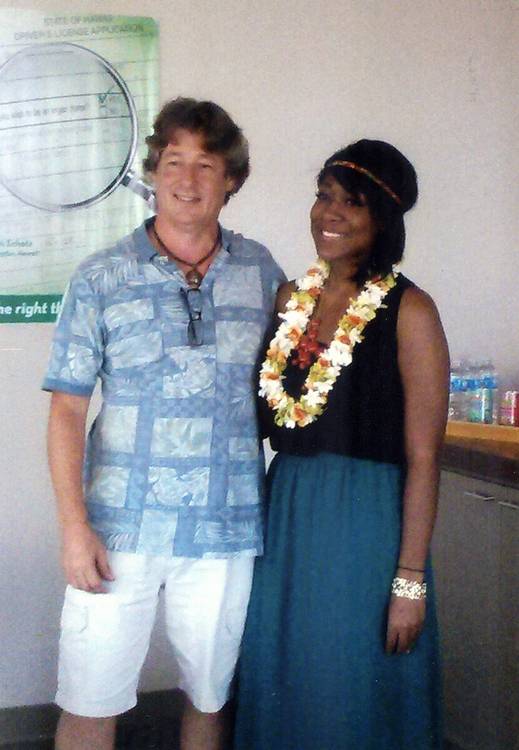
Then, everything came together perfectly in 2014 when the two met in-person in Hawaii. Roberts had moved to Hawaii and Monroe was visiting her family to celebrate her father's retirement.
Roberts remembers the procurement organization organizers staggering his arrival in their offices, so the two would not accidentally meet in the hallway.
"I got up there, and they said, ‘the family's in there—if you're ready to go in there, you can, if you want to go home, go home,’” he recalls.
“I went in there, and it was a rush of emotions—it was incredible to see them all,” Roberts continues. “They had a stethoscope, and I got to listen to her heart, and I think we all cried quite a bit. I met Candice and her mom and dad and sister and her niece, and we just became an instant family."
The bond between Monroe and Roberts remains strong today. “He's very much a part of the family," Monroe says.
Spreading the word
Today, Monroe volunteers with LifeBanc and Donate Life America, sits on the board of trustees for Transplant House of Cleveland and willingly shares her story and her gratitude to Roberts.
Thanks to Alicia, and Roberts’ thoughtful decision, Monroe was able to grow up and go on to earn a bachelor’s degree from John Carroll University, an M.A. from the University of Akron, and become an ethics and compliance manager at the J.M. Smucker Corporation.
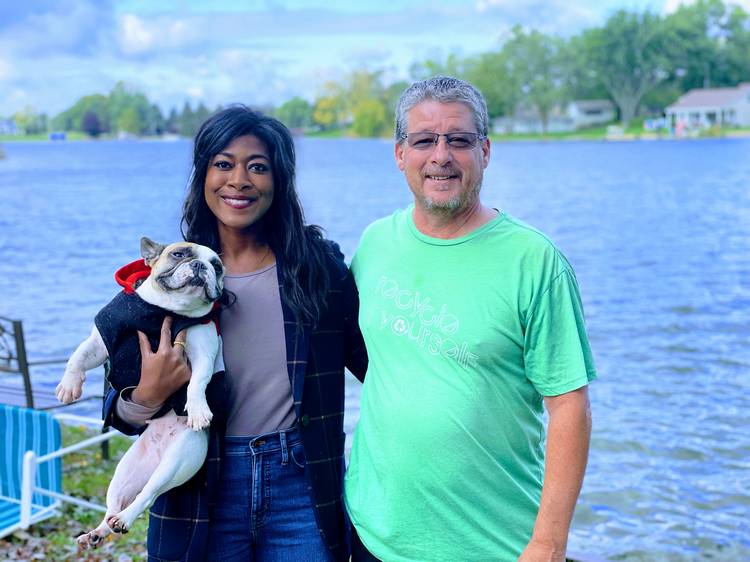
 Chuck Roberts and Candice Monroe are now 'familyPayne, who has experienced loss first-hand, has a simple message to those considering becoming organ donors:
"Talk to your family about what you want," she advises, adding that such a conversation can spare families from making difficult decisions during their darkest hours.
Additionally, Payne says registering as a donor does not mean a donation plan automatically goes into motion.
"The hospital doesn't have any access to the registry, so they can't see who is registered or anything like that," she says, addressing common fears that being a registered donor might affect medical care.
"In your last moments, you have the opportunity to be someone's ultimate gift and to save someone else,” she continues. “There is power in the end of one story, starting the beginning of another."
Roberts continues to speak regularly about organ donation, which he began doing for the Indiana Organ Procurement Organization, Indiana Donor Network in Fort Wayne, where he was living when Alicia passed away.
“I would mostly talk to high school or college classes and would explain the story of Alicia and Candice,” he recalls of his talks. “Obviously, you had the questions from the kids [like], ‘We hear that if you have a heart on your license, when they pull up to you after an accident, they're just going to let you die.’
“I try to dispel that rumor by telling them, ‘These people are dedicating their lives to saving people’—that doesn't happen,” Roberts continues. “I discuss that they can't harvest the organs unless a person is brain dead. I'd say, ‘Let's look at it this way: If your mother or dad were in the hospital and they needed that heart, and I passed away and my heart was available, would you take it?
“They say, ‘Well, absolutely.’ And I will reply, ‘well, there's your answer.’ I look at how I dealt with it and that’s, I think, a great way of explaining it.”