The Black Shield: NEO native Wilbert L. Cooper’s memoir traces three generations of Cleveland Police
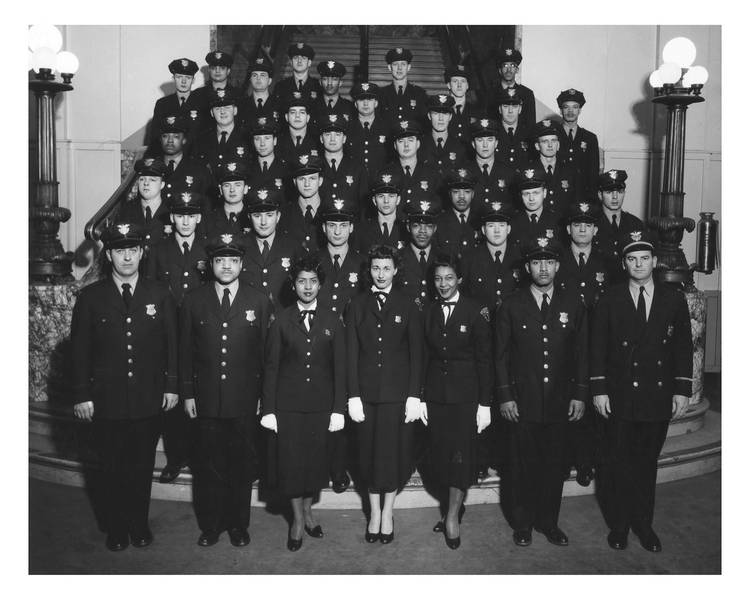
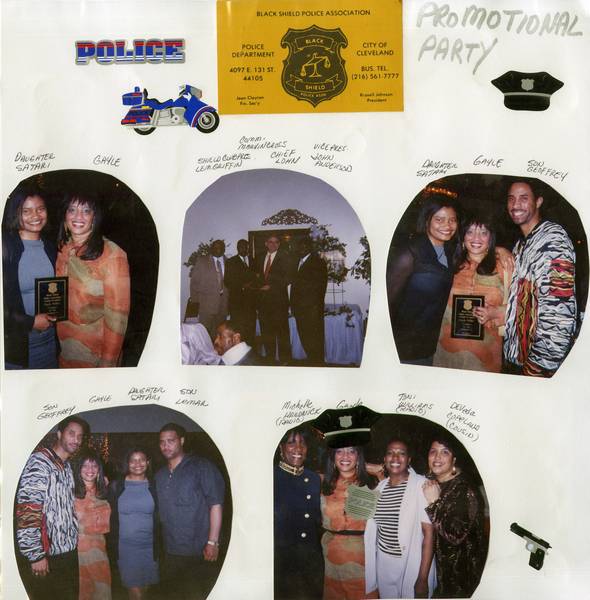
After the police killings and related protests around the deaths of George Floyd and Breonna Taylor that occurred around the country in 2020, reporter Wilbert L. Cooper returned to his hometown of Cleveland from his Brooklyn, New York home to profile Cleveland Police Sgt. Vincent Montague, the president of The Black Shield—a support group formed in the 1940s for Black Cleveland Police officers who were facing discrimination.
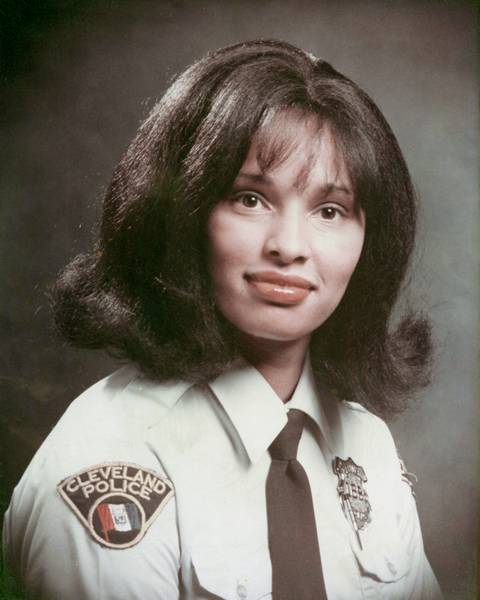
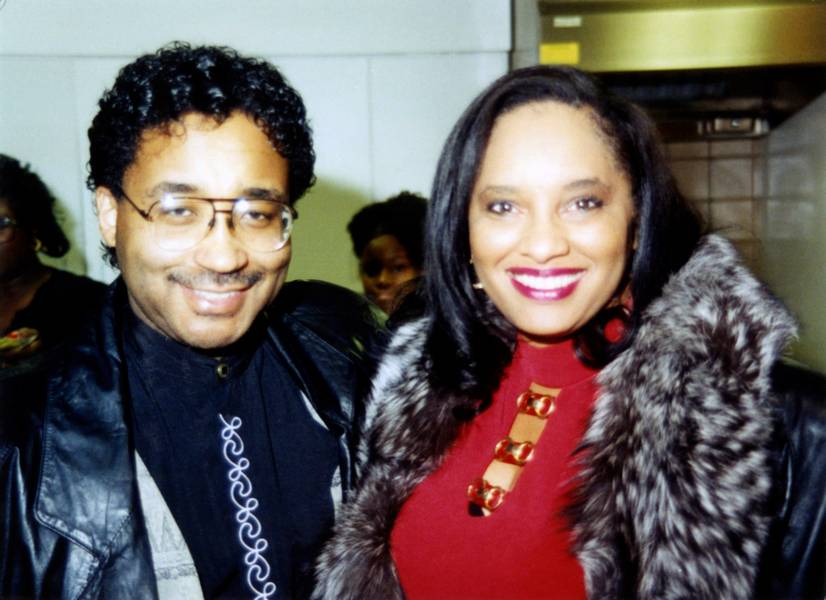
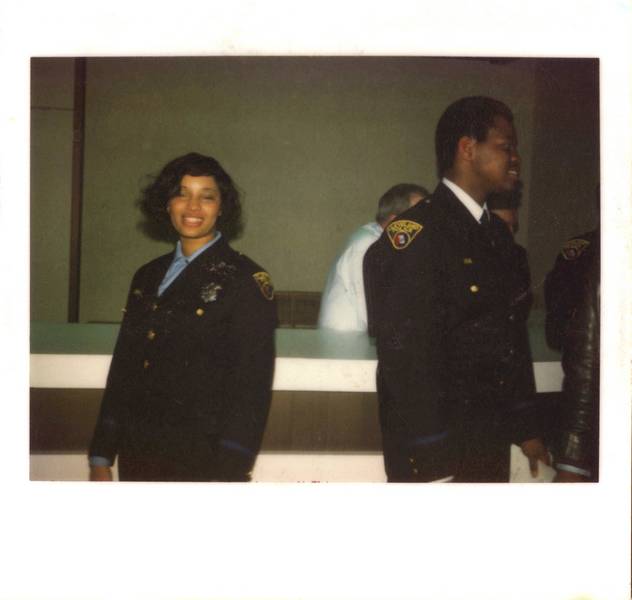
 Wilbert L. Cooper's parents, Sgt. Will Cooper and Gayle Miller Cooper at The Black Shield.In Cooper’s family, being a Cleveland cop is a way of life. Between his parents, Sgt. Will Cooper and Sgt. Gayle Miller Cooper, now-retired members of the Cleveland Police Department, and his sister, Satari Smith, also a retired Cleveland Police officer, there have been Cleveland police officers in the Cooper family since 1950.
In addition to his immediate family, Cooper is a part of a long line of Cleveland police officers, with six members of Cooper’s family who served with the department between 1950 and 2017.
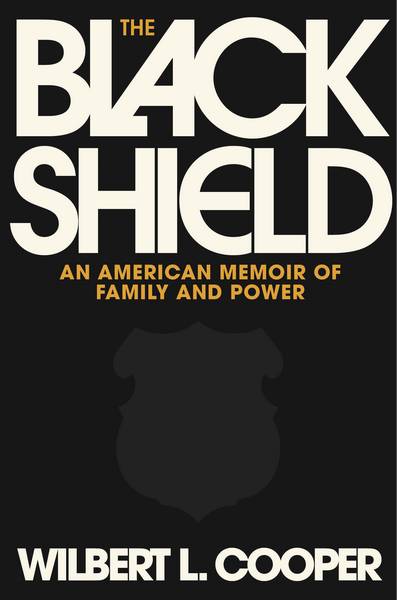
Cooper’s decision to return to Cleveland prompted him to write his new memoir, “The Black Shield: An American Memoir of Family and Power.” The Strongsville native examines three generations of Black police officers in his family—and the complicated history of race, policing and power in Cleveland.
On Thursday, Sept. 17 at 7 p.m., Cooper will discuss “The Black Shield” at Cuyahoga County Public Library’s South Euclid-Lyndhurst Branch, 1876 South Green Road, South Euclid 44121.
Then on Friday, Sept. 18 from 6 p.m. to 8 p.m., Cooper will be at Visible Voice Books, 4601 Lorain Ave. in Ohio City, for a free book event with Cleveland’s DJ Red-I.
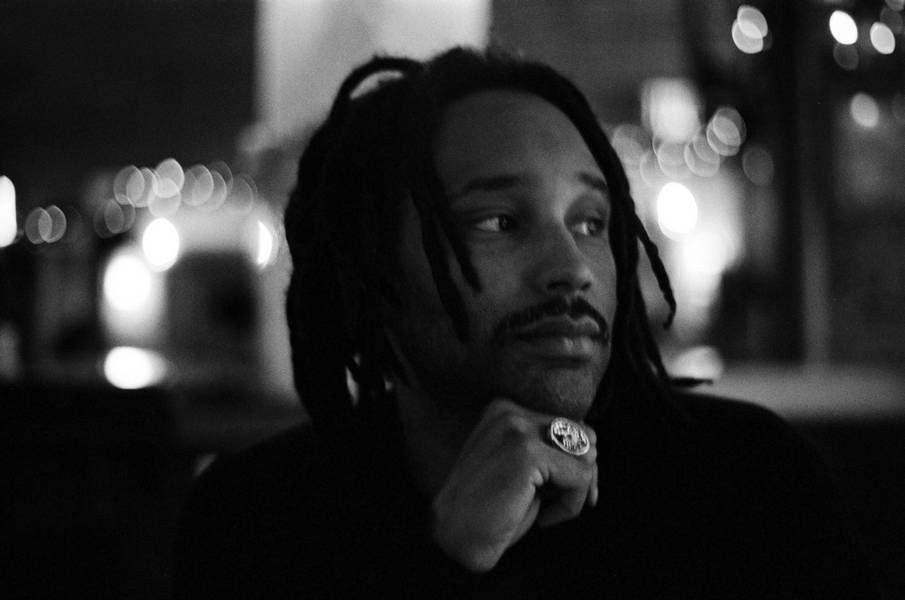
 Journalist Wilbert L. Cooper.Cooper says the story of race and policing in America is not abstract. It runs through his family.
That family history is at the heart of Cooper’s first book, which combines many components of his life to explore the experiences of Black police officers in Cleveland—and the complicated position they occupy within an institution that has itself been shaped by racism.
“This book is a memoir, but it's also history and journalism,” says Cooper. “It's an exploration into the world of Black police officers. For me, it's really driven by my family. I come from a family with three generations of Black cops in the City of Cleveland.”
As Cooper tells the story of his family, he also looks outward, examining the history of race and policing—both in Cleveland and across the country.
“As I'm telling and exploring the [broad] story of race and policing in America, I'm also telling the story and exploring my family's experiences and as Black people in America and also as police officers in America,” he says.
 Wilbert L. Cooper's “The Black Shield: An American Memoir of Family and Power.Living in the complexity
Cooper, who studied journalism at Ohio University before moving to Brooklyn, New York, in 2010, says he wanted the book to resist easy answers about race and policing.
“The book really tries to live in the complexity of these things and try to put intimacy and depth where maybe there hasn't been a lot of that,” he says, “in terms of these conversations around race and policing.”
That complexity is particularly apparent in the stories shared by his parents and other family members who became police officers.
“The book focuses on my two great-uncles, my mother and my father,” Cooper says. “Those are the family members that the book mainly focuses on.”
Cooper notes that his maternal uncle and sister also served with the Cleveland Police Department.
“So I have my great-uncles who are cops, but also my uncle, my mother's brother, was a Cleveland police officer, and my sister was a Cleveland police officer as well,” he says. “So there are six people total, all in the Cleveland Police Department going back from 1950 up until 2017.”
Rather than presenting those experiences in isolation, Cooper says the book examines what led his parents to become police officers and what it meant for them to work within the institution.
“One of the big things it focuses on is what drove my parents to become police officers,” he says. “And it also explores and wrestles with the benefits and the privileges that come with being a police officer—and then the other elements that come with it as well.”
For Cooper, those “other elements” mean confronting an uncomfortable contradiction: Police officers can provide stability and opportunity for Black families while also being part of a system that has had devastating consequences for Black communities.
“Especially when you're a Black person in America and you recognize the negative impact that the carceral system has had on the Black community, recognize the police brutality, that is sort of systemic to the carceral system in this country,” he says. “So it tries to give a complete view of the challenges, the benefits, that come with being a part of an institution like the police.”
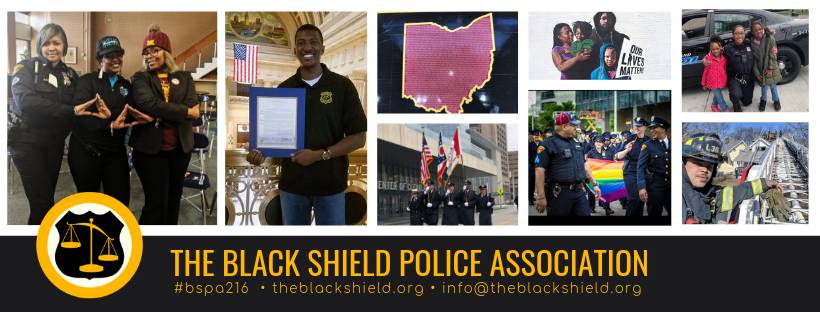
 The Black Shield Pollice Association Cleveland's Facebook page.The story of The Black Shield
One of the book’s major threads is the history of The Black Shield, a Cleveland organization formed by Black police officers in the 1940s.
Cooper describes the Black Shield as an advocacy organization, rather than a traditional police union such as the Fraternal Order of Police (FOP) or the Cleveland Police Patrolmen’s Association (CPPA).
“They don't have bargaining power, but they're an advocacy organization,” he says. “They do advocate on behalf of the concerns, the grievances, and the issues that Black police officers have within the Cleveland Police Department.”
The organization can support members through disciplinary proceedings and has historically raised concerns that Black officers say they felt were not being adequately represented by other police unions.
“So when Black police officers are concerned about police violence, but the CPPA or the FOP are not as concerned about it, that's one differentiating point that we've seen through the history of this organization,” Cooper says.
The Black Shield’s origins are tied to a violent confrontation at Euclid Beach in the 1940s, when Black activists protested the segregation of the amusement park.
Cooper explains that activists asked Cleveland police officer Lynn Coleman to accompany them as they attempted to challenge segregation at the park. Private police attacked both the protesters and Coleman, who was Black, and Coleman was shot in the thigh.
He was taken to a segregated Cleveland hospital, where other Black officers helped guard his room because of concerns that he might face retaliation.
“The group of Black officers who helped guard his room, and the incident itself, sort of helped galvanize them together to form The Black Shield to address the grievances that Black officers had [while] working inside the police department,” says Cooper, “and also [address] the problem of the police department in the city really enforcing and helping maintain de facto segregation. That was kind of the beginning of it.”
The organization’s history, he says, has not been entirely straightforward.
“Throughout its history, [The Black Shield has] sometimes lived up to those values of activism and support of the community,” Cooper says. “Other times it's focused on other things, [like] promotions and stuff.”
History is still unfolding
The Black Shield’s story gave Cooper a way to examine the history of racism within the Cleveland Police Department.
 Cooper's Great Uncle Curtis Scott and Fred Johnson's Police Academy.“I would say that there's a great deal of racism,” he says. “You know, racism is a society-wide problem.” He adds that the book traces how police were involved in enforcing segregation in Cleveland during the Jim Crow era and how Black officers faced racism within the department.
“Black officers being a part of the police department, that also enforces or supports segregation and poses a lot of conflicts and problems,” he says.
Cooper examines the efforts of Black officers to challenge that system, including a lawsuit against the City of Cleveland in the 1970s that Cooper says led to a consent decree and reforms within the department.
But Cooper says the story doesn't end in the past.
“It's a historical aspect, but it's also an ongoing aspect,” he argues. “That's one of the big things the book is wrestling with: How do Black police officers deal with those challenges inside the police department?”
A story few journalists could tell
Cooper’s family connections gave him access to the Black officers whose stories he wanted to tell.
“My family was, I think, very open, and I think a lot of the Black officers I spoke to in Cleveland were pretty open because they were familiar with my family,” observes Cooper, saying some officers were eager to share their experiences but were understandably cautious about speaking with journalists while still working for the department.
“The issue is that a lot of times these officers don't know if they can trust the media or journalists,” he explains. “They're still working, they're still on the job, and so they don't want to jeopardize their employment to talk about things that are going on.”
Retired officers and Cooper’s family connections helped him get personal perspectives that might have otherwise been difficult to access.
“The executive leadership in The Black Shield has a lot more latitude to talk to the media because they're part of the organization,” he says.
That access allowed Cooper to tell a story that is both deeply personal and much larger than his own family.
“One of the approaches the book takes is it tells a multitude of stories, and the primary thread is definitely my family,” he says, “There are narratives and perspectives throughout the book that are [from] people outside my family as well.”
Cooper says those perspectives include activists, Black police officers, and members of The Black Shield, who provide a broader portrait of the ways people have understood and challenged policing over generations.
A story shaped by Cleveland
Cooper says his decision to write the book grew naturally from his own position within the overlapping worlds he lives in.
 Wilbrt L. Cooper's mother and Cleveland Police office Gayle Miller Cooper.“Coming from a family of Black police officers and also being a Black man in America, I think I'm always sort of standing between or tapped into these different aspects of American life,” he observes.
As Cooper came of age, conversations about police violence increasingly became part of the national conversation—and the Cleveland connection made the subject particularly personal.
He says those conversations, along with his family's experiences, made the book feel like an important story to explore and write.
“It felt like a really important issue to explore,” he says. “It felt like I had a unique ability to do it because my family's identities as both Black people and as police officers.”
Now, Cooper is bringing that story back to the place where so much of it began.
“The Black Shield” is available in bookstores and as an audiobook, which Cooper narrates. He says copies will be available at the CCPL event in South Euclid, and he will sign books at Visible Voice.
While Cooper has events planned in New York to celebrate the book, he says returning to Cleveland is particularly meaningful.
“I'm excited to share it,” he says. “We're having some events and stuff in New York to celebrate it, but it'll be extra special to come and share it with Cleveland readers.”
Meet Wilbert L. Cooper
- Cuyahoga County Public Library South Euclid-Lyndhurst Branch, 1876 South Green Road, South Euclid, 44121: Cooper will discuss “The Black Shield” in conversation with “Signal Cleveland” managing editor Rachel Dissell at 7 p.m. on Thursday, Sept. 17.
- Visible Voice Books, 4601 Lorain Ave., Cleveland, 44102: Cooper will discuss the book with special guest DJ Red-I from 6 p.m. to 8 p.m. Friday, Sept. 18.
Author Wilbert L. Cooper, in conversation with Signal Cleveland managing editor Rachel Dissell, is on Thursday, Sept. 17 from 7 p.m. to 8 p.m. at the Cuyahoga County Public Library, South Euclid-Lyndhurst Branch, 1871 South Green Road, South Euclid 44121, in Meeting Room A+B+C (120).
Registration and attendance to the event is free, but VIP tickets are available for 33.85 with fees and include A copy of The Black Shield, VIP seating at the event, signing line priority, and a donation to the Cuyahoga County Public Library Foundation.