
Regional Economy
huffpo features successful cleveland women helping one another
In a Huffington Post story titled “How Women Entrepreneurs Succeed in the Midwest,” Lynn-Ann Gries chronicles the emergence of high-profile startups and companies founded by women in the Midwest, especially Cleveland.
Gries’ piece details everything from networking opportunities to female-focused financial support and resources to the availability of role models to encourage further growth and development.
In the Cleveland area, Laura Bennett, CEO and Founder of Embrace Pet Insurance, formed a mentoring community for female entrepreneurs leading high-growth-potential companies, called the Burning River Coffee Community. "I feel there is a place for a community to mentor women to build our numbers," Bennett says. "Women are no less driven, focused and capable of running high growth companies than men; there just aren't many examples to look to. The BRCC is another way to encourage and support women in building these companies."
Check out the complete informative and inspiring story here.
Gries’ piece details everything from networking opportunities to female-focused financial support and resources to the availability of role models to encourage further growth and development.
In the Cleveland area, Laura Bennett, CEO and Founder of Embrace Pet Insurance, formed a mentoring community for female entrepreneurs leading high-growth-potential companies, called the Burning River Coffee Community. "I feel there is a place for a community to mentor women to build our numbers," Bennett says. "Women are no less driven, focused and capable of running high growth companies than men; there just aren't many examples to look to. The BRCC is another way to encourage and support women in building these companies."
Check out the complete informative and inspiring story here.
art journal highlights cma's 2012 accomplishments
In an Art Daily piece titled “Cleveland Museum of Art celebrates significant accomplishments from 2012,” the online arts newspaper highlights the remarkable year the museum experienced. From an increase in attendance to the opening of a dining facility featuring cuisine from a prominent local chef to educational programs, it was an exciting year.
"The Cleveland Museum of Art announced today that 423,640 visitors came to the museum in 2012. This attendance statistic represents a 38% increase year-over-year and brings the museum’s annual attendance in-line with pre-renovation figures, the first time such an accomplishment has occurred since 2005. Attendance drivers included the blockbuster special exhibition, Rembrandt in America, as well as the highly anticipated openings of the stunning Ames Family Atrium, dining facilities featuring cuisine by Chef Douglas Katz, the museum store and new galleries showcasing the Late Medieval, Renaissance and Islamic collections."
“As the museum approaches the final stages of our transformational renovation project and looks towards its centennial in 2016, we do so with a new vision for the future, led by director David Franklin,” Steven Kestner, chairman of the Board of Trustees, is quoted in the piece. “We are very pleased with the progress made by David and his team thus far and look forward to celebrating even more accomplishments in 2013.”
In the big business that is fine art, the CMA was also thankful to members and donors who make it possible to bring such experiences, exhibitions, films, and other special programs throughout the year.
Read the full piece here.
"The Cleveland Museum of Art announced today that 423,640 visitors came to the museum in 2012. This attendance statistic represents a 38% increase year-over-year and brings the museum’s annual attendance in-line with pre-renovation figures, the first time such an accomplishment has occurred since 2005. Attendance drivers included the blockbuster special exhibition, Rembrandt in America, as well as the highly anticipated openings of the stunning Ames Family Atrium, dining facilities featuring cuisine by Chef Douglas Katz, the museum store and new galleries showcasing the Late Medieval, Renaissance and Islamic collections."
“As the museum approaches the final stages of our transformational renovation project and looks towards its centennial in 2016, we do so with a new vision for the future, led by director David Franklin,” Steven Kestner, chairman of the Board of Trustees, is quoted in the piece. “We are very pleased with the progress made by David and his team thus far and look forward to celebrating even more accomplishments in 2013.”
In the big business that is fine art, the CMA was also thankful to members and donors who make it possible to bring such experiences, exhibitions, films, and other special programs throughout the year.
Read the full piece here.
draft mag drinks to cleveland beer bars
Once again, Draft Magazine has included multiple Cleveland watering holes in its annual round-up of America’s 100 Best Beer Bars: 2013.
"As craft beer has exploded, so has the number of incredible places that serve it. This list celebrates those special haunts with less than three locations and one passionate focus: beer. There might be darts and a jukebox or candlelight and a turntable; there might be five beers or 500. But in every spot on our list, you’ll find an excellent brew in your glass and people -- staff, owners, barflies -- who care about that as much as you do."
Among the list is:
Buckeye Beer Engine
"Grab a seat at the horseshoe bar, order up a cask-conditioned pint from local brewery Indigo Imp, and marvel at the inventive displays of beer paraphernalia -- like the beer-bottle light fixtures illuminating this upbeat watering hole."
La Cave du Vin
"A flicker of candle flame and the glow from the bottle coolers is all the light you have to go by in this subterranean beer mecca, which means the handful of taps, discerning bottle selection and vintage list under lock and key are best enjoyed on a date -- leave your beer notebook at home."
Bier Markt
"Rich, dark wood tones and soft lighting set the mood for this swanky, Belgian-enriched bar, while bottles of 3 Fonteinen Oud Gueze circa 2009 and plates of pickled pork shoulder help make this joint one of the classiest beer spots in Cleveland to bring a date."
Drink up all the good news here.
"As craft beer has exploded, so has the number of incredible places that serve it. This list celebrates those special haunts with less than three locations and one passionate focus: beer. There might be darts and a jukebox or candlelight and a turntable; there might be five beers or 500. But in every spot on our list, you’ll find an excellent brew in your glass and people -- staff, owners, barflies -- who care about that as much as you do."
Among the list is:
Buckeye Beer Engine
"Grab a seat at the horseshoe bar, order up a cask-conditioned pint from local brewery Indigo Imp, and marvel at the inventive displays of beer paraphernalia -- like the beer-bottle light fixtures illuminating this upbeat watering hole."
La Cave du Vin
"A flicker of candle flame and the glow from the bottle coolers is all the light you have to go by in this subterranean beer mecca, which means the handful of taps, discerning bottle selection and vintage list under lock and key are best enjoyed on a date -- leave your beer notebook at home."
Bier Markt
"Rich, dark wood tones and soft lighting set the mood for this swanky, Belgian-enriched bar, while bottles of 3 Fonteinen Oud Gueze circa 2009 and plates of pickled pork shoulder help make this joint one of the classiest beer spots in Cleveland to bring a date."
Drink up all the good news here.

Catanese Classic Seafood, a 30-year-old fish company that recently moved into the Flats, has reached agreements to purchase the entire catches of two local fishing crews that scour Lake Erie. That arrangement is likely to net more than 600,000 pounds of yellow perch alone next year -- as well as an additional 8 jobs.
cleveland among 'american cities that brew the best beer'
AMOG, an online magazine geared to men, included Cleveland in its recent listing of "The 10 American Cities that Brew the Best Beer."
"There’s a lot to consider when planning a vacation. The cost, climate, and sightseeing, are of course, major factors. But what about the beers that are brewed in that city? Regardless if you want to party like a frat boy or sip on a craft beer during dinner, beer can say a lot about the city of its origin. Whether it’s a revolutionary technique used for brewing, unique flavors or just a local favorite, each city that brews their own beer puts their own stamp on beer. So, before you book anything, check out the 10 American cities that beer the best beer."
Cleveland gets nods for Nano Brew Cleveland, which will “pour you a bready amber ale while they tune your bike.” As well as Market Garden Brewery, Fat Heads, the Brew Kettle and Great Lakes Brewing Company.
"Even towns nearby, like Strongsville and Akron, are great places to check out if you’re a beer enthusiast."
Read the rest here.
"There’s a lot to consider when planning a vacation. The cost, climate, and sightseeing, are of course, major factors. But what about the beers that are brewed in that city? Regardless if you want to party like a frat boy or sip on a craft beer during dinner, beer can say a lot about the city of its origin. Whether it’s a revolutionary technique used for brewing, unique flavors or just a local favorite, each city that brews their own beer puts their own stamp on beer. So, before you book anything, check out the 10 American cities that beer the best beer."
Cleveland gets nods for Nano Brew Cleveland, which will “pour you a bready amber ale while they tune your bike.” As well as Market Garden Brewery, Fat Heads, the Brew Kettle and Great Lakes Brewing Company.
"Even towns nearby, like Strongsville and Akron, are great places to check out if you’re a beer enthusiast."
Read the rest here.

The health of Lake Erie has come a long way in the past 40 years, and it is now considered by many to be a case study of a recovering ecosystem. Yet not very many people know that, in part as a result of cleaning up our water pollution as well as our close proximity to a Great Lake, Northeast Ohio companies have developed rich expertise in water technology.
To leverage this cluster, influence policy, and conduct research and education, a group of organizations have launched The Alliance for our Water Future, a new nonprofit organization that seeks to spur innovative solutions to freshwater issues locally and globally.
"Silicon Valley is an example of what one industry cluster can do for a region," says Byron Clayton, Vice President at NorTech. "Companies all worked together in that region to leverage their strengths. In Northeast Ohio, we have a great legacy in cleaning up industrial waste water. We identified areas where we have the best chance of competing, and that's been the focus of our water technology cluster."
The areas that NorTech identified are automation and controls (identifying the best, most efficient way to control water), absorbents (extracting contaminants from water) and corrosion resistance (preventing water systems from corroding).
NorTech's role is to identify, organize and accelerate clusters. The Alliance will help promote this success story and spur cross-sector collaboration. By working together, the groups involved in the Alliance hope to make a global impact.
"This is about the economic future of our region," says Fran DiDonato, Program Manager of the Alliance. "If we can show that we had success with cleaning water, then that gives us credibility when we export our solutions to other places."
Two Northeast Ohio companies, MAR Systems and ABSMaterials, were recently selected by the Artemis Project as 2012 Top 50 Water Companies. Rockwell Automation is also considered a major player in the water technology field.
The founding members of the Alliance are NorTech, Case Western Reserve University, Port of Cleveland, Cleveland Metroparks, Cleveland State University, Hiram College, Great Lakes Science Center, Kent State University, MAR Systems and Northeast Ohio Regional Sewer District.
Source: Byron Clayton, Fran DiDonato
Writer: Lee Chilcote
To leverage this cluster, influence policy, and conduct research and education, a group of organizations have launched The Alliance for our Water Future, a new nonprofit organization that seeks to spur innovative solutions to freshwater issues locally and globally.
"Silicon Valley is an example of what one industry cluster can do for a region," says Byron Clayton, Vice President at NorTech. "Companies all worked together in that region to leverage their strengths. In Northeast Ohio, we have a great legacy in cleaning up industrial waste water. We identified areas where we have the best chance of competing, and that's been the focus of our water technology cluster."
The areas that NorTech identified are automation and controls (identifying the best, most efficient way to control water), absorbents (extracting contaminants from water) and corrosion resistance (preventing water systems from corroding).
NorTech's role is to identify, organize and accelerate clusters. The Alliance will help promote this success story and spur cross-sector collaboration. By working together, the groups involved in the Alliance hope to make a global impact.
"This is about the economic future of our region," says Fran DiDonato, Program Manager of the Alliance. "If we can show that we had success with cleaning water, then that gives us credibility when we export our solutions to other places."
Two Northeast Ohio companies, MAR Systems and ABSMaterials, were recently selected by the Artemis Project as 2012 Top 50 Water Companies. Rockwell Automation is also considered a major player in the water technology field.
The founding members of the Alliance are NorTech, Case Western Reserve University, Port of Cleveland, Cleveland Metroparks, Cleveland State University, Hiram College, Great Lakes Science Center, Kent State University, MAR Systems and Northeast Ohio Regional Sewer District.
Source: Byron Clayton, Fran DiDonato
Writer: Lee Chilcote
wall street journal discusses affordable care act with clinic's dr. cosgrove
In an article titled "Cleveland Clinic Diagnoses Health-Care Act," the Wall Street Journal sits down with CEO Delos "Toby" Cosgrove to discuss the Affordable Care Act.
Anna Wilde Mathews writes, "Just over a year from now, the Affordable Care Act is set to unleash enormous change in the health-care sector, and Cleveland Clinic Chief Executive Delos 'Toby' Cosgrove is preparing his institution by expanding its reach and striving to make caregivers more cost-conscious.
Dr. Cosgrove sat down with the newspaper to discuss the coming changes and how the Clinic is preparing for them.
Read the entire exchange here.
Anna Wilde Mathews writes, "Just over a year from now, the Affordable Care Act is set to unleash enormous change in the health-care sector, and Cleveland Clinic Chief Executive Delos 'Toby' Cosgrove is preparing his institution by expanding its reach and striving to make caregivers more cost-conscious.
Dr. Cosgrove sat down with the newspaper to discuss the coming changes and how the Clinic is preparing for them.
Read the entire exchange here.

Each year in Cuyahoga County, 20 fortunate artists are awarded $20,000 Creative Workforce Fellowship grants to pursue their art, which often takes a back seat to more pressing needs. The fellowships also help to brand the region to outsiders as an artist-friendly place to live.
innovative new school emphasizes respect, responsibility and lifelong learning
The choices you make in life have an impact on others besides yourself.
That is something the students at Facing History New Tech High School have heard continuously since their school debuted last fall. Happily, the 70-pupil freshman class is taking those words seriously, says founding director Marc Engoglia.
Facing History New Tech is a Cleveland Metropolitan School District (CMSD) program now in the middle of its first year with a group of 70 freshmen. Operating out of Charles A. Mooney Middle School, the college-preparatory program blends project-based learning, integration of technology and a strong school culture of trust, respect and responsibility to ready its young charges for college life and beyond.
Students work in groups as if they were members of a workforce, notes Engoglia. "They're responsible for their own learning and [the learning of] other members of the group," he says. "I tell the kids, 'This is your school.'"
The program is a partnership of the New Tech Network and Facing History, groups with the respective goals of implementing innovative schools and teaching students about discrimination in order to develop an informed citizenry.
"The idea is for students to become life-long learners," says Mark Swaim-Fox, executive director of the local chapter of Facing History. "They have a sense of responsibility in making a difference in the world."
These goals were emphasized by a recent project where participants created a public relations message for a local charity organization. Students then presented their projects to members of the local nonprofit community. Engoglia would like to see his pupils get further involved in the "real world," perhaps working as interns with their chosen organizations before graduation.
"They can be a driving force for change," he says.
SOURCE: Marc Engoglia, Mark Swaim-Fox
WRITER: Douglas J. Guth
That is something the students at Facing History New Tech High School have heard continuously since their school debuted last fall. Happily, the 70-pupil freshman class is taking those words seriously, says founding director Marc Engoglia.
Facing History New Tech is a Cleveland Metropolitan School District (CMSD) program now in the middle of its first year with a group of 70 freshmen. Operating out of Charles A. Mooney Middle School, the college-preparatory program blends project-based learning, integration of technology and a strong school culture of trust, respect and responsibility to ready its young charges for college life and beyond.
Students work in groups as if they were members of a workforce, notes Engoglia. "They're responsible for their own learning and [the learning of] other members of the group," he says. "I tell the kids, 'This is your school.'"
The program is a partnership of the New Tech Network and Facing History, groups with the respective goals of implementing innovative schools and teaching students about discrimination in order to develop an informed citizenry.
"The idea is for students to become life-long learners," says Mark Swaim-Fox, executive director of the local chapter of Facing History. "They have a sense of responsibility in making a difference in the world."
These goals were emphasized by a recent project where participants created a public relations message for a local charity organization. Students then presented their projects to members of the local nonprofit community. Engoglia would like to see his pupils get further involved in the "real world," perhaps working as interns with their chosen organizations before graduation.
"They can be a driving force for change," he says.
SOURCE: Marc Engoglia, Mark Swaim-Fox
WRITER: Douglas J. Guth
clinic ceo cosgrove shares transparency lessons with forbes
In a feature titled "Five Lessons in Transparency from Cleveland Clinic CEO Toby Cosgrove," Forbes magazine discusses the Clinic's unique approach to medical transparency.
"Cleveland Clinic is the health care industry trailblazer when it comes to publishing its clinical outcomes. As discussed in this earlier story (“How To Report Quality To The Public”), the Ohio hospital system annually publishes Outcomes Books that detail the clinical performance of each of its departments."
Writer David Whelan spoke to CEO -- and "unofficial transparency officer" -- Delos “Toby” Cosgrove, who personally developed the Outcomes Book concept in the first place.
"Almost thirty years ago when he became chair of heart surgery -- and 20 years before he ascended to his current role -- he started measuring and sharing surgical outcomes as a way to hold staff accountable."
The feature goes on to share five lessons from Dr. Cosgrove on how to run a hospital in an increasingly transparent world of health care.
Read the rest here.
"Cleveland Clinic is the health care industry trailblazer when it comes to publishing its clinical outcomes. As discussed in this earlier story (“How To Report Quality To The Public”), the Ohio hospital system annually publishes Outcomes Books that detail the clinical performance of each of its departments."
Writer David Whelan spoke to CEO -- and "unofficial transparency officer" -- Delos “Toby” Cosgrove, who personally developed the Outcomes Book concept in the first place.
"Almost thirty years ago when he became chair of heart surgery -- and 20 years before he ascended to his current role -- he started measuring and sharing surgical outcomes as a way to hold staff accountable."
The feature goes on to share five lessons from Dr. Cosgrove on how to run a hospital in an increasingly transparent world of health care.
Read the rest here.

Genna Petrolla is working in Cleveland’s economic development department, improving the city’s website and blog, as well as helping to increase exposure to the city’s loan and grant program. She is one of three people at city hall in a two-year fellowship through the Strong Cities, Strong Communities (SC2) fellowship program.
Launched in September by the German Marshall Fund of the United States, Cleveland State University and Virginia Polytechnic Institute and State University, SC2 is a pilot initiative that is designed to strengthen cities by developing their economic visions. It is funded by a grant from the Rockefeller Foundation and overseen by the department of Housing and Urban Development.
“This federal program placing individuals in city governments is innovative,” says Kathryn Hexter, director of CSU’s Center for Community Planning. “It’s a new way for the federal government to help cities. Three mid-career fellows for two years work on priority items for the city.”
While the cities get skilled help with priority projects, the fellows get valuable insight into city programs. “The fellows get experience and leadership and public management training,” says Hexter. “The idea is they would stay on with the cities if it works out, but it’s not a requirement.”
All three of the fellows worked in Cleveland before getting involved in the SC2 program, and each has an average of 10 years of work experience. Petrolla, who has a background in marketing and community development, applied for the fellowship on a whim and says she is enjoying the experience. “I’m learning so much from it, I love it,” she says. “It’s been really cool watching this initiative play out here.”
The other two fellows are working in the building and housing department and the Cuyahoga County Land Bank.
Sources: Genna Petrolla, Kathryn Hexter
Writer: Karin Connelly
Launched in September by the German Marshall Fund of the United States, Cleveland State University and Virginia Polytechnic Institute and State University, SC2 is a pilot initiative that is designed to strengthen cities by developing their economic visions. It is funded by a grant from the Rockefeller Foundation and overseen by the department of Housing and Urban Development.
“This federal program placing individuals in city governments is innovative,” says Kathryn Hexter, director of CSU’s Center for Community Planning. “It’s a new way for the federal government to help cities. Three mid-career fellows for two years work on priority items for the city.”
While the cities get skilled help with priority projects, the fellows get valuable insight into city programs. “The fellows get experience and leadership and public management training,” says Hexter. “The idea is they would stay on with the cities if it works out, but it’s not a requirement.”
All three of the fellows worked in Cleveland before getting involved in the SC2 program, and each has an average of 10 years of work experience. Petrolla, who has a background in marketing and community development, applied for the fellowship on a whim and says she is enjoying the experience. “I’m learning so much from it, I love it,” she says. “It’s been really cool watching this initiative play out here.”
The other two fellows are working in the building and housing department and the Cuyahoga County Land Bank.
Sources: Genna Petrolla, Kathryn Hexter
Writer: Karin Connelly

When Dave Lazor founded Lazorpoint nearly 16 years ago, he had a vision of building a full-service IT firm that would allow clients to focus on what they do best and not worry about whether their information services capabilities were the right match.
“We think, build and run informational systems that instill confidence,” explains Lazor. “Entrepreneurs or mid-market CEOs are focused on running their businesses and servicing their customers. They know they need information services, but they don’t know anything about it. They need a point man.”
And a point man is exactly what Lazorpoint provides. Each client is assigned a point man, who makes sure every need is met. “They have a vision: the point man can provide the leadership,” says Lazor. “When there are problems, or opportunities, we provide the leadership to make things happen.”
Lazor makes sure all of his 22 employees are dedicated to their clients’ needs. “The people we hire are very passionate about serving our clients,” he says. “We are relentless in whatever mission we’re on. We go beyond just the technology. We look at the people process.”
An example of the point man philosophy at work is demonstrated in an instance where a client had a warehouse fire.
“The client called his point man at 11 p.m. on a Saturday night and asked if we could help,” recalls Lazor. “At 8 a.m. Sunday we were on site. They were back in business Monday morning, with emails getting through. No one knew they had this problem.”
The point man approach has proved successful for Lazorpoint. The company has been named to the Weatherhead 100 as one of the fastest growing companies in Northeast Ohio eight times. Lazorpoint hired two additional people last year, and recently brought in a co-op student for a second year. The company currently has one open position, plans on hiring two interns this summer and creating another full-time position later this year.
Source: Dave Lazor
Writer: Karin Connelly
“We think, build and run informational systems that instill confidence,” explains Lazor. “Entrepreneurs or mid-market CEOs are focused on running their businesses and servicing their customers. They know they need information services, but they don’t know anything about it. They need a point man.”
And a point man is exactly what Lazorpoint provides. Each client is assigned a point man, who makes sure every need is met. “They have a vision: the point man can provide the leadership,” says Lazor. “When there are problems, or opportunities, we provide the leadership to make things happen.”
Lazor makes sure all of his 22 employees are dedicated to their clients’ needs. “The people we hire are very passionate about serving our clients,” he says. “We are relentless in whatever mission we’re on. We go beyond just the technology. We look at the people process.”
An example of the point man philosophy at work is demonstrated in an instance where a client had a warehouse fire.
“The client called his point man at 11 p.m. on a Saturday night and asked if we could help,” recalls Lazor. “At 8 a.m. Sunday we were on site. They were back in business Monday morning, with emails getting through. No one knew they had this problem.”
The point man approach has proved successful for Lazorpoint. The company has been named to the Weatherhead 100 as one of the fastest growing companies in Northeast Ohio eight times. Lazorpoint hired two additional people last year, and recently brought in a co-op student for a second year. The company currently has one open position, plans on hiring two interns this summer and creating another full-time position later this year.
Source: Dave Lazor
Writer: Karin Connelly

For 15 years, Declan Synnott has owned and operated the popular Parnell's Pub on Lee Road in Cleveland Heights. In the ever-fickle bar biz, that's eons.
Synnott, who moved to the States from Dublin, purchased the bar (nee The Charles Stewart Parnell) from its previous owner in 1997. He expanded the bar into the adjoining space in 2004.
Synnott's next expansion will be a tad more ambitious: In March, Parnell's Downtown will open in PlayhouseSquare, in a space that has seen its share of short-lived operations. Most recently, it was home to Corks Wine Bar, which lasted a little less than three years.
"I plan on doing the same thing as Parnell's in the Heights, but just do it downtown," Synnott explains.
That means offering a casual, comfortable atmosphere, live soccer on the tellie, good prices on whiskey and the best Guinness drafts in town, and zero food.
"I want to cohabitate with all the restaurants down there like I have for all these years in Cleveland Heights," he adds. "There is a fine array of restaurants down there already. My expertise is in the beverage side of things. I'm going to stick with what I'm good at."
Other than some cosmetic changes, Synnott does not foresee making any significant changes to the space at 1415 Euclid Avenue (next door to the Allen Theatre), which in recent years also was home to Hamilton's Martini Bar.
Outgoing owner Greg Bodnar says that the crowds never materialized for him at Corks.
"The biggest problem down there is that nothing much goes on unless there's a show; and even then, it's an hour before the show and maybe an hour after," Bodnar explains. "If anything is going to make it there, an Irish bar will have the best chance."
In addition to the theatre crowd, Synnott hopes to attract commuters, neighborhood residents and of-age college students.
Synnott's partner in the business is Joseph Rodgers, who for 16 years was a bartender at Flannery's.
Sources: Declan Synnott, Greg Bodnar
Writer: Douglas Trattner
Synnott, who moved to the States from Dublin, purchased the bar (nee The Charles Stewart Parnell) from its previous owner in 1997. He expanded the bar into the adjoining space in 2004.
Synnott's next expansion will be a tad more ambitious: In March, Parnell's Downtown will open in PlayhouseSquare, in a space that has seen its share of short-lived operations. Most recently, it was home to Corks Wine Bar, which lasted a little less than three years.
"I plan on doing the same thing as Parnell's in the Heights, but just do it downtown," Synnott explains.
That means offering a casual, comfortable atmosphere, live soccer on the tellie, good prices on whiskey and the best Guinness drafts in town, and zero food.
"I want to cohabitate with all the restaurants down there like I have for all these years in Cleveland Heights," he adds. "There is a fine array of restaurants down there already. My expertise is in the beverage side of things. I'm going to stick with what I'm good at."
Other than some cosmetic changes, Synnott does not foresee making any significant changes to the space at 1415 Euclid Avenue (next door to the Allen Theatre), which in recent years also was home to Hamilton's Martini Bar.
Outgoing owner Greg Bodnar says that the crowds never materialized for him at Corks.
"The biggest problem down there is that nothing much goes on unless there's a show; and even then, it's an hour before the show and maybe an hour after," Bodnar explains. "If anything is going to make it there, an Irish bar will have the best chance."
In addition to the theatre crowd, Synnott hopes to attract commuters, neighborhood residents and of-age college students.
Synnott's partner in the business is Joseph Rodgers, who for 16 years was a bartender at Flannery's.
Sources: Declan Synnott, Greg Bodnar
Writer: Douglas Trattner

Jonathan Yale has always been socially conscious. As an athlete, he is also concerned about what foods he puts into his body. Those two principles came together when Yale and Phillip Williams founded HooftyMatch last August, an online marketplace for buying and selling locally produced meats.
“It started from a nutritional aspect,” says Yale. “I actually went to farms and bought some whole animals. I started educating myself on all the different factors of why it’s better meat.”
Yale and Williams came up with the idea for HooftyMatch after seeing a booming trend in farm-to-table eating and a strong desire to consume meat from humanely treated animals.
“We focus on farmers and the trend of beef without hormones or antibiotics,” says Yale. “We want to make that higher-quality product easier to get into the market. We want to have a consumer-friendly product where our customers can buy directly from our site and have it shipped to them or they can pick it up from a set location.”
A portfolio company in LaunchHouse Accelerator, HooftyMatch received a $25,000 investment. The company also won Startup Lakewood’s Ideation Challenge last summer.
Yale plans on starting a monthly Cleveland Meat Series with "localvore" restaurants to market HooftyMatch and educate people. “There are definitely people who want this and we want to say it’s out there,” he says. “It's good for farmers, it’s good for the restaurant business, and it’s good for people. It’s kind of like a win-win-win.”
HooftyMatch plans to officially launch its site next month.
Source: Jonathan Yale
Writer: Karin Connelly
“It started from a nutritional aspect,” says Yale. “I actually went to farms and bought some whole animals. I started educating myself on all the different factors of why it’s better meat.”
Yale and Williams came up with the idea for HooftyMatch after seeing a booming trend in farm-to-table eating and a strong desire to consume meat from humanely treated animals.
“We focus on farmers and the trend of beef without hormones or antibiotics,” says Yale. “We want to make that higher-quality product easier to get into the market. We want to have a consumer-friendly product where our customers can buy directly from our site and have it shipped to them or they can pick it up from a set location.”
A portfolio company in LaunchHouse Accelerator, HooftyMatch received a $25,000 investment. The company also won Startup Lakewood’s Ideation Challenge last summer.
Yale plans on starting a monthly Cleveland Meat Series with "localvore" restaurants to market HooftyMatch and educate people. “There are definitely people who want this and we want to say it’s out there,” he says. “It's good for farmers, it’s good for the restaurant business, and it’s good for people. It’s kind of like a win-win-win.”
HooftyMatch plans to officially launch its site next month.
Source: Jonathan Yale
Writer: Karin Connelly

The legal and arts world don't seem like a natural pair, barring the occasional tabloid story about a drug-addled starlet backing her BMW into a police car.
The Volunteer Lawyers for the Arts Committee (VLA) is bringing those realms together in a more positive fashion by providing the local arts community information about the law as well as free access to legal services.
VLA, a committee of the Cleveland Metropolitan Bar Association, refers low-income artists and arts organizations to lawyers for pro bono legal representation, gives informational talks to artists and arts groups, and presents legal seminars to lawyers regarding the arts.
In other words, if an artist needs legal advice about starting a nonprofit arts organization, protecting a copyright, or even forming a band, he or she can turn to VLA, says chairman Todd Masuda, an attorney with Schneider, Smeltz, Ranney & LaFond.
"It's by-need legal work," Masuda says. "Our attorneys will review applications and determine if they meet our criteria" of financial need and relation to the arts.
VLA recently gave a talk to lawyers at the new MOCA. The organization is planning a spring seminar for artists on nonprofit formation issues and health insurance options for the underemployed.
Steve Day, a VLA volunteer and attorney with Calfee, Halter & Griswold, believes the arts-law connection is an important one for Cleveland.
"If you want an attractive city, you need a lively, vibrant arts community," says Day. "We're helping artists navigate legal roadblocks that would be too expensive for them to handle otherwise."
SOURCE: Todd Masuda, Steve Day
WRITER: Douglas J. Guth
The Volunteer Lawyers for the Arts Committee (VLA) is bringing those realms together in a more positive fashion by providing the local arts community information about the law as well as free access to legal services.
VLA, a committee of the Cleveland Metropolitan Bar Association, refers low-income artists and arts organizations to lawyers for pro bono legal representation, gives informational talks to artists and arts groups, and presents legal seminars to lawyers regarding the arts.
In other words, if an artist needs legal advice about starting a nonprofit arts organization, protecting a copyright, or even forming a band, he or she can turn to VLA, says chairman Todd Masuda, an attorney with Schneider, Smeltz, Ranney & LaFond.
"It's by-need legal work," Masuda says. "Our attorneys will review applications and determine if they meet our criteria" of financial need and relation to the arts.
VLA recently gave a talk to lawyers at the new MOCA. The organization is planning a spring seminar for artists on nonprofit formation issues and health insurance options for the underemployed.
Steve Day, a VLA volunteer and attorney with Calfee, Halter & Griswold, believes the arts-law connection is an important one for Cleveland.
"If you want an attractive city, you need a lively, vibrant arts community," says Day. "We're helping artists navigate legal roadblocks that would be too expensive for them to handle otherwise."
SOURCE: Todd Masuda, Steve Day
WRITER: Douglas J. Guth

Do you love Cleveland?
That's the question asked and vociferously answered by the Brain Gain Cleveland Project (BGCP), a nonprofit advocacy group created to grow the city through the creativity and energy of its citizens.
BGCP was founded this spring by a group of lawyers working with the Cleveland Metropolitan Bar Association. The group, led by Jon Leiken of Jones Day, soon realized that the message BGCP was trying to spread wasn't just for legal types, but for Clevelanders everywhere.
Debra Mayers Hollander is no lawyer. She's a freelance marketer also serving as the organization's deputy director of scouting. "We're an online booster club," says Hollander of BGCP's mission. "It's an opportunity for people who love Cleveland to talk about Cleveland."
BGCP's website launched in March and has attracted about 350 “scouts," a term referring to its members, Hollander says. Scouts join for free, and are encouraged to create a profile on the site. Their involvement can include anything from simply adding themselves to the group's email list to creating Cleveland-centric events supporting local brain gain.
The organization has gained backing from local institutions including Greater Cleveland Partnership and the Cleveland Museum of Art. Another supporter is Dan Gilbert, who owns large stakes in the Cleveland Cavaliers, Horseshoe Casino and Quicken Loans.
BGCP is cranking up for a big 2013. The group hopes to surpass 1,000 members soon, and hosts its first event of the new year at the Rock and Roll Hall of Fame and Museum on Thursday, January 10.
"We have such a diverse group of people committed to this already," says Hollander. "There are many ways to shape a city."
SOURCE: Debra Mayers Hollander
WRITER: Douglas J. Guth
That's the question asked and vociferously answered by the Brain Gain Cleveland Project (BGCP), a nonprofit advocacy group created to grow the city through the creativity and energy of its citizens.
BGCP was founded this spring by a group of lawyers working with the Cleveland Metropolitan Bar Association. The group, led by Jon Leiken of Jones Day, soon realized that the message BGCP was trying to spread wasn't just for legal types, but for Clevelanders everywhere.
Debra Mayers Hollander is no lawyer. She's a freelance marketer also serving as the organization's deputy director of scouting. "We're an online booster club," says Hollander of BGCP's mission. "It's an opportunity for people who love Cleveland to talk about Cleveland."
BGCP's website launched in March and has attracted about 350 “scouts," a term referring to its members, Hollander says. Scouts join for free, and are encouraged to create a profile on the site. Their involvement can include anything from simply adding themselves to the group's email list to creating Cleveland-centric events supporting local brain gain.
The organization has gained backing from local institutions including Greater Cleveland Partnership and the Cleveland Museum of Art. Another supporter is Dan Gilbert, who owns large stakes in the Cleveland Cavaliers, Horseshoe Casino and Quicken Loans.
BGCP is cranking up for a big 2013. The group hopes to surpass 1,000 members soon, and hosts its first event of the new year at the Rock and Roll Hall of Fame and Museum on Thursday, January 10.
"We have such a diverse group of people committed to this already," says Hollander. "There are many ways to shape a city."
SOURCE: Debra Mayers Hollander
WRITER: Douglas J. Guth
real estate mag announces school district's plans to auction hq
In a Commercial Property Executive feature titled “Cleveland Metropolitan School District to Auction Off Headquarters in March,” Adrian Matties explains the history behind the district’s prime real estate and potential opportunities it affords the buyer upon its sale.
“The historic building was constructed in 1930. It stands six stories high and is located at 1380 E. Sixth St. The property sits on 1.75 acres in the heart of Cleveland, with 209,359 gross square feet of space. It is surrounded by development projects totaling more than $2 billion, among them the Medical Mart, the Flats East Bank Development, the Horseshoe Casino and numerous residential projects.”
For a district that is struggling to make ends meet after state budget cuts, the sale of the property should help to fill gaps remaining in the budget.
“This offering is a truly rare opportunity to acquire a property that is considered the centerpiece of Cleveland’s downtown lakefront redevelopment,” said Douglas Johnson, managing director of CBRE Auction Services. “The potential demand for truly unique hotel, residential, office and mixed-use space, as well as a growing parking need in the CBD, makes the CMSD site one of the most exciting redevelopment opportunities in Cleveland.”
Read the entire post here.
“The historic building was constructed in 1930. It stands six stories high and is located at 1380 E. Sixth St. The property sits on 1.75 acres in the heart of Cleveland, with 209,359 gross square feet of space. It is surrounded by development projects totaling more than $2 billion, among them the Medical Mart, the Flats East Bank Development, the Horseshoe Casino and numerous residential projects.”
For a district that is struggling to make ends meet after state budget cuts, the sale of the property should help to fill gaps remaining in the budget.
“This offering is a truly rare opportunity to acquire a property that is considered the centerpiece of Cleveland’s downtown lakefront redevelopment,” said Douglas Johnson, managing director of CBRE Auction Services. “The potential demand for truly unique hotel, residential, office and mixed-use space, as well as a growing parking need in the CBD, makes the CMSD site one of the most exciting redevelopment opportunities in Cleveland.”
Read the entire post here.
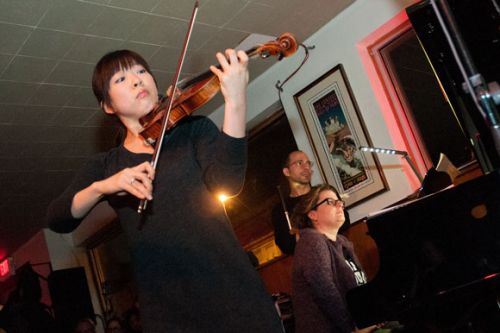
It's not that younger Clevelanders don't appreciate classic art forms like ballet, fine art, literature or the symphony. It's that they don't necessarily appreciate the medium. To engage new audiences, traditional arts institutions are working hard to make their art forms more accessible, less intimidating, and just plain fun.

Throughout its colorful history, the Agora complex in MidTown has been home to a vaudeville theatre, burlesque house, and one of the nation's premiere concert venues. Now, thanks to an evolving landscape outside its door, it's being redeveloped into start-up friendly office space.

Rumors of the death of U.S. manufacturing have been greatly exaggerated. As the industry mounts a comeback in Cleveland and other cities, growing companies are discovering it's not easy to find qualified employees. In short, jobs once left for dead are now hard to fill.
In part, the skills gap exists because a generation of workers has been inculcated with the notion that manufacturing is filled with get-your-hands-dirty, dead-end jobs. On the other hand, the traditional model of high school vocational education does not do enough to meet the needs of tech-savvy manufacturers. Today's factories are as likely to be filled with computers as hulking, greasy machines, owners say.
To plug the gap, the Cleveland Metropolitan School District will soon break ground on a new, 165,000-square-foot campus for Max Hayes High School, a vocational school currently at W. 45th and Detroit. The new building will serve up to 800 students -- a one-third increase -- and feature state-of-the-art labs and new academic classrooms to prepare students for today's manufacturing jobs.
"We want to spread the idea that if you go to Max Hayes, you will get a job that can support your family," says Phillip Schwenk, Principal of Max Hayes. "Your job is relevant and it matters. We're trying to transform ourselves into a modern, global institution that really understands the needs of global industry."
The $40 million campus, which will break ground next year and is slated to be completed in 2015, will feature exposed construction elements such as ductwork, columns and steel beams to emphasize the city's manufacturing heritage. Located at W. 65th and Clark, the school will benefit from its proximity to local businesses, the partners involved believe.
"What comes out of this is a beautiful relationship with all of these businesses on the west side looking for people to work there," says Ward 15 Councilman Matt Zone, who represents the Stockyards neighborhood where Hayes will be built.
Project partners include representatives from manufacturing companies as well as organizations such as WIRE-Net, a Cleveland-based advocacy group. They will come together to create the Friends of Max Hayes to support the school.
Source: Phillip Schwenk, Matt Zone
Writer: Lee Chilcote
In part, the skills gap exists because a generation of workers has been inculcated with the notion that manufacturing is filled with get-your-hands-dirty, dead-end jobs. On the other hand, the traditional model of high school vocational education does not do enough to meet the needs of tech-savvy manufacturers. Today's factories are as likely to be filled with computers as hulking, greasy machines, owners say.
To plug the gap, the Cleveland Metropolitan School District will soon break ground on a new, 165,000-square-foot campus for Max Hayes High School, a vocational school currently at W. 45th and Detroit. The new building will serve up to 800 students -- a one-third increase -- and feature state-of-the-art labs and new academic classrooms to prepare students for today's manufacturing jobs.
"We want to spread the idea that if you go to Max Hayes, you will get a job that can support your family," says Phillip Schwenk, Principal of Max Hayes. "Your job is relevant and it matters. We're trying to transform ourselves into a modern, global institution that really understands the needs of global industry."
The $40 million campus, which will break ground next year and is slated to be completed in 2015, will feature exposed construction elements such as ductwork, columns and steel beams to emphasize the city's manufacturing heritage. Located at W. 65th and Clark, the school will benefit from its proximity to local businesses, the partners involved believe.
"What comes out of this is a beautiful relationship with all of these businesses on the west side looking for people to work there," says Ward 15 Councilman Matt Zone, who represents the Stockyards neighborhood where Hayes will be built.
Project partners include representatives from manufacturing companies as well as organizations such as WIRE-Net, a Cleveland-based advocacy group. They will come together to create the Friends of Max Hayes to support the school.
Source: Phillip Schwenk, Matt Zone
Writer: Lee Chilcote