
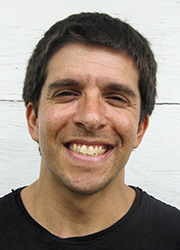
Douglas J. Guth
Stories by: Douglas J. Guth
Douglas J. Guth is a Cleveland Heights-based freelance writer and journalist. In addition to being senior contributing editor at FreshWater, his work has been published by Crain’s Cleveland Business, Ideastream, and Middle Market Growth. At FreshWater, he contributes regularly to the news and features departments, as well as works on regular sponsored series features.
The Greater Cleveland Aquarium (GCA) has a fish story to tell. Starting this spring, the aquarium will bring its compelling undersea tale to students throughout the Cleveland Metropolitan School District (CMSD).
GCA has partnered with the Northeast Ohio Regional Sewer District (NEORSD) for the education outreach program designed to teach kids the deep interconnection that Ohio has with its freshwater systems. This will be accomplished through Native-American lore, one-on-one time with native Ohio fish and reptiles, and hands-on activities that teach students the importance of protecting the area's local waterways.
The program, called Keepin' It Fresh, will be rolled out in local schools at the beginning of May, says Kayla Ott, aquarium marketing and sponsorship manager.
The multi-grade level presentations "will reach communities unable to come to the aquarium due to funding," Ott says. GCA is planning 75 school visits for 2013, and in future years hopes to educate up to 10,000 students annually. What's more, the program falls in line with Ohio academic standards in the realm of science.
"Teachers will be excited to jump on board," says Ott. "They'll be building their curriculums and lesson plans by offering this program."
Generating passion about aquatic life and water conservation is GCA's stated mission. With the sewer district's assistance, the aquarium can now bring this mission to Cleveland impressionable youth.
"We're so fortunate to have a lake right here," Ott says. "Lake Erie is a huge piece of Cleveland. We're teaching students how to protect that resource."
SOURCE: Kayla Ott
WRITER: Douglas J. Guth
GCA has partnered with the Northeast Ohio Regional Sewer District (NEORSD) for the education outreach program designed to teach kids the deep interconnection that Ohio has with its freshwater systems. This will be accomplished through Native-American lore, one-on-one time with native Ohio fish and reptiles, and hands-on activities that teach students the importance of protecting the area's local waterways.
The program, called Keepin' It Fresh, will be rolled out in local schools at the beginning of May, says Kayla Ott, aquarium marketing and sponsorship manager.
The multi-grade level presentations "will reach communities unable to come to the aquarium due to funding," Ott says. GCA is planning 75 school visits for 2013, and in future years hopes to educate up to 10,000 students annually. What's more, the program falls in line with Ohio academic standards in the realm of science.
"Teachers will be excited to jump on board," says Ott. "They'll be building their curriculums and lesson plans by offering this program."
Generating passion about aquatic life and water conservation is GCA's stated mission. With the sewer district's assistance, the aquarium can now bring this mission to Cleveland impressionable youth.
"We're so fortunate to have a lake right here," Ott says. "Lake Erie is a huge piece of Cleveland. We're teaching students how to protect that resource."
SOURCE: Kayla Ott
WRITER: Douglas J. Guth

Cleveland Social Venture Partners (CSVP) is an organization that helps the community's helpers. The group of individual donors accomplishes this worthy goal by pooling its varied skills to strengthen the business acumen of local nonprofits.
After getting linked with a nonprofit organization, CSVP's community professionals provide management support in finance, strategic planning, fund development, legal matters and marketing. CSVP also offers a range of information, workshops and resources to further develop the personal philanthropy of its partners.
"These are all the things an organization needs to be successful," says executive director Linda Springer. "Some nonprofits need assistance to thrive and carry out their missions."
Every other year CSVP holds its bigBANG! event to establish a long-term sponsorship with a local nonprofit. This year's event, to be held April 10 at the Cleveland State University Student Center, features eight nonprofits chosen by CSVP. Each organization will give a fast-pitch presentation to the bigBANG! audience, which will then vote for their favorite.
The chosen nonprofit will receive funding and in-depth consultation services from CSVP. Among this year's presenters are City Year, Drink Local, Drink Tap, Ingenuity and Ohio City Bicycle Coop. The organization is currently working with past vote winners Open Doors Academy and MedWish.
"We're looking for innovative ideas," says Springer. "It could be an organization adapting to its current needs, or wanting to make changes to become stronger."
Assisting these groups is beneficial to CSVP's members as well, adds the executive director. "We're strengthening our own skills to become better donors and philanthropists," she says.
SOURCE: Linda Springer
WRITER: Douglas J. Guth
After getting linked with a nonprofit organization, CSVP's community professionals provide management support in finance, strategic planning, fund development, legal matters and marketing. CSVP also offers a range of information, workshops and resources to further develop the personal philanthropy of its partners.
"These are all the things an organization needs to be successful," says executive director Linda Springer. "Some nonprofits need assistance to thrive and carry out their missions."
Every other year CSVP holds its bigBANG! event to establish a long-term sponsorship with a local nonprofit. This year's event, to be held April 10 at the Cleveland State University Student Center, features eight nonprofits chosen by CSVP. Each organization will give a fast-pitch presentation to the bigBANG! audience, which will then vote for their favorite.
The chosen nonprofit will receive funding and in-depth consultation services from CSVP. Among this year's presenters are City Year, Drink Local, Drink Tap, Ingenuity and Ohio City Bicycle Coop. The organization is currently working with past vote winners Open Doors Academy and MedWish.
"We're looking for innovative ideas," says Springer. "It could be an organization adapting to its current needs, or wanting to make changes to become stronger."
Assisting these groups is beneficial to CSVP's members as well, adds the executive director. "We're strengthening our own skills to become better donors and philanthropists," she says.
SOURCE: Linda Springer
WRITER: Douglas J. Guth

Prom night is typically a highlight for teenagers, but the glitz and glamour of the once-in-a-lifetime event may be lost on teens battling cancer. For the last few years, A Prom to Remember has stepped in to give these young people a night they won't soon forget.
Thanks to the Cleveland nonprofit, teens with cancer will be getting their own special prom on April 5 at The Ritz-Carlton in downtown Cleveland. Organizers expect over 100 teens to attend the event.
"The idea is to give these kids something incredible to look forward to," says prom chair Jane Knausz.
The teens are patients from three area hospitals: Akron Children's Hospital, Cleveland Clinic Children's Hospital, and Rainbow Babies & Children’s Hospital. On prom night, they get the red carpet treatment, including limousine pickup, prom photos and entertainment. On hand will be cheerleaders from the Cleveland Cavaliers as well as members of the St. Ignatius Circus Company.
To prepare the young prom-goers for their big evening, a "Dress Extravaganza" event was held earlier this month at Eton Chagrin Boulevard. About 100 girls selected donated dresses of all sizes, shapes and colors, along with a bevy of jewelry and accessories. Their male counterparts were not left out, receiving tuxedos from American Tuxedo. Funding for accessories like gift bag items is still needed, notes Knausz. Those interested in donating can do so directly on the A Prom to Remember website.
A night away from chemotherapy and hospital gowns is its own kind of therapy, Knausz believes. "These kids can get together with others in the same situation," she says. "They know they're not alone."
SOURCE: Jane Knausz
WRITER: Douglas J. Guth
Thanks to the Cleveland nonprofit, teens with cancer will be getting their own special prom on April 5 at The Ritz-Carlton in downtown Cleveland. Organizers expect over 100 teens to attend the event.
"The idea is to give these kids something incredible to look forward to," says prom chair Jane Knausz.
The teens are patients from three area hospitals: Akron Children's Hospital, Cleveland Clinic Children's Hospital, and Rainbow Babies & Children’s Hospital. On prom night, they get the red carpet treatment, including limousine pickup, prom photos and entertainment. On hand will be cheerleaders from the Cleveland Cavaliers as well as members of the St. Ignatius Circus Company.
To prepare the young prom-goers for their big evening, a "Dress Extravaganza" event was held earlier this month at Eton Chagrin Boulevard. About 100 girls selected donated dresses of all sizes, shapes and colors, along with a bevy of jewelry and accessories. Their male counterparts were not left out, receiving tuxedos from American Tuxedo. Funding for accessories like gift bag items is still needed, notes Knausz. Those interested in donating can do so directly on the A Prom to Remember website.
A night away from chemotherapy and hospital gowns is its own kind of therapy, Knausz believes. "These kids can get together with others in the same situation," she says. "They know they're not alone."
SOURCE: Jane Knausz
WRITER: Douglas J. Guth

"Ever dream of running your own restaurant as an executive chef, pastry chef or sommelier?"
That is the question asked by leaders of EDWINS Leadership & Restaurant Institute. Fulfilling that dream would be a challenge for most anyone, but what about a person reentering society after incarceration?
Hoping to provide the answer is Brandon Chrostowski, general manager, sommelier and fromanger at L'Albatros restaurant. He is also founder of EDWINS, a Cleveland nonprofit providing free restaurant training to underprivileged adults. The 26-week program teaches cooking methods, pastry techniques, food pairings, nutrition and other facets that come with the culinary arts.
Ohio's recidivism rate stands at about 30 percent, according to the Ohio Department of Rehabilitation and Correction. Chrostowski, 33, believes these numbers reflect the lack of opportunities available for ex-inmates.
"There's no guidance and no jobs out there," he says. "Our goal is to provide these people with a skill and a solid path."
Students are rotated through every station of a restaurant, providing them with a variety of skills and real-world experience. Over the last two years, the program has assisted about 30 graduates in finding employment as line cooks, dishwashers and servers. Some students have already been promoted from these entry-level positions.
Chrostowski hit his own "rough patch" a decade ago, and was able to go back to school and hone his culinary craft. The restaurateur wants others to have the same opportunity he did. EDWINS' ultimate goal is to open a restaurant staffed entirely by program graduates.
"Everyone deserves a second shot," Chrostowski says. "This is a chance for people to change their lives."
SOURCE: Brandon Chrostowski
WRITER: Douglas J. Guth
That is the question asked by leaders of EDWINS Leadership & Restaurant Institute. Fulfilling that dream would be a challenge for most anyone, but what about a person reentering society after incarceration?
Hoping to provide the answer is Brandon Chrostowski, general manager, sommelier and fromanger at L'Albatros restaurant. He is also founder of EDWINS, a Cleveland nonprofit providing free restaurant training to underprivileged adults. The 26-week program teaches cooking methods, pastry techniques, food pairings, nutrition and other facets that come with the culinary arts.
Ohio's recidivism rate stands at about 30 percent, according to the Ohio Department of Rehabilitation and Correction. Chrostowski, 33, believes these numbers reflect the lack of opportunities available for ex-inmates.
"There's no guidance and no jobs out there," he says. "Our goal is to provide these people with a skill and a solid path."
Students are rotated through every station of a restaurant, providing them with a variety of skills and real-world experience. Over the last two years, the program has assisted about 30 graduates in finding employment as line cooks, dishwashers and servers. Some students have already been promoted from these entry-level positions.
Chrostowski hit his own "rough patch" a decade ago, and was able to go back to school and hone his culinary craft. The restaurateur wants others to have the same opportunity he did. EDWINS' ultimate goal is to open a restaurant staffed entirely by program graduates.
"Everyone deserves a second shot," Chrostowski says. "This is a chance for people to change their lives."
SOURCE: Brandon Chrostowski
WRITER: Douglas J. Guth

The librarians at Cleveland Public Library (CPL) love books. No surprises there. Still, there's nothing wrong with spreading love of the printed word, and that's exactly what CPL is trying to do with its new outreach program, Read in the CLE.
The program, which launched last month on CPL's website, features a well-known Clevelander who is sharing the book that he or she is currently reading. A selection of CPL librarians also impart whatever page-turner has them staying up past bedtime, with the goal of giving visitors ideas on a new book to read.
"The focus is to pull people in so they can talk about reading together," says Amy Pawlowski, CPL's web applications manager.
As CPL does not have the user base of other local library systems, Read in the CLE was created to enhance interaction and keep the city's public library top mind. Visitors to the site can leave comments discussing their favorite books with either that month's featured reader or CPL's literate librarians.
"These aren't book reviews," Pawlowski says. "It's very loose and free-flowing. More along the lines of 'This is what I'm reading, do I like it?'"
CPL's first featured reader was columnist Connie Schultz. This month's guest is blogger and restaurant-owner Amelia Sawyer. The program will have a rotating series of notable Cleveland readers on hand for the rest of the year.
"We have some great readers downtown, but people always don't have time to get to the library," says Pawlowski. "This (program) is just a way for them to get more involved when they have the time."
SOURCE: Amy Pawlowski
WRITER: Douglas J. Guth
The program, which launched last month on CPL's website, features a well-known Clevelander who is sharing the book that he or she is currently reading. A selection of CPL librarians also impart whatever page-turner has them staying up past bedtime, with the goal of giving visitors ideas on a new book to read.
"The focus is to pull people in so they can talk about reading together," says Amy Pawlowski, CPL's web applications manager.
As CPL does not have the user base of other local library systems, Read in the CLE was created to enhance interaction and keep the city's public library top mind. Visitors to the site can leave comments discussing their favorite books with either that month's featured reader or CPL's literate librarians.
"These aren't book reviews," Pawlowski says. "It's very loose and free-flowing. More along the lines of 'This is what I'm reading, do I like it?'"
CPL's first featured reader was columnist Connie Schultz. This month's guest is blogger and restaurant-owner Amelia Sawyer. The program will have a rotating series of notable Cleveland readers on hand for the rest of the year.
"We have some great readers downtown, but people always don't have time to get to the library," says Pawlowski. "This (program) is just a way for them to get more involved when they have the time."
SOURCE: Amy Pawlowski
WRITER: Douglas J. Guth

During the mid-2000s, local newspapers ran stories with evocative phrases like "quiet crisis" and "brain drain" in lamenting the flight of young, talented minds from Cleveland.
Bob Yanega saw those negative headlines, too, and decided he wanted to do something about it. Yanega, a self-professed "serial entrepreneur" with a background in commercial construction and real estate, is the creator of Choosing Success Programs, a Cleveland-centric advocacy project aimed at area high school students.
The program provides live, in-school presentations showing students how to connect with the opportunities right in their own backyard. The goal is to motivate youth to become passionate, lifelong residents of Northeast Ohio.
"Many kids don't have parents who expose them to what's great here," says Yanega, of Larchmere. "We need to sell Cleveland to young people."
Yanega has been giving Choosing Success talks at local high schools for the last 18 months. Along with providing students with tips on college and career choices, he also mixes in a "sales pitch" about Cleveland, pointing to the city's affordability, increasing job rate and wealth of cultural options.
Choosing Success, under the umbrella of its parent organization The 1990 Project, recently received a boost as one of the winners of The Cleveland Colectivo's fast- pitch presentation event. The program now has a chance to get some much-needed funding from the giving circle, and Yanega believes his brainchild is worth it.
"We're presenting facts about the city," Yanega says. "Keeping the next generation in town is a powerful, broad-based message."
SOURCE: Bob Yanega
WRITER: Douglas J. Guth
Bob Yanega saw those negative headlines, too, and decided he wanted to do something about it. Yanega, a self-professed "serial entrepreneur" with a background in commercial construction and real estate, is the creator of Choosing Success Programs, a Cleveland-centric advocacy project aimed at area high school students.
The program provides live, in-school presentations showing students how to connect with the opportunities right in their own backyard. The goal is to motivate youth to become passionate, lifelong residents of Northeast Ohio.
"Many kids don't have parents who expose them to what's great here," says Yanega, of Larchmere. "We need to sell Cleveland to young people."
Yanega has been giving Choosing Success talks at local high schools for the last 18 months. Along with providing students with tips on college and career choices, he also mixes in a "sales pitch" about Cleveland, pointing to the city's affordability, increasing job rate and wealth of cultural options.
Choosing Success, under the umbrella of its parent organization The 1990 Project, recently received a boost as one of the winners of The Cleveland Colectivo's fast- pitch presentation event. The program now has a chance to get some much-needed funding from the giving circle, and Yanega believes his brainchild is worth it.
"We're presenting facts about the city," Yanega says. "Keeping the next generation in town is a powerful, broad-based message."
SOURCE: Bob Yanega
WRITER: Douglas J. Guth

For six decades, Young Audiences of Northeast Ohio has been promoting creative learning through the arts for local children and teenagers. A 60th-anniversary celebration requires something special, say the nonprofit's leaders. That means awarding residents who are harnessing the organization's arts-infused mission of contributing to the region's vitality.
Young Audiences is currently accepting nominations for its 2013 Arts, Education, and Entrepreneurship Awards. The nonprofit seeks those who have made a lasting impact in the three areas, as the innovation and creative thinking promoted by the arts help individuals succeed across all aspects of life, says development director Jerry Smith. Examples include teaching geometry through dance, or learning storytelling through digital game design.
"It's about the intersection of arts education and entrepreneurship," Smith says. "How does a creative education help drive that next entrepreneur?"
To answer that question, Smith's organization hosts workshops, performances, professional development programs and residencies for young people in the artistic realms of dance, music, theater and the visual arts.
Award nominees are due by April 12. Three winners from the categories of arts, education and entrepreneurship will be recognized at Young Audiences' 60th anniversary gala in September. Winners will receive a commemorative award and a contribution in their name made to the Young Audiences' Fund for Their Future.
An arts background is critical to melding young minds, believes the organization's leadership. Recognizing the individuals shaping that process is a natural step for the group, says Smith.
"Arts and culture are at the core of so much we do and how we succeed," he says.
SOURCE: Jerry Smith, Jennifer Abelson
WRITER: Douglas J. Guth
Young Audiences is currently accepting nominations for its 2013 Arts, Education, and Entrepreneurship Awards. The nonprofit seeks those who have made a lasting impact in the three areas, as the innovation and creative thinking promoted by the arts help individuals succeed across all aspects of life, says development director Jerry Smith. Examples include teaching geometry through dance, or learning storytelling through digital game design.
"It's about the intersection of arts education and entrepreneurship," Smith says. "How does a creative education help drive that next entrepreneur?"
To answer that question, Smith's organization hosts workshops, performances, professional development programs and residencies for young people in the artistic realms of dance, music, theater and the visual arts.
Award nominees are due by April 12. Three winners from the categories of arts, education and entrepreneurship will be recognized at Young Audiences' 60th anniversary gala in September. Winners will receive a commemorative award and a contribution in their name made to the Young Audiences' Fund for Their Future.
An arts background is critical to melding young minds, believes the organization's leadership. Recognizing the individuals shaping that process is a natural step for the group, says Smith.
"Arts and culture are at the core of so much we do and how we succeed," he says.
SOURCE: Jerry Smith, Jennifer Abelson
WRITER: Douglas J. Guth
it's final: cle charter schools score high in state tests
A network of free, public charter schools in Cleveland is performing on par with its suburban brethren, according to the final state school report cards released this week for the 2011-12 academic year.
The Breakthrough Schools network, a charter partner of the Cleveland Metropolitan School District, kept pace with the Orange and Strongsville school districts in state testing of math, science and reading. Two of the programs -- The Intergenerational School (TIS) and Citizens Academy -- were rated "Excellent with Distinction" (the highest rating possible) by the Ohio Department of Education.
Matching report cards with two historically high-ranking districts is a proud moment for the charter program, says communications director Lyman Millard. The results are particularly telling for an area that does not have the economic advantages of its suburban counterparts.
"This is a dream behind all of our schools," says Millard. "The quality of education you receive should not be determined by the region you live in."
The testing covered over 1,000 Breakthrough students in grades 3 through 8. The program formed in 2010 as a collaboration of three charter organizations: Citizens Academy, E Prep/Village Prep and TIS. Since then, Breakthrough has opened five new schools across Cleveland in partnership with the Cleveland school district.
The final report cards’ release followed a months-long delay prompted by a state investigation into whether some districts improperly removed truant students from enrollment figures. With the numbers confirmed, Breakthrough has proven to be a more-than-viable option for a high-quality academic environment, maintains the program's directors.
"We have great schools with great teachers and high expectations," Millard says. "Cleveland families don't have to move to the suburbs if they want a good education for their children."
SOURCE: Lyman Millard
WRITER: Douglas J. Guth
The Breakthrough Schools network, a charter partner of the Cleveland Metropolitan School District, kept pace with the Orange and Strongsville school districts in state testing of math, science and reading. Two of the programs -- The Intergenerational School (TIS) and Citizens Academy -- were rated "Excellent with Distinction" (the highest rating possible) by the Ohio Department of Education.
Matching report cards with two historically high-ranking districts is a proud moment for the charter program, says communications director Lyman Millard. The results are particularly telling for an area that does not have the economic advantages of its suburban counterparts.
"This is a dream behind all of our schools," says Millard. "The quality of education you receive should not be determined by the region you live in."
The testing covered over 1,000 Breakthrough students in grades 3 through 8. The program formed in 2010 as a collaboration of three charter organizations: Citizens Academy, E Prep/Village Prep and TIS. Since then, Breakthrough has opened five new schools across Cleveland in partnership with the Cleveland school district.
The final report cards’ release followed a months-long delay prompted by a state investigation into whether some districts improperly removed truant students from enrollment figures. With the numbers confirmed, Breakthrough has proven to be a more-than-viable option for a high-quality academic environment, maintains the program's directors.
"We have great schools with great teachers and high expectations," Millard says. "Cleveland families don't have to move to the suburbs if they want a good education for their children."
SOURCE: Lyman Millard
WRITER: Douglas J. Guth

Cuyahoga County residents have picked which two large-scale projects will get funding through the Cuyahoga Arts & Culture (CAC) Creative Culture Grants competition.
* Dancing Wheels received $130,421 for a television documentary that will expand on the dance company's performance of the multi-media ballet, Dumbo. The film will explore issues of bullying and social injustice using the life stories of artists and community figures.
* LAND studio was awarded $150,000 to fund a multi-faceted light installation illuminating public spaces in downtown Cleveland.
Both projects were selected by 6,500 county residents in a public voting process held February 1-20. The winning arts programs, scheduled for completion in 2014, were chosen from a list of six finalists selected by an independent panel of arts and culture experts.
Officials from competition sponsor CAC were pleased by the voter turnout, and believe the winning projects will engage the region in creative ways.
"All six finalists had a different spin on how to connect arts and culture to the community," says CAC executive director Karen Gahl-Mills. "The two winners did a great job of reaching out to the general public."
CAC's pilot voting program revealed just how much creativity exists in the area, Gahl-Mills maintains. "It was delightful to see it come forward in new, exciting ways," she says.
The nonprofit is now assessing the program for possible future iterations. Gahl-Mills is not certain CAC will put on an annual public vote, but she can certainly envision county residents stuffing the ballot boxes for future arts projects.
"It's a great investment of public dollars," she says. "It isn't just the organizations that win; the community wins, too."
SOURCE: Karen Gahl-Mills
WRITER: Douglas J. Guth
* Dancing Wheels received $130,421 for a television documentary that will expand on the dance company's performance of the multi-media ballet, Dumbo. The film will explore issues of bullying and social injustice using the life stories of artists and community figures.
* LAND studio was awarded $150,000 to fund a multi-faceted light installation illuminating public spaces in downtown Cleveland.
Both projects were selected by 6,500 county residents in a public voting process held February 1-20. The winning arts programs, scheduled for completion in 2014, were chosen from a list of six finalists selected by an independent panel of arts and culture experts.
Officials from competition sponsor CAC were pleased by the voter turnout, and believe the winning projects will engage the region in creative ways.
"All six finalists had a different spin on how to connect arts and culture to the community," says CAC executive director Karen Gahl-Mills. "The two winners did a great job of reaching out to the general public."
CAC's pilot voting program revealed just how much creativity exists in the area, Gahl-Mills maintains. "It was delightful to see it come forward in new, exciting ways," she says.
The nonprofit is now assessing the program for possible future iterations. Gahl-Mills is not certain CAC will put on an annual public vote, but she can certainly envision county residents stuffing the ballot boxes for future arts projects.
"It's a great investment of public dollars," she says. "It isn't just the organizations that win; the community wins, too."
SOURCE: Karen Gahl-Mills
WRITER: Douglas J. Guth

A student-operated restaurant, a Cleveland-centric advocacy group, and a venture aiming to transform vacant lots into summer program spots for kids were the big winners of The Cleveland Colectivo's fast- pitch presentation event on February 28.
The high-energy affair hosted by Shaker LaunchHouse drew over 125 attendees. They voted on 46 presenters who came with innovative ideas and hopes of getting funding from the Colectivo, a grassroots, Cleveland-based giving circle that pools funds to make contributions in the community.
The three top vote-getters -- Edwins Leadership and Restaurant Institute, The 1990 Project and Literary Lots -- came with accessible, concisely presented ideas that inspired the crowd, says Colectivo founding member Judy Wright. As the crowd favorite, Edwins took home $770 in donations collected at the event.
Colectivo members will next consider the remaining projects to join the crowd's picks. As many as 12 additional ventures will have a chance at this year's grants, which generally range from $500 to $5,000. Grants will be determined and distributed in May.
"We're not a traditional grant-maker," says Wright. "We spend our entire budget every year, and there's no overhead costs. It's basically people putting cash in a pot and giving it away."
Wright, a Lakewood resident, created the Colectivo in 2004 with a group of like-minded friends from the nonprofit sector. She deems this year's fast-pitch event a success, even if every presenter will not be getting their idea funded. It's always good to see a disparate slice of Cleveland's demography getting together, she believes.
"There's some genuine connections being made," Wright says. "It's exciting and energizing. There is some real value in that."
SOURCE: Judy Wright
WRITER: Douglas J. Guth
The high-energy affair hosted by Shaker LaunchHouse drew over 125 attendees. They voted on 46 presenters who came with innovative ideas and hopes of getting funding from the Colectivo, a grassroots, Cleveland-based giving circle that pools funds to make contributions in the community.
The three top vote-getters -- Edwins Leadership and Restaurant Institute, The 1990 Project and Literary Lots -- came with accessible, concisely presented ideas that inspired the crowd, says Colectivo founding member Judy Wright. As the crowd favorite, Edwins took home $770 in donations collected at the event.
Colectivo members will next consider the remaining projects to join the crowd's picks. As many as 12 additional ventures will have a chance at this year's grants, which generally range from $500 to $5,000. Grants will be determined and distributed in May.
"We're not a traditional grant-maker," says Wright. "We spend our entire budget every year, and there's no overhead costs. It's basically people putting cash in a pot and giving it away."
Wright, a Lakewood resident, created the Colectivo in 2004 with a group of like-minded friends from the nonprofit sector. She deems this year's fast-pitch event a success, even if every presenter will not be getting their idea funded. It's always good to see a disparate slice of Cleveland's demography getting together, she believes.
"There's some genuine connections being made," Wright says. "It's exciting and energizing. There is some real value in that."
SOURCE: Judy Wright
WRITER: Douglas J. Guth

As new VP of operations for the Lake Erie Energy Development Corp (LEEDCo), Dave Karpinski will guide the organization through the next phase in the process of building the nation’s first freshwater offshore wind project. With its first round of financing in tow, LEEDCo must now compete for a critical second infusion of funds against six other projects across the country.

Cleveland has gained a reputation nationally for its vibrant local food culture. The city's foodie status has gotten quite a bit bigger - literally - thanks to Green City Growers Cooperative, a 3.25-acre greenhouse that celebrated its official opening on Feb. 25.
Size matters at the hydroponic, high-tech greenhouse, which aims to produce three million heads of lettuce and 300,000 pounds of herbs annually to vendors within a 50-mile radius from its location in Cleveland’s Central neighborhood.
"It's the largest food production greenhouse in an urban area in the U.S.," says Mary Donnell, CEO of Green City Growers.
The greenhouse, which is the size of three football fields, grows its healthy wares in nutrient-rich water rather than soil. The year-round venture, overseen by the nonprofit Evergreen Cooperative Corporation, started harvesting crops in January and is already producing about 60,000 heads of lettuce per week. Green City Growers customers include grocery stores and restaurants.
Planting the leafy goods are local residents. The 25 Clevelanders Green City Growers hired to run the operation will become employee-owners of the cooperative business, receiving a living wage and health insurance.
Besides producing those tasty eats, the goal is create jobs and build financial assets for residents of Cleveland's underserved neighborhoods, says Donnell, whose background includes helping to create a hydroponic greenhouse program for The Ohio State University. The project's key partners include the City of Cleveland, the Cleveland Foundation, PNC Bank and the National Development Council.
Cleveland's new greenhouse is an economic development project that could mean better things for an inner-city neighborhood. "It's wonderful that we have this in the heart of the city," Donnell says.
SOURCE: Mary Donnell
WRITER: Douglas J. Guth
Size matters at the hydroponic, high-tech greenhouse, which aims to produce three million heads of lettuce and 300,000 pounds of herbs annually to vendors within a 50-mile radius from its location in Cleveland’s Central neighborhood.
"It's the largest food production greenhouse in an urban area in the U.S.," says Mary Donnell, CEO of Green City Growers.
The greenhouse, which is the size of three football fields, grows its healthy wares in nutrient-rich water rather than soil. The year-round venture, overseen by the nonprofit Evergreen Cooperative Corporation, started harvesting crops in January and is already producing about 60,000 heads of lettuce per week. Green City Growers customers include grocery stores and restaurants.
Planting the leafy goods are local residents. The 25 Clevelanders Green City Growers hired to run the operation will become employee-owners of the cooperative business, receiving a living wage and health insurance.
Besides producing those tasty eats, the goal is create jobs and build financial assets for residents of Cleveland's underserved neighborhoods, says Donnell, whose background includes helping to create a hydroponic greenhouse program for The Ohio State University. The project's key partners include the City of Cleveland, the Cleveland Foundation, PNC Bank and the National Development Council.
Cleveland's new greenhouse is an economic development project that could mean better things for an inner-city neighborhood. "It's wonderful that we have this in the heart of the city," Donnell says.
SOURCE: Mary Donnell
WRITER: Douglas J. Guth

Last summer, the Near West Recreation League's t-ball league was a hit for Cleveland kids. Organizers believe a recently debuted bowling league will play a similarly big "roll" in the health of a community that didn't have much in the way of organized sports.
The bowling program, open to 70-plus youngsters between the ages of 6 and 10, launched February 16 at Corner Alley in downtown Cleveland. The league is part of a two-year partnership between Ohio Savings Bank and Ohio City Inc. to support recreation activities on the Near West Side. Downtown Cleveland Alliance is also a partner in the new program.
The bowling league was created for children from Tremont, Detroit Shoreway and other West Side enclaves, although similar to the t-ball league, kids have been coming from other parts of the city to participate.
"Sports are a great way of bringing people together at a young age," says Eric Wobser, executive director of Ohio City Inc.
They're also a method of keeping people in the neighborhood, maintain the rec league's leaders. Retaining young families in the 25- to 34-age group has been problematic for Ohio City and downtown. Sports can be another amenity that grows a neighborhood population, while also integrating a community of diverse backgrounds.
"It's improving the quality of life," Wobser says.
If the bowling league proves successful, the rec league will add other sports throughout the year. Plans for the remainder of 2013 include youth-oriented baseball, soccer and basketball. The league may "age up" as well, from young kids all the way to junior high students.
"We've struck a chord with the community," says Wobser.
SOURCE: Eric Wobser
WRITER: Douglas J. Guth
The bowling program, open to 70-plus youngsters between the ages of 6 and 10, launched February 16 at Corner Alley in downtown Cleveland. The league is part of a two-year partnership between Ohio Savings Bank and Ohio City Inc. to support recreation activities on the Near West Side. Downtown Cleveland Alliance is also a partner in the new program.
The bowling league was created for children from Tremont, Detroit Shoreway and other West Side enclaves, although similar to the t-ball league, kids have been coming from other parts of the city to participate.
"Sports are a great way of bringing people together at a young age," says Eric Wobser, executive director of Ohio City Inc.
They're also a method of keeping people in the neighborhood, maintain the rec league's leaders. Retaining young families in the 25- to 34-age group has been problematic for Ohio City and downtown. Sports can be another amenity that grows a neighborhood population, while also integrating a community of diverse backgrounds.
"It's improving the quality of life," Wobser says.
If the bowling league proves successful, the rec league will add other sports throughout the year. Plans for the remainder of 2013 include youth-oriented baseball, soccer and basketball. The league may "age up" as well, from young kids all the way to junior high students.
"We've struck a chord with the community," says Wobser.
SOURCE: Eric Wobser
WRITER: Douglas J. Guth

If Kauser Razvi has a say in it, underutilized spaces in Cleveland will be a place where a child's imagination can run wild, all thanks to power of the written word.
Razvi, founder of the Cleveland-based project management organization Strategic Urban Solutions, is the book-loving brains behind Literary Lots, a program that aims to "brings books to life" in a vacant lot, playground or other outdoor space.
To pilot this idea, Strategic Urban Solutions plans to launch its first Literary Lot this summer in Ohio City's Novak Park. In conjunction with Cleveland Public Library, LAND Studio, and Ohio City Writers, Razvi's group will recreate places, concepts, and adventures from select children's books. The space will also host educational programming, with the goal of bringing Cleveland's kids together through the cooperation of the city's cultural institutions.
"Libraries are community anchors," says Razvi. "We thought it would be cool to marry the idea of bringing books to life in places near our libraries."
The summer program spot would have books (of course), poetry readings or a movie based on the book the space is built around. Artists would enliven the space, perhaps decorating a small sandpit in which kids can dig for buried gold, just like the young adventurer from Treasure Island.
"I think of it as a 'comfortable artistic backyard,'" Razvi says.
Building a nice "backyard" isn't free. A Kickstarter fundraising campaign for the project begins at the end of February, with a minimum goal of $5,500. Razvi believes transforming an underused space into a reading zone for kids is well worth the price of admission.
SOURCE: Kauser Razvi
WRITER: Douglas J. Guth
Razvi, founder of the Cleveland-based project management organization Strategic Urban Solutions, is the book-loving brains behind Literary Lots, a program that aims to "brings books to life" in a vacant lot, playground or other outdoor space.
To pilot this idea, Strategic Urban Solutions plans to launch its first Literary Lot this summer in Ohio City's Novak Park. In conjunction with Cleveland Public Library, LAND Studio, and Ohio City Writers, Razvi's group will recreate places, concepts, and adventures from select children's books. The space will also host educational programming, with the goal of bringing Cleveland's kids together through the cooperation of the city's cultural institutions.
"Libraries are community anchors," says Razvi. "We thought it would be cool to marry the idea of bringing books to life in places near our libraries."
The summer program spot would have books (of course), poetry readings or a movie based on the book the space is built around. Artists would enliven the space, perhaps decorating a small sandpit in which kids can dig for buried gold, just like the young adventurer from Treasure Island.
"I think of it as a 'comfortable artistic backyard,'" Razvi says.
Building a nice "backyard" isn't free. A Kickstarter fundraising campaign for the project begins at the end of February, with a minimum goal of $5,500. Razvi believes transforming an underused space into a reading zone for kids is well worth the price of admission.
SOURCE: Kauser Razvi
WRITER: Douglas J. Guth

Innovative ideas abound in Northeast Ohio, believes Judy Wright, founding member of The Cleveland Colectivo. Too often, however, those dreams are not big enough to draw the attention of the major grant makers in town.
The Colectivo was designed to fill that gap. A grassroots, Cleveland-based giving circle that pools funds to make contributions in the community, the group is inspired by the traditional practice of immigrant neighbors who invested in each other’s businesses to build a neighborhood.
"Our goal is to support small, innovative projects that need a little boost," says Wright, a Lakewood resident. She and a group of like-minded friends from the nonprofit sector created the Colectivo in 2004.
The group's grants range from $500 to $5,000. Funding supports a wide variety of projects, from enhancements to the kitchen at the Cleveland Hostel to a summer series of free music events at Edgewater Park.
"There's no focus area besides these projects having an impact on Cleveland," Wright says.
The next round of funding kicks off February 28 with the Colectivo's fast pitch presentation event at Shaker LaunchHouse. Up to 40 entrepreneurs and innovators will have two minutes to present their bright ideas, which will be voted on by attendees. The top 10 vote-getters will then move on to interviews conducted by group members. Registration to present at the fast pitch event opens February 25 at noon on the group's website.
Getting a roomful of people to network and be excited about their fellow Clevelanders' brainstorms is a side benefit of the effort, notes Wright.
"A little bit of 'spark money' can be hard to get," she says. "We're just trying to make the process easier."
SOURCE: Judy Wright
WRITER: Douglas J. Guth
The Colectivo was designed to fill that gap. A grassroots, Cleveland-based giving circle that pools funds to make contributions in the community, the group is inspired by the traditional practice of immigrant neighbors who invested in each other’s businesses to build a neighborhood.
"Our goal is to support small, innovative projects that need a little boost," says Wright, a Lakewood resident. She and a group of like-minded friends from the nonprofit sector created the Colectivo in 2004.
The group's grants range from $500 to $5,000. Funding supports a wide variety of projects, from enhancements to the kitchen at the Cleveland Hostel to a summer series of free music events at Edgewater Park.
"There's no focus area besides these projects having an impact on Cleveland," Wright says.
The next round of funding kicks off February 28 with the Colectivo's fast pitch presentation event at Shaker LaunchHouse. Up to 40 entrepreneurs and innovators will have two minutes to present their bright ideas, which will be voted on by attendees. The top 10 vote-getters will then move on to interviews conducted by group members. Registration to present at the fast pitch event opens February 25 at noon on the group's website.
Getting a roomful of people to network and be excited about their fellow Clevelanders' brainstorms is a side benefit of the effort, notes Wright.
"A little bit of 'spark money' can be hard to get," she says. "We're just trying to make the process easier."
SOURCE: Judy Wright
WRITER: Douglas J. Guth

Nautical adventure awaits Cleveland youths this summer thanks to Project YESS (Youth Empowered to Succeed through Sailing), a program that allows local students to spend a week sailing and working on a 150-foot tall vessel.
The program, developed by the Rotary Club of Cleveland, is meant for high school students ages 13 to 17. Starting this year, teenagers will develop leadership and navigational proficiencies during a six-week land-based course. Graduates will then ply the Great Lakes aboard a tall ship, using the skills they learned to become a vital member of their on-board community. Lake-faring activities include reading charts, working in the galley and tying ropes.
"They are physically part of the crew," says Project YESS co-chair Anne Kelly. "All of them are sharing in responsibilities and duties from port to port."
The program started in 2010 in conjunction with the Tall Ships Festival. A group of volunteers help raise the $1,500-per-student fee, which includes curriculum materials, meals, and cost of berth. Students with strong leadership skills but who otherwise would not be able to afford the experience are targeted by Project YESS members.
"The kids hold each other accountable and teach one another to step up," Kelly says.
Project officials hope to bring the youth sailing camp experience to 35 students this year. Along with providing direction, confidence and a sense of community, the program can also open students’ eyes to the unique career opportunities that exist in the Great Lakes region, maintains Kelly.
To receive an application for the Project YESS 2013 class, email projectyess@yahoo.com. Applications must be mailed to the Rotary Club of Cleveland by March 15.
SOURCE: Anne Kelly
WRITER: Douglas J. Guth
The program, developed by the Rotary Club of Cleveland, is meant for high school students ages 13 to 17. Starting this year, teenagers will develop leadership and navigational proficiencies during a six-week land-based course. Graduates will then ply the Great Lakes aboard a tall ship, using the skills they learned to become a vital member of their on-board community. Lake-faring activities include reading charts, working in the galley and tying ropes.
"They are physically part of the crew," says Project YESS co-chair Anne Kelly. "All of them are sharing in responsibilities and duties from port to port."
The program started in 2010 in conjunction with the Tall Ships Festival. A group of volunteers help raise the $1,500-per-student fee, which includes curriculum materials, meals, and cost of berth. Students with strong leadership skills but who otherwise would not be able to afford the experience are targeted by Project YESS members.
"The kids hold each other accountable and teach one another to step up," Kelly says.
Project officials hope to bring the youth sailing camp experience to 35 students this year. Along with providing direction, confidence and a sense of community, the program can also open students’ eyes to the unique career opportunities that exist in the Great Lakes region, maintains Kelly.
To receive an application for the Project YESS 2013 class, email projectyess@yahoo.com. Applications must be mailed to the Rotary Club of Cleveland by March 15.
SOURCE: Anne Kelly
WRITER: Douglas J. Guth

"We are all assets," declares the national website of TimeBanks USA, a movement dedicated to building "caring community" economies through an inclusive exchange of time and talent.
Indeed, time can be as valuable an asset as money in terms of the positive impact it has on a neighborhood, says Adam Gifford, director of community involvement at the Stockyard, Clark-Fulton, and Brooklyn Centre Development Office, which, along with its parent Detroit Shoreway Community Development Organization, is sponsoring a time bank in Cleveland.
The time bank movement works through reciprocation. For example, a landscaper does an hour of volunteer tree-trimming work, then deposits those 60 "time dollars" into his account. When he needs a service done, like getting his dogs walked or receiving help with his taxes, he simply "withdraws" his deposit for the service. There is no monetary value ever attached to any service -- time is the one and only coin of the realm.
"People may not have the money available, but they may have time," says Gifford. "It's about giving people access to services they normally couldn't afford."
Time banks have sprung up across the country. Locally, Kent and Medina are among the communities to use the service. The Cleveland time bank is in its infancy, attracting nearly 100 members putting in about 150 hours of work so far. A program orientation will be held February 26 at The Salvation Army's Clarke-Fulton location, while a Cleveland time bank website is scheduled to go live in March.
The time bank is open to individuals and groups. Gifford views the exchange of skills and services without cash as a method to enrich lives.
"It's a creative way to build a community," he says.
SOURCE: Adam Gifford
WRITER: Douglas J. Guth
Indeed, time can be as valuable an asset as money in terms of the positive impact it has on a neighborhood, says Adam Gifford, director of community involvement at the Stockyard, Clark-Fulton, and Brooklyn Centre Development Office, which, along with its parent Detroit Shoreway Community Development Organization, is sponsoring a time bank in Cleveland.
The time bank movement works through reciprocation. For example, a landscaper does an hour of volunteer tree-trimming work, then deposits those 60 "time dollars" into his account. When he needs a service done, like getting his dogs walked or receiving help with his taxes, he simply "withdraws" his deposit for the service. There is no monetary value ever attached to any service -- time is the one and only coin of the realm.
"People may not have the money available, but they may have time," says Gifford. "It's about giving people access to services they normally couldn't afford."
Time banks have sprung up across the country. Locally, Kent and Medina are among the communities to use the service. The Cleveland time bank is in its infancy, attracting nearly 100 members putting in about 150 hours of work so far. A program orientation will be held February 26 at The Salvation Army's Clarke-Fulton location, while a Cleveland time bank website is scheduled to go live in March.
The time bank is open to individuals and groups. Gifford views the exchange of skills and services without cash as a method to enrich lives.
"It's a creative way to build a community," he says.
SOURCE: Adam Gifford
WRITER: Douglas J. Guth

Filing a federal income tax return is far from the most enjoyable activity one can do. It can even be intimidating for people who don't understand the process or know they are eligible for an Earned Income Tax Credit (EITC).
Enterprise Community Partners, a nonprofit providing free tax preparation and other services to low- and middle-income Cuyahoga County residents, aims to bridge the knowledge gap and help hard-working individuals and families keep more of what they earned. Nationwide last year, the average credit handed out was about $2,200, but the credit can provide as much as $5,900.
"About 20 percent of people eligible for [EITC] don't claim it," says Mark McDermott, Enterprise vice president and Ohio market leader. "We get the word out."
That word is spread in conjunction with the Cuyahoga County Earned Income Tax Credit Coalition and a host of other local partner organizations. This tax season, Enterprise has recruited over 350 IRS-certified volunteers to assist in the effort.
Eligible residents can access the free service by dialing the United Way of Greater Cleveland's 2-1-1 help line. Appointments are scheduled at one of 25 sites located throughout the country. There are also a handful of Saturday free tax-preparation events taking place right up until filing day.
During the past seven years, more than 55,000 participants have received over $77 million in refunds and saved millions of dollars in fees from paid tax preparers, notes program director Kathy Matthews.
"That's about $13 million going back into the local economy," says Matthews.
Tax help isn't Enterprise's only offering. Those who use the service also have access to benefit screenings, debt management and more.
"The tax work is our foundation," says McDermott. "This has proven to be a great program."
SOURCES: Mark McDermott, Kathy Matthews
WRITER: Douglas J. Guth
Enterprise Community Partners, a nonprofit providing free tax preparation and other services to low- and middle-income Cuyahoga County residents, aims to bridge the knowledge gap and help hard-working individuals and families keep more of what they earned. Nationwide last year, the average credit handed out was about $2,200, but the credit can provide as much as $5,900.
"About 20 percent of people eligible for [EITC] don't claim it," says Mark McDermott, Enterprise vice president and Ohio market leader. "We get the word out."
That word is spread in conjunction with the Cuyahoga County Earned Income Tax Credit Coalition and a host of other local partner organizations. This tax season, Enterprise has recruited over 350 IRS-certified volunteers to assist in the effort.
Eligible residents can access the free service by dialing the United Way of Greater Cleveland's 2-1-1 help line. Appointments are scheduled at one of 25 sites located throughout the country. There are also a handful of Saturday free tax-preparation events taking place right up until filing day.
During the past seven years, more than 55,000 participants have received over $77 million in refunds and saved millions of dollars in fees from paid tax preparers, notes program director Kathy Matthews.
"That's about $13 million going back into the local economy," says Matthews.
Tax help isn't Enterprise's only offering. Those who use the service also have access to benefit screenings, debt management and more.
"The tax work is our foundation," says McDermott. "This has proven to be a great program."
SOURCES: Mark McDermott, Kathy Matthews
WRITER: Douglas J. Guth

Heights Arts ' executive director Peggy Spaeth is retiring, but that doesn't mean the nonprofit community arts organization will be taking it easy along with her.
The group currently is searching for a replacement for Spaeth, who helped found Heights Arts in 2000 and has led the organization ever since. Since late January, the group has received 40 responses from those hoping to carry on the "creative renaissance" that Spaeth launched over a decade ago, says Heights Arts' board president Sharon Grossman.
"We're just starting the process," says Grossman. "We would like to hire someone by late spring."
Spaeth will stay on board during the hiring period and help train the new executive director after the appointment takes place. The outgoing director said the decision to leave was made out of a desire to pursue other interests.
"We don't want to lose her, but this is an all-encompassing job," Grossman says.
It was also a job that Spaeth did well, adds the board president. As director, she brought public art projects to city streets and chamber music concerts to local living rooms. In 2011, Spaeth oversaw expansion of the Heights Arts Gallery on Lee Road, growing its floorspace and successfully stretching the organization's reach into the community.
"Peggy has great drive and an ability to see the big picture," says Grossman.
Spaeth established important relationships with local artists, also reaching out to public figures -- among them Cleveland Heights Mayor Ed Kelley and Cleveland Cinemas owner Jonathan Forman -- capable of supporting these artists.
Heights' Arts next leader will have challenges ahead, but the transition doesn't have to be rough.
"That person will have a chance to put their own stamp on the organization," says Grossman. "Change can be good."
SOURCE: Sharon Grossman
WRITER: Douglas J. Guth
The group currently is searching for a replacement for Spaeth, who helped found Heights Arts in 2000 and has led the organization ever since. Since late January, the group has received 40 responses from those hoping to carry on the "creative renaissance" that Spaeth launched over a decade ago, says Heights Arts' board president Sharon Grossman.
"We're just starting the process," says Grossman. "We would like to hire someone by late spring."
Spaeth will stay on board during the hiring period and help train the new executive director after the appointment takes place. The outgoing director said the decision to leave was made out of a desire to pursue other interests.
"We don't want to lose her, but this is an all-encompassing job," Grossman says.
It was also a job that Spaeth did well, adds the board president. As director, she brought public art projects to city streets and chamber music concerts to local living rooms. In 2011, Spaeth oversaw expansion of the Heights Arts Gallery on Lee Road, growing its floorspace and successfully stretching the organization's reach into the community.
"Peggy has great drive and an ability to see the big picture," says Grossman.
Spaeth established important relationships with local artists, also reaching out to public figures -- among them Cleveland Heights Mayor Ed Kelley and Cleveland Cinemas owner Jonathan Forman -- capable of supporting these artists.
Heights' Arts next leader will have challenges ahead, but the transition doesn't have to be rough.
"That person will have a chance to put their own stamp on the organization," says Grossman. "Change can be good."
SOURCE: Sharon Grossman
WRITER: Douglas J. Guth

In recent years, Mentor native Erin Huber has flown 7,000 miles just to get the population of a small Ugandan village a drop to drink. That effort is part of a larger endeavor to promote water sustainability both locally and globally.
Huber, founder of Drink Local Drink Tap, a nonprofit organization seeking to connect Clevelanders to local water through art installations and free environmental education, traveled to Africa the last two summers with the mission of getting an impoverished people access to clean water.
The first trip, in 2011, found the activist journeying throughout East Africa to learn about the water situation. Her visit to a rural Ugandan town was particularly eye-opening. Children in the village had to walk over a mile to find a nearby water source, and the water wasn't clean or safe.
Last summer, Huber and her small team returned to Uganda, where they drilled a 70-meter hole into a water table to bring drinkable water to the people of the tiny African community. They filmed their efforts for the documentary Making Waves from Cleveland to Uganda, which Huber hopes to screen at the Cleveland International Film Festival.
"We struck water 'gold,'" she says of the Africa venture, which now supplies fresh drinking water to about 1,500 villagers.
Huber, with a master's degree in environmental studies from Cleveland State University and fond memories of a childhood spent camping next to lakes, streams and rivers, has three more water-related projects set for a future jaunt to Uganda. Meanwhile, she will continue to educate Cleveland's youth and adults about the enormous local fresh water resource known as the Great Lakes.
"We have to realize how fortunate we are," Huber says. "Everything we see needs water to exist."
SOURCE: Erin Huber
WRITER: Douglas J. Guth
Huber, founder of Drink Local Drink Tap, a nonprofit organization seeking to connect Clevelanders to local water through art installations and free environmental education, traveled to Africa the last two summers with the mission of getting an impoverished people access to clean water.
The first trip, in 2011, found the activist journeying throughout East Africa to learn about the water situation. Her visit to a rural Ugandan town was particularly eye-opening. Children in the village had to walk over a mile to find a nearby water source, and the water wasn't clean or safe.
Last summer, Huber and her small team returned to Uganda, where they drilled a 70-meter hole into a water table to bring drinkable water to the people of the tiny African community. They filmed their efforts for the documentary Making Waves from Cleveland to Uganda, which Huber hopes to screen at the Cleveland International Film Festival.
"We struck water 'gold,'" she says of the Africa venture, which now supplies fresh drinking water to about 1,500 villagers.
Huber, with a master's degree in environmental studies from Cleveland State University and fond memories of a childhood spent camping next to lakes, streams and rivers, has three more water-related projects set for a future jaunt to Uganda. Meanwhile, she will continue to educate Cleveland's youth and adults about the enormous local fresh water resource known as the Great Lakes.
"We have to realize how fortunate we are," Huber says. "Everything we see needs water to exist."
SOURCE: Erin Huber
WRITER: Douglas J. Guth