
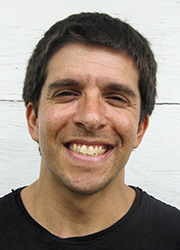
Douglas J. Guth
Stories by: Douglas J. Guth
Douglas J. Guth is a Cleveland Heights-based freelance writer and journalist. In addition to being senior contributing editor at FreshWater, his work has been published by Crain’s Cleveland Business, Ideastream, and Middle Market Growth. At FreshWater, he contributes regularly to the news and features departments, as well as works on regular sponsored series features.
Cleveland State University has had a busy year expanding its international reach, and now it has the accolades to prove it.
CSU produced the second highest number of Fulbright scholars in the nation during the 2012-2013 academic year. The second-place ranking was shared among eight universities, with each producing five Fulbright scholars. Tying for runner-up this year with CSU were Arizona State University, University of Arizona, Rutgers, Texas A&M at College Station, University of Florida, University of Minnesota-Twin Cities and University of Washington at Seattle.
CSU's Fulbright grant winners are staff members Jayne Mary Fuglister, Rama K. Jayanti, Brian Edward Ray, Janche Sang and Miena Sterio.
"This is an important distinction," says Joe Mosbrook, CSU's director of strategic communication. "CSU has an outstanding faculty that's been doing some remarkable things."
The Fulbright program allows participants to study, teach and conduct research abroad. CSU's grantees are studying the fields of law, business and computer science, respectively, and within the next year will be headed to far flung destinations including India and Azerbaijan.
The honor is nothing new for CSU. The university achieved the same ranking during the 2010-2011 academic year. With nearly 50 Fulbright grants awarded to CSU faculty in the past decade alone, the school consistently ranks among the nation’s top universities for Fulbright scholars, its supporters note.
"People don't think about Cleveland State as a research institution," Mosbrook says. "Look at the track record and you'll see the work being done. We look forward to continuing that trend."
SOURCE: Joe Mosbrook
WRITER: Douglas J. Guth
CSU produced the second highest number of Fulbright scholars in the nation during the 2012-2013 academic year. The second-place ranking was shared among eight universities, with each producing five Fulbright scholars. Tying for runner-up this year with CSU were Arizona State University, University of Arizona, Rutgers, Texas A&M at College Station, University of Florida, University of Minnesota-Twin Cities and University of Washington at Seattle.
CSU's Fulbright grant winners are staff members Jayne Mary Fuglister, Rama K. Jayanti, Brian Edward Ray, Janche Sang and Miena Sterio.
"This is an important distinction," says Joe Mosbrook, CSU's director of strategic communication. "CSU has an outstanding faculty that's been doing some remarkable things."
The Fulbright program allows participants to study, teach and conduct research abroad. CSU's grantees are studying the fields of law, business and computer science, respectively, and within the next year will be headed to far flung destinations including India and Azerbaijan.
The honor is nothing new for CSU. The university achieved the same ranking during the 2010-2011 academic year. With nearly 50 Fulbright grants awarded to CSU faculty in the past decade alone, the school consistently ranks among the nation’s top universities for Fulbright scholars, its supporters note.
"People don't think about Cleveland State as a research institution," Mosbrook says. "Look at the track record and you'll see the work being done. We look forward to continuing that trend."
SOURCE: Joe Mosbrook
WRITER: Douglas J. Guth

Recent transplants to Cleveland arriving from so-called "big-ticket" metropolitan markets say that they are experiencing appreciable cost savings in terms of housing, transportation, entertainment and food. And that translates to a better standard of life with little lost in terms of quantity and quality of offerings.

The current generation of soon-to-graduate college students is not just looking for a job, but also a fun and dynamic city that suits its lifestyle needs, says Christy Walkuski, director of (i)Cleveland.
This reality is the impetus behind an upcoming city-centric event hosted by Cleveland Leadership Center. On January 4, (i)Cleveland, a program of the leadership center, will welcome 150 college students and recent graduates to connect with career, civic and social opportunities in Cleveland.
The Winter Edition event will include a networking lunch with downtown executives, a meet with Cleveland's entrenched young professional community, behind-the-scenes tours of East 4th Street's amenities, and an "employer showcase" of current internship and job opportunities.
Combining job and leadership possibilities with highlights of Cleveland lifestyle trumpets a single, distinct message: "The city wants you here," says Walkuski. "Young people have the ability to make their mark on Cleveland."
Walkuski has read the worrisome headlines about young people leaving Northeast Ohio for the bright lights of bigger cities. The (i)Cleveland director herself lived in Chicago and Florida before returning to her home city.
"When I came back, I saw Cleveland with new eyes," says Walkuski.
Opening the eyes of college students requires a community-wide effort. The "Winter Edition" program aligns with (i)Cleveland's mission of using local assets to build relationships and foster lifelong civic engagement. Registration is limited, so Walkuski suggests prospective participants sign up as soon as possible.
"We have a huge education base here," she says. "We must continue to engage this (college-aged) population, because if we don't recruit them, someone else will."
SOURCE: Christy Walkuski
WRITER: Douglas J. Guth
This reality is the impetus behind an upcoming city-centric event hosted by Cleveland Leadership Center. On January 4, (i)Cleveland, a program of the leadership center, will welcome 150 college students and recent graduates to connect with career, civic and social opportunities in Cleveland.
The Winter Edition event will include a networking lunch with downtown executives, a meet with Cleveland's entrenched young professional community, behind-the-scenes tours of East 4th Street's amenities, and an "employer showcase" of current internship and job opportunities.
Combining job and leadership possibilities with highlights of Cleveland lifestyle trumpets a single, distinct message: "The city wants you here," says Walkuski. "Young people have the ability to make their mark on Cleveland."
Walkuski has read the worrisome headlines about young people leaving Northeast Ohio for the bright lights of bigger cities. The (i)Cleveland director herself lived in Chicago and Florida before returning to her home city.
"When I came back, I saw Cleveland with new eyes," says Walkuski.
Opening the eyes of college students requires a community-wide effort. The "Winter Edition" program aligns with (i)Cleveland's mission of using local assets to build relationships and foster lifelong civic engagement. Registration is limited, so Walkuski suggests prospective participants sign up as soon as possible.
"We have a huge education base here," she says. "We must continue to engage this (college-aged) population, because if we don't recruit them, someone else will."
SOURCE: Christy Walkuski
WRITER: Douglas J. Guth

A little imagination this holiday season could go a long way to building a home for a needy Cleveland family.
The Cleveland chapter of American Institute of Graphic Arts (AIGA) is collecting homemade Christmas ornaments from local creatives during its Art of Ornament event on December 14. The decorations will be auctioned off at 78th Street Studios, with proceeds going to Greater Cleveland Habitat for Humanity, a Christian-based organization that constructs homes throughout Northeast Ohio. The only rule is that ornaments can be hung for display and use.
"It's an opportunity for the design community to get together and give back using their natural creative tendencies," says Maggie Durguner, president of AIGA's Cleveland chapter.
All community members can make an ornament for the free, public event whether or not they are employed by the local creative sector. Last year, AIGA collected $2,000 through the auctioning of 80 ornaments. Designs ranged from an intricate depiction of 18th-century women to a tyrannosaurus rex covered in glitter.
"Some of the designs were incredible," Durguner says.
Ornaments usually sell from $15 to $100. A new element this year has AIGA's corporate sponsors matching the highest bid. Every dollar counts, particularly when it "hits home" for Cleveland's underserved, says Durguner.
SOURCE: Maggie Durguner
WRITER: Douglas J. Guth
The Cleveland chapter of American Institute of Graphic Arts (AIGA) is collecting homemade Christmas ornaments from local creatives during its Art of Ornament event on December 14. The decorations will be auctioned off at 78th Street Studios, with proceeds going to Greater Cleveland Habitat for Humanity, a Christian-based organization that constructs homes throughout Northeast Ohio. The only rule is that ornaments can be hung for display and use.
"It's an opportunity for the design community to get together and give back using their natural creative tendencies," says Maggie Durguner, president of AIGA's Cleveland chapter.
All community members can make an ornament for the free, public event whether or not they are employed by the local creative sector. Last year, AIGA collected $2,000 through the auctioning of 80 ornaments. Designs ranged from an intricate depiction of 18th-century women to a tyrannosaurus rex covered in glitter.
"Some of the designs were incredible," Durguner says.
Ornaments usually sell from $15 to $100. A new element this year has AIGA's corporate sponsors matching the highest bid. Every dollar counts, particularly when it "hits home" for Cleveland's underserved, says Durguner.
SOURCE: Maggie Durguner
WRITER: Douglas J. Guth

Domestic abuse often is treated as a taboo subject and not something the general public likes to admit exists, says Molly Scheetz, development marketing officer at the Domestic Violence & Child Advocacy Center of Cleveland.
This reluctance makes events like the organization's January 5 benefit at Negative Space Gallery vitally important in reaching out to victims of abuse. Funds procured at the gallery will be put toward programming that aids Cuyahoga County residents suffering in-home violence and other forms of mistreatment.
"We'll be grateful for whatever is raised," says Scheetz.
Awareness of the center's programming is just as important as funding, Scheetz believes. The community should know of the variety of services available to teens, adults and families, including: An education component bringing knowledge about teen dating violence to local schools; a 24-hour family helpline fielding crisis calls and offering referrals for abuse resources; and a shelter available for victims of domestic violence and their children.
"Anytime people can become more educated about the services we provide, it's a good thing," Scheetz says.
The center is working to overcome its own challenges these days. The nonprofit is the result of a merger that took place earlier this year between Bellflower Center for Prevention of Child Abuse and the Domestic Violence Center.
The transition has been fairly seamless, and the organization will continue to shed light on violence shuttered behind closed doors. "We have to acknowledge problems in order to reach solutions," says Scheetz.
SOURCE: Molly Scheetz
WRITER: Douglas J. Guth
This reluctance makes events like the organization's January 5 benefit at Negative Space Gallery vitally important in reaching out to victims of abuse. Funds procured at the gallery will be put toward programming that aids Cuyahoga County residents suffering in-home violence and other forms of mistreatment.
"We'll be grateful for whatever is raised," says Scheetz.
Awareness of the center's programming is just as important as funding, Scheetz believes. The community should know of the variety of services available to teens, adults and families, including: An education component bringing knowledge about teen dating violence to local schools; a 24-hour family helpline fielding crisis calls and offering referrals for abuse resources; and a shelter available for victims of domestic violence and their children.
"Anytime people can become more educated about the services we provide, it's a good thing," Scheetz says.
The center is working to overcome its own challenges these days. The nonprofit is the result of a merger that took place earlier this year between Bellflower Center for Prevention of Child Abuse and the Domestic Violence Center.
The transition has been fairly seamless, and the organization will continue to shed light on violence shuttered behind closed doors. "We have to acknowledge problems in order to reach solutions," says Scheetz.
SOURCE: Molly Scheetz
WRITER: Douglas J. Guth

Measured discourse is something that's not exactly commonplace these days, notes Jonathan Rodriguez-Lucas. Even this November's presidential debates had the two major candidates talking "at" each other rather than "with," he says.
The argumentative atmosphere of last election season was a major catalyst for the launching of The Cleveland Salon, a seminar series where traditional, even-handed debate is the rule rather than the exception.
The "social experiment," created by Lakewood resident Rodriguez-Lucas and Andrew Samtoy, encourages participants to share their divergent opinions with others in a respectful manner. There have been two seminars this year, both held at Mahall’s 20 Lanes in Lakwood. The most recent, on November 29, touched on the role of the media and what effect the downsizing or loss of The Plain Dealer could have on local journalism.
Seminars are moderated by a facilitator, who kicks off the topic and then opens up the discussion to the group.
The rules of engagement are simple: "Someone can have a belief opposite yours; that doesn't mean they are wrong," says Rodriguez-Lucas, 28.
That means no shouting, finger-pointing or other unseemly behavior. "That's always a concern, but it hasn't been an issue so far," says the co-founder.
The first Cleveland Salon was held this past summer at Ingenuity Festival. The idea was not to bring in a speaker to lecture for an hour, but rather allow non-experts to air their own constructive opinions. Rodriguez-Lucas looks forward to continuing the conversation during the next seminar in January.
"Everyone has a voice," he says.
SOURCE: Jonathan Rodriguez-Lucas
WRITER: Douglas J. Guth
The argumentative atmosphere of last election season was a major catalyst for the launching of The Cleveland Salon, a seminar series where traditional, even-handed debate is the rule rather than the exception.
The "social experiment," created by Lakewood resident Rodriguez-Lucas and Andrew Samtoy, encourages participants to share their divergent opinions with others in a respectful manner. There have been two seminars this year, both held at Mahall’s 20 Lanes in Lakwood. The most recent, on November 29, touched on the role of the media and what effect the downsizing or loss of The Plain Dealer could have on local journalism.
Seminars are moderated by a facilitator, who kicks off the topic and then opens up the discussion to the group.
The rules of engagement are simple: "Someone can have a belief opposite yours; that doesn't mean they are wrong," says Rodriguez-Lucas, 28.
That means no shouting, finger-pointing or other unseemly behavior. "That's always a concern, but it hasn't been an issue so far," says the co-founder.
The first Cleveland Salon was held this past summer at Ingenuity Festival. The idea was not to bring in a speaker to lecture for an hour, but rather allow non-experts to air their own constructive opinions. Rodriguez-Lucas looks forward to continuing the conversation during the next seminar in January.
"Everyone has a voice," he says.
SOURCE: Jonathan Rodriguez-Lucas
WRITER: Douglas J. Guth

Boards are shaping the nonprofit sector in unprecedented ways. The Cleveland BVU: The Center for Nonprofit Excellence is aiming to mold prospective board members to meet the trials and opportunities facing organizations today.
On December 7, BVU will host The Role of the Board, a seminar for current board members or those just thinking of joining a board. Speakers including David Goodman of Cleveland law firm Squire Sanders will discuss the roles and responsibilities of those that sit around the big table. Insight on leading an organization through change will also be shared, says BVU executive vice president Elizabeth Voudouris.
"We're providing people with practical training," she says. "We want to inspire them to service, too."
In general, boards are designed to hire and support a CEO, set the mission of the organization, and give financial oversight, among other duties. Modern pressures like shrinking resources have altered these best practices, Voudouris says.
"Good boards take a lot of work," she says. "There are significant strategic and financial challenges no matter what [a board's] size."
BVU officials expect the seminar to draw about 80 attendees representing nearly 40 businesses. Over half of the expected audience members currently are going through BVU’s board matching program and are planning to serve on a board in the near future. The December 7 event is sold out, but BVU hosts a handful of seminars a year for people looking to get educated about board life.
"It's a great introduction to nonprofit leadership," says Voudouris.
SOURCE: Elizabeth Voudouris
WRITER: Douglas J. Guth
On December 7, BVU will host The Role of the Board, a seminar for current board members or those just thinking of joining a board. Speakers including David Goodman of Cleveland law firm Squire Sanders will discuss the roles and responsibilities of those that sit around the big table. Insight on leading an organization through change will also be shared, says BVU executive vice president Elizabeth Voudouris.
"We're providing people with practical training," she says. "We want to inspire them to service, too."
In general, boards are designed to hire and support a CEO, set the mission of the organization, and give financial oversight, among other duties. Modern pressures like shrinking resources have altered these best practices, Voudouris says.
"Good boards take a lot of work," she says. "There are significant strategic and financial challenges no matter what [a board's] size."
BVU officials expect the seminar to draw about 80 attendees representing nearly 40 businesses. Over half of the expected audience members currently are going through BVU’s board matching program and are planning to serve on a board in the near future. The December 7 event is sold out, but BVU hosts a handful of seminars a year for people looking to get educated about board life.
"It's a great introduction to nonprofit leadership," says Voudouris.
SOURCE: Elizabeth Voudouris
WRITER: Douglas J. Guth

The national #GivingTuesday movement has a mission to create a day of giving at the start of the holiday season. The Cleveland Institute of Music (CIM) is taking that one day and expanding it well beyond the holidays in support of the next generation of classical musicians.
On November 27, in conjunction with #GivingTuesday, CIM launched an eight-week campaign to fund the training of students at the Cleveland School of the Arts (CSA). The school enrolls over 700 students in grades sixth through 12. Part of the curriculum covers instrumental music, hence donors are encouraged to give not only monetary contributions, but also fulfill a "wish list" of much-needed musical instruments, accessories and books to the school and its students.
"We wanted to make this about giving, so there's no goal or amount we're looking for," says Karin Stone, CIM's vice president of institutional advancement.
The official campaign ends January 22, culminating with a Black Heritage Concert on January 27 at CIM's Kulas Hall. The music school will present CSA with the collected contributions during the concert event.
CIM staff, faculty and students regularly work with their peers at CSA, says Stone. Last spring, the schools combined their talents for a concert that was "an amazing experience" for both entities.
CIM's grassroots fundraising effort will ensure there will be more such concerts in the future, Stone says.
"Whatever we get the kids, they will be excited," she says. "We have a long-running relationship with CSA, and this is one more way to enhance it."
SOURCE: Karin Stone
WRITER: Douglas J. Guth
On November 27, in conjunction with #GivingTuesday, CIM launched an eight-week campaign to fund the training of students at the Cleveland School of the Arts (CSA). The school enrolls over 700 students in grades sixth through 12. Part of the curriculum covers instrumental music, hence donors are encouraged to give not only monetary contributions, but also fulfill a "wish list" of much-needed musical instruments, accessories and books to the school and its students.
"We wanted to make this about giving, so there's no goal or amount we're looking for," says Karin Stone, CIM's vice president of institutional advancement.
The official campaign ends January 22, culminating with a Black Heritage Concert on January 27 at CIM's Kulas Hall. The music school will present CSA with the collected contributions during the concert event.
CIM staff, faculty and students regularly work with their peers at CSA, says Stone. Last spring, the schools combined their talents for a concert that was "an amazing experience" for both entities.
CIM's grassroots fundraising effort will ensure there will be more such concerts in the future, Stone says.
"Whatever we get the kids, they will be excited," she says. "We have a long-running relationship with CSA, and this is one more way to enhance it."
SOURCE: Karin Stone
WRITER: Douglas J. Guth

The musCLE house may not be a gym or cable-access bodybuilding show, but it does give Cleveland students the opportunity to flex their musical talents in exchange for a bit of their free time.
Students taking part in the program receive one hour of free music lessons in exchange for volunteering one hour toward philanthropic involvement or community service, says musCLE house co-founder Eric Kogelschatz.
The Detroit native created the program with his wife Hallie Bram Kogelschatz and Cleveland Institute of Music alums Ariel Clayton and Carlos Javier. The musCLE house works with students from Cleveland Municipal School District, although its co-founder would like to expand the program to other districts.
"Music is a basic building block of intelligence," Kogelschatz explains. Due to school districts cutting music programs, "not enough young people have exposure to it."
The musCLE house launched its fundraising campaign this week. Kogelschatz aims to raise $55,000 over the next two months to finance more than 600 hours of music lessons from paid instructors, along with the procurement of instruments, sheet music and more.
With its volunteerism aspect, the program has the tenet of community building at its core, says Kogelschatz. Adding music to the mix is a bonus for the Shaker Heights resident, who grew up playing the saxophone and clarinet.
"We're encouraging kids to get involved with their communities," he says. "Students get to see the change taking place around them, and they're getting a reward."
SOURCE: Eric Kogelschatz
WRITER: Douglas J. Guth
Students taking part in the program receive one hour of free music lessons in exchange for volunteering one hour toward philanthropic involvement or community service, says musCLE house co-founder Eric Kogelschatz.
The Detroit native created the program with his wife Hallie Bram Kogelschatz and Cleveland Institute of Music alums Ariel Clayton and Carlos Javier. The musCLE house works with students from Cleveland Municipal School District, although its co-founder would like to expand the program to other districts.
"Music is a basic building block of intelligence," Kogelschatz explains. Due to school districts cutting music programs, "not enough young people have exposure to it."
The musCLE house launched its fundraising campaign this week. Kogelschatz aims to raise $55,000 over the next two months to finance more than 600 hours of music lessons from paid instructors, along with the procurement of instruments, sheet music and more.
With its volunteerism aspect, the program has the tenet of community building at its core, says Kogelschatz. Adding music to the mix is a bonus for the Shaker Heights resident, who grew up playing the saxophone and clarinet.
"We're encouraging kids to get involved with their communities," he says. "Students get to see the change taking place around them, and they're getting a reward."
SOURCE: Eric Kogelschatz
WRITER: Douglas J. Guth

"Reading is fundamental" is a message that's been transmitted to the nation's children for years. Research shows that's no empty slogan: Kids who are not reading proficiently by third grade are four times more likely to leave school without a diploma, says Robert Paponetti, executive director of the Literacy Cooperative of Greater Cleveland.
Enter the Literacy Cooperative's STEP (Supporting Tutors Engaging Pupils) program, an in-school tutoring program designed to help build reading and language skills in underperforming K-3 students. Young participants are taught in one-on-one, structured tutoring sessions that coordinate with classroom curriculum.
The students chosen for the program usually are close to their grade's reading level, says Paponetti. Lessons are delivered twice a week and are designed to develop fluency, vocabulary development, comprehension and word knowledge.
"Reading to a child is one thing," Paponetti says."We are working with the child."
STEP started as a pilot program for first-grade students at Marion-Sterling School in Cleveland during the 2010-2011 school year. Shoreview Elementary was added to the mix for 2012-2013. There's also an after-school program taking place at Warrensville Heights Library this year.
The program, funded by Cleveland Foundation and several other groups, has resulted in positive gains for its young readers, notes Paponetti. Participating students at Marion-Sterling, for example, showed improvement in all measures of reading skills compared to non-tutored students.
Further success will see future expansion of the program. "There's a beautiful simplicity to structured tutoring intervention," says Paponetti. "It could be a real tool for helping children."
SOURCE: Robert Paponetti
WRITER: Douglas J. Guth
Enter the Literacy Cooperative's STEP (Supporting Tutors Engaging Pupils) program, an in-school tutoring program designed to help build reading and language skills in underperforming K-3 students. Young participants are taught in one-on-one, structured tutoring sessions that coordinate with classroom curriculum.
The students chosen for the program usually are close to their grade's reading level, says Paponetti. Lessons are delivered twice a week and are designed to develop fluency, vocabulary development, comprehension and word knowledge.
"Reading to a child is one thing," Paponetti says."We are working with the child."
STEP started as a pilot program for first-grade students at Marion-Sterling School in Cleveland during the 2010-2011 school year. Shoreview Elementary was added to the mix for 2012-2013. There's also an after-school program taking place at Warrensville Heights Library this year.
The program, funded by Cleveland Foundation and several other groups, has resulted in positive gains for its young readers, notes Paponetti. Participating students at Marion-Sterling, for example, showed improvement in all measures of reading skills compared to non-tutored students.
Further success will see future expansion of the program. "There's a beautiful simplicity to structured tutoring intervention," says Paponetti. "It could be a real tool for helping children."
SOURCE: Robert Paponetti
WRITER: Douglas J. Guth

After 35 years producing theatrical performances in rented spaces, the Near West Theatre finally is getting its own place. The community theater broke ground on its first-ever permanent home on November 27, and its supporters are happily looking ahead to the first show at the stand-alone building.
It will be about two years before the Detroit-Shoreway theater opens at W. 67th Street, just north of Detroit, says chief operating officer Hans Holznagel. Until then, Near West Theatre will continue to operate out of its longtime rented home on the third floor of a hall owned by St. Patrick's Church at W. 38th Street and Bridge Avenue in Cleveland's Ohio City neighborhood.
The new 25,000-square-foot theater will have extra seating and increased stage space. It also will have rehearsal space and air conditioning, two amenities the current facility has done without for years.
"It opens up all kinds of possibilities for us," says Holznagel.
Hundreds of people from the Gordon Square Arts District, the Detroit Shoreway neighborhood and the local theater community were invited to celebrate the theater's groundbreaking. The project will cost nearly $7 million -- a portion of the $30 million Gordon Square Arts District campaign set aside to revitalize the Detroit Shoreway neighborhood using the arts as an economic catalyst.
A new space won't detract from the intimacy that Near West Theatre shows are known for, promises Holznagel. When it opens in fall 2014, the space will offer the professionally produced, large-scale shows long-time fans have grown to love.
"We're excited to be part of a diverse, vibrant community that matches with the mission of our theater," Holznagel says.
SOURCE: Hans Holznagel
WRITER: Douglas J. Guth
It will be about two years before the Detroit-Shoreway theater opens at W. 67th Street, just north of Detroit, says chief operating officer Hans Holznagel. Until then, Near West Theatre will continue to operate out of its longtime rented home on the third floor of a hall owned by St. Patrick's Church at W. 38th Street and Bridge Avenue in Cleveland's Ohio City neighborhood.
The new 25,000-square-foot theater will have extra seating and increased stage space. It also will have rehearsal space and air conditioning, two amenities the current facility has done without for years.
"It opens up all kinds of possibilities for us," says Holznagel.
Hundreds of people from the Gordon Square Arts District, the Detroit Shoreway neighborhood and the local theater community were invited to celebrate the theater's groundbreaking. The project will cost nearly $7 million -- a portion of the $30 million Gordon Square Arts District campaign set aside to revitalize the Detroit Shoreway neighborhood using the arts as an economic catalyst.
A new space won't detract from the intimacy that Near West Theatre shows are known for, promises Holznagel. When it opens in fall 2014, the space will offer the professionally produced, large-scale shows long-time fans have grown to love.
"We're excited to be part of a diverse, vibrant community that matches with the mission of our theater," Holznagel says.
SOURCE: Hans Holznagel
WRITER: Douglas J. Guth

Soldiers are trained to not leave their comrades behind on the battlefield. That commitment shouldn't be relinquished by the public once combat veterans return from war, say supporters of housing solution organization Purple Heart Homes.
The City of South Euclid is partnering with the North Carolina-based nonprofit to build a home for Clevelander Demond Taylor, a veteran of the U.S. campaign in Iraq now suffering from Post Traumatic Stress Disorder (PTSD).
The city, along with Purple Heart Homes, One South Euclid Community Development Corporation, and the Cuyahoga Land Bank, will renovate the home located at 1171 Avondale Road. While Purple Heart Homes was founded in 2008 by two Iraq combat veterans, the idea to use their services locally was that of retired South Euclid service director and Vietnam veteran Ed Gallagher, says director of community services Keith Ari Benjamin.
The home has not been lived in for several years and needs new windows, flooring, interior walls, plumbing and more. South Euclid is taking cash donations as well as in-kind donations like paint. Contractors willing to help rebuild the home on a volunteer basis are also needed
South Euclid held a mission kickoff event on Monday, November 12, with the eventual aim of raising $60,000 to $70,000 to refurbish the house. The program drew over 100 people, some of whom have already stepped forward to give of their money or time. "It's great to see so many folks wanting to get involved, but we're going to need more," says Benjamin.
South Euclid has set up a website and Facebook page for those wanting to contribute. Purple Heart Homes immediately contributed $20,000, which will allow work on the house to begin as soon as next week. Construction should be completed by the spring.
The city has implemented several home rehab projects since the housing crisis began. Says Benjamin, It's an honor for South Euclid to give the dream of home ownership to someone who's sacrificed so much.
"Our goal is to welcome veterans like Demond," he says. "We want to take care of him like he took care of us when he served our country."
SOURCE: Keith Ari Benjamin
WRITER: Douglas J. Guth
The City of South Euclid is partnering with the North Carolina-based nonprofit to build a home for Clevelander Demond Taylor, a veteran of the U.S. campaign in Iraq now suffering from Post Traumatic Stress Disorder (PTSD).
The city, along with Purple Heart Homes, One South Euclid Community Development Corporation, and the Cuyahoga Land Bank, will renovate the home located at 1171 Avondale Road. While Purple Heart Homes was founded in 2008 by two Iraq combat veterans, the idea to use their services locally was that of retired South Euclid service director and Vietnam veteran Ed Gallagher, says director of community services Keith Ari Benjamin.
The home has not been lived in for several years and needs new windows, flooring, interior walls, plumbing and more. South Euclid is taking cash donations as well as in-kind donations like paint. Contractors willing to help rebuild the home on a volunteer basis are also needed
South Euclid held a mission kickoff event on Monday, November 12, with the eventual aim of raising $60,000 to $70,000 to refurbish the house. The program drew over 100 people, some of whom have already stepped forward to give of their money or time. "It's great to see so many folks wanting to get involved, but we're going to need more," says Benjamin.
South Euclid has set up a website and Facebook page for those wanting to contribute. Purple Heart Homes immediately contributed $20,000, which will allow work on the house to begin as soon as next week. Construction should be completed by the spring.
The city has implemented several home rehab projects since the housing crisis began. Says Benjamin, It's an honor for South Euclid to give the dream of home ownership to someone who's sacrificed so much.
"Our goal is to welcome veterans like Demond," he says. "We want to take care of him like he took care of us when he served our country."
SOURCE: Keith Ari Benjamin
WRITER: Douglas J. Guth

Seven is a lucky number for North Collinwood's burgeoning arts community, as a like-numbered group of the neighborhood's creative thinkers recently received grants from the Community Partnership for Arts and Culture (CPAC).
The seven artists, most working out of North Collinwood's Waterloo Arts and Entertainment District as part of CPAC's "Artists in Residence" initiative, will get a total of $45,000 in funding for projects including a music education series for local children and an "intergenerational story circle" starring some of the community elderly residents, says CPAC strategic initiative director Seth Beattie.
The grants will address community priorities through arts activities between this month and the end of March. Overarching themes of the grant cycle are residents, community assets and youth involvement. CPAC is awarding the grants in conjunction with the nonprofit Northeast Shores Development Corporation.
"We had 30 proposals this time around," says Beattie of CPAC's second of three grant periods; the third round will come next spring. "These particular ones rose to the top."
The grants are a component of the Artists in Residence program, which is using the North Collinwood neighborhood as "a laboratory" for increasing artists’ engagement with the population, says CPAC president and CEO Tom Schorgl. Area painters, sculptors, videographers and musicians are given perks like affordable housing with the hope they will be a major participant in neighborhood revitalization.
"Artists want communities where they can live affordably with a great quality of life," says Beattie. "They can be a tremendous force in absorbing space in the neighborhood. Collinwood is poised to see a dramatic turnaround in the coming years."
The Waterloo Road arts district can be part of that transformation, with CPAC's latest granting round a good beginning on getting that done, believe the organization's leaders.
"We're marrying strengths here," Beattie says. "It's about money and developing a system of support that helps artists build up projects now and in the future."
SOURCE: Tom Schorgl, Seth Beattie
WRITER: Douglas J. Guth
The seven artists, most working out of North Collinwood's Waterloo Arts and Entertainment District as part of CPAC's "Artists in Residence" initiative, will get a total of $45,000 in funding for projects including a music education series for local children and an "intergenerational story circle" starring some of the community elderly residents, says CPAC strategic initiative director Seth Beattie.
The grants will address community priorities through arts activities between this month and the end of March. Overarching themes of the grant cycle are residents, community assets and youth involvement. CPAC is awarding the grants in conjunction with the nonprofit Northeast Shores Development Corporation.
"We had 30 proposals this time around," says Beattie of CPAC's second of three grant periods; the third round will come next spring. "These particular ones rose to the top."
The grants are a component of the Artists in Residence program, which is using the North Collinwood neighborhood as "a laboratory" for increasing artists’ engagement with the population, says CPAC president and CEO Tom Schorgl. Area painters, sculptors, videographers and musicians are given perks like affordable housing with the hope they will be a major participant in neighborhood revitalization.
"Artists want communities where they can live affordably with a great quality of life," says Beattie. "They can be a tremendous force in absorbing space in the neighborhood. Collinwood is poised to see a dramatic turnaround in the coming years."
The Waterloo Road arts district can be part of that transformation, with CPAC's latest granting round a good beginning on getting that done, believe the organization's leaders.
"We're marrying strengths here," Beattie says. "It's about money and developing a system of support that helps artists build up projects now and in the future."
SOURCE: Tom Schorgl, Seth Beattie
WRITER: Douglas J. Guth

It can be said that not only did Buck Harris live and work in Cleveland's Detroit Shoreway neighborhood before it was cool, he also had a hand in making the community cool in the first place.
Harris, a Lakewood native, has lived in the near west side neighborhood for 35 years, opening in 2002 a yoga studio called There’s No Place Like Om. Running a business at that time was a risk, but it wasn't the first Harris has taken when it comes to his beloved community. In 1992, he founded Bridge Brigade, "a guerilla-type community action group" created to push back against the crime that was inundating Bridge Avenue between W. 45th and W. 58th streets.
In those days, street corners were manned by gangs, drug dealers and prostitutes, while the surrounding neighborhood was blighted with dilapidated homes. Bridge Brigade members would patrol the streets in specially marked cars, using a CB radio to inform police of blatant criminal activity. Members also put up signs throughout the neighborhood to let drug dealers know they were being watched.
"We got chased a couple times," says Harris. "Things could get pretty hairy."
This year marked two milestones for Harris and his Bridge Brigade. The block group celebrated its 20th anniversary last summer with a street festival. In early November, the group's founder received an award for his good work from the Detroit Shoreway Community Development Organization.
Harris, who shared the community service award with life partner and fellow Bridge Brigade member Michael O'Connor, is proud to be one of Detroit Shoreway's "urban pioneers," he says. Along with the yoga studio, Harris also owned a restaurant in the neighborhood, and he's been thrilled to have been at ground zero for such area revitalization efforts as the Gordon Square Arts District.
Bridge Avenue, in particular, has seen an upswing with new townhouse projects and more. "I never would have believed the street would look like what it does today," says Harris. "There are people out jogging and walking. There was a time when people were afraid to walk around."
Ironically, the community's renewal is doing well to make Bridge Brigade nearly obsolete. "Attendance has definitely dropped," Harris says. "There's no longer a threat to fight."
That is not a bad problem to have, notes the block group founder. "I love the diversity here, and the proximity to West Side Market," says Harris. "Helping to create a neighborhood is a nice feather in my cap."
SOURCE: Buck Harris
WRITER: Douglas J. Guth
Harris, a Lakewood native, has lived in the near west side neighborhood for 35 years, opening in 2002 a yoga studio called There’s No Place Like Om. Running a business at that time was a risk, but it wasn't the first Harris has taken when it comes to his beloved community. In 1992, he founded Bridge Brigade, "a guerilla-type community action group" created to push back against the crime that was inundating Bridge Avenue between W. 45th and W. 58th streets.
In those days, street corners were manned by gangs, drug dealers and prostitutes, while the surrounding neighborhood was blighted with dilapidated homes. Bridge Brigade members would patrol the streets in specially marked cars, using a CB radio to inform police of blatant criminal activity. Members also put up signs throughout the neighborhood to let drug dealers know they were being watched.
"We got chased a couple times," says Harris. "Things could get pretty hairy."
This year marked two milestones for Harris and his Bridge Brigade. The block group celebrated its 20th anniversary last summer with a street festival. In early November, the group's founder received an award for his good work from the Detroit Shoreway Community Development Organization.
Harris, who shared the community service award with life partner and fellow Bridge Brigade member Michael O'Connor, is proud to be one of Detroit Shoreway's "urban pioneers," he says. Along with the yoga studio, Harris also owned a restaurant in the neighborhood, and he's been thrilled to have been at ground zero for such area revitalization efforts as the Gordon Square Arts District.
Bridge Avenue, in particular, has seen an upswing with new townhouse projects and more. "I never would have believed the street would look like what it does today," says Harris. "There are people out jogging and walking. There was a time when people were afraid to walk around."
Ironically, the community's renewal is doing well to make Bridge Brigade nearly obsolete. "Attendance has definitely dropped," Harris says. "There's no longer a threat to fight."
That is not a bad problem to have, notes the block group founder. "I love the diversity here, and the proximity to West Side Market," says Harris. "Helping to create a neighborhood is a nice feather in my cap."
SOURCE: Buck Harris
WRITER: Douglas J. Guth

Daniel Cuffaro has been working in design for 20 years. He knows how an inspiring, eclectic workspace can act as fuel for creative minds, promoting interaction among those who essentially use their imagination for a living.
Such was the idea behind Cuffaro's founding of Abeo Design, a Lakewood-based company that builds aesthetically distinctive office/studio workstations with a sustainable bent. Unlike your typical office furniture, the spindly "Hive" workstations are designed with both functionality and adaptability in mind, Cuffaro says.
Each station is comprised of a work surface and storage shelf embedded with LED lighting. The entire unit is on wheels, making a studio or office easy to reconfigure as projects or teams change, notes Cuffaro. This is not something you could readily do with a set of hard-to-move cubicles.
"Our product is a dynamic and customizable alternative,” he says.
The workstations also fulfill a practical need. They are made of wood and other building materials reclaimed from abandoned Cleveland houses deconstructed during the foreclosure crisis. Cuffaro, head of the industrial design program at The Cleveland Institute of Art (CIA), first got the idea for Abeo in 2009 when he was developing the layout for the school's design studio. At the time, there was a growing market for raw materials harvested from foreclosed homes, so why not build CIA's studio furniture with those resources?
"I had a desire to turn a bad situation into something salvageable," Cuffaro says.
His first customer also happens to be his current employer. CIA recently purchased a handful of the $6,000-and-up workstations from Abeo, which works with Northeast Ohio companies A Piece of Cleveland and Benchmark Craftsmen to make the product a reality.
A portion of Abeo's profits will support CIA programs. Meanwhile, Cuffaro will continue to live by the company's name. In Latin, Abeo ( pronounced "a-bay-o") means "change" or "transformation." Turning trash into something of value is good for both the company and a sustainable Cleveland, he says.
SOURCE: Daniel Cuffaro
WRITER: Douglas J. Guth
Such was the idea behind Cuffaro's founding of Abeo Design, a Lakewood-based company that builds aesthetically distinctive office/studio workstations with a sustainable bent. Unlike your typical office furniture, the spindly "Hive" workstations are designed with both functionality and adaptability in mind, Cuffaro says.
Each station is comprised of a work surface and storage shelf embedded with LED lighting. The entire unit is on wheels, making a studio or office easy to reconfigure as projects or teams change, notes Cuffaro. This is not something you could readily do with a set of hard-to-move cubicles.
"Our product is a dynamic and customizable alternative,” he says.
The workstations also fulfill a practical need. They are made of wood and other building materials reclaimed from abandoned Cleveland houses deconstructed during the foreclosure crisis. Cuffaro, head of the industrial design program at The Cleveland Institute of Art (CIA), first got the idea for Abeo in 2009 when he was developing the layout for the school's design studio. At the time, there was a growing market for raw materials harvested from foreclosed homes, so why not build CIA's studio furniture with those resources?
"I had a desire to turn a bad situation into something salvageable," Cuffaro says.
His first customer also happens to be his current employer. CIA recently purchased a handful of the $6,000-and-up workstations from Abeo, which works with Northeast Ohio companies A Piece of Cleveland and Benchmark Craftsmen to make the product a reality.
A portion of Abeo's profits will support CIA programs. Meanwhile, Cuffaro will continue to live by the company's name. In Latin, Abeo ( pronounced "a-bay-o") means "change" or "transformation." Turning trash into something of value is good for both the company and a sustainable Cleveland, he says.
SOURCE: Daniel Cuffaro
WRITER: Douglas J. Guth

Patrick Ciamacco loves the theater scene in Cleveland. However, he sometime finds himself visiting a venue only once a season, as programming tends to run with similar themes to the point where if Ciamacco has seen one show, he's seen them all.
There's nothing inherently wrong with that approach, but the Brunswick native wanted something more out of the stage experience. Thus, the creation of Blank Canvas Theatre, a so-called "Theatre for the People," which is wrapping up its inaugural season on Cleveland's West Side.
Ciamacco, Blank Canvas' founder and artistic director, says that 2012 has been a fun if stressful year. The theater opened in January with The Texas Chainsaw Musical, and is closing the year with Debbie Does Dallas: The Musical. In between all the blood-letting and singing were three additional shows, including the John Steinbeck classic, Of Mice and Men.
A wide range of shows available at affordable prices has attracted a young, diverse crowd to the new venue, says Ciamacco. "It takes years to build an audience, but with the quality of work we're doing, there's a kind of, 'If you build it, they will come' feeling," he says.
Ciamacco founded Blank Canvas partly as a performance space for The Laughter League, his Cleveland-based sketch-comedy group. The 78th Street Studios, an arts complex bustling with 40 galleries and studios, seemed like a great place to plant a new artistic foothold within the city.
The space is intimate, with no seat more than 15 feet from the stage. Starting off, Ciamacco received support from Cleveland's theater community in the form of tools, lighting and emotional support. The coming year will be spent improving the venue's infrastructure and bringing in a variety of new shows. There already are plans to bring back fan favorite Texas Chainsaw Musical next Halloween for a revival.
Eclectic programming will always be Blank Canvas Theatre's calling card, maintains Ciamacco. "We're going to have something to attract the atypical theater-goer, while trying to get the normal theater fan to go outside the box," he says.
SOURCE: Patrick Ciamacco
WRITER: Douglas J. Guth
There's nothing inherently wrong with that approach, but the Brunswick native wanted something more out of the stage experience. Thus, the creation of Blank Canvas Theatre, a so-called "Theatre for the People," which is wrapping up its inaugural season on Cleveland's West Side.
Ciamacco, Blank Canvas' founder and artistic director, says that 2012 has been a fun if stressful year. The theater opened in January with The Texas Chainsaw Musical, and is closing the year with Debbie Does Dallas: The Musical. In between all the blood-letting and singing were three additional shows, including the John Steinbeck classic, Of Mice and Men.
A wide range of shows available at affordable prices has attracted a young, diverse crowd to the new venue, says Ciamacco. "It takes years to build an audience, but with the quality of work we're doing, there's a kind of, 'If you build it, they will come' feeling," he says.
Ciamacco founded Blank Canvas partly as a performance space for The Laughter League, his Cleveland-based sketch-comedy group. The 78th Street Studios, an arts complex bustling with 40 galleries and studios, seemed like a great place to plant a new artistic foothold within the city.
The space is intimate, with no seat more than 15 feet from the stage. Starting off, Ciamacco received support from Cleveland's theater community in the form of tools, lighting and emotional support. The coming year will be spent improving the venue's infrastructure and bringing in a variety of new shows. There already are plans to bring back fan favorite Texas Chainsaw Musical next Halloween for a revival.
Eclectic programming will always be Blank Canvas Theatre's calling card, maintains Ciamacco. "We're going to have something to attract the atypical theater-goer, while trying to get the normal theater fan to go outside the box," he says.
SOURCE: Patrick Ciamacco
WRITER: Douglas J. Guth

Skull-faced children and adults danced through the streets of the Gordon Square Arts District last Saturday afternoon, followed by tall, cadaverous puppets and altars overflowing with flowers and other remembrances of those who have passed on to the next realm.
There was nothing to be afraid of, however; the macabre and colorful carrying-on was in celebration of the Day of the Dead, a Latin-American holiday that pays joyful homage to lost relatives. El Día de los Muertos is meant to be more reflective than sad or scary, says Hector Castellanos, the event's coordinator and artistic director.
This year's Cleveland-centric Day of the Dead festival drew a large crowd to the arts district on a chilly fall afternoon. Attendees enjoyed a parade, music, folk art and food truck fare. Castellanos doesn't have attendance figures yet, but the event has drawn between 1,200 and 1,400 people each of the last two years.
"People came from all over the region," he says. "There was a lot of energy and passion."
Gordon Square has hosted the Day of the Dead celebration for five years, with the festival marching through Cleveland's East Side the three years before that. While Cleveland's Latino population was well represented last weekend, many non-Latinos came for the festivities as well. There were many hands involved in building floats and making puppets. Area businesses got in on the fun, too, decorating storefronts with skulls and other symbols of the ancient holiday.
"The whole neighborhood got involved," says Castellanos, a native of Guatemala. "It's a powerful event."
Cleveland artist Bruce Buchanan built an altar representing the surrounding West Side neighborhood and the people who once lived there. The shrine is decorated with rows of colorful houses fronted by abstract skeletons, while tiny flags scrawled with the names of deceased former residents are placed on the alter along with offerings of food, flowers and candles.
"We're helping to build the neighborhood now, but these people built the neighborhood in the first place," says Buchanan. "That's something we should respect."
Meanwhile, Castellanos already is planning to make next year's celebration bigger and better. "It's spiritual and educational, with so much history behind it," he says. "It also brings the community together, and that's one of the most important aspects for me."
SOURCES: Hector Castellanos, Bruce Buchanan
WRITER: Douglas J. Guth
There was nothing to be afraid of, however; the macabre and colorful carrying-on was in celebration of the Day of the Dead, a Latin-American holiday that pays joyful homage to lost relatives. El Día de los Muertos is meant to be more reflective than sad or scary, says Hector Castellanos, the event's coordinator and artistic director.
This year's Cleveland-centric Day of the Dead festival drew a large crowd to the arts district on a chilly fall afternoon. Attendees enjoyed a parade, music, folk art and food truck fare. Castellanos doesn't have attendance figures yet, but the event has drawn between 1,200 and 1,400 people each of the last two years.
"People came from all over the region," he says. "There was a lot of energy and passion."
Gordon Square has hosted the Day of the Dead celebration for five years, with the festival marching through Cleveland's East Side the three years before that. While Cleveland's Latino population was well represented last weekend, many non-Latinos came for the festivities as well. There were many hands involved in building floats and making puppets. Area businesses got in on the fun, too, decorating storefronts with skulls and other symbols of the ancient holiday.
"The whole neighborhood got involved," says Castellanos, a native of Guatemala. "It's a powerful event."
Cleveland artist Bruce Buchanan built an altar representing the surrounding West Side neighborhood and the people who once lived there. The shrine is decorated with rows of colorful houses fronted by abstract skeletons, while tiny flags scrawled with the names of deceased former residents are placed on the alter along with offerings of food, flowers and candles.
"We're helping to build the neighborhood now, but these people built the neighborhood in the first place," says Buchanan. "That's something we should respect."
Meanwhile, Castellanos already is planning to make next year's celebration bigger and better. "It's spiritual and educational, with so much history behind it," he says. "It also brings the community together, and that's one of the most important aspects for me."
SOURCES: Hector Castellanos, Bruce Buchanan
WRITER: Douglas J. Guth

Local firms like TWIST Creative, Go Media and Studio Graphique are just a few of the design-minded companies that are fueling Cleveland's creative renaissance. With the region's future success dependent on the procurement of young talent, the design community's exciting body of work is earning the city regional and national buzz.

That's no crass come-on, but rather an effort to advocate for a Cleveland-based bike-sharing network that has become popular in a number of U.S. cities. For a small fee, bike sharing allows patrons to rent a bike at self-service sites scattered about a city, then return the bike to another site.
Cleveland's Office of Sustainability recently issued a request to conduct a feasibility and implementation study on the service. Minneapolis, Chicago and Chattanooga, Tenn., are among the cities that have recently launched a bike-sharing network.
The local push is being fronted by Bike Cleveland, a group that advocates for the rights of the local cycling community. Earlier this year, the organization teamed with University Circle Inc. and other groups to form a Bike Share Task Force.
By providing greater access to bikes, bike-share programs can help increase the number of people biking, decrease the amount of pollutants in the air and improve community health, says Jacob VanSickle, executive director of Bike Cleveland.
"The city has stepped up," he says of the effort. "We have to determine the model that would work in Cleveland."
VanSickle would like to see bike-sharing docks placed at locations with high-density populations and job rates, including rapid stations, Public Square, college campuses and the Cleveland Clinic. The bikes would typically be used for short trips -- an office worker taking a bus to Public Square, for example, could use the automated bike station instead of taking another bus to his ultimate destination.
Trips of less than 30 minutes would be free of charge. Those using the service more frequently could pay $50 to $70 become annually. They would be charged a fee for treks longer than a half hour.
Promoting bike sharing is part of creating a culture that makes a city more attractive, says VanSickle. Along with the bike-sharing program, Bike Cleveland has been advocating for bike lanes and other cycling-friendly amenities. The group plans to keep the wheels turning until more progress is made.
"Cities with the bike-sharing program are seen as more livable and friendly," says VanSickle. "That's something we can gain from in Cleveland."
SOURCE: Jacob VanSickle
WRITER: Douglas J. Guth
Cleveland's Office of Sustainability recently issued a request to conduct a feasibility and implementation study on the service. Minneapolis, Chicago and Chattanooga, Tenn., are among the cities that have recently launched a bike-sharing network.
The local push is being fronted by Bike Cleveland, a group that advocates for the rights of the local cycling community. Earlier this year, the organization teamed with University Circle Inc. and other groups to form a Bike Share Task Force.
By providing greater access to bikes, bike-share programs can help increase the number of people biking, decrease the amount of pollutants in the air and improve community health, says Jacob VanSickle, executive director of Bike Cleveland.
"The city has stepped up," he says of the effort. "We have to determine the model that would work in Cleveland."
VanSickle would like to see bike-sharing docks placed at locations with high-density populations and job rates, including rapid stations, Public Square, college campuses and the Cleveland Clinic. The bikes would typically be used for short trips -- an office worker taking a bus to Public Square, for example, could use the automated bike station instead of taking another bus to his ultimate destination.
Trips of less than 30 minutes would be free of charge. Those using the service more frequently could pay $50 to $70 become annually. They would be charged a fee for treks longer than a half hour.
Promoting bike sharing is part of creating a culture that makes a city more attractive, says VanSickle. Along with the bike-sharing program, Bike Cleveland has been advocating for bike lanes and other cycling-friendly amenities. The group plans to keep the wheels turning until more progress is made.
"Cities with the bike-sharing program are seen as more livable and friendly," says VanSickle. "That's something we can gain from in Cleveland."
SOURCE: Jacob VanSickle
WRITER: Douglas J. Guth

A school garden is a real, living world, a type of lab that offers teachers a way to embed creativity, collaboration and love for nature into their curriculum, believes Carlton Jackson, a farmer, self-described "food evangelist" and proprietor of Tunnel Vision Hoops, a provider of hoop houses that allow for year-round food production.
The Cleveland-based company is offering Cuyahoga County public school students grades K-8 a chance to win a hoop house for their school. The Gardens that Teach contest, which runs through February, asks students a series of questions about the preparation, construction and maintenance of a theoretical school garden. Answers will be reviewed by a panel of experts from the realms of food policy, botany and community gardening.
The winning school will receive the greenhouse-like hoop house, while the other participants will learn about the benefits of plants, year-round gardening and healthy eating, says Jackson. "We wanted kids to use their math skills," he adds. For example, "how many pounds of tomatoes can they get? What will the do with the food once it's grown?"
Hoop houses provide a high-temperature environment that protects crops from strong winds, cold and frost, allowing fruits and vegetables to grow during gardening's so-called "off-season," Jackson says.
The concept also is in line with the city's Sustainable Cleveland 2019 project, a movement that in part aims to increase the percentage of locally produced food. Mayor Frank Jackson also proclaimed October 24 to be Food Day, a national venture with the overriding objective of "eating real" and promoting healthy diets among the population.
The Gardens That Teach contest is certainly a nourishing exercise for Northeast Ohio's young students, says Jackson.
"There's a wonderment in watching something grow," he says. "If we can kids back to that, it would be a beautiful thing."
SOURCE: Carlton Jackson
WRITER: Douglas J. Guth
The Cleveland-based company is offering Cuyahoga County public school students grades K-8 a chance to win a hoop house for their school. The Gardens that Teach contest, which runs through February, asks students a series of questions about the preparation, construction and maintenance of a theoretical school garden. Answers will be reviewed by a panel of experts from the realms of food policy, botany and community gardening.
The winning school will receive the greenhouse-like hoop house, while the other participants will learn about the benefits of plants, year-round gardening and healthy eating, says Jackson. "We wanted kids to use their math skills," he adds. For example, "how many pounds of tomatoes can they get? What will the do with the food once it's grown?"
Hoop houses provide a high-temperature environment that protects crops from strong winds, cold and frost, allowing fruits and vegetables to grow during gardening's so-called "off-season," Jackson says.
The concept also is in line with the city's Sustainable Cleveland 2019 project, a movement that in part aims to increase the percentage of locally produced food. Mayor Frank Jackson also proclaimed October 24 to be Food Day, a national venture with the overriding objective of "eating real" and promoting healthy diets among the population.
The Gardens That Teach contest is certainly a nourishing exercise for Northeast Ohio's young students, says Jackson.
"There's a wonderment in watching something grow," he says. "If we can kids back to that, it would be a beautiful thing."
SOURCE: Carlton Jackson
WRITER: Douglas J. Guth