
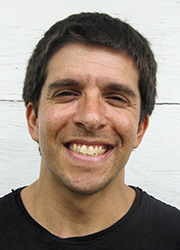
Douglas J. Guth
Stories by: Douglas J. Guth
Douglas J. Guth is a Cleveland Heights-based freelance writer and journalist. In addition to being senior contributing editor at FreshWater, his work has been published by Crain’s Cleveland Business, Ideastream, and Middle Market Growth. At FreshWater, he contributes regularly to the news and features departments, as well as works on regular sponsored series features.

For a number of years at the tail end of the 20th century, Greater Cleveland's public and private leaders attempted to pull the city up through ambitious marketing campaigns. For awhile it seemed to work. The national media began referring to Cleveland as the "Comeback City" in conjunction with the grand openings of ambitious projects like Tower City Center, Jacobs Field and the Rock and Roll Hall of Fame and Museum.
But toward the end of the '90s a strange thing happened: The city, for all intents and purposes, stopped marketing itself.
Why?
"We began to believe our own press," says Rick Batyko, president of the Regional Marketing Alliance of Northeast Ohio, which conducts the Cleveland Plus campaign. And civic officials "moved on to other tasks and defunded marketing."
In essence, Northeast Ohio stopped telling its tale with the tale barely begun -- a rather large mistake in retrospect. "The underlying economy wasn't doing that well," Batyko says. "That's something you couldn't see in the skyline shots."
During the mid-2000s, the region's narrative thread was picked up by Cleveland Plus campaign. Established in 2005 -- with founding members that included Greater Cleveland Partnership, Positively Cleveland and Team NEO -- the organization champions Northeast Ohio as a culturally rich, yet affordable place to live.
Read the rest of the story here.
But toward the end of the '90s a strange thing happened: The city, for all intents and purposes, stopped marketing itself.
Why?
"We began to believe our own press," says Rick Batyko, president of the Regional Marketing Alliance of Northeast Ohio, which conducts the Cleveland Plus campaign. And civic officials "moved on to other tasks and defunded marketing."
In essence, Northeast Ohio stopped telling its tale with the tale barely begun -- a rather large mistake in retrospect. "The underlying economy wasn't doing that well," Batyko says. "That's something you couldn't see in the skyline shots."
During the mid-2000s, the region's narrative thread was picked up by Cleveland Plus campaign. Established in 2005 -- with founding members that included Greater Cleveland Partnership, Positively Cleveland and Team NEO -- the organization champions Northeast Ohio as a culturally rich, yet affordable place to live.
Read the rest of the story here.

If Northeast Ohio has a digital divide, then Cleveland-based nonprofit broadband provider OneCommunity wants to lay down enough fiber-optic cable to successfully bridge the gap.
The divide is particularly wide in Cleveland's poorer neighborhoods, says OneCommunity CEO Brett Lindsey. In response, his organization created the Connect Your Community Project (CYC). Since 2010, CYC has provided broadband training, equipment and support for nearly 8,000 Cleveland and East Cleveland residents. The group's work is supported through a $18.7 million grant from the U.S. Department of Commerce’s Broadband Technology Opportunities Program (BTOP).
The organization's new adopters receive a refurbished computer at no cost after matriculating through the training program. They also have the opportunity to receive a free modem and affordable, high-speed home Internet service.
In modern society, everything from job postings to health care information is online, notes Lindsey. The idea is not to give Cleveland's underserved access to solitaire or funny YouTube videos, but an electronic education that will allow them to look up information on their child's school system or connect with far flung family members.
"The haves and have nots in terms of technology are significant," says Lindsey. "This is a way to get people engaged."
OneCommunity is also bringing "digital literacy" to Cleveland families with young people on track for college entry but not currently connected to broadband. Computer training and access can go far in spurring parental engagement in a student's post-high school academic career, Lindsey believes.
So far, so good, says the OneCommunity CEO. In its initial CYC data, 75 percent of parents surveyed used their home broadband connection to communicate with their child's teachers and administrators.
"We have to continue to ensure that people don't get left behind," says Lindsey.
SOURCE: Brett Lindsey
WRITER: Douglas J. Guth
The divide is particularly wide in Cleveland's poorer neighborhoods, says OneCommunity CEO Brett Lindsey. In response, his organization created the Connect Your Community Project (CYC). Since 2010, CYC has provided broadband training, equipment and support for nearly 8,000 Cleveland and East Cleveland residents. The group's work is supported through a $18.7 million grant from the U.S. Department of Commerce’s Broadband Technology Opportunities Program (BTOP).
The organization's new adopters receive a refurbished computer at no cost after matriculating through the training program. They also have the opportunity to receive a free modem and affordable, high-speed home Internet service.
In modern society, everything from job postings to health care information is online, notes Lindsey. The idea is not to give Cleveland's underserved access to solitaire or funny YouTube videos, but an electronic education that will allow them to look up information on their child's school system or connect with far flung family members.
"The haves and have nots in terms of technology are significant," says Lindsey. "This is a way to get people engaged."
OneCommunity is also bringing "digital literacy" to Cleveland families with young people on track for college entry but not currently connected to broadband. Computer training and access can go far in spurring parental engagement in a student's post-high school academic career, Lindsey believes.
So far, so good, says the OneCommunity CEO. In its initial CYC data, 75 percent of parents surveyed used their home broadband connection to communicate with their child's teachers and administrators.
"We have to continue to ensure that people don't get left behind," says Lindsey.
SOURCE: Brett Lindsey
WRITER: Douglas J. Guth

Education is on the forefront of Cleveland's transformation plans. The city is aiming to reform its troubled school system as well as increase the number of youth attending and graduating from college.
Cleveland Public Library (CPL) had Cleveland's goals in mind when planning its African American History Month programming for this year. Throughout February, the library will offer a variety of education- and educator-focused programming, music and events at its main facility and branch locations.
"We try to focus on topics that resonate with the community," says CPL programming director Aaron Mason. "Education is the topic of the day."
Featured programs and events include:
* A showcase of student-produced music and videos created by Cleveland’s youth through the efforts of Reading R.A.M.M. (Recording Arts Music Media) founder Edward “Phatty” Banks. The February 9 event at the main library is designed to connect area children with reading and education through use of pop-culture-style music and media.
* A performance by Ralph Miles Jones and Baba Issa Abramaleem, otherwise known as "The Seekers of Truth Revolutionary Ensemble." Jones is a multi-instrumentalist and recording artist from Oberlin College. Abramaleem is a composer, visual artist, playwright and percussionist-guitarist. The duo plays CPL's Rice Branch on February 15.
* A free screening of the documentary "PUSH: Madison vs. Madison" on February 22 at the Martin Luther King, Jr. branch. The film covers the trials of a talented but dysfunctional high school basketball team.
This year's round of African American History Month programming is meant to look ahead rather than back at history, notes Mason.
"The library should be a place of learning and engagement," he says. "It's about exposing people to new ideas."
SOURCE: Aaron Mason
WRITER: Douglas J. Guth
Cleveland Public Library (CPL) had Cleveland's goals in mind when planning its African American History Month programming for this year. Throughout February, the library will offer a variety of education- and educator-focused programming, music and events at its main facility and branch locations.
"We try to focus on topics that resonate with the community," says CPL programming director Aaron Mason. "Education is the topic of the day."
Featured programs and events include:
* A showcase of student-produced music and videos created by Cleveland’s youth through the efforts of Reading R.A.M.M. (Recording Arts Music Media) founder Edward “Phatty” Banks. The February 9 event at the main library is designed to connect area children with reading and education through use of pop-culture-style music and media.
* A performance by Ralph Miles Jones and Baba Issa Abramaleem, otherwise known as "The Seekers of Truth Revolutionary Ensemble." Jones is a multi-instrumentalist and recording artist from Oberlin College. Abramaleem is a composer, visual artist, playwright and percussionist-guitarist. The duo plays CPL's Rice Branch on February 15.
* A free screening of the documentary "PUSH: Madison vs. Madison" on February 22 at the Martin Luther King, Jr. branch. The film covers the trials of a talented but dysfunctional high school basketball team.
This year's round of African American History Month programming is meant to look ahead rather than back at history, notes Mason.
"The library should be a place of learning and engagement," he says. "It's about exposing people to new ideas."
SOURCE: Aaron Mason
WRITER: Douglas J. Guth

The philosophy of the Public Animal Welfare Society (PAWS) is that kindness to animals helps build a better world for all. If that's true, then Negative Space Gallery hopes to set the foundation for a happier planet with an upcoming PAWS charity event.
Negative Space and area band Second Hand Dogs will host the benefit for the nonprofit animal rescue group on February 16 at the gallery. PAWS' emphasis is placed on reform of current animal cruelty laws and adoption of dogs in need.
The event is particularly timely in light of two recent cases of animal cruelty that made headlines in Cleveland, notes Negative Space director Michael Kurtz. In November, a bull mastiff was shot and left for dead in a Cleveland Heights park. Late last month, a Labrador mix was killed with a bow and arrow in Old Brooklyn.
The Negative Space program offers a raffle to benefit PAWS, resource tables, adoption opportunities, and a guest appearance by "Forrest," the survivor of the Cleveland Heights attack.
"There are people whose animals mean more to them than anything in the world," says Kurtz, whose Collie-German Shepherd mix was rescued from a home with poor conditions. "Who can [shoot a dog] and sleep at night?"
Ohio is one of the states with the most lax animal cruelty laws, PAWS officials note. Seven bills dealing with animal cruelty were recently rejected in the 129th General Assembly. Raising funding and awareness for such an important issue is a pleasure for Kurtz.
"There should be public pressure to not allow this kind of behavior," he says.
SOURCE: Michael Kurtz
WRITER: Douglas J. Guth
Negative Space and area band Second Hand Dogs will host the benefit for the nonprofit animal rescue group on February 16 at the gallery. PAWS' emphasis is placed on reform of current animal cruelty laws and adoption of dogs in need.
The event is particularly timely in light of two recent cases of animal cruelty that made headlines in Cleveland, notes Negative Space director Michael Kurtz. In November, a bull mastiff was shot and left for dead in a Cleveland Heights park. Late last month, a Labrador mix was killed with a bow and arrow in Old Brooklyn.
The Negative Space program offers a raffle to benefit PAWS, resource tables, adoption opportunities, and a guest appearance by "Forrest," the survivor of the Cleveland Heights attack.
"There are people whose animals mean more to them than anything in the world," says Kurtz, whose Collie-German Shepherd mix was rescued from a home with poor conditions. "Who can [shoot a dog] and sleep at night?"
Ohio is one of the states with the most lax animal cruelty laws, PAWS officials note. Seven bills dealing with animal cruelty were recently rejected in the 129th General Assembly. Raising funding and awareness for such an important issue is a pleasure for Kurtz.
"There should be public pressure to not allow this kind of behavior," he says.
SOURCE: Michael Kurtz
WRITER: Douglas J. Guth

Northeast Ohio has a vibrant arts and culture ecosystem, so why not let its patrons be directly involved in growing that environment?
This was a question asked by nonprofit Cuyahoga Arts & Culture (CAC) when putting to a public vote which large-scale arts or culture projects will receive funding through the organization's new Creative Culture Grants program.
Starting February 1, voters will be able to pick two winning arts projects from a list of six finalists chosen by an independent panel of arts and culture experts. The project finalists, among them a multi-media ballet led by Dancing Wheels, a multi-faceted light installation from LAND studio, and a community-wide arts collaboration between Cleveland's East and West sides, were chosen based on their creativity and prospective ability to impact thousands of Cuyahoga County residents.
"We wanted something that would be a stretch for these groups; something they may not have tried otherwise," says CAC executive director Karen Gahl-Mills.
The winning projects will get up to $150,000 each through the nonprofit's grants program. County residents can vote in two ways: Online up until 11:59 p.m. EST on February 20 or by mail until 4:30 p.m. EST February 15. Paper ballots will be available for download or by calling 216-515-8303. CAC will announce the winning projects on February 25. The chosen projects will take place between March 2013 and August 2014.
Gahl-Mills views the vote as the public's opportunity to have a real say as to where community dollars are going.
"Any of the six projects can be terrific for the region," she says. "We want the community to help make that decision."
SOURCE: Karen Gahl-Mills
WRITER: Douglas J. Guth
This was a question asked by nonprofit Cuyahoga Arts & Culture (CAC) when putting to a public vote which large-scale arts or culture projects will receive funding through the organization's new Creative Culture Grants program.
Starting February 1, voters will be able to pick two winning arts projects from a list of six finalists chosen by an independent panel of arts and culture experts. The project finalists, among them a multi-media ballet led by Dancing Wheels, a multi-faceted light installation from LAND studio, and a community-wide arts collaboration between Cleveland's East and West sides, were chosen based on their creativity and prospective ability to impact thousands of Cuyahoga County residents.
"We wanted something that would be a stretch for these groups; something they may not have tried otherwise," says CAC executive director Karen Gahl-Mills.
The winning projects will get up to $150,000 each through the nonprofit's grants program. County residents can vote in two ways: Online up until 11:59 p.m. EST on February 20 or by mail until 4:30 p.m. EST February 15. Paper ballots will be available for download or by calling 216-515-8303. CAC will announce the winning projects on February 25. The chosen projects will take place between March 2013 and August 2014.
Gahl-Mills views the vote as the public's opportunity to have a real say as to where community dollars are going.
"Any of the six projects can be terrific for the region," she says. "We want the community to help make that decision."
SOURCE: Karen Gahl-Mills
WRITER: Douglas J. Guth

Studio Fifty-One is a new wig boutique providing free wigs to any woman undergoing cancer treatment at the Cleveland Clinic that results in hair loss. Perhaps the greatest benefit the wigs provide is the sense of normalcy that goes AWOL while a patient is going through the healing process.
"The salon brings our patients comfort at a difficult time of their cancer journey," says Elizabeth Lindecke, director of The Scott Hamilton CARES Initiative at the Clinic.
The initiative partially funds the boutique, which opened on January 24 at the Cleveland Clinic Taussig Cancer Center. Funding is also coming from Margaret Rose Giltinan, a breast cancer survivor who underwent treatment at the hospital. The synthetic and real hair wigs are provided by the American Cancer Society and Jeffrey Paul Salon.
Early response has been "wonderful," reports Lindecke. The salon gave out 15 wigs during its first day of operation. One woman arrived with an old photograph that displayed her pre-cancer hairdo.
"She asked, 'Will I ever see this girl again?'" says Lindecke. "We found a wig that approximated her old hairstyle, and she left feeling like a million bucks."
Since its opening, Studio Fifty-One has received numerous emails and phone calls from people interested in the program. While there are no toupees for male patients, Cleveland's professional sports teams have donated a variety of free hats and caps for them to don during treatment.
For further information on Studio Fifty-One, email studio51@ccf.org or call 216-445-6885.
SOURCE: Elizabeth Lindecke
WRITER: Douglas J. Guth
"The salon brings our patients comfort at a difficult time of their cancer journey," says Elizabeth Lindecke, director of The Scott Hamilton CARES Initiative at the Clinic.
The initiative partially funds the boutique, which opened on January 24 at the Cleveland Clinic Taussig Cancer Center. Funding is also coming from Margaret Rose Giltinan, a breast cancer survivor who underwent treatment at the hospital. The synthetic and real hair wigs are provided by the American Cancer Society and Jeffrey Paul Salon.
Early response has been "wonderful," reports Lindecke. The salon gave out 15 wigs during its first day of operation. One woman arrived with an old photograph that displayed her pre-cancer hairdo.
"She asked, 'Will I ever see this girl again?'" says Lindecke. "We found a wig that approximated her old hairstyle, and she left feeling like a million bucks."
Since its opening, Studio Fifty-One has received numerous emails and phone calls from people interested in the program. While there are no toupees for male patients, Cleveland's professional sports teams have donated a variety of free hats and caps for them to don during treatment.
For further information on Studio Fifty-One, email studio51@ccf.org or call 216-445-6885.
SOURCE: Elizabeth Lindecke
WRITER: Douglas J. Guth

Arts and culture can define a community, creating a critical mass that translates into jobs, business opportunities and, ideally, sustained economic prosperity. These were the words of Northeast Ohio Sustainable Communities Consortium Initiative (NEOSCC) director Hunter Morrison during a January 25 roundtable hosted by the Community Partnership for Arts and Culture (CPAC).
These also are words that CPAC president and CEO Tom Schorgl likes to hear. The focus of the roundtable event was sustainability, and how the arts and culture community can assist the region as it evolves through population and land use shifts. The local arts sector becoming engaged in these issues can help keep Northeast Ohio resilient, vibrant and sustainable, said Morrison, a notion that the CPAC president shares.
"We have cultural clusters throughout the region, and the ability to communicate on a larger basis with the population about those clusters," says Schorgl. "We need to continue to reach our audience."
The roundtable, which drew over 50 attendees to the Cleveland Museum of Natural History's main gallery, was CPAC's first such event of the year. The nonprofit will sponsor similar forums through November, with an overall aim of connecting the arts and culture realm with professionals from sectors including community development and health and human services. Past roundtable speakers have included Cuyahoga County Executive Ed FitzGerald, Cleveland Metropolitan School District CEO Eric Gordon, and City of Cleveland Mayor Frank Jackson.
"The idea is to provide a forum for new ideas around a common cause," Schorgl says.
SOURCE: Tom Schorgl
WRITER: Douglas J. Guth
These also are words that CPAC president and CEO Tom Schorgl likes to hear. The focus of the roundtable event was sustainability, and how the arts and culture community can assist the region as it evolves through population and land use shifts. The local arts sector becoming engaged in these issues can help keep Northeast Ohio resilient, vibrant and sustainable, said Morrison, a notion that the CPAC president shares.
"We have cultural clusters throughout the region, and the ability to communicate on a larger basis with the population about those clusters," says Schorgl. "We need to continue to reach our audience."
The roundtable, which drew over 50 attendees to the Cleveland Museum of Natural History's main gallery, was CPAC's first such event of the year. The nonprofit will sponsor similar forums through November, with an overall aim of connecting the arts and culture realm with professionals from sectors including community development and health and human services. Past roundtable speakers have included Cuyahoga County Executive Ed FitzGerald, Cleveland Metropolitan School District CEO Eric Gordon, and City of Cleveland Mayor Frank Jackson.
"The idea is to provide a forum for new ideas around a common cause," Schorgl says.
SOURCE: Tom Schorgl
WRITER: Douglas J. Guth

Providence House has spread its arms just a little bit wider to Northeast Ohio abused and neglected children with the recent expansion of its facilities.
The Ohio City-based agency, which stands as the first crisis nursery in Ohio, renovated its current at W. 32nd Street and Lorain Avenue location and added 6,500 square feet of space, which combines the children’s shelter and services. As a result of its growth, Providence House will be able to serve an additional 125 at-risk children each year, notes executive director Natalie Leek-Nelson.
"All of our kids are moved over," Leek-Nelson says.
The expansion is the first part of a $2 million, three-phase project designed to allow the nonprofit agency to better serve Northeast Ohio families in crisis. Providence House has raised $2.3 million since launching its "Protect the Promise" campaign in spring 2011. Not only will the agency be able to provide more short-term housing for kids unsafe in their homes, it will also increase the ages of children served from newborn to six up to the age of 10.
"Now the older brothers and sisters in the same crises as their younger siblings will be helped," says Leek-Nelson. "We've created unique educational spaces with computers and academic resources so these kids can catch up on their schoolwork."
The second phase of the “Protect the Promise” capital campaign will include a new family center that will take over an existing building across the street from the expanded facility. The third and final phase involves construction of a 60,000-square-foot children and family campus.
SOURCE: Natalie Leek-Nelson
WRITER: Douglas J. Guth
The Ohio City-based agency, which stands as the first crisis nursery in Ohio, renovated its current at W. 32nd Street and Lorain Avenue location and added 6,500 square feet of space, which combines the children’s shelter and services. As a result of its growth, Providence House will be able to serve an additional 125 at-risk children each year, notes executive director Natalie Leek-Nelson.
"All of our kids are moved over," Leek-Nelson says.
The expansion is the first part of a $2 million, three-phase project designed to allow the nonprofit agency to better serve Northeast Ohio families in crisis. Providence House has raised $2.3 million since launching its "Protect the Promise" campaign in spring 2011. Not only will the agency be able to provide more short-term housing for kids unsafe in their homes, it will also increase the ages of children served from newborn to six up to the age of 10.
"Now the older brothers and sisters in the same crises as their younger siblings will be helped," says Leek-Nelson. "We've created unique educational spaces with computers and academic resources so these kids can catch up on their schoolwork."
The second phase of the “Protect the Promise” capital campaign will include a new family center that will take over an existing building across the street from the expanded facility. The third and final phase involves construction of a 60,000-square-foot children and family campus.
SOURCE: Natalie Leek-Nelson
WRITER: Douglas J. Guth

Cleveland's Gordon Square Arts District (GSAD) is supported by a strong backbone of dedicated institutions, corporations, merchants, residents and philanthropists, says Judi Feniger, newly named executive director of the West Side arts enclave.
Feniger planned to spend this week meeting with these groups, and looks forward to continuing the relationships that will help make the district even stronger. "It's a dynamic area," says Feniger, successor to GSAD founding executive director Joy Roller, who earlier this month became president of Global Cleveland. "I need to get a sense of what's going on."
What's been happening in recent years is new loft housing, an enhanced Detroit Avenue streetscape, new retail and gallery ventures, and the renovation of the Cleveland Public Theatre complex and Capitol Theatre. The latest milestone occurred in November with the groundbreaking for the Near West Theatre’s first permanent performance venue.
"Gordon Square is a growing part of Cleveland that attracting young residents," says Feniger. "How can we take these great assets and show them to our community?"
The experienced arts and business leader plans to answer that question thanks to a philanthropy and arts background that includes leadership stints with the American Red Cross and most recently the Maltz Museum of Jewish Heritage.
"I've been to Gordon Square many times," Feniger says. "It will be exciting to build on the foundation and bring more activity and awareness to the things going on here."
The district's potent combination of housing, new businesses, the arts and neighborhood beautification is attracting national attention and drawing audiences and visitors from throughout the region, notes the new executive director.
"There are many great things to do in Cleveland," says Feniger. "Our challenge will be to get a share of people's time and mind."
SOURCE: Judi Feniger
WRITER: Douglas J. Guth
Feniger planned to spend this week meeting with these groups, and looks forward to continuing the relationships that will help make the district even stronger. "It's a dynamic area," says Feniger, successor to GSAD founding executive director Joy Roller, who earlier this month became president of Global Cleveland. "I need to get a sense of what's going on."
What's been happening in recent years is new loft housing, an enhanced Detroit Avenue streetscape, new retail and gallery ventures, and the renovation of the Cleveland Public Theatre complex and Capitol Theatre. The latest milestone occurred in November with the groundbreaking for the Near West Theatre’s first permanent performance venue.
"Gordon Square is a growing part of Cleveland that attracting young residents," says Feniger. "How can we take these great assets and show them to our community?"
The experienced arts and business leader plans to answer that question thanks to a philanthropy and arts background that includes leadership stints with the American Red Cross and most recently the Maltz Museum of Jewish Heritage.
"I've been to Gordon Square many times," Feniger says. "It will be exciting to build on the foundation and bring more activity and awareness to the things going on here."
The district's potent combination of housing, new businesses, the arts and neighborhood beautification is attracting national attention and drawing audiences and visitors from throughout the region, notes the new executive director.
"There are many great things to do in Cleveland," says Feniger. "Our challenge will be to get a share of people's time and mind."
SOURCE: Judi Feniger
WRITER: Douglas J. Guth

CrossFit is a strength and conditioning program designed for people of all ages and fitness levels. Jillian Neimeister and Tricia Tortoreti, owners of the recently opened Birdtown CrossFit in Lakewood, believe the program can empower the lives of Cleveland's teenagers in ways beyond physical prowess.
During a fundraising campaign to help purchase equipment for the gym, the pair promised to donate a one-year membership to the Big Brothers Big Sisters of Greater Cleveland for every $2,000 raised. The duo ended up raising $7,260 through their indieGOGO.com campaign, equating to three memberships for teens affiliated with the Big Brothers Big Sisters program.
"Our intention is to introduce teens to a larger community of people who are committed to health, and a network of Clevelanders who may encourage and support them," says Tortoreti, a "Big Sister" with the organization for the last five years.
"We're happy to engage a different audience around the benefits of mentoring," says Big Brothers Big Sisters president/CEO Gretchen Faro regarding the partnership. "Fitness is clearly a need for our community."
The business partners expect that participating teens will come to the gym with their Big Brother or Big Sister, but membership affords them use of all classes on offer. CrossFit is not a typical gym, relying more on jump ropes and barbells than elliptical machines and treadmills. The Cleveland-based CrossFit is located in the Lake Erie Building in Lakewood's Birdtown neighborhood.
Partnering with Big Brothers Big Sisters was an easy call for Tortoreti. Her 14-year-old "Little" was eagerly searching for after-school activities that didn't involve video games or just hanging out with friends.
"CrossFit can do so much for you besides making you more fit," says Tortoreti. "We have a great community spirit here."
SOURCES: Jillian Neimeister, Tricia Tortoreti, Gretchen Faro
WRITER: Douglas J. Guth
During a fundraising campaign to help purchase equipment for the gym, the pair promised to donate a one-year membership to the Big Brothers Big Sisters of Greater Cleveland for every $2,000 raised. The duo ended up raising $7,260 through their indieGOGO.com campaign, equating to three memberships for teens affiliated with the Big Brothers Big Sisters program.
"Our intention is to introduce teens to a larger community of people who are committed to health, and a network of Clevelanders who may encourage and support them," says Tortoreti, a "Big Sister" with the organization for the last five years.
"We're happy to engage a different audience around the benefits of mentoring," says Big Brothers Big Sisters president/CEO Gretchen Faro regarding the partnership. "Fitness is clearly a need for our community."
The business partners expect that participating teens will come to the gym with their Big Brother or Big Sister, but membership affords them use of all classes on offer. CrossFit is not a typical gym, relying more on jump ropes and barbells than elliptical machines and treadmills. The Cleveland-based CrossFit is located in the Lake Erie Building in Lakewood's Birdtown neighborhood.
Partnering with Big Brothers Big Sisters was an easy call for Tortoreti. Her 14-year-old "Little" was eagerly searching for after-school activities that didn't involve video games or just hanging out with friends.
"CrossFit can do so much for you besides making you more fit," says Tortoreti. "We have a great community spirit here."
SOURCES: Jillian Neimeister, Tricia Tortoreti, Gretchen Faro
WRITER: Douglas J. Guth

It's been more than three years since the bodies of 11 women were discovered on Imperial Avenue. The home of convicted serial killer Anthony Sowell has since been demolished, but the empty lot will soon see a memorial project thanks to a grassroots group that includes architect Kevin Robinette.

The motto of the Near West Family Network (NWFN) is "Stronger Families, Stronger Cleveland." Good schools are an important means of bringing those families into town, maintains the volunteer group's founders, hence the forthcoming Near West Cleveland PreK-8 School Fair.
The fair takes place February 2 from 10 a.m. to 2 p.m. at St. Ignatius High School. Sponsored by NWFN and advocacy group Ohio City, Inc., participants will get information about the private, charter, public and parochial schools found in Ohio City, Detroit Shoreway, Tremont and other Near West Side neighborhoods. School representatives will be on hand to provide information and answer questions.
"There will be a gamut of educational options available," says NWFN co-founder and Ohio City resident Norma Polanco-Boyd.
The mother of two daughters expects between 18 to 20 schools to be represented at the fair. "The goal goes back to the reason we started this organization [in November 2012,] says Polanco-Boyd. "We wanted to create a resource-based organization to retain families or attract them to these neighborhoods."
Along with the schools, Polanco-Boyd expects attendance from a handful of non-academic groups as well. These entities will provide yet another source of information for participating parents.
The NWFN website has a list of schools serving the Near West Side. Polanco-Boyd, a community affairs officer with a bank regulator, moved to Cleveland from Chicago with her husband, Joe. At the time, the couple didn't know anyone; Polanco-Boyd helped create NWFN for young families in similar straits.
The school fair is a critical to her group's mission, Polanco-Boyd believes. "We want to grow Cleveland and help maintain its vibrancy," she says.
SOURCE: Norma Polanco-Boyd
WRITER: Douglas J. Guth
The fair takes place February 2 from 10 a.m. to 2 p.m. at St. Ignatius High School. Sponsored by NWFN and advocacy group Ohio City, Inc., participants will get information about the private, charter, public and parochial schools found in Ohio City, Detroit Shoreway, Tremont and other Near West Side neighborhoods. School representatives will be on hand to provide information and answer questions.
"There will be a gamut of educational options available," says NWFN co-founder and Ohio City resident Norma Polanco-Boyd.
The mother of two daughters expects between 18 to 20 schools to be represented at the fair. "The goal goes back to the reason we started this organization [in November 2012,] says Polanco-Boyd. "We wanted to create a resource-based organization to retain families or attract them to these neighborhoods."
Along with the schools, Polanco-Boyd expects attendance from a handful of non-academic groups as well. These entities will provide yet another source of information for participating parents.
The NWFN website has a list of schools serving the Near West Side. Polanco-Boyd, a community affairs officer with a bank regulator, moved to Cleveland from Chicago with her husband, Joe. At the time, the couple didn't know anyone; Polanco-Boyd helped create NWFN for young families in similar straits.
The school fair is a critical to her group's mission, Polanco-Boyd believes. "We want to grow Cleveland and help maintain its vibrancy," she says.
SOURCE: Norma Polanco-Boyd
WRITER: Douglas J. Guth
foundation looks to transform masonic space into technologically advanced media center
The imposing brick structure of the Cleveland Masonic and Performance Arts Center (CMPAC) has stood in Midtown Cleveland for a century. A local charity seeking to purchase the building sees a unique opportunity to harness CMPAC's historic legacy and create something new and distinctive.
The Mason Foundation, a 501(c)3 organization structured "to promote the arts and academic excellence in Northeast Ohio," is working to buy the facility, which it would refurbish into a technologically advanced media center while also improving the performance space.
"We want to elevate the entire community," says foundation founder Gregory Mason, pointing to CMPAC's Midtown location as virtually equidistant to downtown and University Circle.
The foundation is now involved in engineering and architecture surveys on the site. The building's current owner is the Cleveland chapter of the Ancient Accepted Scottish Rite, and Mason believes his organization will be ready to purchase the facility before the end of the year.
The centerpiece of the new venture is the "Towne Hall," a 24/7 data center and public space participants can use to access civic and library resources. Other plans include renovating CMPAC's "acoustically perfect" performance space, while the building would also host creative arts classes. Current tenants like the American Red Cross would remain and could even benefit from Mason Foundation backing, says the organization founder.
"We want to help nonprofits reach some of the resources they can't access now," Mason says.
Restoration will cost $30 million, a figure Mason hopes to accrue through grants, donors and private investors. The cost is worth it to unite civic, academic and arts resources in one place, Mason believes.
SOURCE: Gregory Mason
WRITER: Douglas J. Guth
The Mason Foundation, a 501(c)3 organization structured "to promote the arts and academic excellence in Northeast Ohio," is working to buy the facility, which it would refurbish into a technologically advanced media center while also improving the performance space.
"We want to elevate the entire community," says foundation founder Gregory Mason, pointing to CMPAC's Midtown location as virtually equidistant to downtown and University Circle.
The foundation is now involved in engineering and architecture surveys on the site. The building's current owner is the Cleveland chapter of the Ancient Accepted Scottish Rite, and Mason believes his organization will be ready to purchase the facility before the end of the year.
The centerpiece of the new venture is the "Towne Hall," a 24/7 data center and public space participants can use to access civic and library resources. Other plans include renovating CMPAC's "acoustically perfect" performance space, while the building would also host creative arts classes. Current tenants like the American Red Cross would remain and could even benefit from Mason Foundation backing, says the organization founder.
"We want to help nonprofits reach some of the resources they can't access now," Mason says.
Restoration will cost $30 million, a figure Mason hopes to accrue through grants, donors and private investors. The cost is worth it to unite civic, academic and arts resources in one place, Mason believes.
SOURCE: Gregory Mason
WRITER: Douglas J. Guth

With the new year comes the inevitable glut of new year's resolutions. Cleveland Clinic's Fairview Hospital is aiming to ensure people keep their health-related resolutions with its Fit in Fairview Health Challenge fitness program.
The eight-week program, sponsored by the hospital, Gemini Recreation Center and the City of Fairview Park, kicked off January 5. Participants are given an initial health assessment that includes a free lipid profile and screenings of their body mass index and blood pressure. Challengers will be re-screened in early March when the program ends to see how far they have come.
"The challenge is for people to get healthier," says Rosemary Miles, community outreach manager at Fairview Hospital.
Developing strong exercise and eating habits will be encouraged through free fitness classes. Another piece is “Walk with a Health Professional” sessions where body-conscious Northeast Ohioans will hike a track in gradually increasing increments along with a cardiologist, oncologist or dietitian. The walk will be increased by two laps every week.
"It's about upping levels of stamina and working a little harder each week to reach a goal," Miles says.
Prizes will be awarded at the end of the challenge to the top three participants based on involvement in walks, screenings and fitness classes. The program is aimed at people ages 18 and over, and has drawn 180 participants so far. Miles believes the challenge will motivate partakers to make healthy lifestyle choices that keep them out of the hospital.
"People will get sick, but being physically fit helps them fight disease," she says.
To register for the challenge, visit www.activityreg.com. Click on Ohio, then Fairview Park. Select "register for activity" link, then "adult fitness," then "Fit in Fairview." The challenge costs $10 to enter.
SOURCE: Rosemary Miles
WRITER: Douglas J. Guth
The eight-week program, sponsored by the hospital, Gemini Recreation Center and the City of Fairview Park, kicked off January 5. Participants are given an initial health assessment that includes a free lipid profile and screenings of their body mass index and blood pressure. Challengers will be re-screened in early March when the program ends to see how far they have come.
"The challenge is for people to get healthier," says Rosemary Miles, community outreach manager at Fairview Hospital.
Developing strong exercise and eating habits will be encouraged through free fitness classes. Another piece is “Walk with a Health Professional” sessions where body-conscious Northeast Ohioans will hike a track in gradually increasing increments along with a cardiologist, oncologist or dietitian. The walk will be increased by two laps every week.
"It's about upping levels of stamina and working a little harder each week to reach a goal," Miles says.
Prizes will be awarded at the end of the challenge to the top three participants based on involvement in walks, screenings and fitness classes. The program is aimed at people ages 18 and over, and has drawn 180 participants so far. Miles believes the challenge will motivate partakers to make healthy lifestyle choices that keep them out of the hospital.
"People will get sick, but being physically fit helps them fight disease," she says.
To register for the challenge, visit www.activityreg.com. Click on Ohio, then Fairview Park. Select "register for activity" link, then "adult fitness," then "Fit in Fairview." The challenge costs $10 to enter.
SOURCE: Rosemary Miles
WRITER: Douglas J. Guth
legal aid society of cleveland presses on despite budget cuts
The Legal Aid Society of Cleveland has become a leaner operation in the last year, but that hasn't stopped the nonprofit organization from assisting low-income Northeast Ohioans in need of council.
Cuts in federal funding forced Legal Aid to lay off eight staff members in 2012. It could have been worse, says director of development and communications Melanie Shakarian, but private donations allowed the nonprofit to keep most of its staff intact.
Legal Aid now has 50 lawyers on hand to give free help to the poor on cases involving evictions, divorce, loss of benefits and other civil issues. The organization still has the capacity to help 25,000 people annually, although the reduction in funding will force Legal Aid to turn away some potential clients.
"We're striving to help as many people as possible, but we're always going to need more assistance," Shakarian says.
The century-old agency receives most of its funding through a federal grant, civil filing fees and interest on money that attorneys set aside in trusts for their clients' legal settlements. With the cuts, Legal Aid must make the difficult determination of what cases are the most desperate.
"We take on pro bono volunteers to take the cases we cannot," says Shakarian.
Legal Aid is fortunate to have nonprofit partners that add value to its legal services, notes the agency director. For example, the organization has three attorneys on site at MetroHealth Medical Center to resolve the legal issues that can become barriers for patients.
Shakarian believes that with additional help, these good works can continue into 2013 and beyond. "The community really stepped up last year," she says. "We're confident that generosity will continue."
SOURCE: Melanie Shakarian
WRITER: Douglas J. Guth
Cuts in federal funding forced Legal Aid to lay off eight staff members in 2012. It could have been worse, says director of development and communications Melanie Shakarian, but private donations allowed the nonprofit to keep most of its staff intact.
Legal Aid now has 50 lawyers on hand to give free help to the poor on cases involving evictions, divorce, loss of benefits and other civil issues. The organization still has the capacity to help 25,000 people annually, although the reduction in funding will force Legal Aid to turn away some potential clients.
"We're striving to help as many people as possible, but we're always going to need more assistance," Shakarian says.
The century-old agency receives most of its funding through a federal grant, civil filing fees and interest on money that attorneys set aside in trusts for their clients' legal settlements. With the cuts, Legal Aid must make the difficult determination of what cases are the most desperate.
"We take on pro bono volunteers to take the cases we cannot," says Shakarian.
Legal Aid is fortunate to have nonprofit partners that add value to its legal services, notes the agency director. For example, the organization has three attorneys on site at MetroHealth Medical Center to resolve the legal issues that can become barriers for patients.
Shakarian believes that with additional help, these good works can continue into 2013 and beyond. "The community really stepped up last year," she says. "We're confident that generosity will continue."
SOURCE: Melanie Shakarian
WRITER: Douglas J. Guth

Physical power is an important component of most any successful sports-related endeavor. However, athletics can also be used as a source of inner strength, a lesson Liz Ferro knows well.
Ferro is founder and executive director of Girls With Sole, a Rocky River-based nonprofit offering athletics programs to young victims of abuse throughout Cuyahoga, Lorain and Stark counties. Since its inception in August 2009, the program has aided nearly 500 girls. The organization offers traditional team sports as well as yoga, dance, Pilates and other wellness and nutrition activities.
"It's an outlet for these girls to expend their negative energies," says Ferro, whose organization brings its programming to different venues throughout the Cleveland area.
Ferro founded Girls With Sole to help girls who have experienced abuse gain self-esteem and mental strength. An abuse victim herself, Ferro used athletics as a source of empowerment when she had nowhere else to turn. Through the nonprofit, local girls have a chance to put teamwork, confidence and plain old fun into their daily routines.
"It's an amazing feeling for them to do something physically," Ferro says. "They can take that and use it in other areas of their lives."
Ferro has numerous success stories among her young clients. One girl, a ward of the state in residential treatment, initially rejected Girls With Sole. Today, she's a marathon runner and triathlete, a far better option than drugs or other unhealthy coping mechanisms troubled teens undertake.
"These kids don't get this kind of encouragement elsewhere," says Ferro. "Seeing positive and healthy people around them makes an impact."
SOURCE: Liz Ferro
WRITER: Douglas J. Guth
Ferro is founder and executive director of Girls With Sole, a Rocky River-based nonprofit offering athletics programs to young victims of abuse throughout Cuyahoga, Lorain and Stark counties. Since its inception in August 2009, the program has aided nearly 500 girls. The organization offers traditional team sports as well as yoga, dance, Pilates and other wellness and nutrition activities.
"It's an outlet for these girls to expend their negative energies," says Ferro, whose organization brings its programming to different venues throughout the Cleveland area.
Ferro founded Girls With Sole to help girls who have experienced abuse gain self-esteem and mental strength. An abuse victim herself, Ferro used athletics as a source of empowerment when she had nowhere else to turn. Through the nonprofit, local girls have a chance to put teamwork, confidence and plain old fun into their daily routines.
"It's an amazing feeling for them to do something physically," Ferro says. "They can take that and use it in other areas of their lives."
Ferro has numerous success stories among her young clients. One girl, a ward of the state in residential treatment, initially rejected Girls With Sole. Today, she's a marathon runner and triathlete, a far better option than drugs or other unhealthy coping mechanisms troubled teens undertake.
"These kids don't get this kind of encouragement elsewhere," says Ferro. "Seeing positive and healthy people around them makes an impact."
SOURCE: Liz Ferro
WRITER: Douglas J. Guth
innovative new school emphasizes respect, responsibility and lifelong learning
The choices you make in life have an impact on others besides yourself.
That is something the students at Facing History New Tech High School have heard continuously since their school debuted last fall. Happily, the 70-pupil freshman class is taking those words seriously, says founding director Marc Engoglia.
Facing History New Tech is a Cleveland Metropolitan School District (CMSD) program now in the middle of its first year with a group of 70 freshmen. Operating out of Charles A. Mooney Middle School, the college-preparatory program blends project-based learning, integration of technology and a strong school culture of trust, respect and responsibility to ready its young charges for college life and beyond.
Students work in groups as if they were members of a workforce, notes Engoglia. "They're responsible for their own learning and [the learning of] other members of the group," he says. "I tell the kids, 'This is your school.'"
The program is a partnership of the New Tech Network and Facing History, groups with the respective goals of implementing innovative schools and teaching students about discrimination in order to develop an informed citizenry.
"The idea is for students to become life-long learners," says Mark Swaim-Fox, executive director of the local chapter of Facing History. "They have a sense of responsibility in making a difference in the world."
These goals were emphasized by a recent project where participants created a public relations message for a local charity organization. Students then presented their projects to members of the local nonprofit community. Engoglia would like to see his pupils get further involved in the "real world," perhaps working as interns with their chosen organizations before graduation.
"They can be a driving force for change," he says.
SOURCE: Marc Engoglia, Mark Swaim-Fox
WRITER: Douglas J. Guth
That is something the students at Facing History New Tech High School have heard continuously since their school debuted last fall. Happily, the 70-pupil freshman class is taking those words seriously, says founding director Marc Engoglia.
Facing History New Tech is a Cleveland Metropolitan School District (CMSD) program now in the middle of its first year with a group of 70 freshmen. Operating out of Charles A. Mooney Middle School, the college-preparatory program blends project-based learning, integration of technology and a strong school culture of trust, respect and responsibility to ready its young charges for college life and beyond.
Students work in groups as if they were members of a workforce, notes Engoglia. "They're responsible for their own learning and [the learning of] other members of the group," he says. "I tell the kids, 'This is your school.'"
The program is a partnership of the New Tech Network and Facing History, groups with the respective goals of implementing innovative schools and teaching students about discrimination in order to develop an informed citizenry.
"The idea is for students to become life-long learners," says Mark Swaim-Fox, executive director of the local chapter of Facing History. "They have a sense of responsibility in making a difference in the world."
These goals were emphasized by a recent project where participants created a public relations message for a local charity organization. Students then presented their projects to members of the local nonprofit community. Engoglia would like to see his pupils get further involved in the "real world," perhaps working as interns with their chosen organizations before graduation.
"They can be a driving force for change," he says.
SOURCE: Marc Engoglia, Mark Swaim-Fox
WRITER: Douglas J. Guth

The legal and arts world don't seem like a natural pair, barring the occasional tabloid story about a drug-addled starlet backing her BMW into a police car.
The Volunteer Lawyers for the Arts Committee (VLA) is bringing those realms together in a more positive fashion by providing the local arts community information about the law as well as free access to legal services.
VLA, a committee of the Cleveland Metropolitan Bar Association, refers low-income artists and arts organizations to lawyers for pro bono legal representation, gives informational talks to artists and arts groups, and presents legal seminars to lawyers regarding the arts.
In other words, if an artist needs legal advice about starting a nonprofit arts organization, protecting a copyright, or even forming a band, he or she can turn to VLA, says chairman Todd Masuda, an attorney with Schneider, Smeltz, Ranney & LaFond.
"It's by-need legal work," Masuda says. "Our attorneys will review applications and determine if they meet our criteria" of financial need and relation to the arts.
VLA recently gave a talk to lawyers at the new MOCA. The organization is planning a spring seminar for artists on nonprofit formation issues and health insurance options for the underemployed.
Steve Day, a VLA volunteer and attorney with Calfee, Halter & Griswold, believes the arts-law connection is an important one for Cleveland.
"If you want an attractive city, you need a lively, vibrant arts community," says Day. "We're helping artists navigate legal roadblocks that would be too expensive for them to handle otherwise."
SOURCE: Todd Masuda, Steve Day
WRITER: Douglas J. Guth
The Volunteer Lawyers for the Arts Committee (VLA) is bringing those realms together in a more positive fashion by providing the local arts community information about the law as well as free access to legal services.
VLA, a committee of the Cleveland Metropolitan Bar Association, refers low-income artists and arts organizations to lawyers for pro bono legal representation, gives informational talks to artists and arts groups, and presents legal seminars to lawyers regarding the arts.
In other words, if an artist needs legal advice about starting a nonprofit arts organization, protecting a copyright, or even forming a band, he or she can turn to VLA, says chairman Todd Masuda, an attorney with Schneider, Smeltz, Ranney & LaFond.
"It's by-need legal work," Masuda says. "Our attorneys will review applications and determine if they meet our criteria" of financial need and relation to the arts.
VLA recently gave a talk to lawyers at the new MOCA. The organization is planning a spring seminar for artists on nonprofit formation issues and health insurance options for the underemployed.
Steve Day, a VLA volunteer and attorney with Calfee, Halter & Griswold, believes the arts-law connection is an important one for Cleveland.
"If you want an attractive city, you need a lively, vibrant arts community," says Day. "We're helping artists navigate legal roadblocks that would be too expensive for them to handle otherwise."
SOURCE: Todd Masuda, Steve Day
WRITER: Douglas J. Guth

Do you love Cleveland?
That's the question asked and vociferously answered by the Brain Gain Cleveland Project (BGCP), a nonprofit advocacy group created to grow the city through the creativity and energy of its citizens.
BGCP was founded this spring by a group of lawyers working with the Cleveland Metropolitan Bar Association. The group, led by Jon Leiken of Jones Day, soon realized that the message BGCP was trying to spread wasn't just for legal types, but for Clevelanders everywhere.
Debra Mayers Hollander is no lawyer. She's a freelance marketer also serving as the organization's deputy director of scouting. "We're an online booster club," says Hollander of BGCP's mission. "It's an opportunity for people who love Cleveland to talk about Cleveland."
BGCP's website launched in March and has attracted about 350 “scouts," a term referring to its members, Hollander says. Scouts join for free, and are encouraged to create a profile on the site. Their involvement can include anything from simply adding themselves to the group's email list to creating Cleveland-centric events supporting local brain gain.
The organization has gained backing from local institutions including Greater Cleveland Partnership and the Cleveland Museum of Art. Another supporter is Dan Gilbert, who owns large stakes in the Cleveland Cavaliers, Horseshoe Casino and Quicken Loans.
BGCP is cranking up for a big 2013. The group hopes to surpass 1,000 members soon, and hosts its first event of the new year at the Rock and Roll Hall of Fame and Museum on Thursday, January 10.
"We have such a diverse group of people committed to this already," says Hollander. "There are many ways to shape a city."
SOURCE: Debra Mayers Hollander
WRITER: Douglas J. Guth
That's the question asked and vociferously answered by the Brain Gain Cleveland Project (BGCP), a nonprofit advocacy group created to grow the city through the creativity and energy of its citizens.
BGCP was founded this spring by a group of lawyers working with the Cleveland Metropolitan Bar Association. The group, led by Jon Leiken of Jones Day, soon realized that the message BGCP was trying to spread wasn't just for legal types, but for Clevelanders everywhere.
Debra Mayers Hollander is no lawyer. She's a freelance marketer also serving as the organization's deputy director of scouting. "We're an online booster club," says Hollander of BGCP's mission. "It's an opportunity for people who love Cleveland to talk about Cleveland."
BGCP's website launched in March and has attracted about 350 “scouts," a term referring to its members, Hollander says. Scouts join for free, and are encouraged to create a profile on the site. Their involvement can include anything from simply adding themselves to the group's email list to creating Cleveland-centric events supporting local brain gain.
The organization has gained backing from local institutions including Greater Cleveland Partnership and the Cleveland Museum of Art. Another supporter is Dan Gilbert, who owns large stakes in the Cleveland Cavaliers, Horseshoe Casino and Quicken Loans.
BGCP is cranking up for a big 2013. The group hopes to surpass 1,000 members soon, and hosts its first event of the new year at the Rock and Roll Hall of Fame and Museum on Thursday, January 10.
"We have such a diverse group of people committed to this already," says Hollander. "There are many ways to shape a city."
SOURCE: Debra Mayers Hollander
WRITER: Douglas J. Guth