
MidTown
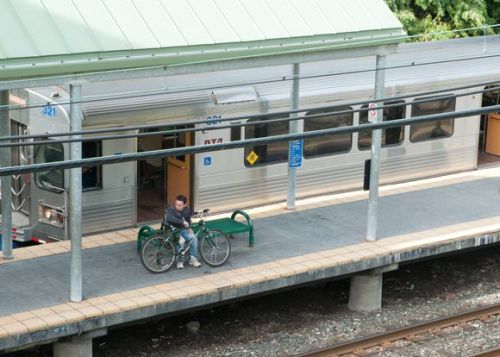
City of Cleveland officials and non-profit leaders are taking notice of how an improved cycling infrastructure can reshape the future of our city for the better. How the city proceeds with a handful or projects could make or break our momentum.

The Northeast Ohio Sustainable Communities Consortium (NEOSCC) has mapped out what our region's future looks like if we stay on the same, urban-sprawl-lovin' course. Spoiler alert: It ain't good.
The group's "Business as Usual" scenario attempts to answer the question, "What will happen over the next 27 years if Northeast Ohio just keeps doing what it has been doing?" using sophisticated mapping.
NEOSCC's predictions include 2.4 percent growth in population and 6.2 percent growth in employment across 12 counties. Yet given our current land use patterns, about 92,500 acres will be used for new development and 77,100 acres will be abandoned.
That means Northeast Ohio is "on pace to abandon 10.5 percent of its housing units by 2040" or "18 units abandoned per day," according to the NEOSCC.
Although NEOSCC will not reveal its recommendations at this point, staff will present four scenarios to the public at open houses in the coming weeks.
These scenarios include "business as usual" (sprawl with limited growth), "doing things differently" (more sustainable development with limited growth), "grow the same" (sprawl with growth at a higher level than is occurring now) and "grow differently" (more sustainable development with greater growth).
After receiving input from residents, NEOSCC will recommend a scenario to the four metropolitan planning organizations that help divvy up transportation dollars for the region and create long-term land use plans. Jeff Anderle of NEOSCC says that the group must create a "shared vision" to be successful with its efforts.
"We're not a governing organization; we don't have implementation power," he says. "It's been tricky, but we've gotten great participation from elected officials throughout the region. There's a lot of 'Let's see how and where this comes out.'"
To participate in the process, Northeast Ohio residents can attend one of the upcoming open houses or check out the Imagine My NEO tool on the website.
Source: Jeff Anderle
Writer: Lee Chilcote
The group's "Business as Usual" scenario attempts to answer the question, "What will happen over the next 27 years if Northeast Ohio just keeps doing what it has been doing?" using sophisticated mapping.
NEOSCC's predictions include 2.4 percent growth in population and 6.2 percent growth in employment across 12 counties. Yet given our current land use patterns, about 92,500 acres will be used for new development and 77,100 acres will be abandoned.
That means Northeast Ohio is "on pace to abandon 10.5 percent of its housing units by 2040" or "18 units abandoned per day," according to the NEOSCC.
Although NEOSCC will not reveal its recommendations at this point, staff will present four scenarios to the public at open houses in the coming weeks.
These scenarios include "business as usual" (sprawl with limited growth), "doing things differently" (more sustainable development with limited growth), "grow the same" (sprawl with growth at a higher level than is occurring now) and "grow differently" (more sustainable development with greater growth).
After receiving input from residents, NEOSCC will recommend a scenario to the four metropolitan planning organizations that help divvy up transportation dollars for the region and create long-term land use plans. Jeff Anderle of NEOSCC says that the group must create a "shared vision" to be successful with its efforts.
"We're not a governing organization; we don't have implementation power," he says. "It's been tricky, but we've gotten great participation from elected officials throughout the region. There's a lot of 'Let's see how and where this comes out.'"
To participate in the process, Northeast Ohio residents can attend one of the upcoming open houses or check out the Imagine My NEO tool on the website.
Source: Jeff Anderle
Writer: Lee Chilcote
move over silicon valley, here comes the rust belt
In a Forbes feature titled "The Surprising Rebirth Of America's Industrial Centers," Natalie Burg reports on the continued trend of former industrial cities transforming into today's hotbeds of entrepreneurial innovation.
"Move over, Silicon Valley. The American Rust Belt is going fiber optic. Though local economies built on manufacturing may not sound like the perfect candidates to transition into the new economy, cities like Cleveland, Detroit and Pittsburgh are proving otherwise."
Why would tech-minded entrepreneurs choose to live and work in Detroit, Pittsburgh or Cleveland instead of the sunny Silicon Valley?
“They want to see things being made,” the article contends. “These academically high achievers love making things.”
That's not all.
“There’s been an acceleration of restaurants, urban farms, are everything the tech industry require,” Russo said. “Chefs from other regions are relocating here.”
Read the rest of the news right here.
"Move over, Silicon Valley. The American Rust Belt is going fiber optic. Though local economies built on manufacturing may not sound like the perfect candidates to transition into the new economy, cities like Cleveland, Detroit and Pittsburgh are proving otherwise."
Why would tech-minded entrepreneurs choose to live and work in Detroit, Pittsburgh or Cleveland instead of the sunny Silicon Valley?
“They want to see things being made,” the article contends. “These academically high achievers love making things.”
That's not all.
“There’s been an acceleration of restaurants, urban farms, are everything the tech industry require,” Russo said. “Chefs from other regions are relocating here.”
Read the rest of the news right here.

Hemingway Development and Geis Companies have completed the third building of the MidTown Tech Park campus at 6555 Carnegie Avenue. The $9 million project brings the campus to a total of 242,000 square feet of new office space.
"When we arrived in MidTown, we wanted to develop one building a year, and we have exceeded that with the opening of this building,” said Fred Geis, a Hemingway principal, in a press release. "With the growth of the MidTown Tech Park campus, we have been able to create a real community where our tenants can interact and grow their businesses."
Radio One, a national urban media company with four radio stations in Northeast Ohio, is one of the first new tenants. Regional Vice President Jeffrey Wilson says the developer's experience and the area's redevelopment attracted the firm.
"When I first looked at it, you might have thought I'd lost my mind, but we put our trust in Fred Geis," says Wilson of the building, which was raw prior to completion. "Now it's one of the most exciting spaces in all of Radio One."
The company will occupy 12,000 square feet on the first floor, including four main broadcast studios, production studios, a mix studio and a talk studio. Geis worked with Radio One to construct a 180-foot tower alongside the building, which will make it easier to transmit audio to the company's transmitter locations.
"To partake in the rebirth of the MidTown area really fulfills our creed," says Wilson. "We take a sense of pride in contributing to the rebirth of the area."
Talis Clinical, a Cleveland Clinic spinoff, is also leasing office space in the building. Geis says that the building will support 150 jobs and generate $300,000 in annual payroll taxes. The City of Cleveland provided $4.5 million in low-interest loans.
Source: Jeffrey Wilson, Fred Geis
Writer: Lee Chilcote
"When we arrived in MidTown, we wanted to develop one building a year, and we have exceeded that with the opening of this building,” said Fred Geis, a Hemingway principal, in a press release. "With the growth of the MidTown Tech Park campus, we have been able to create a real community where our tenants can interact and grow their businesses."
Radio One, a national urban media company with four radio stations in Northeast Ohio, is one of the first new tenants. Regional Vice President Jeffrey Wilson says the developer's experience and the area's redevelopment attracted the firm.
"When I first looked at it, you might have thought I'd lost my mind, but we put our trust in Fred Geis," says Wilson of the building, which was raw prior to completion. "Now it's one of the most exciting spaces in all of Radio One."
The company will occupy 12,000 square feet on the first floor, including four main broadcast studios, production studios, a mix studio and a talk studio. Geis worked with Radio One to construct a 180-foot tower alongside the building, which will make it easier to transmit audio to the company's transmitter locations.
"To partake in the rebirth of the MidTown area really fulfills our creed," says Wilson. "We take a sense of pride in contributing to the rebirth of the area."
Talis Clinical, a Cleveland Clinic spinoff, is also leasing office space in the building. Geis says that the building will support 150 jobs and generate $300,000 in annual payroll taxes. The City of Cleveland provided $4.5 million in low-interest loans.
Source: Jeffrey Wilson, Fred Geis
Writer: Lee Chilcote

Researchers have found that the Athersys stem cell product, MultiStem, has been effective in preventing rejection in organ transplant patients. The drug might someday eliminate the need for transplant recipients to take a life-long regime of immunosuppressant drugs that have potentially detrimental side effects.
Athersys has been developing MultiStem for the past six to eight years. The company developed the drug from human stem cells harvested from adult bone marrow. Potentially millions of doses of MultiStem can be created from one donor.
Researchers found that when MultiStem was used in animal heart transplants, permanent organ acceptance was achieved without the need for long-term immunosuppressants. Researchers in Germany are now moving into human trials with liver transplant patients using MultiStem and short-term immunosuppressants.
“This is pretty important for the field of transplantation,” says Athersys president and COO B.J. Lehmann. “Using MultiStem just after transplant allows the body to recognize the organ its own. If we can do this in humans it will change the way to do transplants today.”
MultiStem has proven effective in treatments for heart attacks, strokes and graft versus host disease. “This is just another example of the effect MultiStem therapy has,” says Lehmann. “Our goal is to develop cell therapy in areas where there is substantial need. We wanted to change the game, and this is a perfect example.”
Source: B.J. Lehmann
Writer: Karin Connelly
Athersys has been developing MultiStem for the past six to eight years. The company developed the drug from human stem cells harvested from adult bone marrow. Potentially millions of doses of MultiStem can be created from one donor.
Researchers found that when MultiStem was used in animal heart transplants, permanent organ acceptance was achieved without the need for long-term immunosuppressants. Researchers in Germany are now moving into human trials with liver transplant patients using MultiStem and short-term immunosuppressants.
“This is pretty important for the field of transplantation,” says Athersys president and COO B.J. Lehmann. “Using MultiStem just after transplant allows the body to recognize the organ its own. If we can do this in humans it will change the way to do transplants today.”
MultiStem has proven effective in treatments for heart attacks, strokes and graft versus host disease. “This is just another example of the effect MultiStem therapy has,” says Lehmann. “Our goal is to develop cell therapy in areas where there is substantial need. We wanted to change the game, and this is a perfect example.”
Source: B.J. Lehmann
Writer: Karin Connelly

Three prominent community development groups in Cleveland have merged, and staffers say the resulting alliance will help strengthen community revitalization efforts across the city, foster more unified advocacy, and allow for greater efficiency in citywide efforts.
Neighborhood Progress Inc. (NPI), a community development intermediary that provides grants and technical assistance to community development corporations (CDCs), has merged with Cleveland Neighborhood Development Coalition (CNDC) and LiveCleveland. CNDC is a trade association of CDCs; LiveCleveland helps to market city neighborhoods.
That might sound like a mouthful of acronyms to the average city resident, but Joel Ratner, President of NPI, says the collaboration really is about improving Cleveland's neighborhoods.
"We'll have a greater ability to coordinate the marketing of neighborhoods along with advocacy, capacity building and all the other things we've traditionally done," he says. "This is really about uniting the strands of community development across the city in a way that's integrated and strategic rather than separate."
For example, says Ratner, CDCs will be able to have a stronger voice in education reform and other efforts that affect the entire city, residents will see an increased marketing presence, and CDC employees will benefit from shared services like healthcare. It adds up to more effective efforts to improve all of Cleveland.
"Our mission is to foster communities of choice and opportunity throughout Cleveland," says Ratner, who acknowledges that NPI will still only have resources to provide core operating support to a subset of city neighborhoods. "There are lots of ways we can play a role in lifting up all CDCs and neighborhoods."
CNDC Director Colleen Gilson says that while the merger idea was far from popular among CDCs at first -- they feared losing their independence -- individual leaders saw the value in fostering a citywide community development network that provides more effective services to all neighborhoods, not just a select few.
The merger will be publicly rolled out in September, with NPI moving into its new offices in the Saint Luke's project at Shaker Boulevard and E. 116th by January.
Source: Joel Ratner
Writer: Lee Chilcote
Neighborhood Progress Inc. (NPI), a community development intermediary that provides grants and technical assistance to community development corporations (CDCs), has merged with Cleveland Neighborhood Development Coalition (CNDC) and LiveCleveland. CNDC is a trade association of CDCs; LiveCleveland helps to market city neighborhoods.
That might sound like a mouthful of acronyms to the average city resident, but Joel Ratner, President of NPI, says the collaboration really is about improving Cleveland's neighborhoods.
"We'll have a greater ability to coordinate the marketing of neighborhoods along with advocacy, capacity building and all the other things we've traditionally done," he says. "This is really about uniting the strands of community development across the city in a way that's integrated and strategic rather than separate."
For example, says Ratner, CDCs will be able to have a stronger voice in education reform and other efforts that affect the entire city, residents will see an increased marketing presence, and CDC employees will benefit from shared services like healthcare. It adds up to more effective efforts to improve all of Cleveland.
"Our mission is to foster communities of choice and opportunity throughout Cleveland," says Ratner, who acknowledges that NPI will still only have resources to provide core operating support to a subset of city neighborhoods. "There are lots of ways we can play a role in lifting up all CDCs and neighborhoods."
CNDC Director Colleen Gilson says that while the merger idea was far from popular among CDCs at first -- they feared losing their independence -- individual leaders saw the value in fostering a citywide community development network that provides more effective services to all neighborhoods, not just a select few.
The merger will be publicly rolled out in September, with NPI moving into its new offices in the Saint Luke's project at Shaker Boulevard and E. 116th by January.
Source: Joel Ratner
Writer: Lee Chilcote

The two square miles of real estate between downtown Cleveland and University Circle are bursting with development. A local nonprofit has established a fund to ensure that work continues to flourish.
On June 20, economic development corporation MidTown Cleveland, Inc. announced the creation of the MidTown Cleveland, Inc. Endowment Fund at the Cleveland Foundation. The fund, under the foundation's guidance, proposes to build a sustainable revenue source to secure continued activity in the burgeoning district. This will include promotion of the health-tech corridor, a three-mile expanse of hospitals, business incubators, educational institutions and high-tech companies situated within MidTown.
The growing tech corridor isn't the only project the fund will support, notes MidTown chairman John Melchiorre. The group plans to leave other "footprints" on the community as well, be they demolishing old buildings, planting flowers along Euclid Avenue or helping transform distressed properties into job-creating enterprises.
"The Cleveland Foundation has been a leading supporter of the revitalization of Midtown, so this is just the latest way our two organizations have joined forces for the betterment of that neighborhood," said Kaye Ridolfi, senior vice president of advancement at the Cleveland Foundation.
Founded by Cleveland businessman Mort Mandel and others some 30 years ago, MidTown Cleveland has helped develop the area into a business district home to 600 companies and 18,000 employees. Executive director Jim Haviland views MidTown as part of the city's renaissance, and believes the fund will sustain the region for decades to come.
"It helps us to continue the role we play" within the neighborhood, says Haviland.
SOURCES: John Melchiorre, Jim Haviland, Kaye Ridolfi
WRITER: Douglas J. Guth
On June 20, economic development corporation MidTown Cleveland, Inc. announced the creation of the MidTown Cleveland, Inc. Endowment Fund at the Cleveland Foundation. The fund, under the foundation's guidance, proposes to build a sustainable revenue source to secure continued activity in the burgeoning district. This will include promotion of the health-tech corridor, a three-mile expanse of hospitals, business incubators, educational institutions and high-tech companies situated within MidTown.
The growing tech corridor isn't the only project the fund will support, notes MidTown chairman John Melchiorre. The group plans to leave other "footprints" on the community as well, be they demolishing old buildings, planting flowers along Euclid Avenue or helping transform distressed properties into job-creating enterprises.
"The Cleveland Foundation has been a leading supporter of the revitalization of Midtown, so this is just the latest way our two organizations have joined forces for the betterment of that neighborhood," said Kaye Ridolfi, senior vice president of advancement at the Cleveland Foundation.
Founded by Cleveland businessman Mort Mandel and others some 30 years ago, MidTown Cleveland has helped develop the area into a business district home to 600 companies and 18,000 employees. Executive director Jim Haviland views MidTown as part of the city's renaissance, and believes the fund will sustain the region for decades to come.
"It helps us to continue the role we play" within the neighborhood, says Haviland.
SOURCES: John Melchiorre, Jim Haviland, Kaye Ridolfi
WRITER: Douglas J. Guth

Stormwater run-off can overflow sewers, flood homes, erode roads and streambanks, and pollute our beloved waterways. Northeast Ohio Regional Sewer District is seeking to address these issues with a stormwater management program. Kyle Dreyfuss-Wells, manager of watershed programs for NEORSD, explains what the venture means for the average resident.

In hundreds of metalworking shops throughout the region, modern-day makers are carrying on a grand tradition that links them to our city's past. Early on, Cleveland produced the most cherished ornamental ironwork. Today, artistic fabricators are using iron and steel as their go-to material when crafting functional furnishings or imposing public art projects.

Zuga Medical, a medical device company, recently received a $250,000 investment from JumpStart to launch its dental implant system. In April Zuga received FDA approval for its system, which allows a general dentist to perform implants using a screw, a procedure previously done only by oral surgeons.
“Our patent-pending technology makes it simpler, easier and more cost-effective for both the dentist and the patient,” says Zuga CEO Steve Cornelius, who met the company’s founder and CSO, Chan Wang, a year-and-a-half ago through BioEnterprise and joined the board of directors. He then became CEO. With 15 years of experience in the dental industry, Cornelius was intrigued with Wang’s product. “Chan had a vision of making things simple for general dentistry.”
Zuga will use the JumpStart investment to conduct a soft launch with eight to nine local dentists. Those dentists will take a training course on placing the implants next month. “We’re using the local soft launch in Cleveland to prove out our business model and raise the next round of investments,” Cornelius says. “Our vision is to create a dental company right here in Cleveland.”
As Zuga grows, Cornelius hopes to hire three to four sales reps, a marketing person and a customer service rep by the end of the year.
Zuga Medical has also received investments from the Cuyahoga County North Coast Opportunities Fund and the Innovation Fund.
Source: Steve Cornelius
Writer: Karin Connelly
“Our patent-pending technology makes it simpler, easier and more cost-effective for both the dentist and the patient,” says Zuga CEO Steve Cornelius, who met the company’s founder and CSO, Chan Wang, a year-and-a-half ago through BioEnterprise and joined the board of directors. He then became CEO. With 15 years of experience in the dental industry, Cornelius was intrigued with Wang’s product. “Chan had a vision of making things simple for general dentistry.”
Zuga will use the JumpStart investment to conduct a soft launch with eight to nine local dentists. Those dentists will take a training course on placing the implants next month. “We’re using the local soft launch in Cleveland to prove out our business model and raise the next round of investments,” Cornelius says. “Our vision is to create a dental company right here in Cleveland.”
As Zuga grows, Cornelius hopes to hire three to four sales reps, a marketing person and a customer service rep by the end of the year.
Zuga Medical has also received investments from the Cuyahoga County North Coast Opportunities Fund and the Innovation Fund.
Source: Steve Cornelius
Writer: Karin Connelly

Meet Helen Qin and Jesse Mason, a couple whose love for each other is rivaled only by their love of ice cream. After swapping the West Coast for the North Coast, the two launched Mason's Creamery, an ice cream start-up. Since moving to town, they have found Cleveland to be a city that not only loves ice cream, but that supports small business.

Young urbanist leaders who were in Cleveland this week for Next City's annual Vanguard conference were asked a provocative question about this city's future. With new development activity happening in neighborhoods across a city that still is devastatingly poor, how can we do a better job of ensuring that these projects will benefit our poorest residents?
"I'm a little concerned that as we build projects, we're creating a city for yuppies and a city for everyone else," commented Ari Maron of MRN Ltd. in a presentation to 40 leaders from across the U.S. and Canada engaged in fields such as urban planning, entrepreneurship and sustainability. "How many cupcake and yogurt shops can a city sustain?"
Heads nodded and attendees laughed as Maron admitted the challenge was as much to himself as others, since MRN owns three of the city's most prominent new developments, E. Fourth Street in downtown Cleveland, Uptown in University Circle and property along W. 25th in Ohio City.
Several attendees noted that they were surprised by how few of the city's larger developments have translated into prosperity for surrounding neighborhoods. Sitting in the newly-built Museum of Contemporary Art at University Circle, leaders asked how that area's success could benefit its low-income neighbors.
Maron cited the Greater University Circle Initiative and local hiring and procuring efforts by University Hospitals and others. MRN has committed to hiring local residents for its projects, and the company now employs 285 city residents.
"When people from the neighborhood work here, they take ownership of the project because it's their neighborhood," he said, citing DoubleTree Hotel as one example of a University Circle project that employees many local residents.
An attendee from Chicago noted that Cleveland appears to be behind in adding bike-friendly infrastructure. He cited the recent addition of separated bicycle lanes to Surmac Avenue in Chicago as a game-changing project for his city. "Cleveland needs to do one really good pilot project," said the attendee.
Next City is a national nonprofit media organization that organizes the Vanguard conference to highlight best urban practices and develop young urban leaders. Updates from the conference are being posted on Next City's daily blog.
Source: Next City, Ari Maron
Writer: Lee Chilcote
"I'm a little concerned that as we build projects, we're creating a city for yuppies and a city for everyone else," commented Ari Maron of MRN Ltd. in a presentation to 40 leaders from across the U.S. and Canada engaged in fields such as urban planning, entrepreneurship and sustainability. "How many cupcake and yogurt shops can a city sustain?"
Heads nodded and attendees laughed as Maron admitted the challenge was as much to himself as others, since MRN owns three of the city's most prominent new developments, E. Fourth Street in downtown Cleveland, Uptown in University Circle and property along W. 25th in Ohio City.
Several attendees noted that they were surprised by how few of the city's larger developments have translated into prosperity for surrounding neighborhoods. Sitting in the newly-built Museum of Contemporary Art at University Circle, leaders asked how that area's success could benefit its low-income neighbors.
Maron cited the Greater University Circle Initiative and local hiring and procuring efforts by University Hospitals and others. MRN has committed to hiring local residents for its projects, and the company now employs 285 city residents.
"When people from the neighborhood work here, they take ownership of the project because it's their neighborhood," he said, citing DoubleTree Hotel as one example of a University Circle project that employees many local residents.
An attendee from Chicago noted that Cleveland appears to be behind in adding bike-friendly infrastructure. He cited the recent addition of separated bicycle lanes to Surmac Avenue in Chicago as a game-changing project for his city. "Cleveland needs to do one really good pilot project," said the attendee.
Next City is a national nonprofit media organization that organizes the Vanguard conference to highlight best urban practices and develop young urban leaders. Updates from the conference are being posted on Next City's daily blog.
Source: Next City, Ari Maron
Writer: Lee Chilcote

With downtown Cleveland seeing more than $2 billion in travel-related development, we must step up and make sure visitors are provided with the best possible service. We want them to spread the word when they get home about how great Cleveland is.
That was the message from David Gilbert, CEO of Positively Cleveland, at the organization's recent annual meeting. Based on recent research, the organization has determined that the city has "a communication gap" rather than "a product gap."
"We have the product -- amenities that most cities would be jealous of," said Gilbert. "We don't have enough people experiencing it."
To close that gap, Gilbert unveiled an aggressive plan to train hospitality workers as well as locals in how to better market the city and welcome and direct visitors. Positively Cleveland will also focus on legibility and wayfinding signage, online information, streetscape improvements, visitor hospitality, altering local perceptions and better destination branding and communications.
"We've done a great job of building big buildings, but we need more than that," Gilbert said. "It's 'what was the walk like?,' not just the Rock Hall experience."
Source: David Gilbert
Writer: Lee Chilcote
That was the message from David Gilbert, CEO of Positively Cleveland, at the organization's recent annual meeting. Based on recent research, the organization has determined that the city has "a communication gap" rather than "a product gap."
"We have the product -- amenities that most cities would be jealous of," said Gilbert. "We don't have enough people experiencing it."
To close that gap, Gilbert unveiled an aggressive plan to train hospitality workers as well as locals in how to better market the city and welcome and direct visitors. Positively Cleveland will also focus on legibility and wayfinding signage, online information, streetscape improvements, visitor hospitality, altering local perceptions and better destination branding and communications.
"We've done a great job of building big buildings, but we need more than that," Gilbert said. "It's 'what was the walk like?,' not just the Rock Hall experience."
Source: David Gilbert
Writer: Lee Chilcote

The Cuyahoga County Next Generation Council (NGC) will host Spark Plug, an event to celebrate small business growth and the region’s many opportunities for funding and growth, June 6 at Negative Space Gallery. The event kicks off Small Business Incubator Month.
“Spark Plug is focused on small business accelerators and incubators,” says Tammy Oliver, program organizer and a member of NGC. “It brings together all of the amazing resources we have in Cleveland and Northeast Ohio for young and innovative people.”
More than 20 incubators, accelerators and funding organizations will have tables set up to explain what they do and how they can assist a young business. “There hasn’t been an event before this where all of the incubators and accelerators come together in the same room,” says Oliver. “By supporting each other these organizations are supporting the region and all of the businesses. It’s not a secret that small business drives the economy.”
Successful businesses that have benefitted from some of the area’s resources will make presentations. Oliver hopes their stories will encourage other aspiring entrepreneurs. “There are so many people out there with amazing ideas and they don’t know where to start,” she says. “Hopefully, they will walk away with more knowledge and know they can take smart risks and there are a lot of people here to help them.”
Spark Plug runs from 5:30 p.m. to 8:30 p.m. Registration is preferred, but Oliver says walk-ins are welcome. Admission is free.
Source: Tammy Oliver
Writer: Karin Connelly
“Spark Plug is focused on small business accelerators and incubators,” says Tammy Oliver, program organizer and a member of NGC. “It brings together all of the amazing resources we have in Cleveland and Northeast Ohio for young and innovative people.”
More than 20 incubators, accelerators and funding organizations will have tables set up to explain what they do and how they can assist a young business. “There hasn’t been an event before this where all of the incubators and accelerators come together in the same room,” says Oliver. “By supporting each other these organizations are supporting the region and all of the businesses. It’s not a secret that small business drives the economy.”
Successful businesses that have benefitted from some of the area’s resources will make presentations. Oliver hopes their stories will encourage other aspiring entrepreneurs. “There are so many people out there with amazing ideas and they don’t know where to start,” she says. “Hopefully, they will walk away with more knowledge and know they can take smart risks and there are a lot of people here to help them.”
Spark Plug runs from 5:30 p.m. to 8:30 p.m. Registration is preferred, but Oliver says walk-ins are welcome. Admission is free.
Source: Tammy Oliver
Writer: Karin Connelly

As cities continue to become more bike-friendly, new bike-based businesses are springing up to support the movement. These bike-centric businesses are both banking on and promoting a growing interest in riding, and in the process they are boosting their cities' economies.
cleveland schools trying new educational approach
In a CBS News story titled “Public, charter schools team up in Cleveland,” Dean Reynolds writes of Cleveland’s historically poor performance in standardized testing and efforts to improve such data through specialized charter schools.
“The classrooms are quiet and small -- 15 kids or less. There's individual instruction from teachers on everything from public speaking to personal etiquette.”
While the traditional schools are struggling with behavior issues, large class sizes, and overall poor performance, Alan Roskamm, CEO of a group of charters, shares that in the right environment the children can thrive.
"Many people will say you have to fix poverty before you can fix education. We believe it is upside down. The only way to fix poverty is to provide our children with a quality education," Roskamm was quoted in the article.
Read the full story here.
“The classrooms are quiet and small -- 15 kids or less. There's individual instruction from teachers on everything from public speaking to personal etiquette.”
While the traditional schools are struggling with behavior issues, large class sizes, and overall poor performance, Alan Roskamm, CEO of a group of charters, shares that in the right environment the children can thrive.
"Many people will say you have to fix poverty before you can fix education. We believe it is upside down. The only way to fix poverty is to provide our children with a quality education," Roskamm was quoted in the article.
Read the full story here.
forbes takes a sip of cleveland whiskey's novel methods
In a Forbes feature titled “Cleveland Whiskey Ages Bourbon In One Week,” science, technology, and culture writer Alex Knapp explores the unique process Tom Lix developed to bring his product to market.
“After making the spirit, a distillery places it into charred, American oak barrels to age. Usually for several years, with premium bourbons often aging for nine years or more,” Knapp writes. “But in Cleveland, Ohio, Tom Lix aims to disrupt the traditional aging process of bourbon. He’s developed a process to accelerate the aging process of whiskey from years into about a week.”
While the story does not go into details of the proprietary aging process for obvious reasons, a bare-bones explanation of how it works is revealed.
“It definitely does not taste like a young whiskey, a common snark you’ll see at some whiskey tasting websites, where Cleveland Whiskey is seeing plenty of detractors,” Knapp continues.
Enjoy the complete feature here.
“After making the spirit, a distillery places it into charred, American oak barrels to age. Usually for several years, with premium bourbons often aging for nine years or more,” Knapp writes. “But in Cleveland, Ohio, Tom Lix aims to disrupt the traditional aging process of bourbon. He’s developed a process to accelerate the aging process of whiskey from years into about a week.”
While the story does not go into details of the proprietary aging process for obvious reasons, a bare-bones explanation of how it works is revealed.
“It definitely does not taste like a young whiskey, a common snark you’ll see at some whiskey tasting websites, where Cleveland Whiskey is seeing plenty of detractors,” Knapp continues.
Enjoy the complete feature here.
rta healthline praised as major job creator
In a Huffington Post blog item titled “Transit Initiatives Boosted by Employers,” Laura Barrett writes of the vast amount of good that follows support and investment in public transit.
In the piece, Barrett highlights numerous benefits, including job creation, as one of the key factors in drumming up support for new transit creation.
“For every $1 billion investment in transit, 60,000 jobs are created, making transit one of the best job generators in our economy.”
Our fair city was cited as an example of success when public support paired with corporate involvement work together for the greater good.
“Cleveland's two largest employers, The Cleveland Clinic and University Hospitals of Cleveland, were involved in a campaign for the HealthLine, one of the nation's most successful Bus Rapid Transit lines.”
Read the full post here.
In the piece, Barrett highlights numerous benefits, including job creation, as one of the key factors in drumming up support for new transit creation.
“For every $1 billion investment in transit, 60,000 jobs are created, making transit one of the best job generators in our economy.”
Our fair city was cited as an example of success when public support paired with corporate involvement work together for the greater good.
“Cleveland's two largest employers, The Cleveland Clinic and University Hospitals of Cleveland, were involved in a campaign for the HealthLine, one of the nation's most successful Bus Rapid Transit lines.”
Read the full post here.

The Cleveland Culinary Launch and Kitchen and the Economic and Community Development Institute (ECDI) will be hosting a business incubator for food and beverage entrepreneurs this summer. The nine-week program will focus on the specifics of opening a food-related business -- from food safety and nutrition to marketing and product development.
“We’ll really touch on everything to get a business off the ground,” says Emily Sullivan, ECDI Cleveland operations coordinator. “We’re creating a food incubator program. This is a hands-on look at getting a food business started.” Participants also will develop business plans and have opportunities to meet with ECDI managers about securing a loan.
This will be a hands-on program, says Carolyn Priemer, general manager of the Culinary Launch. “It’s not going to be a classroom setting,” she explains. “We’re going to be out in the community and in restaurants.”
Incubator participants do not need to be Culinary Launch tenants to enroll in the program. However, there is a $200 fee once applicants are accepted. Scholarships will be available. Ten companies will be accepted. Applications will be taken through mid-June, with the program beginning in July.
Open for six weeks now, the Culinary Launch has six tenants, ranging from an ice cream maker to caterers to a custard frosting maker. The Launch is a partnership between ECDI, Carolyn and Gordon Priemer of J&M Real Estate, and Tim and Bill Skaryd of Hospitality Marketing and Sales.
Sources: Emily Sullivan and Carolyn Priemer
Writer: Karin Connelly
“We’ll really touch on everything to get a business off the ground,” says Emily Sullivan, ECDI Cleveland operations coordinator. “We’re creating a food incubator program. This is a hands-on look at getting a food business started.” Participants also will develop business plans and have opportunities to meet with ECDI managers about securing a loan.
This will be a hands-on program, says Carolyn Priemer, general manager of the Culinary Launch. “It’s not going to be a classroom setting,” she explains. “We’re going to be out in the community and in restaurants.”
Incubator participants do not need to be Culinary Launch tenants to enroll in the program. However, there is a $200 fee once applicants are accepted. Scholarships will be available. Ten companies will be accepted. Applications will be taken through mid-June, with the program beginning in July.
Open for six weeks now, the Culinary Launch has six tenants, ranging from an ice cream maker to caterers to a custard frosting maker. The Launch is a partnership between ECDI, Carolyn and Gordon Priemer of J&M Real Estate, and Tim and Bill Skaryd of Hospitality Marketing and Sales.
Sources: Emily Sullivan and Carolyn Priemer
Writer: Karin Connelly

The brave escape of three women held captive in a Cleveland home has garnered a philanthropic response from local political and business entities.
The Cleveland Courage Fund was established by Cleveland City Council members Brian Cummins, Matt Zone and Dona Brady to benefit kidnap victims Gina DeJesus, Michelle Knight, Amanda Berry and Berry's daughter. The funds were set up at the Cleveland Foundation and Key Bank two days after the release of the survivors, and have raised $650,000 to date. The total includes a $50,000 gift from the Cleveland Foundation and a $10,000 donation from Key Bank.
Money can be donated through the foundation's website or at KeyBank branches throughout Northeast Ohio, says Tom Stevens, the bank's vice chair and chief administrative officer. Prospective donors also can mail funds to the Cleveland Courage Fund care of the Cleveland Foundation, 1422 Euclid Ave., Suite 1300, Cleveland, Ohio, 44115.
KeyBank is providing pro bono financial council to the affected women and their families."We hope that through the generosity of the public, we can help these women get the resources they need," Stevens says. "We are delighted to serve as advisors to help ensure that Gina, Michelle and Amanda are able to use the money for their well-being."
Since its inception, the fund has received contributions from all 50 states as well as overseas. Groups including Jones Day, which is providing free legal council to the women, and The Centers for Families and Children are working to get every penny of the donated dollars into the right hands.
"People have been very generous with their contributions," says Stevens.
SOURCE: Tom Stevens
WRITER: Douglas J. Guth
The Cleveland Courage Fund was established by Cleveland City Council members Brian Cummins, Matt Zone and Dona Brady to benefit kidnap victims Gina DeJesus, Michelle Knight, Amanda Berry and Berry's daughter. The funds were set up at the Cleveland Foundation and Key Bank two days after the release of the survivors, and have raised $650,000 to date. The total includes a $50,000 gift from the Cleveland Foundation and a $10,000 donation from Key Bank.
Money can be donated through the foundation's website or at KeyBank branches throughout Northeast Ohio, says Tom Stevens, the bank's vice chair and chief administrative officer. Prospective donors also can mail funds to the Cleveland Courage Fund care of the Cleveland Foundation, 1422 Euclid Ave., Suite 1300, Cleveland, Ohio, 44115.
KeyBank is providing pro bono financial council to the affected women and their families."We hope that through the generosity of the public, we can help these women get the resources they need," Stevens says. "We are delighted to serve as advisors to help ensure that Gina, Michelle and Amanda are able to use the money for their well-being."
Since its inception, the fund has received contributions from all 50 states as well as overseas. Groups including Jones Day, which is providing free legal council to the women, and The Centers for Families and Children are working to get every penny of the donated dollars into the right hands.
"People have been very generous with their contributions," says Stevens.
SOURCE: Tom Stevens
WRITER: Douglas J. Guth