A decade of impact: How MAGNET’s Mspire Pitch Competition fuels regional physical product startups
Launching a new company is always a challenge, but the current economic climate has made the startup landscape even harder to navigate.
This year, two key government grants for early-stage technologies through the Small Business Administration—the Small Business Innovation Research (SBIR) and Small Business Technology Transfer programs (SBTR)—put funding solicitations on hold after the programs were moved to different agencies.
Along with capital and investment obstacles, new enterprises are encountering supply chain volatility and labor shortages.
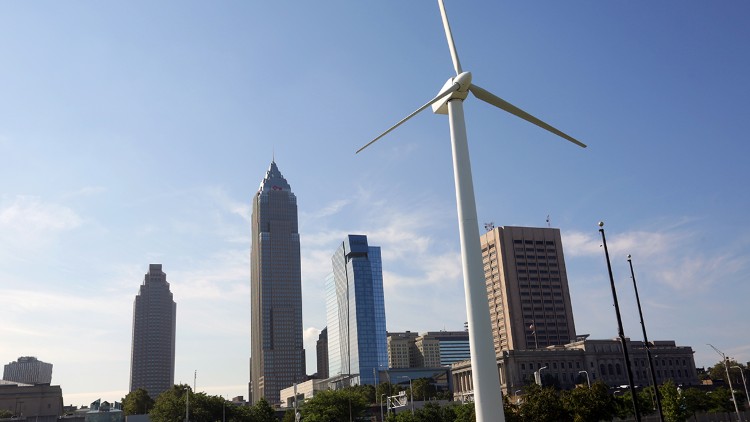
 Accelerate Wind, a2024 Mspire winner, is a producer of rooftop wind turbines for commercial buildings.However, Cleveland’s Manufacturing Growth Advocacy Network (MAGNET) is currently accepting applications for its annual Mspire Pitch Competition in October—an event that helps innovators navigate some of the complexities startups currently face.
Now in its 10th year, MAGNET’s startup showcase backs manufacturing-centered innovation in hard tech, advanced materials, and physical product development.
Budding business owners are invited to compete for more than $85,000 in services and prizes, including a $10,000 Huntington Innovation Award designed to support diverse entrepreneurs.
While most new companies struggle for capital, fundraising is an especially high hurdle for physical product manufacturers, which are often overshadowed by software businesses in the funding ecosystem, notes Andrea Navratil, MAGNET’s director of new ventures.
“Venture capital has gotten tighter and harder to get, but it’s always been a challenge with manufacturing technology,” says Navratil. “With software, there is a shorter time to market, and you typically need less investment. Software doesn’t have the scaling costs you see with physical products.”
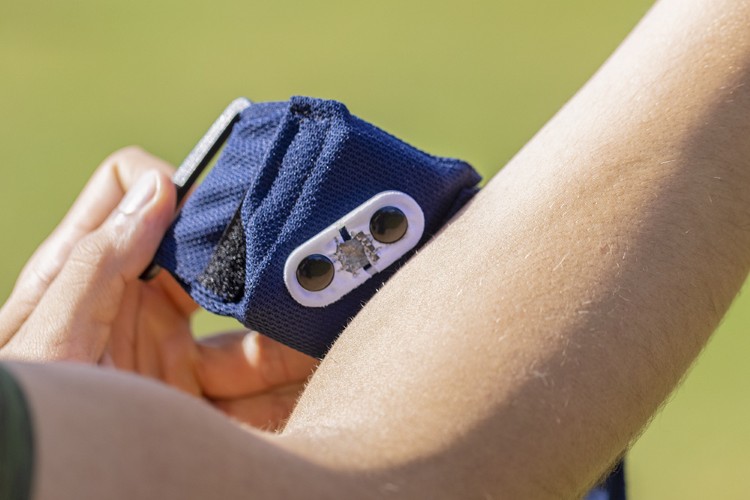
 Past Mspire winner SweatID in 2022 was the first recipient of the AMF, a collaborative effort between MAGNET, JumpStart, and private stakeholders who are growing early-stage physical product and manufacturing ventures.Applications for Mspire 2025 are open now through Monday, Aug. 18, with finalists pitching to a panel of seasoned investors and business owners at MAGNET’s headquarters on Thursday, Oct. 16.
The needs of these startups have evolved over the last decade—shifting from prototyping assistance to a significant influx of capital to scale production.
“These are late-stage startups, when we were seeing ideas on napkins in the early years,” Navratil recalls. “Now, people need product management help and other more complex needs.”
Where the industry is headed
Awareness is as vital as funding for emerging product entrepreneurs, says MAGNET vice president of operations Michael O’Donnell. With the newest app or machine learning tool grabbing headlines, the annual Mspire Pitch Competition is a means of bringing attention to an oft-underserved sector, he says.
Finalists gain exposure to industry experts, technical partners, and potential investors, not to mention the Advanced Manufacturing Fund, a regionally-based venture group that backs promising physical-product businesses.
 Now in its 10th year, the MAGNET Mspire competition is a showcase for innovation in hard tech, advanced materials, and physical product development.“The competition is giving startups visibility in the community, which is even more important than funding,” O’Donnell says.
Innovation is a watchword for Mspire as it enters its tenth year, adds O’Donnell. Whereas previous participants would pitch commodity products like soap, newer entrants are offering exciting new technologies, like a liquid latex machine that perfectly fits a surgical glove to the shape of a hand.
The high failure rate among innovators is another key reason for Mspire's persistence, O’Donnell argues.
“If you come into MAGNET, we can help you understand that this idea isn’t going to work, and you shouldn’t waste your money on it,” he says. “Disengaging on a bad idea is the biggest value.”
The advocacy group also sends engineers and investment experts to work with entrepreneurs on site, a change prompted by the pitch competition's expanded geographic reach. Marketing, sales, and prototype scaling are the type of crucial non-financial aid that MAGNET gives all Mspire competitors—even those who don’t reach the finals.
“This is a place where entrepreneurs get together, and it’s encouraging for them,” says O’Donnell. “Innovation is a tough job, because you’ll fail more than you’ll succeed.”
MAGNET director Navratil was not with the organization when it launched the pitch contest a decade ago. Yet, she knows well the gap in support it’s filling for physical product entrepreneurs.
“The fun part is seeing what new industries we can touch,” she says. “It’s an exciting time each year for us to reflect on where manufacturing technology is headed.”