Pain and gain: Tariffs continue to reshape Ohio’s manufacturing landscape
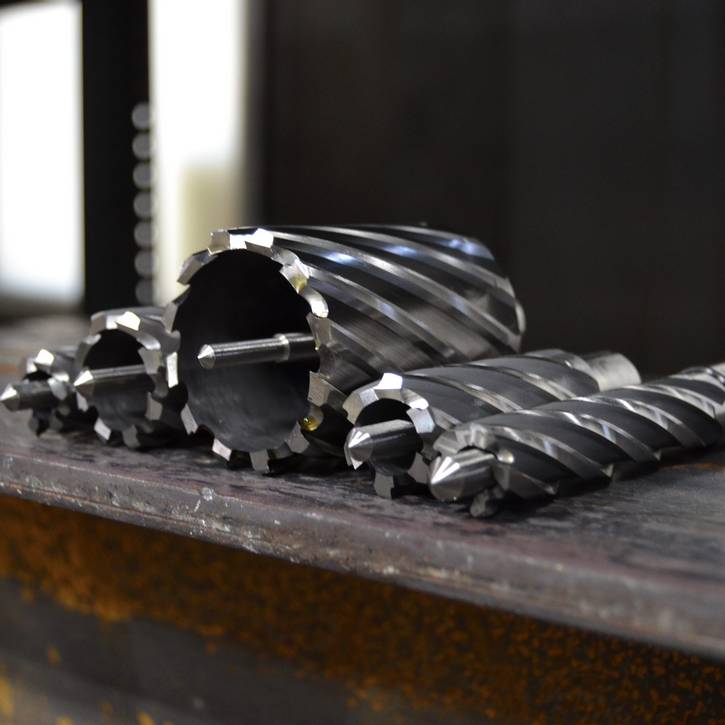



Since its founding in 1908, Cleveland Steel Tool has been producing punches, blades and other custom equipment used in manufacturing. The company has survived a century-plus of market fluctuations, with tariffs implemented by the Trump administration representing the newest hurdle.
“We’ve been doing this for 120 years, and we’ll do it for another 120, but it’s been hard,” says Cleveland Steel Tool president Mark Dawson. “The tariffs have been tough for us, our customers, and suppliers, so we need some level of stability.”
Tariffs are creating strain and opportunity industry-wide, according to a 2025 Ohio Manufacturing Survey released Nov. 19 by Cleveland’s Manufacturing Growth Advocacy Network (MAGNET).
About a third of producers are reporting an impact on sales, both positive and negative. Though some companies are gaining business from reshoring and domestic sourcing, others are feeling the bite of higher costs, shrinking orders, and global uncertainty.
Losses are cutting deeper than gains, especially for smaller firms and businesses making branded products. Manufacturers reporting sales declines said their revenue fell an average of 16%, nearly double the 9% growth rate reported by those benefiting from tariffs.
Steel costs for Cleveland Steel Tool spiked 50% over the past half-year, a situation compounded by retaliatory tariffs from Mexico, Dawson says. Canadian tariffs had also challenged the company until the country exempted parts used in manufacturing. But that relief has done little to mitigate the doubt plaguing the larger market, says Dawson.
“It’s less a problem of losing customers, and more so about uncertainty,” Dawson says. “Uncertainty is the enemy of the business. We’ve got customers holding off until the last minute to make a purchase, which I’m doing as well.
“We have six to eight months lead time when purchasing steel,” Dawson continues. “I don’t want to make commitments when I’m paying a 50% premium.”
Persevering in turbulent times
MAGNET’s report, “Tariffs and Turbulence: How Ohio Manufacturers Are Navigating a Shifting Trade Landscape,” provides a large-scale exploration of trade policy six months after tariffs took effect. The report, part of a larger survey on manufacturing trends, highlights both the widespread impact of tariffs and the businesses most affected.
“We can see that smaller companies are losing sales more than bigger companies,” says MAGNET president and chief executive officer Ethan Karp. “And those losing sales are hurting more than the companies that are benefitting [from tariffs].”
Downward market shifts are also forcing companies to deprioritize innovation in favor of the bottom line, Karp adds.
“People are doing less innovative work because they’re dealing with tariff fluctuations,” he explains. “Anything that makes manufacturing difficult puts innovation on the back burner.”
The survey, conducted from August through October 2025, interviewed 266 Ohio companies representing sectors from metals and machinery to plastics, food, and electronics.
Even amid tariff-spurred chaos, businesses are finding room for optimism, with 66% of respondents forecasting “meaningful growth” in 2026. Another 24% of companies expect increased sales as a result of tariffs, although many are still waiting for inquiries from U.S. buyers to become actual purchases.
Despite a recent uptick in sales, Montville Plastics & Rubber chief executive officer Tracie Roberts remains ambivalent about the net benefit of tariffs.
“There’s a side of me that wants to see manufacturing come back to the U.S. but didn’t understand how that would impact the economy long-term,” says Roberts, whose custom plastic extruder and injection molding business was established in 1977. “Tariffs have been beneficial for us in the short-term, I’m just not sure I’ll have the same sentiment by the middle of next year.”
Adapt to survive
Roberts hasn’t had a substantial rise in raw materials costs, with the exception of cardboard used for packaging. Yet even that 15% to 20% increase represents a fraction of her total materials cost. Meanwhile, in-house automation has helped keep down labor costs, resulting in a trickle-down of cheaper products for customers across industries.
Nor is Roberts surprised by how many customers are staying conservative on purchases—a mindset from COVID that has been reactivated by the current tariffs.
“We’ll continue to talk to them—we’re highly dependent on the cost of raw materials, and our customers understand that,” Roberts says. “We’ve been communicating with customers and talking to our raw material suppliers. Customers know where we set our price points on materials. If materials increase, we pass that cost along to them.”
While the impact of tariffs has been uneven, companies across Ohio are adapting by changing suppliers, investing in technology, and finding fresh ways to stay competitive.
For example, manufacturers that function as a “build-to-print” extension of a customer development team are faring better than businesses that build and own their own products.
“It’s easier for build-to-print (firms) to make new products needed by companies who are reshoring or bringing back production,” says MAGNET’s Karp. “It’s advantageous today to have the ability to make a wide variety of products that are now newly needed in the U.S.”
Nonetheless, Karp says he empathizes with the pain of a marketplace wrestling with fallout from new taxes on imports.
“It feels like it’s the government that’s causing you to win or lose,” he says. “It’s almost a random feeling, or it feels unfair, because it’s something impacting businesses out of their control.”