
Search results for 'statue entertainer worked for media outlet near auctioneer jeweler rehab center'
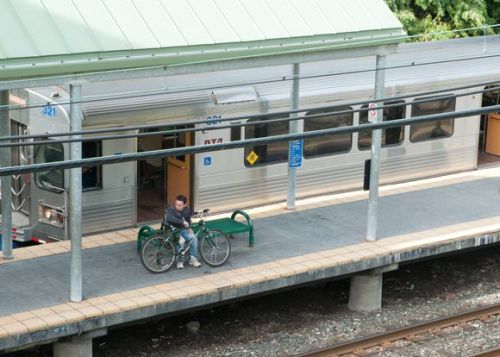
City of Cleveland officials and non-profit leaders are taking notice of how an improved cycling infrastructure can reshape the future of our city for the better. How the city proceeds with a handful or projects could make or break our momentum.

For 10 years, my husband and I have called Ohio City home, where we are now raising our three young children. This summer, Team Taseff created a “Cleveland Summer Bucket List,” which includes 10 places and activities to explore in Cleveland that are free, fun and close to home.

John Farina and Adam Tully have been collecting art for years, and like many collectors, they've always wanted to open a gallery to showcase work of artists they love. That idea will become a reality next month as The Maria Neil Art Project opens up on Waterloo.
"There are a lot of artists in Cleveland who are either unrepresented or underrepresented," says Farina, who also recently bought a home in North Collinwood with Tully. "This work should be known. Having a space with low overhead, we can show off emerging artists that haven't been shown off before."
The cozy gallery at 15813 Waterloo will be open Friday, Saturday and Sunday starting September 6th. The first exhibition will feature artist Michaelangelo Lovelace, known for his gritty, whimsical portraits of street life in the city. Frameworks in Bedford, a framing shop, will offer framing in the space.
Farina says that the Waterloo Arts District is definitely becoming known as a good community for artists, with multiple galleries now located on the street, artists buying houses in the neighborhood and arts groups setting up shop here.
Source: John Farina
Writer: Lee Chilcote
"There are a lot of artists in Cleveland who are either unrepresented or underrepresented," says Farina, who also recently bought a home in North Collinwood with Tully. "This work should be known. Having a space with low overhead, we can show off emerging artists that haven't been shown off before."
The cozy gallery at 15813 Waterloo will be open Friday, Saturday and Sunday starting September 6th. The first exhibition will feature artist Michaelangelo Lovelace, known for his gritty, whimsical portraits of street life in the city. Frameworks in Bedford, a framing shop, will offer framing in the space.
Farina says that the Waterloo Arts District is definitely becoming known as a good community for artists, with multiple galleries now located on the street, artists buying houses in the neighborhood and arts groups setting up shop here.
Source: John Farina
Writer: Lee Chilcote

OnShift, which produces staff scheduling software for the healthcare and senior living industries, recently made new additions to its software to comply with Affordable Care Act (ACA) requirements. The ACA, which goes into effect in 2014, puts penalties on companies that mismanage employee’s part-time and full-time hours. OnShift’s new predictive analytics helps employers keep better track of employees’ hours.
“Labor is the number-one operating expense for employers,” explains OnShift CEO Mark Woodka. “Companies have to really understand what is full-time and what is part-time. If they don’t, they may accidentally assign someone too much work and part-time becomes full-time, which leads to penalties and additional coverage requirements under the ACA.”
The upgrade is free to existing OnShift customers. “Our commitment to our customers is to keep them current about impending legislation,” says Woodka.
Business is booming for OnShift because of the new updates to its systems and the ACA requirements. “We’ve already won some business because of this and we think it will be a trigger event for other customers,’ says Woodka. “We’re having a great year and we’re growing like gangbusters.”
Woodka predicts OnShift will hire 10 to 15 new employees this year. The company has already added three positions this year and currently has five open in positions in everything from customer service to developers.
Source: Mark Woodka
Writer: Karin Connelly
“Labor is the number-one operating expense for employers,” explains OnShift CEO Mark Woodka. “Companies have to really understand what is full-time and what is part-time. If they don’t, they may accidentally assign someone too much work and part-time becomes full-time, which leads to penalties and additional coverage requirements under the ACA.”
The upgrade is free to existing OnShift customers. “Our commitment to our customers is to keep them current about impending legislation,” says Woodka.
Business is booming for OnShift because of the new updates to its systems and the ACA requirements. “We’ve already won some business because of this and we think it will be a trigger event for other customers,’ says Woodka. “We’re having a great year and we’re growing like gangbusters.”
Woodka predicts OnShift will hire 10 to 15 new employees this year. The company has already added three positions this year and currently has five open in positions in everything from customer service to developers.
Source: Mark Woodka
Writer: Karin Connelly

Palo Alto-based Technology Crossover Ventures (TCV) recently invested $66 million in Beachwood-based TOA Technologies, the largest ever venture-backed investment in an Ohio software company and the fourth largest of its kind in the nation last year.
TOA, which provides on-demand mobile workforce management solutions, began looking for investors about a year ago as part of its long-term growth plan. “We were looking at our ability to meet the opportunity ahead of us,” explains John Opdycke, vice president of worldwide marketing for TOA. “More and more companies are looking to manage their mobile employees, and more and more companies are depending on mobile employees to be the face of the company. Now we’re better prepared for rapid growth.”
In January TOA executives began talking to several investment firms. TOA had TCV on their short list, and TCV was looking for investment opportunities in the mobile workforce management industry. Founded in 2003, TOA has steadily grown. Prior to TCV’s investment, TOA announced its cumulative annual contract value had increased 444 percent from 2008 to 2012 and doubled its customers from 2011 to 2012. Additionally, the company developed strategic partnerships and successfully launched a new product, ETAdirect Professional.
The investment will go toward all aspects of the business, Opdycke says, including R&D, marketing and hiring. “Department heads are already talking about their hiring plans,” he says. TOA has 56 employees in Cleveland and expects to expand to 80 by the end of the year. Globally, TOA expects to increase employees from 450 to 600. “We’ll have an immediate uptick in the next six months and that will probably continue into 2013.”
Additionally, Opdycke sees the investment as good for Northeast Ohio. “It’s great to see a big VC looking outside Silicon Valley for investments,” he says. “We are more than happy to carry the light for other companies to look for investments outside the region. Such an infusion of cash in Northeast Ohio shows these things can happen in our part of the country.”
Source: John Opdycke
Writer: Karin Connelly
TOA, which provides on-demand mobile workforce management solutions, began looking for investors about a year ago as part of its long-term growth plan. “We were looking at our ability to meet the opportunity ahead of us,” explains John Opdycke, vice president of worldwide marketing for TOA. “More and more companies are looking to manage their mobile employees, and more and more companies are depending on mobile employees to be the face of the company. Now we’re better prepared for rapid growth.”
In January TOA executives began talking to several investment firms. TOA had TCV on their short list, and TCV was looking for investment opportunities in the mobile workforce management industry. Founded in 2003, TOA has steadily grown. Prior to TCV’s investment, TOA announced its cumulative annual contract value had increased 444 percent from 2008 to 2012 and doubled its customers from 2011 to 2012. Additionally, the company developed strategic partnerships and successfully launched a new product, ETAdirect Professional.
The investment will go toward all aspects of the business, Opdycke says, including R&D, marketing and hiring. “Department heads are already talking about their hiring plans,” he says. TOA has 56 employees in Cleveland and expects to expand to 80 by the end of the year. Globally, TOA expects to increase employees from 450 to 600. “We’ll have an immediate uptick in the next six months and that will probably continue into 2013.”
Additionally, Opdycke sees the investment as good for Northeast Ohio. “It’s great to see a big VC looking outside Silicon Valley for investments,” he says. “We are more than happy to carry the light for other companies to look for investments outside the region. Such an infusion of cash in Northeast Ohio shows these things can happen in our part of the country.”
Source: John Opdycke
Writer: Karin Connelly

Cleveland has a proud and colorful comic book legacy, which begins with Superman and ends (for now) with Captain America. And that heroic heritage is taken seriously at local comic book shops, where geek is chic and comic book enthusiasts no longer are relegated to the shadowy corners of what's cool.

The Northeast Ohio Sustainable Communities Consortium (NEOSCC) has mapped out what our region's future looks like if we stay on the same, urban-sprawl-lovin' course. Spoiler alert: It ain't good.
The group's "Business as Usual" scenario attempts to answer the question, "What will happen over the next 27 years if Northeast Ohio just keeps doing what it has been doing?" using sophisticated mapping.
NEOSCC's predictions include 2.4 percent growth in population and 6.2 percent growth in employment across 12 counties. Yet given our current land use patterns, about 92,500 acres will be used for new development and 77,100 acres will be abandoned.
That means Northeast Ohio is "on pace to abandon 10.5 percent of its housing units by 2040" or "18 units abandoned per day," according to the NEOSCC.
Although NEOSCC will not reveal its recommendations at this point, staff will present four scenarios to the public at open houses in the coming weeks.
These scenarios include "business as usual" (sprawl with limited growth), "doing things differently" (more sustainable development with limited growth), "grow the same" (sprawl with growth at a higher level than is occurring now) and "grow differently" (more sustainable development with greater growth).
After receiving input from residents, NEOSCC will recommend a scenario to the four metropolitan planning organizations that help divvy up transportation dollars for the region and create long-term land use plans. Jeff Anderle of NEOSCC says that the group must create a "shared vision" to be successful with its efforts.
"We're not a governing organization; we don't have implementation power," he says. "It's been tricky, but we've gotten great participation from elected officials throughout the region. There's a lot of 'Let's see how and where this comes out.'"
To participate in the process, Northeast Ohio residents can attend one of the upcoming open houses or check out the Imagine My NEO tool on the website.
Source: Jeff Anderle
Writer: Lee Chilcote
The group's "Business as Usual" scenario attempts to answer the question, "What will happen over the next 27 years if Northeast Ohio just keeps doing what it has been doing?" using sophisticated mapping.
NEOSCC's predictions include 2.4 percent growth in population and 6.2 percent growth in employment across 12 counties. Yet given our current land use patterns, about 92,500 acres will be used for new development and 77,100 acres will be abandoned.
That means Northeast Ohio is "on pace to abandon 10.5 percent of its housing units by 2040" or "18 units abandoned per day," according to the NEOSCC.
Although NEOSCC will not reveal its recommendations at this point, staff will present four scenarios to the public at open houses in the coming weeks.
These scenarios include "business as usual" (sprawl with limited growth), "doing things differently" (more sustainable development with limited growth), "grow the same" (sprawl with growth at a higher level than is occurring now) and "grow differently" (more sustainable development with greater growth).
After receiving input from residents, NEOSCC will recommend a scenario to the four metropolitan planning organizations that help divvy up transportation dollars for the region and create long-term land use plans. Jeff Anderle of NEOSCC says that the group must create a "shared vision" to be successful with its efforts.
"We're not a governing organization; we don't have implementation power," he says. "It's been tricky, but we've gotten great participation from elected officials throughout the region. There's a lot of 'Let's see how and where this comes out.'"
To participate in the process, Northeast Ohio residents can attend one of the upcoming open houses or check out the Imagine My NEO tool on the website.
Source: Jeff Anderle
Writer: Lee Chilcote
move over silicon valley, here comes the rust belt
In a Forbes feature titled "The Surprising Rebirth Of America's Industrial Centers," Natalie Burg reports on the continued trend of former industrial cities transforming into today's hotbeds of entrepreneurial innovation.
"Move over, Silicon Valley. The American Rust Belt is going fiber optic. Though local economies built on manufacturing may not sound like the perfect candidates to transition into the new economy, cities like Cleveland, Detroit and Pittsburgh are proving otherwise."
Why would tech-minded entrepreneurs choose to live and work in Detroit, Pittsburgh or Cleveland instead of the sunny Silicon Valley?
“They want to see things being made,” the article contends. “These academically high achievers love making things.”
That's not all.
“There’s been an acceleration of restaurants, urban farms, are everything the tech industry require,” Russo said. “Chefs from other regions are relocating here.”
Read the rest of the news right here.
"Move over, Silicon Valley. The American Rust Belt is going fiber optic. Though local economies built on manufacturing may not sound like the perfect candidates to transition into the new economy, cities like Cleveland, Detroit and Pittsburgh are proving otherwise."
Why would tech-minded entrepreneurs choose to live and work in Detroit, Pittsburgh or Cleveland instead of the sunny Silicon Valley?
“They want to see things being made,” the article contends. “These academically high achievers love making things.”
That's not all.
“There’s been an acceleration of restaurants, urban farms, are everything the tech industry require,” Russo said. “Chefs from other regions are relocating here.”
Read the rest of the news right here.

Hemingway Development and Geis Companies have completed the third building of the MidTown Tech Park campus at 6555 Carnegie Avenue. The $9 million project brings the campus to a total of 242,000 square feet of new office space.
"When we arrived in MidTown, we wanted to develop one building a year, and we have exceeded that with the opening of this building,” said Fred Geis, a Hemingway principal, in a press release. "With the growth of the MidTown Tech Park campus, we have been able to create a real community where our tenants can interact and grow their businesses."
Radio One, a national urban media company with four radio stations in Northeast Ohio, is one of the first new tenants. Regional Vice President Jeffrey Wilson says the developer's experience and the area's redevelopment attracted the firm.
"When I first looked at it, you might have thought I'd lost my mind, but we put our trust in Fred Geis," says Wilson of the building, which was raw prior to completion. "Now it's one of the most exciting spaces in all of Radio One."
The company will occupy 12,000 square feet on the first floor, including four main broadcast studios, production studios, a mix studio and a talk studio. Geis worked with Radio One to construct a 180-foot tower alongside the building, which will make it easier to transmit audio to the company's transmitter locations.
"To partake in the rebirth of the MidTown area really fulfills our creed," says Wilson. "We take a sense of pride in contributing to the rebirth of the area."
Talis Clinical, a Cleveland Clinic spinoff, is also leasing office space in the building. Geis says that the building will support 150 jobs and generate $300,000 in annual payroll taxes. The City of Cleveland provided $4.5 million in low-interest loans.
Source: Jeffrey Wilson, Fred Geis
Writer: Lee Chilcote
"When we arrived in MidTown, we wanted to develop one building a year, and we have exceeded that with the opening of this building,” said Fred Geis, a Hemingway principal, in a press release. "With the growth of the MidTown Tech Park campus, we have been able to create a real community where our tenants can interact and grow their businesses."
Radio One, a national urban media company with four radio stations in Northeast Ohio, is one of the first new tenants. Regional Vice President Jeffrey Wilson says the developer's experience and the area's redevelopment attracted the firm.
"When I first looked at it, you might have thought I'd lost my mind, but we put our trust in Fred Geis," says Wilson of the building, which was raw prior to completion. "Now it's one of the most exciting spaces in all of Radio One."
The company will occupy 12,000 square feet on the first floor, including four main broadcast studios, production studios, a mix studio and a talk studio. Geis worked with Radio One to construct a 180-foot tower alongside the building, which will make it easier to transmit audio to the company's transmitter locations.
"To partake in the rebirth of the MidTown area really fulfills our creed," says Wilson. "We take a sense of pride in contributing to the rebirth of the area."
Talis Clinical, a Cleveland Clinic spinoff, is also leasing office space in the building. Geis says that the building will support 150 jobs and generate $300,000 in annual payroll taxes. The City of Cleveland provided $4.5 million in low-interest loans.
Source: Jeffrey Wilson, Fred Geis
Writer: Lee Chilcote

Researchers have found that the Athersys stem cell product, MultiStem, has been effective in preventing rejection in organ transplant patients. The drug might someday eliminate the need for transplant recipients to take a life-long regime of immunosuppressant drugs that have potentially detrimental side effects.
Athersys has been developing MultiStem for the past six to eight years. The company developed the drug from human stem cells harvested from adult bone marrow. Potentially millions of doses of MultiStem can be created from one donor.
Researchers found that when MultiStem was used in animal heart transplants, permanent organ acceptance was achieved without the need for long-term immunosuppressants. Researchers in Germany are now moving into human trials with liver transplant patients using MultiStem and short-term immunosuppressants.
“This is pretty important for the field of transplantation,” says Athersys president and COO B.J. Lehmann. “Using MultiStem just after transplant allows the body to recognize the organ its own. If we can do this in humans it will change the way to do transplants today.”
MultiStem has proven effective in treatments for heart attacks, strokes and graft versus host disease. “This is just another example of the effect MultiStem therapy has,” says Lehmann. “Our goal is to develop cell therapy in areas where there is substantial need. We wanted to change the game, and this is a perfect example.”
Source: B.J. Lehmann
Writer: Karin Connelly
Athersys has been developing MultiStem for the past six to eight years. The company developed the drug from human stem cells harvested from adult bone marrow. Potentially millions of doses of MultiStem can be created from one donor.
Researchers found that when MultiStem was used in animal heart transplants, permanent organ acceptance was achieved without the need for long-term immunosuppressants. Researchers in Germany are now moving into human trials with liver transplant patients using MultiStem and short-term immunosuppressants.
“This is pretty important for the field of transplantation,” says Athersys president and COO B.J. Lehmann. “Using MultiStem just after transplant allows the body to recognize the organ its own. If we can do this in humans it will change the way to do transplants today.”
MultiStem has proven effective in treatments for heart attacks, strokes and graft versus host disease. “This is just another example of the effect MultiStem therapy has,” says Lehmann. “Our goal is to develop cell therapy in areas where there is substantial need. We wanted to change the game, and this is a perfect example.”
Source: B.J. Lehmann
Writer: Karin Connelly
great lakes brewery helped transform ohio city
In a Massachusetts Republic feature titled "Craft breweries help transform 6 cities," writer Tali Arbel explores how craft breweries have helped to transform the neighborhoods around them.
"Small business owners tackled the hard work of transforming industrial buildings, many of which had sat empty as demographic changes pulled manufacturers and residents to the suburbs," she writes.
Here's a look at six breweries whose presence helped to change their surroundings:
"Great Lakes opened in Cleveland's Ohio City neighborhood in 1988. The downtown neighborhood was "perceived as dangerous and blighted" into the 1980s, says Eric Wobser. He works for Ohio City Inc., a nonprofit that promotes residential and commercial development while trying to preserve the neighborhood's older buildings."
"Great Lakes built a brewery and a brewpub. Other breweries and businesses -- a pasta maker, a bike shop, a tortilla factory, as well as restaurants and bars -- followed. Newcomers flock to the neighborhood, even though Cleveland's overall population is still declining. The city repaved the quiet street next to the brewery, Market Ave., with cobblestones, and poured millions into renovating a nearby 19th-century market."
Read the rest here.
"Small business owners tackled the hard work of transforming industrial buildings, many of which had sat empty as demographic changes pulled manufacturers and residents to the suburbs," she writes.
Here's a look at six breweries whose presence helped to change their surroundings:
"Great Lakes opened in Cleveland's Ohio City neighborhood in 1988. The downtown neighborhood was "perceived as dangerous and blighted" into the 1980s, says Eric Wobser. He works for Ohio City Inc., a nonprofit that promotes residential and commercial development while trying to preserve the neighborhood's older buildings."
"Great Lakes built a brewery and a brewpub. Other breweries and businesses -- a pasta maker, a bike shop, a tortilla factory, as well as restaurants and bars -- followed. Newcomers flock to the neighborhood, even though Cleveland's overall population is still declining. The city repaved the quiet street next to the brewery, Market Ave., with cobblestones, and poured millions into renovating a nearby 19th-century market."
Read the rest here.

Slavic Village Recovery, an ambitious effort to provide an extreme neighborhood makeover to a 530-acre chunk of the east side, has begun the process of purchasing 40 homes that will be rehabbed.
Two of these properties already have been put on the market with new mechanicals and other finishes for a mere $60,000, says Marie Kittredge, Executive Director of Slavic Village Development, a partner in the project along with Forest City Enterprises and Safeguard Properties.
"The model is: If my kids are 20-somethings buying their first house, what would that first house look like and what would be attractive to them?" explains Kittredge. "We have to build demand by telling the story. We believe our demographic is people who are already familiar with the neighborhood and ready to buy."
Slavic Village Recovery's innovative model focuses on renovating a majority of the vacant homes on a multi-block area around Mound Avenue and E. 54th Street, where 20- to 30-percent vacancy rates prevail. The homes are acquired from lenders and rehabbed using a model that includes all major items but does not include reconfiguring floor plans, adding bedrooms or other expensive options.
Kittredge says that the rehab costs will likely range from $40,000 to $50,000, allowing the partners to earn a small profit they can reinvest in the initiative.
"The key innovation is that there's no public subsidy," she says. "It's not possible to get the subsidy you'd need for a 25 to 50 home model. If you did just one [house], people would say that's scary. If you say, 'Hey, we're doing 20 to 25 and we have Forest City involved and major grants from Wells Fargo,' then that's different."
Kittredge expects additional homes to hit the market this fall. Last week, a group of volunteers from Forest City cleaned up 60 properties in the area. Some homes are being secured using SecureView, a new product that looks like glass but is far more durable, allowing houses to be secured without using ugly plywood boards.
Source: Marie Kittredge
Writer: Lee Chilcote
Two of these properties already have been put on the market with new mechanicals and other finishes for a mere $60,000, says Marie Kittredge, Executive Director of Slavic Village Development, a partner in the project along with Forest City Enterprises and Safeguard Properties.
"The model is: If my kids are 20-somethings buying their first house, what would that first house look like and what would be attractive to them?" explains Kittredge. "We have to build demand by telling the story. We believe our demographic is people who are already familiar with the neighborhood and ready to buy."
Slavic Village Recovery's innovative model focuses on renovating a majority of the vacant homes on a multi-block area around Mound Avenue and E. 54th Street, where 20- to 30-percent vacancy rates prevail. The homes are acquired from lenders and rehabbed using a model that includes all major items but does not include reconfiguring floor plans, adding bedrooms or other expensive options.
Kittredge says that the rehab costs will likely range from $40,000 to $50,000, allowing the partners to earn a small profit they can reinvest in the initiative.
"The key innovation is that there's no public subsidy," she says. "It's not possible to get the subsidy you'd need for a 25 to 50 home model. If you did just one [house], people would say that's scary. If you say, 'Hey, we're doing 20 to 25 and we have Forest City involved and major grants from Wells Fargo,' then that's different."
Kittredge expects additional homes to hit the market this fall. Last week, a group of volunteers from Forest City cleaned up 60 properties in the area. Some homes are being secured using SecureView, a new product that looks like glass but is far more durable, allowing houses to be secured without using ugly plywood boards.
Source: Marie Kittredge
Writer: Lee Chilcote

Three prominent community development groups in Cleveland have merged, and staffers say the resulting alliance will help strengthen community revitalization efforts across the city, foster more unified advocacy, and allow for greater efficiency in citywide efforts.
Neighborhood Progress Inc. (NPI), a community development intermediary that provides grants and technical assistance to community development corporations (CDCs), has merged with Cleveland Neighborhood Development Coalition (CNDC) and LiveCleveland. CNDC is a trade association of CDCs; LiveCleveland helps to market city neighborhoods.
That might sound like a mouthful of acronyms to the average city resident, but Joel Ratner, President of NPI, says the collaboration really is about improving Cleveland's neighborhoods.
"We'll have a greater ability to coordinate the marketing of neighborhoods along with advocacy, capacity building and all the other things we've traditionally done," he says. "This is really about uniting the strands of community development across the city in a way that's integrated and strategic rather than separate."
For example, says Ratner, CDCs will be able to have a stronger voice in education reform and other efforts that affect the entire city, residents will see an increased marketing presence, and CDC employees will benefit from shared services like healthcare. It adds up to more effective efforts to improve all of Cleveland.
"Our mission is to foster communities of choice and opportunity throughout Cleveland," says Ratner, who acknowledges that NPI will still only have resources to provide core operating support to a subset of city neighborhoods. "There are lots of ways we can play a role in lifting up all CDCs and neighborhoods."
CNDC Director Colleen Gilson says that while the merger idea was far from popular among CDCs at first -- they feared losing their independence -- individual leaders saw the value in fostering a citywide community development network that provides more effective services to all neighborhoods, not just a select few.
The merger will be publicly rolled out in September, with NPI moving into its new offices in the Saint Luke's project at Shaker Boulevard and E. 116th by January.
Source: Joel Ratner
Writer: Lee Chilcote
Neighborhood Progress Inc. (NPI), a community development intermediary that provides grants and technical assistance to community development corporations (CDCs), has merged with Cleveland Neighborhood Development Coalition (CNDC) and LiveCleveland. CNDC is a trade association of CDCs; LiveCleveland helps to market city neighborhoods.
That might sound like a mouthful of acronyms to the average city resident, but Joel Ratner, President of NPI, says the collaboration really is about improving Cleveland's neighborhoods.
"We'll have a greater ability to coordinate the marketing of neighborhoods along with advocacy, capacity building and all the other things we've traditionally done," he says. "This is really about uniting the strands of community development across the city in a way that's integrated and strategic rather than separate."
For example, says Ratner, CDCs will be able to have a stronger voice in education reform and other efforts that affect the entire city, residents will see an increased marketing presence, and CDC employees will benefit from shared services like healthcare. It adds up to more effective efforts to improve all of Cleveland.
"Our mission is to foster communities of choice and opportunity throughout Cleveland," says Ratner, who acknowledges that NPI will still only have resources to provide core operating support to a subset of city neighborhoods. "There are lots of ways we can play a role in lifting up all CDCs and neighborhoods."
CNDC Director Colleen Gilson says that while the merger idea was far from popular among CDCs at first -- they feared losing their independence -- individual leaders saw the value in fostering a citywide community development network that provides more effective services to all neighborhoods, not just a select few.
The merger will be publicly rolled out in September, with NPI moving into its new offices in the Saint Luke's project at Shaker Boulevard and E. 116th by January.
Source: Joel Ratner
Writer: Lee Chilcote

Former L'Albatros GM Brandon Chrostowski just signed a lease to open EDWINS, a restaurant that will serve as a training program to help people reentering society after prison to gain relevant job skills. Chrostowski will open the eatery, which will be located in the former Grotto Wine Bar space at Shaker Square, this fall.
"The food will be industrial French -- I've only worked in French restaurants, so it's kind of like taking that cuisine and putting an industrial twist on it," Chrostowski says. "For the City of Cleveland, I think it's got to have that flavor and punch to it."
Edwins will offer a six-month training program modeled after Chrostowski's alma mater, the Culinary Institute of America. Participants learn cooking fundamentals as well as "front of house" managerial skills. Chrostowski has relationships with judges and nonprofit reentry programs to help identify candidates and provide additional support.
After participants have completed the six-month program, they'll be paired with an industry professional through the "big chef/little cook" program. The long-term goal is to help trainees find meaningful employment in the restaurant industry.
Chrostowski, whose passion for the progam is motivated by a prior stint behind bars and the help he received getting back on his feet, is currently fixing up the space. The price points will be comparable to other restaurants at the Square, he says, adding that the experience will be professional and won't feel like a student-run restaurant.
Edwins is a nonprofit organization. Chrostowski raised money from foundations and individuals to support his dream since he first launched the effort in 2007.
"It's kind of amazing what a community can do when you believe in something," he says.
Source: Brandon Chrostowski
Writer: Lee Chilcote
"The food will be industrial French -- I've only worked in French restaurants, so it's kind of like taking that cuisine and putting an industrial twist on it," Chrostowski says. "For the City of Cleveland, I think it's got to have that flavor and punch to it."
Edwins will offer a six-month training program modeled after Chrostowski's alma mater, the Culinary Institute of America. Participants learn cooking fundamentals as well as "front of house" managerial skills. Chrostowski has relationships with judges and nonprofit reentry programs to help identify candidates and provide additional support.
After participants have completed the six-month program, they'll be paired with an industry professional through the "big chef/little cook" program. The long-term goal is to help trainees find meaningful employment in the restaurant industry.
Chrostowski, whose passion for the progam is motivated by a prior stint behind bars and the help he received getting back on his feet, is currently fixing up the space. The price points will be comparable to other restaurants at the Square, he says, adding that the experience will be professional and won't feel like a student-run restaurant.
Edwins is a nonprofit organization. Chrostowski raised money from foundations and individuals to support his dream since he first launched the effort in 2007.
"It's kind of amazing what a community can do when you believe in something," he says.
Source: Brandon Chrostowski
Writer: Lee Chilcote
cleveland clinic, university hospitals make best hospitals list
In a Huffington Post report titled “Best Hospitals: US News releases 2013-2014 Ranking,” Kimberly Leonard of US News shares the year's best hospitals, with two of Cleveland’s own making the list.
Among the best, University Hospitals Case Medical Center ranked at No. 18, while the Cleveland Clinic came in at No. 4 behind the Mayo Clinic, Massachusetts General Hospital, and Johns Hopkins Hospital.
The Cleveland Clinic did receive the top honors for Cardiology and Heart Surgery.
“Just five metropolitan areas have more than one Honor Roll hospital. New York City and Boston achieved this feat last year as well, and were joined this year by Los Angeles, Philadelphia and Cleveland, due to the additions of Cedars-Sinai Medical Center, Thomas Jefferson University Hospital (which landed on the coveted list for the first time), and University Hospitals Case Medical Center respectively.”
Read the full piece here.
Among the best, University Hospitals Case Medical Center ranked at No. 18, while the Cleveland Clinic came in at No. 4 behind the Mayo Clinic, Massachusetts General Hospital, and Johns Hopkins Hospital.
The Cleveland Clinic did receive the top honors for Cardiology and Heart Surgery.
“Just five metropolitan areas have more than one Honor Roll hospital. New York City and Boston achieved this feat last year as well, and were joined this year by Los Angeles, Philadelphia and Cleveland, due to the additions of Cedars-Sinai Medical Center, Thomas Jefferson University Hospital (which landed on the coveted list for the first time), and University Hospitals Case Medical Center respectively.”
Read the full piece here.

WorkAdvance, a national program that provides low-income and low-skilled individuals with employment training, in conjunction with Towards Employment, a Cuyahoga County-based employment readiness agency, and seven other collaborators, has enrolled 465 local participants in its training program.
Enrollment began in June. The participants are receiving skills training and career services in manufacturing and healthcare. Rebecca Kusner, director of WorkAdvance, says two-thirds of the Cuyahoga County participants are from Cleveland.
The WorkAdvance program is part of a study to show that low-skill and low-income people with barriers to employment can meet companies’ needs if they are offered coordinated skills training and career coaching. “Often, people get GED services, but not technical training,” says Kusner. “WorkAdvance puts together all the services people need to not only get a job, but continue along a career pathway so they don’t end up back on public assistance.”
Northeast Ohio is one of four sites nationwide in the study. The program operates through federal funding from the Social Innovation Fund and under a local investment from the Fund for Our Economic Future.
Manufacturing and health care are two areas most in need of trained workers, Kusner says. “We talked to employers in both fields and asked them where they feel the pain,” she explains, adding that qualified welders were particularly in demand in Northeast Ohio.
Participants received training at places like Tri-C, Lincoln Electric, and Lakeland Community College. Kusner reports that 30 percent of those participants in jobs after training have already received wage increases.
Source: Rebecca Kusner
Writer: Karin Connelly
Enrollment began in June. The participants are receiving skills training and career services in manufacturing and healthcare. Rebecca Kusner, director of WorkAdvance, says two-thirds of the Cuyahoga County participants are from Cleveland.
The WorkAdvance program is part of a study to show that low-skill and low-income people with barriers to employment can meet companies’ needs if they are offered coordinated skills training and career coaching. “Often, people get GED services, but not technical training,” says Kusner. “WorkAdvance puts together all the services people need to not only get a job, but continue along a career pathway so they don’t end up back on public assistance.”
Northeast Ohio is one of four sites nationwide in the study. The program operates through federal funding from the Social Innovation Fund and under a local investment from the Fund for Our Economic Future.
Manufacturing and health care are two areas most in need of trained workers, Kusner says. “We talked to employers in both fields and asked them where they feel the pain,” she explains, adding that qualified welders were particularly in demand in Northeast Ohio.
Participants received training at places like Tri-C, Lincoln Electric, and Lakeland Community College. Kusner reports that 30 percent of those participants in jobs after training have already received wage increases.
Source: Rebecca Kusner
Writer: Karin Connelly

The Cleveland Shop, a 34-year old vintage clothing and costume rental store, has relocated from Detroit and W. 117th to the Gordon Square Arts District, adding to a growing fashion presence in this burgeoning near west side neighborhood.
The shop, which opened July 11th, took over the former duoHOME space at 6511 Detroit Avenue. It is open Tuesday through Thursday from 12-6 p.m., Friday and Saturday from 12-9 p.m. and closed Sunday and Monday. It joins Turnstyle Clothing and Yellowcake in a mini fashion hub in the Detroit Shoreway neighborhood.
"I think the space chose me," says store owner Jane Joseph, who had been looking since last year for a retail location with more foot traffic and greater synergy with other businesses. "We kind of have two personalities within one store, and this space is large enough that it allows us to have room for both sections."
"The Cleveland Shop's funky, eclectic brand of retail nicely complements the existing commercial businesses in Gordon Square," says Councilman Matt Zone. "Jane kind of rounds out the diverse blend of high quality fashion in [the area]."
The Cleveland Shop sells vintage merchandise "from as early as the roaring 1920s era through the funky fashions of the 1970s," proclaims its website. It also rents period costumes and carries vintage reproduction items like platform shoes.
So if you're looking for that perfect set of go-go boots or a sharkskin suit to add to your vintage collection, look no further. The Cleveland Shop has got you covered -- fashionably.
Source: The Cleveland Shop
Writer: Lee Chilcote
The shop, which opened July 11th, took over the former duoHOME space at 6511 Detroit Avenue. It is open Tuesday through Thursday from 12-6 p.m., Friday and Saturday from 12-9 p.m. and closed Sunday and Monday. It joins Turnstyle Clothing and Yellowcake in a mini fashion hub in the Detroit Shoreway neighborhood.
"I think the space chose me," says store owner Jane Joseph, who had been looking since last year for a retail location with more foot traffic and greater synergy with other businesses. "We kind of have two personalities within one store, and this space is large enough that it allows us to have room for both sections."
"The Cleveland Shop's funky, eclectic brand of retail nicely complements the existing commercial businesses in Gordon Square," says Councilman Matt Zone. "Jane kind of rounds out the diverse blend of high quality fashion in [the area]."
The Cleveland Shop sells vintage merchandise "from as early as the roaring 1920s era through the funky fashions of the 1970s," proclaims its website. It also rents period costumes and carries vintage reproduction items like platform shoes.
So if you're looking for that perfect set of go-go boots or a sharkskin suit to add to your vintage collection, look no further. The Cleveland Shop has got you covered -- fashionably.
Source: The Cleveland Shop
Writer: Lee Chilcote

The fourth annual Cleveland Give Camp will be held this weekend on the LeanDog boat by Burke Lakefront Airport. Organizers are expecting 200 volunteers to turn out from Friday, July 19 to Sunday, July 21 to help 18 chosen non-profits with their software and web-based application projects.
In addition to the developers, project managers, designers, creative professionals and other techies, volunteers do everything from making sure everyone is well fed to cleaning up. “Each project team leader, project manager... Every single person who works on Give Camp is a volunteer,” explains spokesperson Amy Wong. “It’s a way for people with a unique set of skills to give back.”
But the people involved in Give Camp, many who come back year after year, also have fun. Many pitch tents for the weekend, while others simply go without sleeping. The event is also a great techie networking opportunity.
“It’s fun, you get to spend the weekend on the lake with a great view,” says Wong. “You meet a lot of great people you never met before and hang with some really smart people. People get sucked in by the non-profits they work with.”
Some of the non-profits receiving help on their projects this year include the Free Clinic, LAND Studio, Malachi House and the May Dugan Center. In addition to LeanDog and Burke hosting the event, 12 additional companies sponsor Give Camp. Some of the top sponsors include Arras Keathley, Explorys, JumpStart and Hyland Software.
“We’re really grateful to all of our sponsors,” says Wong. “They give us everything. They feed us breakfast, lunch and dinner and a special treat on Saturday night.”
Source: Amy Wong
Writer: Karin Connelly
In addition to the developers, project managers, designers, creative professionals and other techies, volunteers do everything from making sure everyone is well fed to cleaning up. “Each project team leader, project manager... Every single person who works on Give Camp is a volunteer,” explains spokesperson Amy Wong. “It’s a way for people with a unique set of skills to give back.”
But the people involved in Give Camp, many who come back year after year, also have fun. Many pitch tents for the weekend, while others simply go without sleeping. The event is also a great techie networking opportunity.
“It’s fun, you get to spend the weekend on the lake with a great view,” says Wong. “You meet a lot of great people you never met before and hang with some really smart people. People get sucked in by the non-profits they work with.”
Some of the non-profits receiving help on their projects this year include the Free Clinic, LAND Studio, Malachi House and the May Dugan Center. In addition to LeanDog and Burke hosting the event, 12 additional companies sponsor Give Camp. Some of the top sponsors include Arras Keathley, Explorys, JumpStart and Hyland Software.
“We’re really grateful to all of our sponsors,” says Wong. “They give us everything. They feed us breakfast, lunch and dinner and a special treat on Saturday night.”
Source: Amy Wong
Writer: Karin Connelly

Researchers at CWRU School of Medicine and the Cleveland Clinic Lerner Research Institute have discovered a way to restore bladder function in rats with severe spinal cord injuries. Jerry Silver, professor of neurosciences at CWRU School of Medicine, and Yu-Shang Lee, assistant staff scientist in the Cleveland Clinic’s Lerner Research Institute, paired a traditional nerve bridge graft with scar degrading and growth factor treatments to grow new nerve cells.
The neural bridge spans the gap between the severed sections of the spinal cord -- from the thoracic region to the lower spinal cord. The new nerve cells regrew in the bridge, which allowed the rats to regain bladder control.
“It’s exciting news for us,” says Lee, who has been working on this research for the past 10 years. He cites a bladder control survey in which spinal cord injury patients ranked bladder control in the top two most important concerns -- higher than motor or sensory function. “It’s new hope for future treatments.”
The team’s work was detailed in the June 26 issue of the Journal of Neuroscience. Lee and Silver plan to test their method on larger animals before moving on to human trials in a few years. Silver and Lee hope their research will ultimately result in restoration of bodily functions in paralyzed humans.
Source: Yu-Shang Lee
Writer: Karin Connelly
The neural bridge spans the gap between the severed sections of the spinal cord -- from the thoracic region to the lower spinal cord. The new nerve cells regrew in the bridge, which allowed the rats to regain bladder control.
“It’s exciting news for us,” says Lee, who has been working on this research for the past 10 years. He cites a bladder control survey in which spinal cord injury patients ranked bladder control in the top two most important concerns -- higher than motor or sensory function. “It’s new hope for future treatments.”
The team’s work was detailed in the June 26 issue of the Journal of Neuroscience. Lee and Silver plan to test their method on larger animals before moving on to human trials in a few years. Silver and Lee hope their research will ultimately result in restoration of bodily functions in paralyzed humans.
Source: Yu-Shang Lee
Writer: Karin Connelly

Each week, Fresh Fork Market delivers "grab bags" of locally grown ingredients to thousands of subscribers at various drop-off sites around town. From the customer's point of view, the process is a breeze. But ride along with owner Trevor Clatterbuck, as photographer Bob Perkoski did for this slideshow, and you'll see how much work goes into each bag.