A splash of color, a conservation lesson: Willson students restore St. Casimir rain barrels
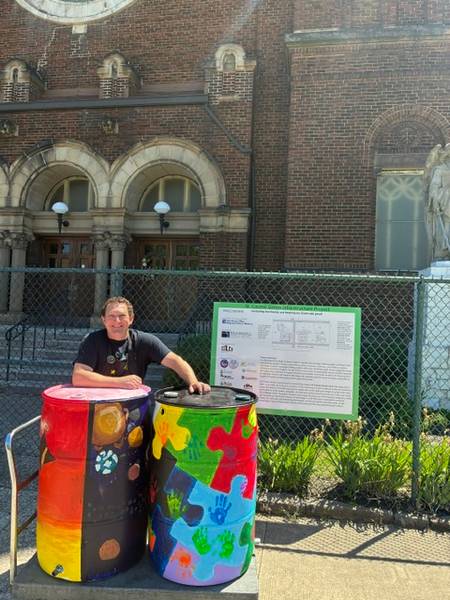
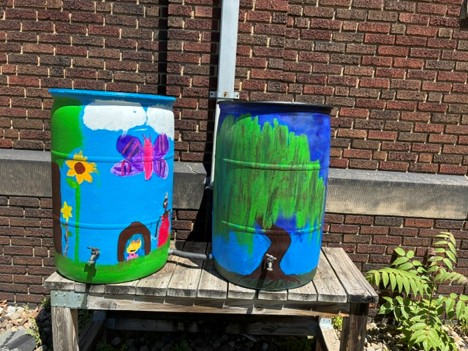
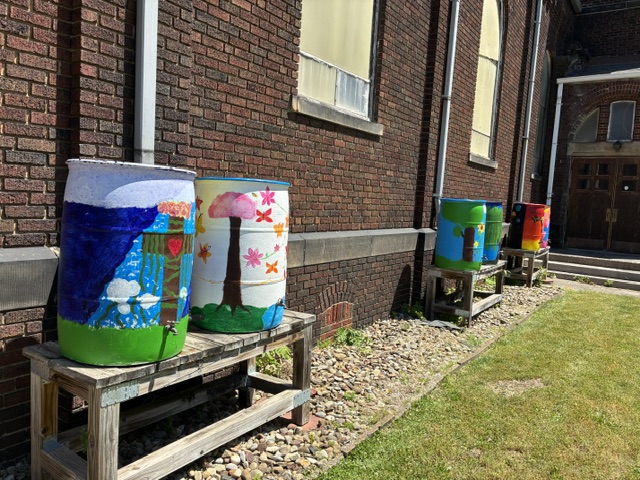
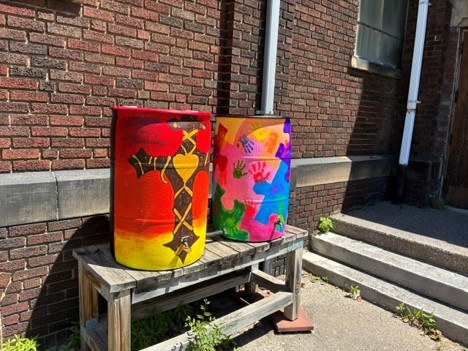
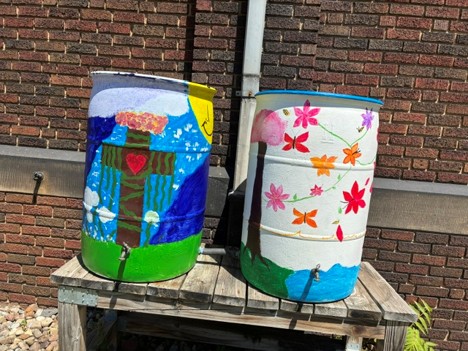
Six colored rain barrels sit outside the historic St. Casimir Parish Church on Sowinski Avenue, bringing a rainbow of color to the St. Clair-Superior neighborhood.
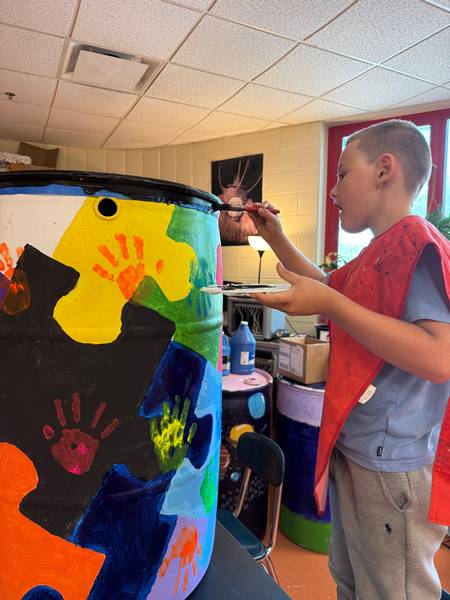
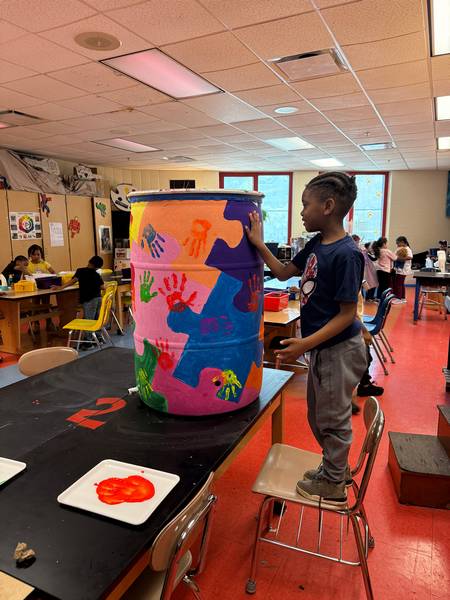
 A student puts the final painting touches on a rain barrel.But the barrels are more than just public art installations. They are part of a green infrastructure project designed to reduce stormwater runoff around the church property and help protect the local waterways.
This past spring, students from neighboring Cleveland Metropolitan School District (CMSD) Willson School helped restore and redesign the original rain barrels—first installed nearly a decade ago as part of St. Casimir’s Green Infrastructure Initiative.
Willson visual arts teacher Adam Nunnari says the Rain Barrel Project was originally scheduled to start in late February, but scheduling conflicts delayed the project and its scope. Despite the delay, the project was completed earlier in June.
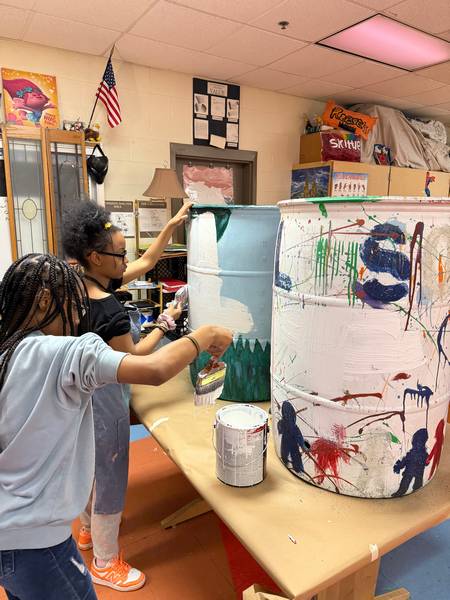
“After much deliberation, the students and [I] were able to volunteer and take our lunch and recess time to design and paint the rain barrels,” Nunnari recalls of the solution to the conflict. “Students worked for about 20 to 30 minutes at a time—eating, painting, and cleaning the materials—before they [would have] to report to class.”
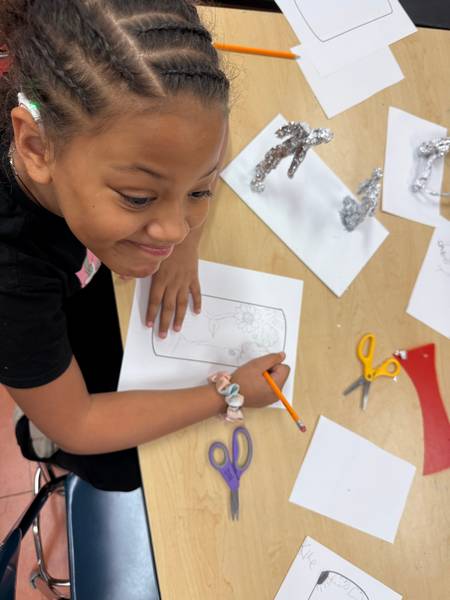
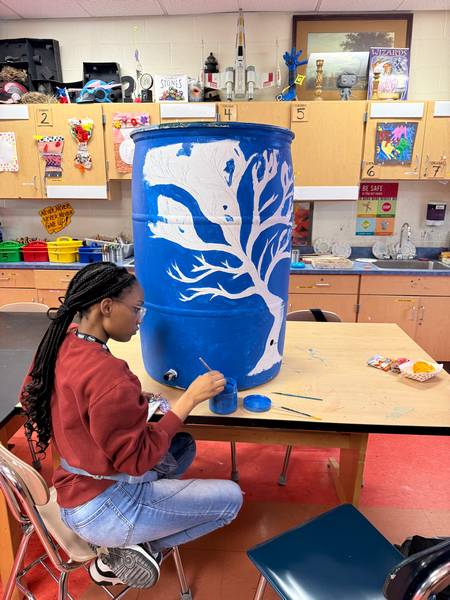
Nunnari explains that students first drafted their design ideas on paper before drawing them on the barrels. They then painted the designs, and a coat of clear, matte protective spray was applied.
Rain barrels collect stormwater runoff from rooftops through gutter downspouts, where the water is stored for later uses, like watering gardens.
By capturing rainwater before it enters storm drains, St. Casimir students and staff help reduce the amount of runoff entering Northeast Ohio's sewer system and local waterways, which causes backups and raw sewage contamination in our freshwater sources.
The water accumulated in the rain barrels can be used for tasks like:
- watering gardens
- landscaping
- preparing flower beds
- other non-potable outdoor uses
 Students first drafted their design ideas on paper before drawing them on the barrels.
Students from multiple grade levels and abilities, including several deaf Willson students, participated in the restoration project. A first-grade class created a barrel featuring handprints, a third-grade class collaborated on a shared design and seventh and eighth-grade students volunteered their lunch periods to help complete the artwork.
Nunnari says the project highlighted the Willson students’ talents and skills, while also offering them the opportunity to contribute to the community.
"We wanted to connect the community with both the church and the environment," Nunnari says. "A lot of our artwork centered around that."
The students incorporated themes of faith, nature, and conservation into their designs. Butterflies, flowers, trees, and other animals appear throughout the designs—reflecting both the natural environment and the church's commitment to sustainability.
Nunnari says the project offered an opportunity to learn about environmental issues in a hands-on way.
“A lot of students didn't know the function of that barrel, or why [the barrels] were on the side of the church,” he says. “It gave me an opportunity to both introduce rain barrels and conserving water.”
Students researched the plants, animals, and insects they painted—learning about local ecosystems while creating artwork about those ecosystems. Their resulting rain barrels will remain on display in the St. Clair-Superior neighborhood.
"It's a different way to learn, and it's a different way to connect with the community," Nunnari says.
The rain barrels were most recently used as part of St. Casimir's broader green infrastructure efforts. The church received funding through the Northeast Ohio Regional Sewer District (NEORSD) for installation of permeable pavers, bioretention areas, and rain barrels to help capture stormwater before it enters the sewer system.
"We're the first green infrastructure church in the Cleveland Diocese," says John Niedzialek, a parish council volunteer at St. Casimir.
 Wilsson School students work on their rain barrels.He adds that the goal is to reduce the amount of stormwater entering Northeast Ohio's combined sewer system, where heavy rain events can overwhelm infrastructure and contribute to pollution reaching local waterways and Lake Erie.
Natalie Gertz-Young, education and information coordinator with the Lake County Soil and Water Conservation District, explains that the rain barrels collect runoff from rooftops before it reaches storm drains.
"Rain barrels prevent some of that water from reaching our streams during a rain event," she says, noting that a single rain barrel can divert more than 2,000 gallons of stormwater runoff annually.
The benefits are especially important in Northeast Ohio, where communities rely on Lake Erie and local waterways for drinking water, recreation and tourism.
"We have some really spectacular streams and rivers here," Gertz-Young says. "They contribute a lot economically due to things like tourism, things like fishing and kayaking."
By reducing stormwater runoff, she explains that rain barrels help protect those resources while encouraging residents to think about the role they play in caring for the environment.
The church's partnership with Willson School extends beyond the rain barrels. In past years, students have helped plant a bioretention garden and other green initiatives on the property, while the church and school collaborate on community outreach efforts throughout the year.
"We've been trying to be more active with the community," Niedzialek says. "One way we're doing that is with the public elementary school."
Niedzialek says involving students in the restoration project was an important way to strengthen that connection while encouraging environmental awareness.
The completed barrels now stand outside the church, serving as both functional environmental infrastructure and colorful reminders of a partnership between a neighborhood church and the students who helped bring the project to life.
For Niedzialek, the project represents more than stormwater management. "We're trying to work as much as we can with the community," he says.
The restored barrels now give students a visible reminder of their work while helping Historic St. Casimir continue its efforts to protect local waterways and strengthen neighborhood connections.