Remembering the dead and celebrating life: 22 years of Día de Muertos in Cleveland
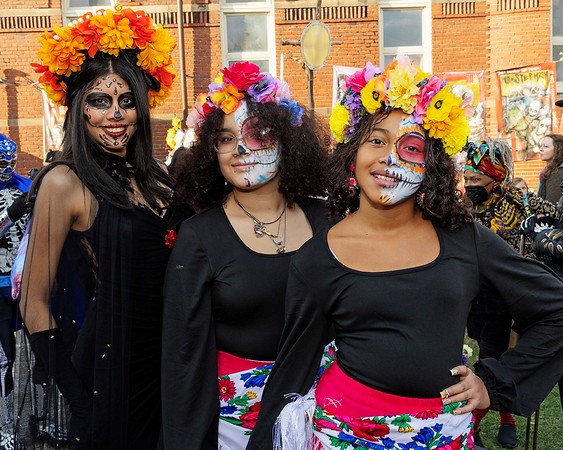



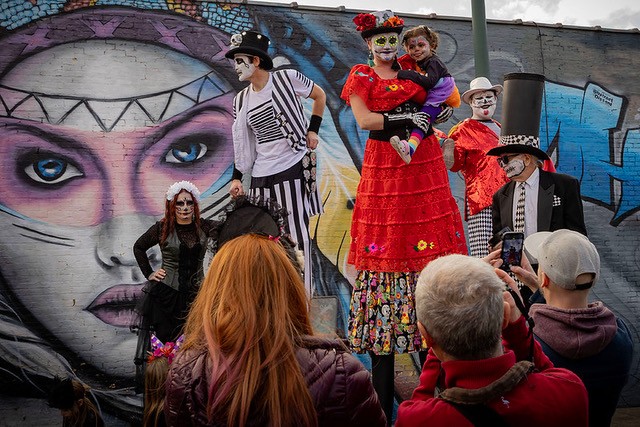
 A colorful senorita.=Cleveland’s Día de Muertos celebration has always been about remembering the people who are no longer on this earth. But as the annual gathering enters its 22nd year, it is also a place where people from different backgrounds come together to honor loved ones, share traditions, and reflect on the connections that unite them.
Día de Muertos returns to the Cleveland Public Theatre (CPT) campus in the Gordon Square Arts District on Saturday, Nov. 7, with traditional ofrendas (altars), performances, Latin food, live music, a folk art market, and vendors.
For artistic director Héctor Castellanos Lara, the growing participation reflects the spirit of an event that has welcomed people into the tradition for more than two decades. “We go over borders, you know,” he says.
Día de los Muertos, or Day of the Dead, is a tradition rooted in Mexican culture that honors people who have died by celebrating their lives and keeping their memories present.
Through photographs, personal belongings, food, and other meaningful objects, the altars offer families and visitors a way to remember the people behind the names and faces.
“When you mention it's a celebration of life, you know, people get confused,” explains Castellanos Lara. “They're talking about the dead—they're talking about life, but it's the life of the dead. The people [who are] not with us anymore, we're talking about their lives and we’re honoring them for when they were here.”
A tradition takes root in Cleveland
The local celebration began with small gatherings in Tremont in 1999 and 2000, when Castellanos Lara and others introduced the tradition through dancers, sugar skulls, pan de Muerto (bread of the dead), and hot chocolate.
The first Cleveland Día de Muertos drew about 125 people. The following year, in 2000, two buses brought students from Kent State University, which helped grow attendance to nearly 300 people.
 Día de Muertos 2024 at Cleveland Public Theatre“That means that we have been doing a good job,” Castellanos Lara says of the gradual growth in public understanding of the Día de Muertos traditions. “Every year there are [fewer misconceptions].”
In 2004, another local group organized a Día de Muertos event at La Sagrada Familia Parish, a Hispanic church on Detroit Avenue that serves a multicultural community. Castellanos Lara and his friend Salvador Gonzalez decided to find a permanent home for the celebration, a place where the entire community could come together.
They held the event at Convivium 33 Gallery from 2005 through 2007 before moving it to Cleveland Public Theatre in 2008, where it has continued to grow.
Castellanos Lara has spent years explaining the tradition through presentations at schools, churches, and senior centers. He says the animated film “Coco” has helped more people understand the meaning behind the celebration, but there is still work to do.
He recently spoke with a Cleveland State University student who wanted to help other students learn about the tradition, including some who had Mexican friends but knew little about the local celebration.
“I still have more work to do,” Castellanos Lara says, emphasizing that education and an open invitation remain central to the Día de Muertos event. “For us, it's just, ‘celebrate and have our arms open to everyone to participate’ or ‘come and see what it is.’ And that's it.”
 Kaye and JuliaEight altars, a hope for peace
Several altars will have a presence this year, each offering a different perspective on remembrance.
One altar will honor the father of Castellanos Lara’s wife, Delia. Carlos Enrique Rodriguez died in January at age 93. He played the saxophone, so his instrument and photos that depict much of his life will be part of the altar.
Castellanos Lara says these personal objects can prompt memories and conversations among family members and friends of a departed loved one. A watch, a photograph, or an instrument can spark a memory someone shared with the person being honored—keeping the honoree’s story alive.
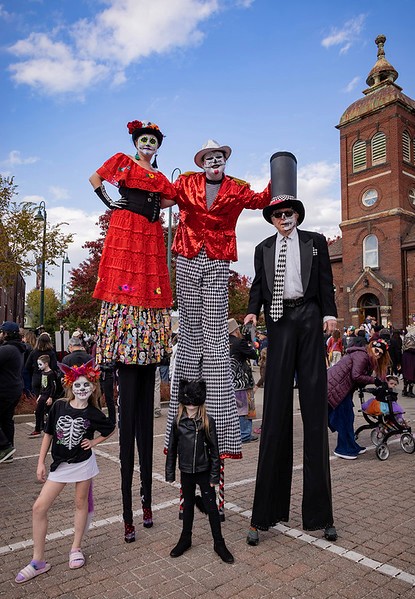
The main altar will honor Julia Pankhurst’s mother, Catherine, who was involved with Cleveland Museum of Art’s Parade the Circle stilt-walkers. Catherine attended the Día de Muertos celebration for years, even while using a wheelchair. Castellanos Lara says Catherine enjoyed being part of the event, and Pankhurst will create an altar in her mother’s memory.
Students from Metro Catholic School are working with their art teacher to contribute a collective altar, which Castellanos Lara says will focus on the 1980 murders of three nuns and a missionary in El Salvador.
Castellanos Lara adds that the project not only teaches students about history, it also encourages them to think about how the past can help people understand conflict and work toward a more peaceful future.
Two altars—one by the Jewish Federation of Cleveland and the other by members of Cleveland’s Palestinian community—will broaden the Día de Muertos celebration’s cultural reach.
 Dia de Muertos 2025The Jewish Federation of Cleveland will create one of the altars, led by Israeli-born wood carving artist Gadi Samir, who is founder and executive director of Negative Space Gallery.
Cleveland City Council executive assistant and an actor with CPT’s Masrah Cleveland El-Arabi Joseph Naser is leading members of the Palestinian community in creating the second altar.
The collaborations came out of a moment at last year’s Día de Muertos. Members of the Jewish and Arab communities took turns reading poetry related to death and remembrance—bringing the groups together in a shared expression of grief and a wish for peace, Castellanos Lara says.
“Palestinians and the Jews were praying together,” he recalls, adding that he saw participants embracing at the end of the gathering and wishing each other peace amid conflict around the world.
The remaining three altars include creations by Kim Crowl, Renata Jelito, and Susie Underwood.
Also new this year are performances by two groups of Aztec dancers. Danza Azteca La Guadalupana, a group from Painesville, and a dance group associated with the Cleveland Mexican Committee, Danza del Sagrado Corazón Tonantzin, will perform traditional dances.
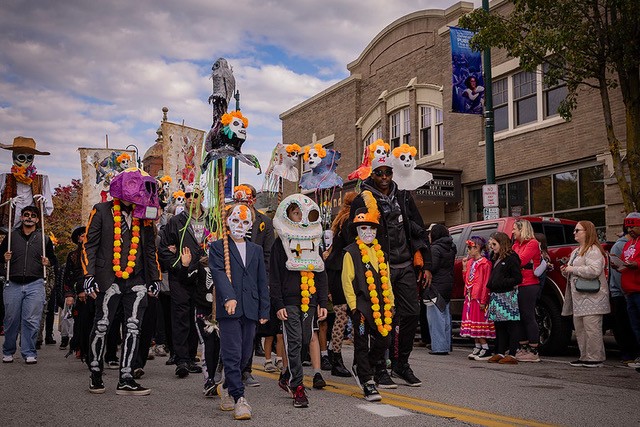
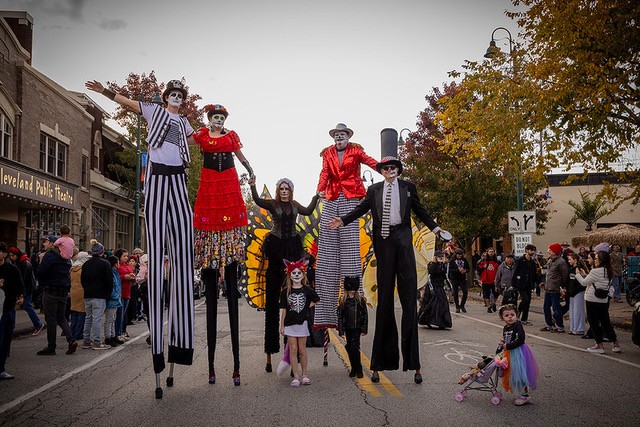
The Procession of Skulls and Skeletons takes place from 3:30 p.m. to 4:15 p.m., with Grand Marshal Willie Colón and banner leader Olga Rosado. Mariachi Santa Cecilia, Samba da Cidade, and Pick Up Stix stilt walkers will perform.
The cost of traditions
For most of its history, the Día de Muertos celebration has been free. This year, visitors will be asked to make a $10 donation when they secure a free ticket to see the altars inside the new Joan Yellen Horvitz Performing Arts Center, the renovated former church space on the CPT campus.
The performances, vendors, food stands, face painting, and the parade will all be open to the public without an admission charge, although tickets are required.
Castellanos Lara says the change comes as production costs continue to rise. Organizers provide stipends to altar artists to help cover materials, pay performers and musicians, rent trucks and equipment for the cemetery installation, and cover security expenses.
Día de Muertos 2024 at Cleveland Public TheatreHe says security has become one of the event’s largest costs, with CPT covering the expense last year, but he is also concerned about the celebration’s long-term financial future.
Organizers are successfully producing Día de Muertos 2026 and will be ready for the Nov. 7 celebration. But funding for 2027 is uncertain, Castellanos Lara says, and some organizations are considering cutting programs or charging for more activities to stay afloat next year.
He encourages people who want to support Día de Muertos to donate directly to CPT.
Despite those concerns, Castellanos Lara stays focused on the gathering’s purpose: Remembering people who have died, sharing their stories, and welcoming anyone interested in learning more about Día de Muertos
“It's time to celebrate and have our arms open to everyone to participate or just to come and see,” Castellanos says. For him, the celebration’s enduring value lies in the way it keeps loved ones present while bringing a wider community together.