
Search results for 'cheap cc fullz, 【 Visit Amsiga.com 】 ojM3t2s., buy fullz info, carding cc shop, non avs bin BgRi'

A key component of the Cleveland Plan for Transforming Schools is helping families choose the right school. Neighborhood ambassadors are charged with informing the community about school choices.

Mike Kister likes to look out for the little guy. As a veteran entrepreneur – having started four internet service, e-commerce and web companies – Kister’s latest venture, Acceleration Systems, offers faster internet speeds and enhanced bandwidth on a subscription basis to small companies that previously couldn’t afford such services.
With Acceleration Systems’ cloud-based tools, customers can see download speeds 10 times faster and uploads 17 times faster than a regular internet connection. “That’s a pretty dramatic kind of improvement,” Kister, president and CEO, says.
“Bandwidth optimization has been around for a while, but it’s only available in Fortune 1000 companies for the past decade,” says Kister. “With our cloud-based monthly subscription, now bandwidth optimization is affordable to small businesses.”
Kister and his team have been working on their technology for two years and filed patents in January 2013. A year ago, the group had its first working prototype. “We then went on a fundraising tour and two weeks later we were fully funded,” he says. “We took the prototype and had a working model in eight months.”
The company headquarters are in Northfield, just three miles from Kister’s home. Acceleration Systems also has offices in Philadelphia, R&D offices in Lexington, Kentucky and four sales offices throughout the eastern United States. The company recently hired two additional engineers to its team of 18.
“We’ll get them up to speed and then hire a couple of more,” says Kister of their recent hiring. “We’re just growing like gangbusters right now. We’re scrambling to keep up with demand. It’s a lot of fun.”
Kister envisions Acceleration Systems’ software will eventually be in all sorts of computer devices. “Ultimately, this technology will be embedded in your cable modem, embedded in your smart phone,” he says. “We have additional twists we put on the problem – businesses with multiple locations can tie together through private cloud services.”
With Acceleration Systems’ cloud-based tools, customers can see download speeds 10 times faster and uploads 17 times faster than a regular internet connection. “That’s a pretty dramatic kind of improvement,” Kister, president and CEO, says.
“Bandwidth optimization has been around for a while, but it’s only available in Fortune 1000 companies for the past decade,” says Kister. “With our cloud-based monthly subscription, now bandwidth optimization is affordable to small businesses.”
Kister and his team have been working on their technology for two years and filed patents in January 2013. A year ago, the group had its first working prototype. “We then went on a fundraising tour and two weeks later we were fully funded,” he says. “We took the prototype and had a working model in eight months.”
The company headquarters are in Northfield, just three miles from Kister’s home. Acceleration Systems also has offices in Philadelphia, R&D offices in Lexington, Kentucky and four sales offices throughout the eastern United States. The company recently hired two additional engineers to its team of 18.
“We’ll get them up to speed and then hire a couple of more,” says Kister of their recent hiring. “We’re just growing like gangbusters right now. We’re scrambling to keep up with demand. It’s a lot of fun.”
Kister envisions Acceleration Systems’ software will eventually be in all sorts of computer devices. “Ultimately, this technology will be embedded in your cable modem, embedded in your smart phone,” he says. “We have additional twists we put on the problem – businesses with multiple locations can tie together through private cloud services.”

When students head to college, they expect to received four years of learning and, hopefully, to graduate with a career plan and a good job lined up. But Tom Roulston noticed a disturbing discrepancy. “Seventy percent of seniors really don’t know what they want to do when they graduate,” he says. “And 50 percent are unemployed or underemployed when they graduate.”
So Roulston created Trust Navigator, a multi-tiered program that supplements the book smarts taught in colleges with some networking, life lessons and guidance to prepare students for successful careers. Trust Navigator will work with colleges to provide the “real world” component of education.
“We have created a platform with schools that allows you to take a lot of different tests, identify interests, passions, strengths and weaknesses,” Roulston explains. “We’ve archived interviews with hundreds of thousands of individuals, asking them ‘what do you do, how did you get started, how much money did you make when you started and what was your career path?’”
The Trust Navigator program has four components. First, students take classes in addition to their academic work, that teach “real world” lessons. “There are classes that supplement academic work – life skills, communication skills, financial literacy, how to buy healthcare insurance, networking and communications,”
Second, Trust Navigator offers experiential learning, with events that re-engage alumni with the campus. The third component involves an online form to partner students with different organizations and identify career interests.
The fourth tier focuses on success coaching and testing and surveys to identify career paths. “Someone who will sit with these students every month and ask them what courses they are taking,” says Roulston.
Trust Navigator is a “pay-to-play” program that Roulston says will alleviate the problem of college grads with tons of debt and no job, as well as encourage alumni to be more involved with their alma maters. “Large gift giving has increased over the years, but annual fund participation has dropped pretty dramatically,” says Roulston of alumni support. “More and more kids aren’t finding jobs right away, don’t have money and blame the colleges. There’s $1.3 trillion in student debt.”
Roulston closed his investment research business last year to focus on Trust Navigator. He plans to be in five to 10 colleges of varying sizes this fall.
So Roulston created Trust Navigator, a multi-tiered program that supplements the book smarts taught in colleges with some networking, life lessons and guidance to prepare students for successful careers. Trust Navigator will work with colleges to provide the “real world” component of education.
“We have created a platform with schools that allows you to take a lot of different tests, identify interests, passions, strengths and weaknesses,” Roulston explains. “We’ve archived interviews with hundreds of thousands of individuals, asking them ‘what do you do, how did you get started, how much money did you make when you started and what was your career path?’”
The Trust Navigator program has four components. First, students take classes in addition to their academic work, that teach “real world” lessons. “There are classes that supplement academic work – life skills, communication skills, financial literacy, how to buy healthcare insurance, networking and communications,”
Second, Trust Navigator offers experiential learning, with events that re-engage alumni with the campus. The third component involves an online form to partner students with different organizations and identify career interests.
The fourth tier focuses on success coaching and testing and surveys to identify career paths. “Someone who will sit with these students every month and ask them what courses they are taking,” says Roulston.
Trust Navigator is a “pay-to-play” program that Roulston says will alleviate the problem of college grads with tons of debt and no job, as well as encourage alumni to be more involved with their alma maters. “Large gift giving has increased over the years, but annual fund participation has dropped pretty dramatically,” says Roulston of alumni support. “More and more kids aren’t finding jobs right away, don’t have money and blame the colleges. There’s $1.3 trillion in student debt.”
Roulston closed his investment research business last year to focus on Trust Navigator. He plans to be in five to 10 colleges of varying sizes this fall.

Seventeen companies in various stages of development pitched their causes to about 30 local investors last Thursday, June 4 at MAGNET’s ProtoTech: Invest at the Metropolitan at The 9. All of the companies are in significant fund-raising mode.
“It was a good event, it was a lot of fun,” says Dave Crain, executive director of the Incubator at MAGNET and ProtoTech organizer. “I don’t think people realized how many great startups are in the region. There were 17 presenters and not a dud in the group.”
Crain traveled to other entrepreneurial hubs around the country to research “investment summits,” or pitch events geared toward attracting investors. ProtoTech: Invest, was the first event of its kind in the state, Crain says. “No one is really doing it in Ohio, statewide,” he says. “Great entrepreneurial regions do these all the time.”
In fact, Crain says he will consider hosting ProtoTech: Invest a couple of times a year, based on feedback he heard from investors in attendance. “There are lots of great opportunities, lot of great companies, but we need more money in the region,” he says. “I would tell the investors, when we do this next time, call all your friends on the coasts.”
While investors on the East and West coasts have started to take notice of Cleveland’s entrepreneurial scene. “I do think it’s changing,” Crain says. “The coasts have a much more developed ecosystem out there.”
But Crain enjoyed hearing about the progress of many of the startups presenting on Thursday, such as Rick Pollack’s 3-D printer manufacturer MakerGear. “I know Rick, but I never realized they are the number-one rated company on Amazon,” Crain says. “They’re asking for money to fund their growth. It’s fun to hear how much they’ve grown. There’s a breadth of opportunity here, from life sciences to products.”
“It was a good event, it was a lot of fun,” says Dave Crain, executive director of the Incubator at MAGNET and ProtoTech organizer. “I don’t think people realized how many great startups are in the region. There were 17 presenters and not a dud in the group.”
Crain traveled to other entrepreneurial hubs around the country to research “investment summits,” or pitch events geared toward attracting investors. ProtoTech: Invest, was the first event of its kind in the state, Crain says. “No one is really doing it in Ohio, statewide,” he says. “Great entrepreneurial regions do these all the time.”
In fact, Crain says he will consider hosting ProtoTech: Invest a couple of times a year, based on feedback he heard from investors in attendance. “There are lots of great opportunities, lot of great companies, but we need more money in the region,” he says. “I would tell the investors, when we do this next time, call all your friends on the coasts.”
While investors on the East and West coasts have started to take notice of Cleveland’s entrepreneurial scene. “I do think it’s changing,” Crain says. “The coasts have a much more developed ecosystem out there.”
But Crain enjoyed hearing about the progress of many of the startups presenting on Thursday, such as Rick Pollack’s 3-D printer manufacturer MakerGear. “I know Rick, but I never realized they are the number-one rated company on Amazon,” Crain says. “They’re asking for money to fund their growth. It’s fun to hear how much they’ve grown. There’s a breadth of opportunity here, from life sciences to products.”

Engaging with patrons and the community has always been a priority for Cleveland Public Library, says youth services librarian Maria Estrella. CPL is taking this all-important mission on the road this summer with a brand new "book bike."
The bike, actually an oversized orange tricycle, will serve nearby neighborhoods as a roving book depository and checkout station. Community members will be able to sign up for library cards on the spot, and search for reading materials in the system catalog thanks to the bike's capability as a traveling Wi-Fi hotspot.
"We'll have popular books and new releases as well as children's books," says Estrella.
The bike, introduced to the public on May 29 in the main library's Eastman Reading Garden, will act as a roaming literacy advocate and outreach tool at downtown events like Walnut Wednesday. Daycare and school visits will also be part of the bike's hot weather agenda.
"Local branches can borrow the bike, too," says Estrella. "It's going to be all over the place."
The three-wheeled library joins CPL's BookBox, a mobile unit of the main library that will offer its wares this summer at University Circle for the Wade Oval Wednesdays concert series. Both book-distributing entities are meant to reach communities lacking easy library access, with the hope of catching interest from downtown Cleveland pedestrians.
Ultimately, CPL's newest initiative is pedaling a creative way to implement library services, Estrella maintains.
"The bike is a wonderful opportunity to get information to people and show them what we're about," she says. "It's great to be able to bring the library to the community."
The bike, actually an oversized orange tricycle, will serve nearby neighborhoods as a roving book depository and checkout station. Community members will be able to sign up for library cards on the spot, and search for reading materials in the system catalog thanks to the bike's capability as a traveling Wi-Fi hotspot.
"We'll have popular books and new releases as well as children's books," says Estrella.
The bike, introduced to the public on May 29 in the main library's Eastman Reading Garden, will act as a roaming literacy advocate and outreach tool at downtown events like Walnut Wednesday. Daycare and school visits will also be part of the bike's hot weather agenda.
"Local branches can borrow the bike, too," says Estrella. "It's going to be all over the place."
The three-wheeled library joins CPL's BookBox, a mobile unit of the main library that will offer its wares this summer at University Circle for the Wade Oval Wednesdays concert series. Both book-distributing entities are meant to reach communities lacking easy library access, with the hope of catching interest from downtown Cleveland pedestrians.
Ultimately, CPL's newest initiative is pedaling a creative way to implement library services, Estrella maintains.
"The bike is a wonderful opportunity to get information to people and show them what we're about," she says. "It's great to be able to bring the library to the community."

Last summer, Jenny Bendis Goe, artist and owner of Jewelry by Jenny, was touring Coventry with Angie Hetrick, director of the Coventry Village Special Improvement District. Goe, who has lived in the area for her entire life, was heartbroken by the amount of vacant shops at the top of the hill.
So, Goe made it her mission to transform the vacancies to thriving storefronts, starting with her own. She contacted landlord Lewis Zipkin in August, and after some persistence and a business plan, Zipkin agreed to lease Goe former Phoenix Coffee space.
In January Goe opened In the 216, a store that features not only Goe’s artwork but the word of nearly 60 other local artists.
Last Thursday, May 28, Goe officially held a grand opening for In the 216 – offering more than 200 guests food, drinks and a look at some of the works for sale at the store. “There are 58 small businesses represented here,” says Goe. “I have works from $2 to $3,000.”
Goe decided to postpone the grand opening until she had her bearings and the weather improved. “It was a little nerve wracking when we first opened up, but all of the Coventry veterans are right, it’s gotten increasingly better,” she says. “I feel like Coventry is just the perfect place for this. Business has doubled, if not tripled since we first opened.”
Bodega Coventry next door served food at the grand opening, and encouraged guests to come have a drink on the patio, while burlesque star Bella Sin welcomed people on the street. The event was a success, with both familiar faces and strangers in attendance. “It was fantastic, it was wonderful,” Goe says.
In addition to her husband, Steve, Goe has two of the artists helping her out in the store, and just had two high school seniors interested in pursuing art perform their senior projects at In the 216.
Now Goe is moving ahead with the next part of her vision for the empty space on Coventry. “I’d really like to see exhibits in the [former] Strickland’s Custard space,” she says. “Not just for artists. I hope anything we do will encourage businesses to open in the empty spaces.” Goe has a few artists in mind who would like to exhibit in the space. She is talking to Zipkin about her plans to implement exhibits or studios in the area.
So, Goe made it her mission to transform the vacancies to thriving storefronts, starting with her own. She contacted landlord Lewis Zipkin in August, and after some persistence and a business plan, Zipkin agreed to lease Goe former Phoenix Coffee space.
In January Goe opened In the 216, a store that features not only Goe’s artwork but the word of nearly 60 other local artists.
Last Thursday, May 28, Goe officially held a grand opening for In the 216 – offering more than 200 guests food, drinks and a look at some of the works for sale at the store. “There are 58 small businesses represented here,” says Goe. “I have works from $2 to $3,000.”
Goe decided to postpone the grand opening until she had her bearings and the weather improved. “It was a little nerve wracking when we first opened up, but all of the Coventry veterans are right, it’s gotten increasingly better,” she says. “I feel like Coventry is just the perfect place for this. Business has doubled, if not tripled since we first opened.”
Bodega Coventry next door served food at the grand opening, and encouraged guests to come have a drink on the patio, while burlesque star Bella Sin welcomed people on the street. The event was a success, with both familiar faces and strangers in attendance. “It was fantastic, it was wonderful,” Goe says.
In addition to her husband, Steve, Goe has two of the artists helping her out in the store, and just had two high school seniors interested in pursuing art perform their senior projects at In the 216.
Now Goe is moving ahead with the next part of her vision for the empty space on Coventry. “I’d really like to see exhibits in the [former] Strickland’s Custard space,” she says. “Not just for artists. I hope anything we do will encourage businesses to open in the empty spaces.” Goe has a few artists in mind who would like to exhibit in the space. She is talking to Zipkin about her plans to implement exhibits or studios in the area.

The issue of concussions among both professional and student athletes is a hot topic these days. But repetitive brain injuries – how to detect, prevent and treat concussions – are also a concern among people in virtually every walk of life.
So on Tuesday and Wednesday, June 23 and 24, national scientists, engineers, clinicians and researchers will gather at the Global Center for Health Innovation to brainstorm and share their ideas at Concussion: A National Challenge.
The event, ,sponsored by the National Academy of Engineering, the Institute of Medicine in Washington, D.C., Case Western Reserve University, MetroHealth and Taipei Medical University, among others, will focus on medical advances in concussion detection, prevention and treatment in areas such as athletics, auto accidents and military personnel.
“This is bringing people together who don’t normally attend the same meetings for a frank discussion of what we need to do,” says Jay Alberts, director of the Cleveland Clinic Concussion Center and one of the event’s speakers. “It’s unique to have people from the automotive industry, sports and military. All of these groups are concerned about concussions and mild to moderate brain injury. We will take the best practices from each group to address what the fundamental practices are.”
The public is invited to join the discussions and presentations. “You don’t have to be a trained specialist or an engineer to be a part of the talks,” stresses Alberts. “Parents and coaches are encouraged to attend. They will ask questions that will force people on the panel and the speakers to think about it differently. It’s always important to get the patient perspective to understand the fundamental problems and the questions that need to be answered.”
The symposium is free, but registration is required.
So on Tuesday and Wednesday, June 23 and 24, national scientists, engineers, clinicians and researchers will gather at the Global Center for Health Innovation to brainstorm and share their ideas at Concussion: A National Challenge.
The event, ,sponsored by the National Academy of Engineering, the Institute of Medicine in Washington, D.C., Case Western Reserve University, MetroHealth and Taipei Medical University, among others, will focus on medical advances in concussion detection, prevention and treatment in areas such as athletics, auto accidents and military personnel.
“This is bringing people together who don’t normally attend the same meetings for a frank discussion of what we need to do,” says Jay Alberts, director of the Cleveland Clinic Concussion Center and one of the event’s speakers. “It’s unique to have people from the automotive industry, sports and military. All of these groups are concerned about concussions and mild to moderate brain injury. We will take the best practices from each group to address what the fundamental practices are.”
The public is invited to join the discussions and presentations. “You don’t have to be a trained specialist or an engineer to be a part of the talks,” stresses Alberts. “Parents and coaches are encouraged to attend. They will ask questions that will force people on the panel and the speakers to think about it differently. It’s always important to get the patient perspective to understand the fundamental problems and the questions that need to be answered.”
The symposium is free, but registration is required.
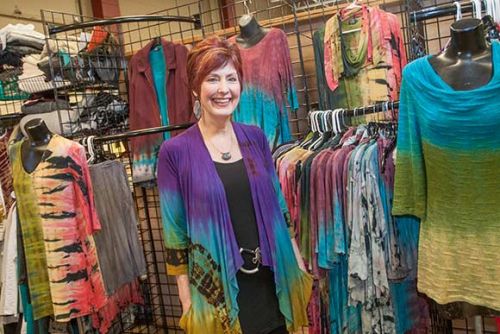
The Goldman Sachs 10,000 Small Businesses initiative has brought new jobs and economic opportunity to Northeast Ohio in its first three years.

While on spring break in 2013 from his junior year at Ohio University, Seth Miller and three of his friends were killing time in the car on their way to Florida. “My buddy and I were freestyling on the way down to spring break,” he recalls. “It was pretty terrible, but they were hilarious. I knew people would enjoy doing it.”
Miller, now 22, then spent the next two years developing his app concept – pick from a curated rap beat, freestyle over it and send it to friends in a one-minute message. The Lakewood resident presented RapChat at Startup Weekend Athens and won $1,000. Miller officially launched RapChat for iPhones in June 2014.
The app targets 16-24 year olds and spans gender and racial lines. RapChat is available for iPhone free download in the iTunes App Store.
“In December we ramped up and started going like crazy, like a rocket ship,” says Miller. Today, RapChat has already seen 410,000 downloads and 4 million raps sent in 2015. There’s no shortage of beats to choose from either. “We haven’t had to do much recently,” Miller brags. “Producers submit beats and we pick out the best ones. We curate new beats once a week.”
The app features beats from more than 20 artists such as Cal Scruby and Matt Houston. The company has plans to add bigger producers as time goes soon and has plans to release a beat by ASAP Ty Beats, a member of the ASAP Mob and producer of ASAP Rocky’s hits “Purple Swag” and “Peso.”
When the app hit 300,000 downloads last year, Miller decided to quit his job and focus on RapChat full time. The company now has 10 team members – all located throughout the Midwest. One of the other three original founders, Brandon Logan, is still with RapChat.
Right now, the company is not focusing on revenue. Miller takes freelance jobs to pay the bills. But he says they already have some "major brands" interested in partnering with RapChat when the time is right.
Miller, now 22, then spent the next two years developing his app concept – pick from a curated rap beat, freestyle over it and send it to friends in a one-minute message. The Lakewood resident presented RapChat at Startup Weekend Athens and won $1,000. Miller officially launched RapChat for iPhones in June 2014.
The app targets 16-24 year olds and spans gender and racial lines. RapChat is available for iPhone free download in the iTunes App Store.
“In December we ramped up and started going like crazy, like a rocket ship,” says Miller. Today, RapChat has already seen 410,000 downloads and 4 million raps sent in 2015. There’s no shortage of beats to choose from either. “We haven’t had to do much recently,” Miller brags. “Producers submit beats and we pick out the best ones. We curate new beats once a week.”
The app features beats from more than 20 artists such as Cal Scruby and Matt Houston. The company has plans to add bigger producers as time goes soon and has plans to release a beat by ASAP Ty Beats, a member of the ASAP Mob and producer of ASAP Rocky’s hits “Purple Swag” and “Peso.”
When the app hit 300,000 downloads last year, Miller decided to quit his job and focus on RapChat full time. The company now has 10 team members – all located throughout the Midwest. One of the other three original founders, Brandon Logan, is still with RapChat.
Right now, the company is not focusing on revenue. Miller takes freelance jobs to pay the bills. But he says they already have some "major brands" interested in partnering with RapChat when the time is right.

The Flashstarts business accelerator and venture fund recently moved from Playhouse Square to a much larger location in Terminal Tower for two basic reasons, says cofounder Charles Stack.
The first reason was to make it easier for startup companies to find stable office space. The second was to condense newbie entrepreneurial efforts into StartMart, a single, highly energetic nucleus where water cooler moments can foster new ideas and economic growth.
This concept of "engineered serendipity" began May 16th when Flashstarts, which provides coaching, funds and other resources to new companies that participate in a 12-week program, left for its new 30,000-square-foot headquarters on Public Square, a space six times larger than its previous office.
"I've been doing this for 30 years, and I've never been more optimistic about startups having the opportunity to turn this region into a powerhouse," says Stack, who began planning StartMart with fellow Flashstarts founder Jennifer Neundorfer last spring. "This move is a small step in that direction."
Flashstarts itself will be the hub's first official tenant in the lead-up to a public launch in September. Over the summer, the accelerator will engage the community for feedback on StartMart's design and begin identifying and communicating with potential members. Though the group's focus is on use of software and technology, Stack expects a diverse range of occupants to fill the space.
"It's wide open to anyone who wants to join," he says.
Participants will work in a flexible space where privacy is an option even as collaboration is encouraged. Ultimately, StartMart will stand as a focal point for large-scale innovation.
"We want this to be a global center for startups," says Stack. "Cleveland can be a great home base (for small businesses), and we need to play up that strength."
The first reason was to make it easier for startup companies to find stable office space. The second was to condense newbie entrepreneurial efforts into StartMart, a single, highly energetic nucleus where water cooler moments can foster new ideas and economic growth.
This concept of "engineered serendipity" began May 16th when Flashstarts, which provides coaching, funds and other resources to new companies that participate in a 12-week program, left for its new 30,000-square-foot headquarters on Public Square, a space six times larger than its previous office.
"I've been doing this for 30 years, and I've never been more optimistic about startups having the opportunity to turn this region into a powerhouse," says Stack, who began planning StartMart with fellow Flashstarts founder Jennifer Neundorfer last spring. "This move is a small step in that direction."
Flashstarts itself will be the hub's first official tenant in the lead-up to a public launch in September. Over the summer, the accelerator will engage the community for feedback on StartMart's design and begin identifying and communicating with potential members. Though the group's focus is on use of software and technology, Stack expects a diverse range of occupants to fill the space.
"It's wide open to anyone who wants to join," he says.
Participants will work in a flexible space where privacy is an option even as collaboration is encouraged. Ultimately, StartMart will stand as a focal point for large-scale innovation.
"We want this to be a global center for startups," says Stack. "Cleveland can be a great home base (for small businesses), and we need to play up that strength."

When the Incubator at MAGNET launched ProtoTech last year, the event was a pitch competition for product-based start-ups competing for $25,000 in prize money. This year, organizers have shifted focus a bit with ProtoTech: INVEST – a networking and pitch event that is all about investment in growing companies.
“Last year it was a pitch event for really early stage companies,” says Dave Crain, the Incubator at MAGNET executive director. “This year we’re more about connections and networking than it is of a contest. It’s for presenters who are looking for $500,000 to $2 million in investments.”
There will be pitches, but in a less formal setting without voting or prize money at ProtoTech: INVEST. Fifteen to 20 technology based start-ups with a focus on products will showcase their companies to investors at the event. “It’s an opportunity to get the right people in the room to make connections, network and find funding,” says Crain, adding that ProtoTech: INVEST is the next step in pitch competitions.
“It’s just a part of the evolution, part of maturity,” Crain says. “There will always be pitch competitions, there always should be pitch competitions. We’re just building a pipeline. This is the next level of maturity as these companies grow up.”
Crain says the shift came in response to feedback from both sides involved in start-up fundraising. “What I’m really hearing from both the start-ups and investors is while Ohio has made a lot of progress, no one is doing this locally – this is something successful ventures cities are doing.”
Some of the companies already registered are Cleveland Whiskey, Vadxx, Biolectrics and Everykey.
ProtoTech: INVEST will be held at the Metropolitan at the 9 on Thursday, June 4. Registration and pitches will be from 2pm to 5pm; dinner and networking at 5pm. Presenters can register here; investors can register here.
“Last year it was a pitch event for really early stage companies,” says Dave Crain, the Incubator at MAGNET executive director. “This year we’re more about connections and networking than it is of a contest. It’s for presenters who are looking for $500,000 to $2 million in investments.”
There will be pitches, but in a less formal setting without voting or prize money at ProtoTech: INVEST. Fifteen to 20 technology based start-ups with a focus on products will showcase their companies to investors at the event. “It’s an opportunity to get the right people in the room to make connections, network and find funding,” says Crain, adding that ProtoTech: INVEST is the next step in pitch competitions.
“It’s just a part of the evolution, part of maturity,” Crain says. “There will always be pitch competitions, there always should be pitch competitions. We’re just building a pipeline. This is the next level of maturity as these companies grow up.”
Crain says the shift came in response to feedback from both sides involved in start-up fundraising. “What I’m really hearing from both the start-ups and investors is while Ohio has made a lot of progress, no one is doing this locally – this is something successful ventures cities are doing.”
Some of the companies already registered are Cleveland Whiskey, Vadxx, Biolectrics and Everykey.
ProtoTech: INVEST will be held at the Metropolitan at the 9 on Thursday, June 4. Registration and pitches will be from 2pm to 5pm; dinner and networking at 5pm. Presenters can register here; investors can register here.


Thirty years ago, Carol Emeruwa began searching for an alternative to the standard chocolate chip cookie to put in a care packages to her daughter at college. “I was looking around for something, but she didn’t like chocolate chip cookies,” Emeruwa recalls. So she started fooling around with different recipes and developed a ginger cookie made with natural ingredients and three kinds of ginger. “She moved to New York after college and I still sent those cookies.”
Then Emeruwa was downsized from her accounting job two years ago. New job prospects looked bleak. “My daughter said, ‘do something you enjoy doing,’” Emeruwa says. So she decided to devote her time to baking and crated Red Head Artisanal Ginger Cookies in December of 2014. She sells gift boxes and subscriptions through the Red Head website and AHAlife. Prices start at $24 for a dozen cookies. Emeruwa now has a two-pack of cookies that she plans to distribute to area stores.
The business has taken off. Emeruwa now offers five different flavors of ginger cookies that she bakes in the Cleveland Culinary Launch and Kitchen. “It’s really exciting down there,” she says. “It’s a great place to learn and taste other people’s products. There’s a great atmosphere down there.”
Emeruwa says she thinks she’s found her true calling. “I want to spend all my time building the business,” she says. “This is something I really enjoy doing. Now we’re working on new flavors, more savory items, and I’m tinkering with bacon.” Emeruwa recently recruited 15 customers to taste her new flavors, and she still sends the new flavors to her daughter.
Then Emeruwa was downsized from her accounting job two years ago. New job prospects looked bleak. “My daughter said, ‘do something you enjoy doing,’” Emeruwa says. So she decided to devote her time to baking and crated Red Head Artisanal Ginger Cookies in December of 2014. She sells gift boxes and subscriptions through the Red Head website and AHAlife. Prices start at $24 for a dozen cookies. Emeruwa now has a two-pack of cookies that she plans to distribute to area stores.
The business has taken off. Emeruwa now offers five different flavors of ginger cookies that she bakes in the Cleveland Culinary Launch and Kitchen. “It’s really exciting down there,” she says. “It’s a great place to learn and taste other people’s products. There’s a great atmosphere down there.”
Emeruwa says she thinks she’s found her true calling. “I want to spend all my time building the business,” she says. “This is something I really enjoy doing. Now we’re working on new flavors, more savory items, and I’m tinkering with bacon.” Emeruwa recently recruited 15 customers to taste her new flavors, and she still sends the new flavors to her daughter.
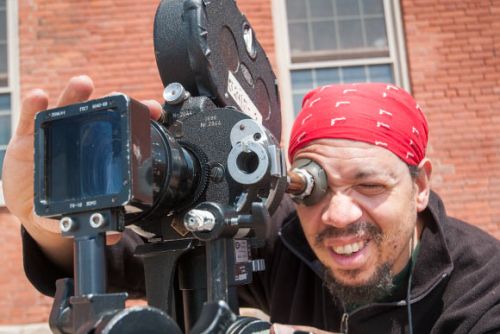
Cleveland has played a starring role in several blockbuster films in recent years, creating an economic boom in the local film industry. Can local filmmakers build on that success?

Since 1965 Pier W in Lakewood has been a seafood destination for special occasions. On May 11 the restaurant will mark its 50th anniversary and it seems there is no shortage of memories shared at the iconic dinner spot on Lake Erie.
“We’re 50 years and still going strong,” says general manager Mark Kawada. “We’re having some of the best years of the restaurant’s history and it’s great to be a part of it, and great to hear the stories.” Only a handful of area restaurants have the bragging rights to 50 years in business, he says.
Kawada recalls a man who recently came in for brunch and brought in a Polaroid photo of himself and his prom date from 30 years ago. “That happens all the time here,” he says.
Although the world has changed in 50 years, Pier W has kept up with the times while maintaining its commitment to fresh seafood in a beautiful setting. “Back then we didn’t have social media or a ton of websites that review you,” he says. “And people have a fascination with food now. When times were tough and most people pulled back, we didn’t pull back. We have to stay true to who we are and what we make.”
What they make is fish that is handled only seven times or less before cooking – the average restaurant serves seafood that has been handled an average of 100 times before it is served – by sourcing its fish from places like Copper River Salmon in Alaska or tuna overnighted three times a week from Hawaii.
“We get fish in almost every day and when we say we get all of our fish in whole, we get it quicker and we get it fresher,” Kawada explains. “We have whole cooler with running water and we cut all of our own fish. It does make a difference.”
Executive chef Regan Reik is an expert in sustainable seafood, building relationships directly with the fishermen who fish responsibly. The same practices hold true for Pier W’s meat and chicken.
The commitment to quality is what has kept Pier W going for five decades. “How we evolved, even in slow times, is we’ll spend the time and money to do it right, because it’s the best,” Kawada says. The restaurant closed for a year about 10 years ago for a $4 million remodel.
Yes, a lot of practices have remained the same. “We have the same bouillabaisse recipe we made 50 years ago,” Kawada says. “A lot of things are old school, the same way we did it 50 years ago.”
A new generation of regulars come to Pier W every day, as well as folks who have been coming for the past 50 years.
“We’re 50 years and still going strong,” says general manager Mark Kawada. “We’re having some of the best years of the restaurant’s history and it’s great to be a part of it, and great to hear the stories.” Only a handful of area restaurants have the bragging rights to 50 years in business, he says.
Kawada recalls a man who recently came in for brunch and brought in a Polaroid photo of himself and his prom date from 30 years ago. “That happens all the time here,” he says.
Although the world has changed in 50 years, Pier W has kept up with the times while maintaining its commitment to fresh seafood in a beautiful setting. “Back then we didn’t have social media or a ton of websites that review you,” he says. “And people have a fascination with food now. When times were tough and most people pulled back, we didn’t pull back. We have to stay true to who we are and what we make.”
What they make is fish that is handled only seven times or less before cooking – the average restaurant serves seafood that has been handled an average of 100 times before it is served – by sourcing its fish from places like Copper River Salmon in Alaska or tuna overnighted three times a week from Hawaii.
“We get fish in almost every day and when we say we get all of our fish in whole, we get it quicker and we get it fresher,” Kawada explains. “We have whole cooler with running water and we cut all of our own fish. It does make a difference.”
Executive chef Regan Reik is an expert in sustainable seafood, building relationships directly with the fishermen who fish responsibly. The same practices hold true for Pier W’s meat and chicken.
The commitment to quality is what has kept Pier W going for five decades. “How we evolved, even in slow times, is we’ll spend the time and money to do it right, because it’s the best,” Kawada says. The restaurant closed for a year about 10 years ago for a $4 million remodel.
Yes, a lot of practices have remained the same. “We have the same bouillabaisse recipe we made 50 years ago,” Kawada says. “A lot of things are old school, the same way we did it 50 years ago.”
A new generation of regulars come to Pier W every day, as well as folks who have been coming for the past 50 years.
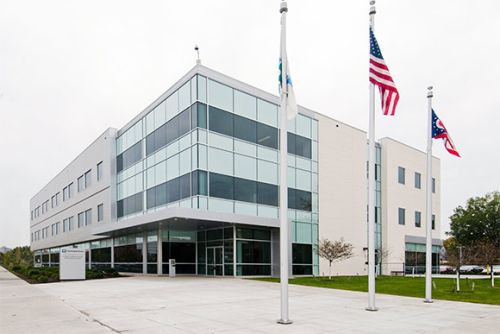
Through turning inventors' ideas into medical products and services, CCI has created 73 spinoff companies in the past 15 years, including some that have become recognizable entities in Cleveland and worldwide.

When Todd Goldstein and Dar Caldwell first created LaunchHouse in 2008, the organization was the first accelerator in the region to support early-stage startup companies. Since then, LaunchHouse has supported 62 companies and secured $23 million in follow-on funding. “We’re still going to work with our portfolio companies and help those companies be successful,” says Goldstein.
But earlier this month, LaunchHouse announced it was moving away from its adult accelerator model and instead will focus on fostering student entrepreneurs. The move comes with the success of the LaunchHouse Institute, a program started two years ago by LaunchHouse the and Shaker Heights Development Corporation as a way to educate, mentor and invest in student entrepreneurs.
“We’re going back to the roots of LaunchHouse, which are education, investing and bringing the entire community together, and create successful, vibrant entrepreneurs,” says Goldstein. “We’re reinforcing our position as a place in the community for entrepreneurial organizations to start and grow businesses. We’re really recognizing that education is the first step in growing any business.”
With the establishment of the LaunchHouse Institute came LEAP, one of the country’s first high school accelerators. Students go through a summer program to take business ideas to fruition. “I think what’s exciting about entrepreneurship is the opportunity to be creative while doing something to make money,” says Katie Connelly, LaunchHouse’s director of entrepreneurial programming. “You’re never too young to think about entrepreneurship and starting a business.”
The decision to focus on students came in part after noticing a skills gap in adult entrepreneurs. Goldstein saw the need to teach basic skills, like speaking to people and writing a professional emails, to young entrepreneurs in middle school, high school and college.
This summer LaunchHouse will also offer a Hack-a-Thing, one-day and five-day programs for middle and high school students centered on developing a physical product, says Connelly.
Additionally, through funding from the Arminius Foundation LaunchHouse will place two shipping containers in its garage for office space. The containers can house between two and 10 employees. “There’s no space for entrepreneurs who are growing and need space,” explains Goldstein. “This is an agile space to work out of. LaunchHouse is really a place for all entrepreneurs.”
But earlier this month, LaunchHouse announced it was moving away from its adult accelerator model and instead will focus on fostering student entrepreneurs. The move comes with the success of the LaunchHouse Institute, a program started two years ago by LaunchHouse the and Shaker Heights Development Corporation as a way to educate, mentor and invest in student entrepreneurs.
“We’re going back to the roots of LaunchHouse, which are education, investing and bringing the entire community together, and create successful, vibrant entrepreneurs,” says Goldstein. “We’re reinforcing our position as a place in the community for entrepreneurial organizations to start and grow businesses. We’re really recognizing that education is the first step in growing any business.”
With the establishment of the LaunchHouse Institute came LEAP, one of the country’s first high school accelerators. Students go through a summer program to take business ideas to fruition. “I think what’s exciting about entrepreneurship is the opportunity to be creative while doing something to make money,” says Katie Connelly, LaunchHouse’s director of entrepreneurial programming. “You’re never too young to think about entrepreneurship and starting a business.”
The decision to focus on students came in part after noticing a skills gap in adult entrepreneurs. Goldstein saw the need to teach basic skills, like speaking to people and writing a professional emails, to young entrepreneurs in middle school, high school and college.
This summer LaunchHouse will also offer a Hack-a-Thing, one-day and five-day programs for middle and high school students centered on developing a physical product, says Connelly.
Additionally, through funding from the Arminius Foundation LaunchHouse will place two shipping containers in its garage for office space. The containers can house between two and 10 employees. “There’s no space for entrepreneurs who are growing and need space,” explains Goldstein. “This is an agile space to work out of. LaunchHouse is really a place for all entrepreneurs.”

Since 2009, Explorys has leveraged big data in the healthcare field to form one of the largest healthcare databases in the world, helping medical professionals provide better patient care and diagnoses. Formed out of the Cleveland Clinic in October 2009 by Charlie Lougheed and Stephen McHale, Explorys has become one of the world’s largest data platforms.
Last Monday, McHale announced to 38,000 attendees of the HIMSS conference in Chicago that Explorys has been acquired by IBM. The news was announced by Lougheed in Cleveland. The company will be a part of IBM’s Watson Health Unit.
The deal was a natural fit, says Lougheed. “It was one of those things,” he says. “Explorys and IBM are both leaders in the space. We’ve bumped into each other and we’ve even collaborated from time to time with our joint customers. We really see each other as pioneers in the industry”
 Lougheed said there were three components to the decision to join IBM: Industry growth, customers, and Explorys’ employees. “We really believe in this mission and we want to see the mission continue and accelerate,” he explains. “We asked, is it good for our customers, does it make sense? Because they subscribe to our systems for a reason, so it had to matter to them.”
Most importantly, Lougheed said they considered their employees. “We asked, is this good for our employees, because they deserve something great as well,” he explains. “This a great thing for our employees to grow their careers.”
Explorys will remain in Cleveland, and all employees will retain their jobs. “There are some of the best and the brightest data software engineers in the world here,” Lougheed says. “Cleveland is a great place to keep Explorys moving. We’re going to continue to expand as expected.”
Last Monday, McHale announced to 38,000 attendees of the HIMSS conference in Chicago that Explorys has been acquired by IBM. The news was announced by Lougheed in Cleveland. The company will be a part of IBM’s Watson Health Unit.
The deal was a natural fit, says Lougheed. “It was one of those things,” he says. “Explorys and IBM are both leaders in the space. We’ve bumped into each other and we’ve even collaborated from time to time with our joint customers. We really see each other as pioneers in the industry”
Lougheed said there were three components to the decision to join IBM: Industry growth, customers, and Explorys’ employees. “We really believe in this mission and we want to see the mission continue and accelerate,” he explains. “We asked, is it good for our customers, does it make sense? Because they subscribe to our systems for a reason, so it had to matter to them.”Most importantly, Lougheed said they considered their employees. “We asked, is this good for our employees, because they deserve something great as well,” he explains. “This a great thing for our employees to grow their careers.”
Explorys will remain in Cleveland, and all employees will retain their jobs. “There are some of the best and the brightest data software engineers in the world here,” Lougheed says. “Cleveland is a great place to keep Explorys moving. We’re going to continue to expand as expected.”

In 2010 when Victor Ruiz took over as director of Esperanza, an organization focused on promoting academic achievement among Hispanic high school students and college after high school, things were pretty dismal.
Graduation rates among Hispanic Cleveland high school students hovered around 30 percent. Graduation among white and African-American students in the same schools was double that rate. And many Hispanic students were struggling to pass the 10th grade proficiency test, which they must pass by their senior year to graduate. “There was a lot of failure,” recalls Ruiz. “Students were just not academically prepared. Our youth were not being given the resources they needed. After a few tries and not passing the test, our children were just giving up and dropping out.”
Ruiz set out to change those numbers. Now in his fifth year as Esperanza’s director, Ruiz took a community approach to helping students not only make it through high school, but excel. “We looked at it on a holistic level,” he says. “We partnered with other organizations to address the whole child, not the pieces and parts. We work with parents and teach them about the importance of education and how to participate in the educational system.”
The approach was successful. Graduation rates among Cleveland’s Hispanic high school students in 2014 was 61 percent, pretty close to the overall graduation rate of 65 percent in the Cleveland Metropolitan School District.
With the proficiency tests, Ruiz implemented mentoring programs to offer support and guidance. “We were able to identify students who have tried several times and gave them rigorous academic tutoring,” he explains. “They may have to try several times, but they are able to pass and graduate.”
Esperanza, which awards college scholarships as a way to promote academic achievement, awarded 103 scholarships in 2014, compared to fewer than 40 in 2010. “Our goal is to see an increase in scholarships in the Cleveland schools,” says Ruiz.
While the numbers are still below the national average, Esperanza and Ruiz continue forward, with a mission to only improve further. “It has to be a priority,” he says. “Education is community. It has to be a priority. On a national level we still have a lot of work to do in graduation and college. But we feel the numbers are continuing to grow. We welcome anyone to join us in our effort.”
Graduation rates among Hispanic Cleveland high school students hovered around 30 percent. Graduation among white and African-American students in the same schools was double that rate. And many Hispanic students were struggling to pass the 10th grade proficiency test, which they must pass by their senior year to graduate. “There was a lot of failure,” recalls Ruiz. “Students were just not academically prepared. Our youth were not being given the resources they needed. After a few tries and not passing the test, our children were just giving up and dropping out.”
Ruiz set out to change those numbers. Now in his fifth year as Esperanza’s director, Ruiz took a community approach to helping students not only make it through high school, but excel. “We looked at it on a holistic level,” he says. “We partnered with other organizations to address the whole child, not the pieces and parts. We work with parents and teach them about the importance of education and how to participate in the educational system.”
The approach was successful. Graduation rates among Cleveland’s Hispanic high school students in 2014 was 61 percent, pretty close to the overall graduation rate of 65 percent in the Cleveland Metropolitan School District.
With the proficiency tests, Ruiz implemented mentoring programs to offer support and guidance. “We were able to identify students who have tried several times and gave them rigorous academic tutoring,” he explains. “They may have to try several times, but they are able to pass and graduate.”
Esperanza, which awards college scholarships as a way to promote academic achievement, awarded 103 scholarships in 2014, compared to fewer than 40 in 2010. “Our goal is to see an increase in scholarships in the Cleveland schools,” says Ruiz.
While the numbers are still below the national average, Esperanza and Ruiz continue forward, with a mission to only improve further. “It has to be a priority,” he says. “Education is community. It has to be a priority. On a national level we still have a lot of work to do in graduation and college. But we feel the numbers are continuing to grow. We welcome anyone to join us in our effort.”

Beginning in September, two of Cleveland’s top institutions will come together to offer a program for those with a mind for both business and health care. CWRU Weatherhead School of Management and the Cleveland Clinic announced on Thursday that the two will partner to offer an executive MBA program with a focus on health care.
“This is just an idea I’ve been kicking around for a while,” says Simon Peck, associate dean for Weatherhead’s MBA programs and associate professor in the management school’s design and innovation department. “It’s taking an existing MBA program that’s always been highly rated and collaborating with the Cleveland Clinic. I think it’s crazy we’re not doing more in this area.”
The program will target students who have both an interest in business and the growing health care sector. With a top academic institution and a top hospital system both located so close together, and with the partnership in the medical education campus, the partnership only made sense, says Peck.
“This is the first time Weatherhead School of Management and the Cleveland Clinic have partnered so closely,” he says. “I saw a need for leadership in an MBA with a focus on healthcare. You can’t just be a fantastic doctor and pick up the skills to run a hospital.” But Peck also stresses the eMBA program is not just for physicians -- the need for executives in health care is growing in all areas.
The 20-month academic program consists of 16 sessions over five semesters. Classes meet three days a month. Classroom sessions meet at both the Weatherhead and Clinic campuses.
Applications are due by June 15. For more information, contact Stephen Scheidt, director of admissions at the Weatherhead School.
“This is just an idea I’ve been kicking around for a while,” says Simon Peck, associate dean for Weatherhead’s MBA programs and associate professor in the management school’s design and innovation department. “It’s taking an existing MBA program that’s always been highly rated and collaborating with the Cleveland Clinic. I think it’s crazy we’re not doing more in this area.”
The program will target students who have both an interest in business and the growing health care sector. With a top academic institution and a top hospital system both located so close together, and with the partnership in the medical education campus, the partnership only made sense, says Peck.
“This is the first time Weatherhead School of Management and the Cleveland Clinic have partnered so closely,” he says. “I saw a need for leadership in an MBA with a focus on healthcare. You can’t just be a fantastic doctor and pick up the skills to run a hospital.” But Peck also stresses the eMBA program is not just for physicians -- the need for executives in health care is growing in all areas.
The 20-month academic program consists of 16 sessions over five semesters. Classes meet three days a month. Classroom sessions meet at both the Weatherhead and Clinic campuses.
Applications are due by June 15. For more information, contact Stephen Scheidt, director of admissions at the Weatherhead School.